






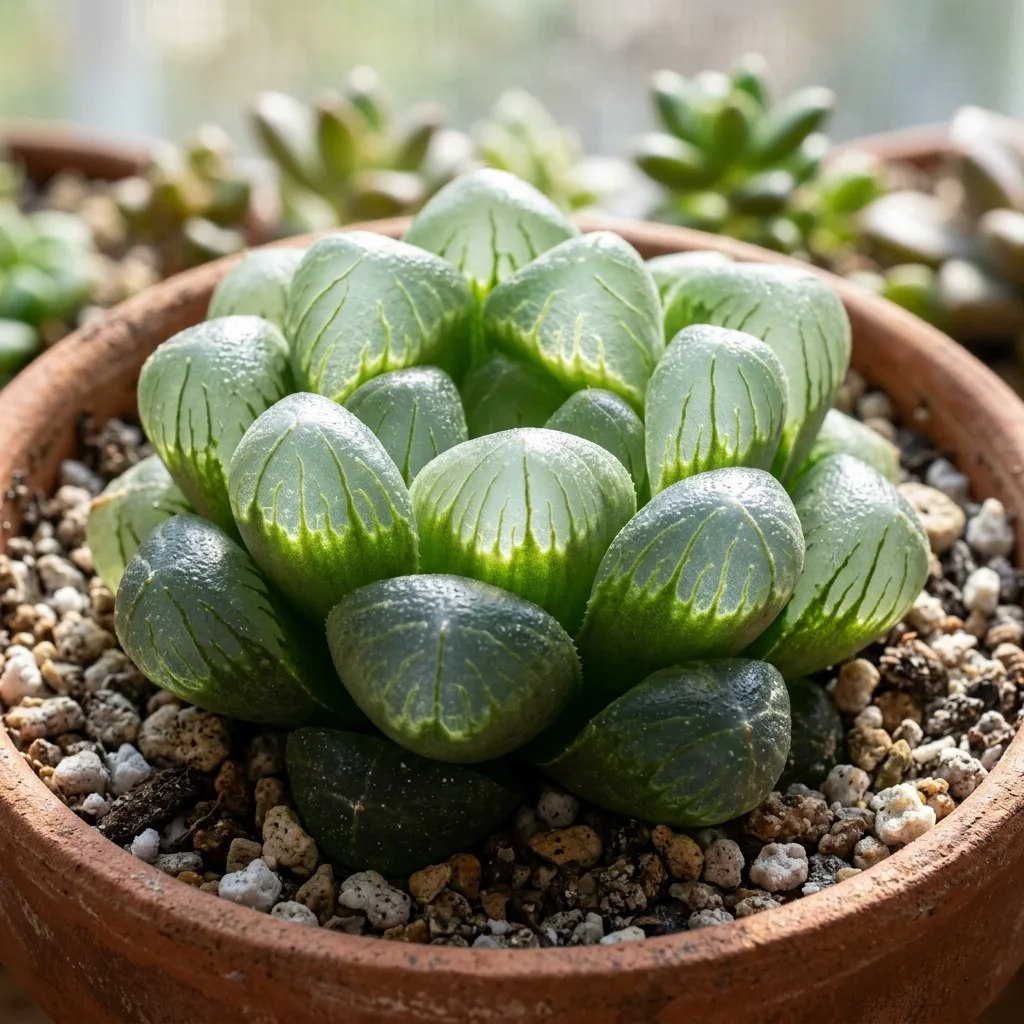
In the semi-arid Karoo basin of South Africa, sheltered away from scorching direct sun beneath the canopy of low-growing nurse shrubs and deep within cool rock crevices, Haworthia species thrive as the most refined jewels of the succulent kingdom. Popular treasures such as Haworthia fasciata (the Zebra succulent) or the translucent-windowed Haworthia cooperi are frequently sold in nurseries under the misleading label of 'indestructible, low-maintenance houseplants.' However, the underlying anatomy of these windowed wonders departs radically from desert cactus regimes. The acute sensitivity of their root xylem tissues to saturated media, paired with nocturnal respiration driven by Crassulacean Acid Metabolism (CAM), means that even subtle watering missteps can trigger rapid pathogen colonization.
If the leaves of your living-room Haworthia begin turning rusty brown, curling tightly inward, or softening into a gelatinous mush at the core, it is never a random occurrence. Dousing succulents with frequent sips of water is not an act of devotion; it suffocates the root rhizosphere and invites anaerobic oomycetes and fungal pathogens—specifically virulent Fusarium and Pythium species—directly into the plant's vascular bundles. In this master horticultural guide, we examine Haworthia care through the eyes of a greenhouse grower and field botanist, teaching you how to interpret cellular stress cues and surgically resurrect a declining rosette before necrosis takes hold.
1. Early Diagnostic Symptoms and Microscopic / Visual Cues
In Haworthia specimens, systemic collapse rarely strikes overnight; the plant signals distress at a cellular level weeks in advance. The loss of leaf turgor pressure serves as your initial and most vital diagnostic clue. In optimal health, a Haworthia leaf acts like a pressurized reservoir—plump, rigid, and clad in thick, protective cuticle tissue.
Keep a vigilant eye out for these pathological and physiological indicators:
- Reddish-Brown Discoloration (Anthocyanin Surge): When vibrant green leaves shift to a matte rust-red or muddy brown, the plant is enduring either photo-oxidative stress from excessive direct radiation or severe hydraulic failure at root level. When impaired roots cannot uptake moisture, the plant synthesizes protective anthocyanin sunscreens to shield chloroplasts against photo-bleaching.
- Inward Curling and Rosette Deflation: A Haworthia rosette clenching tightly into a clenched fist reflects extreme dehydration—either from desiccated media or, far more commonly, root rot that has collapsed the vascular conduits. A root-compromised succulent will exhibit severe thirst symptoms even while standing in waterlogged soil.
- Basal Blackening and Vitrification (Jelly Leaves): Lower leaves turning watery, translucent, and yellow before softening into black necrosis indicates progressive bacterial soft rot triggered by Erwinia carotovora or pervasive fungal tissue breakdown.
- Roots Reducing to Hollow Paper Tubes: Vibrant, functional Haworthia roots are thick, creamy-white, and fleshy, featuring specialized contractile tissue designed to anchor the plant into mineral fissures. In contrast, rotted roots slip away like hollow brown husks, leaving behind stringy fibers and emitting an unmistakable sour odor.
2. Root Causes and Environmental Triggers
Approximately 90% of Haworthia mortalities stem from an incompatible watering schedule coupled with dense, suffocating substrate formulations. In their natural habitat, these plants wedge themselves into quartzite, sandstone, and decomposed granite scree where organic content regularly sits below 5%. Standard commercial peat and heavy garden soils act as oxygen-depleted swamps around their fleshy root systems.
Key environmental stressors accelerating disease include:
- Anaerobic Substrate Compaction: Peat-heavy mixes retain capillary water like a sponge. Deprived of gaseous oxygen, root cells halt cellular respiration and undergo cell wall rupture, providing an open entryway for opportunistic soil-borne pathogens like Rhizoctonia solani and Phytophthora.
- Unfiltered Radiation Exposure: Unlike sun-adapted desert cacti, Haworthias lack thick, sun-reflecting spines. Intense midday sun burns their epidermal windows, creating scarred, necrotic white or gray lesions that serve as hospitable landing zones for fungal spores. Bright, filtered ambient light is non-negotiable.
- Dormancy Cycles and Off-Season Overwatering: Many Haworthia varieties enter semi-dormancy during peak summer heat and mid-winter cold snaps. During these periods, metabolic turnover plunges and water absorption drops close to zero. Routine calendar watering during dormant phases inevitably rots the root system.
- Stagnant Air and Crown Trapping: In closed rooms lacking adequate airflow, water droplets trapped inside the tight rosette crown cultivate rapid micro-colonies of Botrytis cinerea (gray mold).
3. Natural and Biological Remediation Protocols
When an infection or pest infestation is identified in its earliest stages, targeted mechanical intervention and biological treatments can restore health without requiring immediate synthetic chemistry.
Recommended biological protocols include:
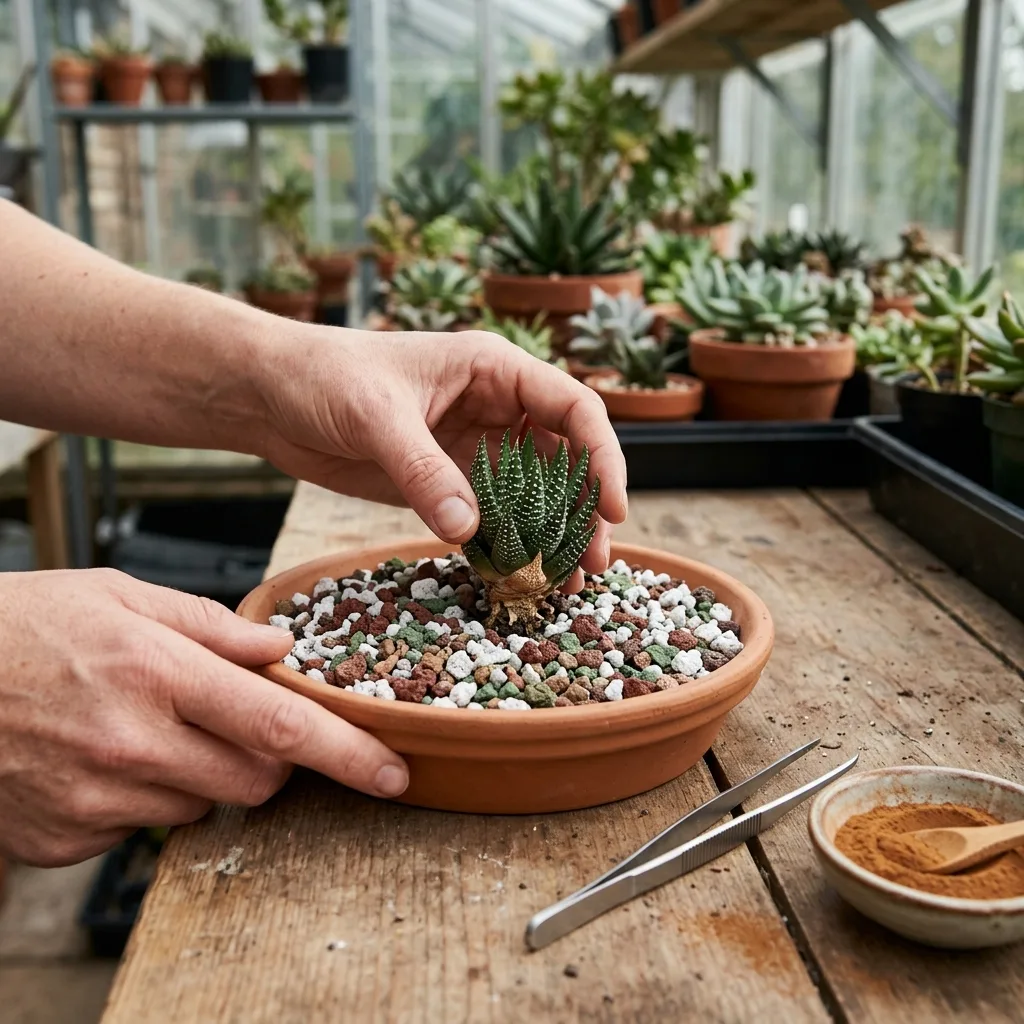
- Surgical Debridement and Ceylon Cinnamon Treatment: Unpot the plant and gently wash all old media from the root ball under lukewarm running water. Using an alcohol-sterilized scalpel, excise every trace of brown, hollow, or translucent tissue back to clean, creamy-white root flesh. Dust the cut surfaces generously with raw Ceylon cinnamon powder (a natural antifungal rich in cinnamaldehyde) or pharmaceutical-grade powdered activated charcoal.
- Callus Formation (Shaded Air-Drying): A freshly trimmed Haworthia must NEVER be returned directly to soil. Place the debrided rosette in a dry, well-ventilated, shaded spot for 3 to 5 full days to permit the wounded tissues to suberize and form a resilient callus barrier against microbial entry.
- Cold-Pressed Neem Oil for Mealybug Outbreaks: For root or foliar mealybugs hiding between tight leaf axils, mix 5 ml of cold-pressed, unrefined neem oil (rich in azadirachtin) with 2 drops of gentle liquid castile soap in 1 liter of tepid water. Emulsify thoroughly and apply directly onto pest colonies using a fine watercolor brush.
- Chamomile Infusion Spray: For superficial mildew or early fungal blooms, freshly brewed and cooled organic chamomile tea contains natural sulfur compounds that inhibit surface spore germination across leaf windows.
4. Chemical and Systemic Fungicide Application Guide
When soft rot reaches the central crown axis or deep-seated root mealybug colonies resist organic remedies, targeted systemic applications become necessary to preserve the plant. Always conduct treatments outdoors in shaded conditions while utilizing proper personal protective gear.
| Active Ingredient | Target Pathogen / Pest | Dosage (Per 1 Liter Water) | Application Method & Interval |
|---|---|---|---|
| Propamocarb Hydrochloride | Pythium and Oomycete Root Rot | 1.5 - 2.0 ml | Substrate drench; 2 applications spaced 14 days apart |
| Azoxystrobin + Difenoconazole | Stem Necrosis, Anthracnose, Fusarium | 0.75 - 1.0 ml | Foliar and crown misting; repeat once after 10 days |
| Acetamiprid | Root Mealybugs & Foliar Scale Pests | 0.5 - 0.6 g | Soil drench and foliar spray; 2 doses spaced 10 days apart |
| Copper Oxychloride | Bacterial Spotting & Open Wound Protection | 1.5 g | Direct paste painting onto debrided crown using a fine brush |
5. Quarantine and Disinfection Procedures
A pathogen-compromised Haworthia poses a direct biological hazard to adjacent succulents in your collection. Move any symptomatic specimen at least 2 meters away into an isolated rehabilitation space equipped with gentle air circulation.
Execute these rigorous sanitation steps:
- Container Sterilization: Submerge used ceramic or plastic pots in a 10% bleach solution (1 part household sodium hypochlorite to 9 parts water) for 20 minutes, then rinse thoroughly and sun-dry. Porous unglazed terracotta pots can be baked in an oven at 150°C (300°F) for 30 minutes to eliminate latent fungal spores.
- Tool Hygiene: Dip razor blades, pruning shears, and tweezers into 70% isopropyl alcohol between every cut, or hold them over a direct flame until sanitized.
- Disposal of Contaminated Media: Never recycle compromised potting mix into other planters. Bag diseased substrate and dispose of it directly with domestic refuse to prevent cross-contamination.
- Surrounding Surface Sanitation: Wipe down grow lights, shelving, and plant saucers with dilute hydrogen peroxide (3%) or medical-grade alcohol wipes.
6. Rehabilitation Protocol and Post-Recovery Nursing
Bringing a Haworthia back to life after full root loss requires patience, environmental control, and restraint. These plants possess exceptional regenerative capacity; once placed in proper conditions, the base of the stem will initiate fresh adventitious root primordia.
Step-by-step rehabilitation process:
- Suspended Air Rooting (Water Vapor Cueing): Balance the callused, rootless rosette over the rim of an empty glass jar or cup containing an inch of water at the bottom. The base of the plant MUST NOT touch the water; maintain a 1–2 cm gap. The humid microclimate will stimulate latent root buds without rotting the stem.
- Dry Mineral Bed Method: Alternatively, set the rosette gently onto a bed of 100% dry, coarse pumice or horticultural perlite. Keep the medium completely dry for the first 10 days. Thereafter, deliver a light bottom misting once weekly to provide subtle background humidity.
- Photoperiod Management: Keep recovering plants entirely out of direct sunlight. Place them under gentle fluorescent/LED fixtures or along an east/north window with soft, indirect illumination to keep metabolic transpirational stress low.
- Nutritional Fasting: Never apply liquid fertilizer to a rootless or recovering Haworthia. Unassimilated fertilizer salts will dehydrate and scorch fragile young root tips, aborting regeneration. Defer feeding until approximately 2 months after new growth has anchored firmly into the pot, then apply a balanced cactus fertilizer diluted to quarter strength.


Reader Reviews & Comments 3 Reviews
Eleanor Vance
Marcus Sterling
Julian Hayes
Leave a Review & Rating
Share your plant care tips, experiences, or questions with our succulent community.