






Tracing its lineage from the calcareous Eurasian steppes and windswept valleys directly into ancient textile dye vats, Isatis tinctoria (commonly known as woad or dyer's woad) brings a singular herbaceous identity to modern landscaping with its sculptural basal rosettes and frothy spring clouds of luminous yellow blossoms. Harboring natural indigo precursors within its taproots and fleshy leaf tissue, this resilient biennial easily shrugs off harsh continental climates in nature, yet frequently falls victim to excessive kindness in residential gardens and container plantings. Given its herbaceous physiology, the leaf petioles store considerable water reserves, making the plant exceptionally intolerant of saturated root zones; heavy, oxygen-deprived clay substrates quickly initiate an insidious, silent suffocation.
If the Isatis tinctoria in your border garden or container collection has suddenly lost turgor, started blackening from the crown rosette, or turned pale yellow while shedding its glaucous sheen, do not panic. Like all complex flora, woad sends unmistakable cellular SOS signals under acute physiological strain. Through prompt diagnostic assessment, timely surgical root intervention, and the deliberate restoration of microbiological balance, you can successfully revive your declining specimen and enjoy its golden, pollinator-rich floral displays once more.
1. Early Diagnostic Symptoms and Microscopic / Visual Cues
Cellular breakdown in Isatis tinctoria almost invariably initiates as progressive chlorophyll loss throughout the lower foliar laminae. When hydraulic lift within the root xylem collapses due to pathogen invasion or lack of soil oxygen, the plant fails to transport water and dissolved minerals to peripheral foliage. Marginal leaf wilting—accompanied by the sudden loss of firm turgor pressure when gently pressed, replaced by a sponge-like softness—serves as your earliest warning sign.
Key diagnostic indicators to monitor during inspection include:
- Crown Blackening and Basal Softening: Dark brown or black water-soaked lesions developing where the lowest leaf petioles meet the root crown (a hallmark indicator of bacterial soft rot or fungal decay caused by Rhizoctonia solani).
- Interveinal Chlorosis on Mature Leaves: Foliar veins remain faint green while interveinal zones fade to washed-out yellow (evidence of localized root asphyxiation or secondary micronutrient lockout involving iron and magnesium).
- Cottony or Powdery Aggregates: Fluffy white deposits nestling within the leaf axils or on foliar undersides, signaling mealybug (Pseudococcidae) infestations or active powdery mildew (Erysiphe spp.) mycelial mats.
- Slipping Root Epidermis: Upon exposing the subterranean root ball, healthy creamy-white taproot fibers are replaced by dark brown, foul-smelling strands whose outer cortex readily sloughs off between your fingers like wet string.
2. Underlying Root Causes and Environmental Triggers
In its native steppe habitats, Isatis tinctoria flourishes across lean, mineral-dense, chalky soils with extraordinary drainage, buffeted by non-stop atmospheric wind. Confining this robust herbaceous perennial to sheltered balconies, stagnant interior corners, or dense, peat-dominated potting soils shifts the microclimate decisively in favor of opportunistic fungal pathogens.
The most pervasive root causes encompass:
- Substrate Porosity Deficits: A low proportion of coarse, non-capillary macropores eliminates vital oxygen diffusion within the rhizosphere. When fine feeder roots are deprived of dissolved oxygen, root hair dieback occurs within hours, leaving open lesions where fungal zoospores infiltrate.
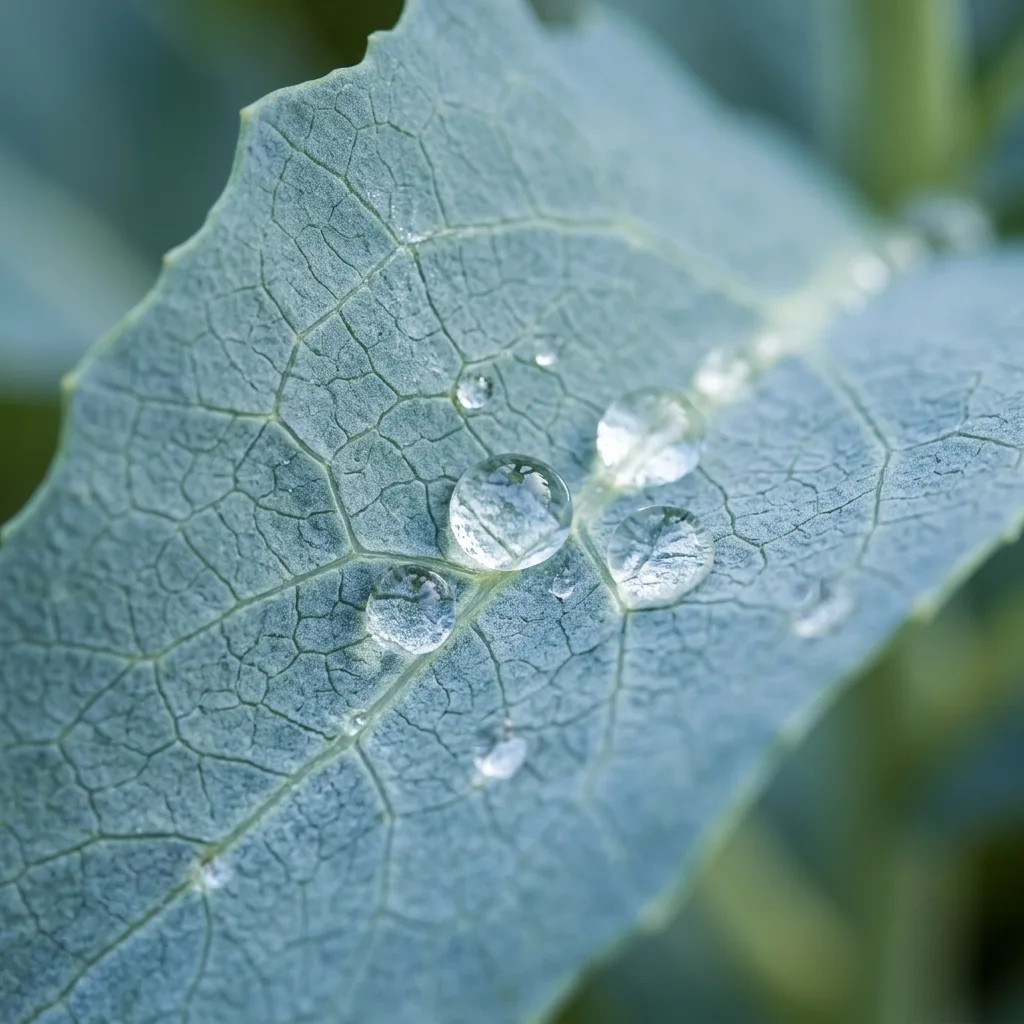
- Suboptimal Light Levels: As a strict obligate heliophyte, woad demands full sunlight. Less than six hours of uninterrupted, direct sun drastically reduces photosynthetic carbon assimilation, causing systemic cellular depletion and compromising baseline plant immunity.
- Excessive Nitrogen Fertilization: Pushing woad with high-nitrogen liquid feeds induces rapid, fragile vegetative elongation. These thin, poorly lignified cell walls present a vulnerable pathway for piercing sap-feeders and fungal hyphae to colonize.
3. Natural and Organic Remediation Protocols
Before turning to broad-spectrum chemical syntheses, harness targeted botanical and mineral formulations designed to suppress fungal pathogen pressure while bolstering natural systemic resistance. For superficial leaf pathogens and early-stage pest colonies, these biological solutions prove remarkably curative.
1. Cold-Pressed Pure Neem Oil Protocol: Emulsify 5 ml of 100% cold-pressed neem oil into 1 liter of lukewarm distilled water along with 2 ml of organic castile soap or potassium horticultural soap. Vigorously agitate and apply as a fine mist to leaf undersides and down into the crown folds during early evening to prevent phototoxicity. The azadirachtin disrupts the hormonal molting and feeding of soft-bodied scale insects, aphids, and mealybugs.
2. Cinnamon & Chamomile Infusion (Bio-Fungicide): Steep 2 tablespoons of organic Ceylon cinnamon powder and a handful of dried German chamomile blossoms in 500 ml of boiling water; cool completely and strain through fine muslin. Rich in cinnamaldehyde and natural flavonoids, this botanical drench naturally curbs superficial surface saprophytes and damping-off fungi without burning tender root tissue.
3. Dry Food-Grade Diatomaceous Earth: Dusting an even, thin mantle of food-grade amorphous silica across bone-dry soil surfaces destroys the protective lipid layers of crawling soft-bodied pests via physical micro-abrasion, desensitizing and dehydrating infestations cleanly.
4. Chemical and Systemic Treatment Protocol
When an aggressive fungal attack has already compromised structural crown tissues or mealybugs have taken refuge deep within folded rosette stems, organic methods may fall short. At this juncture, deploying active systemic and targeted contact chemistries on a disciplined curative schedule prevents total specimen loss.
| Target Pest / Pathogen | Recommended Active Ingredient | Dosage (Per Liter of Water) | Application Frequency | Application Method |
|---|---|---|---|---|
| Root & Crown Rot (Pythium / Phytophthora) | Fosetyl-Al or Propamocarb | 2.5 g / 2.0 ml | Every 12–14 days (Max 2 cycles) | Targeted soil drench / Crown collar saturation |
| Powdery Mildew & Leaf Spotting | Azoxystrobin or Difenoconazole | 0.8 ml – 1.0 ml | Every 10 days (1–2 applications) | Full-coverage foliar misting |
| Mealybugs & Armored Scale | Acetamiprid or Flonicamid | 0.5 g – 0.6 g | Every 7–10 days (2–3 treatments) | Systemic drench and complete foliar spray |
| Bacterial Soft Rot | Copper Oxychloride or Copper Sulfate | 1.5 g – 2.0 g | Every 15 days (Strictly contact) | Localized paintbrush application to affected petioles |
5. Strict Quarantine and Surgical Sanitation Steps
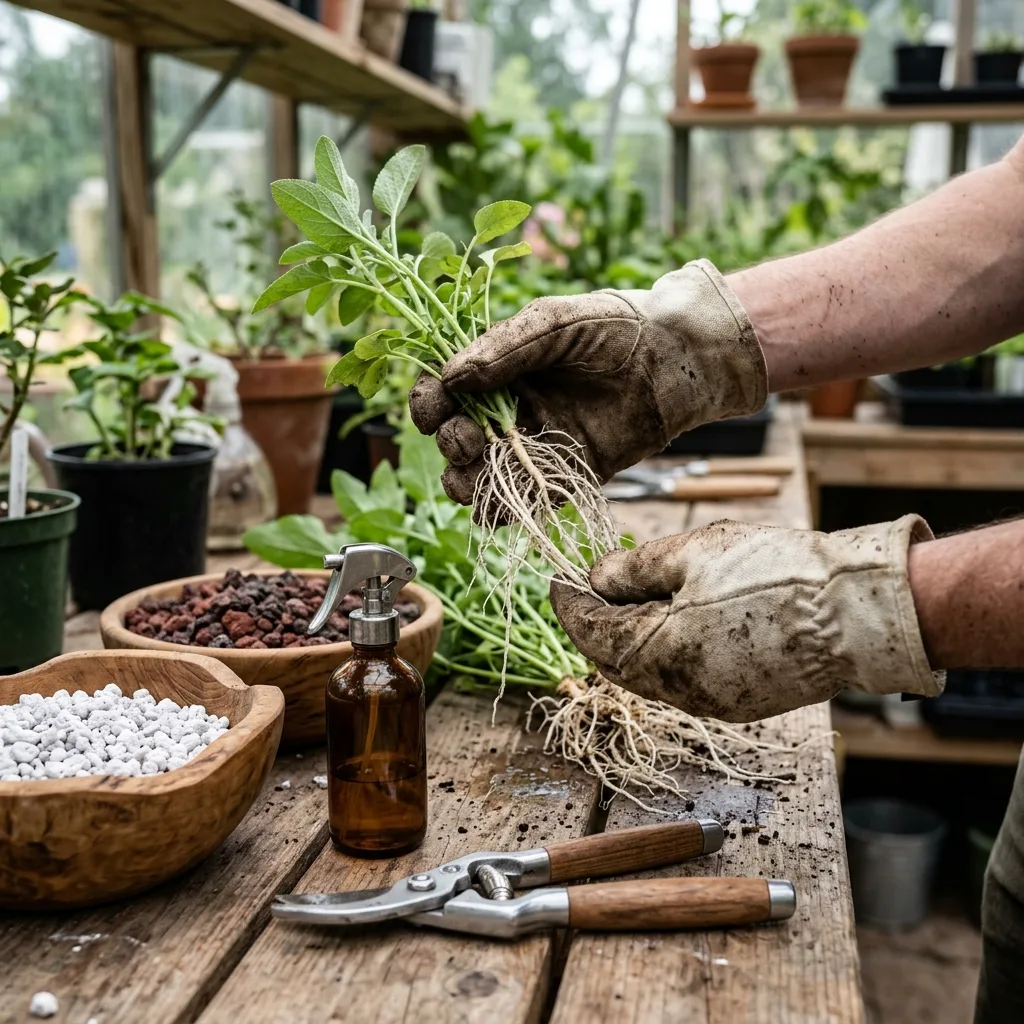
Any compromised Isatis tinctoria must be removed immediately from your broader horticultural collection—particularly away from prized succulent arrangements and susceptible brassicas—to a well-ventilated, bright quarantine area at least 2 to 3 meters away.
- Tool Sterilization: Thoroughly wipe bypass shears, scalpel blades, and root hooks with 70% isopropyl alcohol or pass them through an open flame between cuts.
- Surgical Debridement: Carefully dissect away all darkened, necrotic, or water-soaked leaf bases down to pristine green or white vascular tissue. Sterilize your blade after every single incision to prevent mechanical inoculation of healthy tissue.
- Pot Sterilization: If salvaging the existing container, strip away all remaining debris and soak the vessel in a 10% sodium hypochlorite (household bleach) solution for 20 minutes, followed by an extensive freshwater rinse.
6. Plant Rehabilitation and Long-Term Recovery Care
A debrided, recovering woad requires an ultra-porous, structurally stable, lean rooting medium engineered to maximize gas exchange while discouraging secondary pathogen emergence. The crown of the plant must rest strictly at or slightly proud of the finished soil line—never bury the central rosette below grade.
Dedicated Rehabilitation Substrate Recipe:
- 30% Washed horticultural pumice (2–4 mm aggregate size)
- 20% Porous crushed red scoria (lava rock)
- 20% Horticultural zeolite (to capture heavy salts and buffer rhizosphere pH)
- 30% Screened, fibrous low-peat leaf compost or inert coco coir fiber
Shield your recovering plant from scorching midday summer sun for the first 72 hours, locating it where it receives cool, indirect light or filtered early-morning rays with excellent cross-ventilation. Do not irrigate immediately following repotting; allow root severance wounds to form a protective suberin calloused layer for 48 hours. When reintroducing water, incorporate cold-water kelp extract at 1 ml per liter to supply natural auxins and cytokinins, encouraging rapid feeder root generation and restoring the proud, historic vitality of your dyer's woad.


Reader Reviews & Comments 3 Reviews
Eleanor Vance
Julian Sterling
Marcus Thornton
Leave a Review & Rating
Share your plant care tips, experiences, or questions with our succulent community.