






One of the most disheartening moments a succulent enthusiast can experience in their greenhouse or living room is waking up to find that rosette leaves—once firm and sculpted like marble statues—have suddenly slumped into a spongy, yielding softness. In botanical literature, the term 'soft' or 'tender' succulents refers to frost-sensitive, delicate-bodied species unsuited to freezing winters, but it also reflects the tactile, elastic leaf deformation growers feel beneath their fingertips. Originating from the steep, sun-drenched rocky canyons of Mexico to the bright windowsills of our homes, these plants manage every single drop of water stored within their cells as a masterful survival strategy.
When nurturing your succulents with dedicated care, accurately interpreting a sudden loss of leaf elasticity is a vital horticultural skill. A leaf that yields slightly between your fingers may simply be whispering a thirsty plea for hydration; on other occasions, it serves as the final alarm bell of a drowning plant suffocated by excessive love and waterlogged roots. Guided by botanical science, let us explore the captivating species that naturally fall into the 'tender succulent' category while deciphering the exact language of softening leaves together.
1. Botanical Identity and Morphological Traits: What Are 'Soft' (Tender) Succulents?
In horticultural taxonomy, succulents are broadly categorized by their cold hardiness into two primary groups: 'Hardy' succulents (frost-tolerant varieties like Sempervivum and select Sedum species capable of enduring temperatures down to -20°C / -4°F) and 'Soft' or 'Tender' succulents. Because tender succulents evolved in subtropical or temperate microclimates, they lack physiological mechanisms to withstand frost. At sub-zero temperatures, ice crystals form within their delicate cell walls, rupturing membranes and turning the water-storing parenchymal tissue into a lifeless, gelatinous mass.
The most celebrated genera within this tender group include:
- Echeveria: Architecturally immaculate rosettes whose plumpness is sustained by high cellular turgor, their epidermis shielded by a delicate epicuticular wax layer known as 'farina'.
- Graptopetalum & Pachyphytum: Characterized by extreme leaf plumpness and a gentle, jelly-like elasticity, commonly celebrated as 'Ghost Plants' or 'Moonstones'.
- Haworthia & Haworthiopsis: Featuring translucent 'leaf windows' that channel sunlight deep into interior photosynthetic tissues; structurally fibrous yet exceptionally sensitive to internal hydraulic pressure.
- Crassula ovata (Jade Plant): Though its mature stems become semi-woody, its fleshy leaves serve as immediate, visible barometers of cellular hydration.
The specialized foliage of these plants features hypertrophied vacuoles (intracellular water storage compartments) operating as part of their Crassulacean Acid Metabolism (CAM) photosynthetic pathway. In a thriving tender succulent, optimal internal turgor pressure keeps the leaves rigid, plump, and firm to the touch.
2. Light Requirements and Indoor Positioning
While delicate soft succulents must not be abruptly scorched beneath blistering midday summer sun, a deficiency of light triggers etiolation—an unnatural elongation that stretches stems, thins cell walls, and leaves the foliage limp, fragile, and pale. The ideal setting provides 4 to 5 hours of gentle morning direct sunlight via an east-facing window, or abundant, bright indirect sunlight filtered through a sheer curtain along southern or western exposures throughout the day.
Sunlight directly dictates photosynthetic rates and cuticle thickness. The powdery farina coating the leaves serves as the plant's built-in natural sunscreen and hydrophobic armor; avoid touching the leaves, as oils from human fingers strip this non-renewable barrier away. Under inadequate light, succulent leaves lose their structural integrity, thin out, and take on a limp, rubbery texture when handled.

3. Watering Discipline: The 'Soak and Dry' Method
Leaf softening fundamentally stems from two diametrically opposed physiological states: Acute Dehydration (Under-watering) and Hypoxic Root Rot (Over-watering). Distinguishing between these two conditions is one of the most critical diagnostic milestones for any passionate plant caretaker.
- Dehydration Softening: The lowest leaves soften first, developing fine, transverse wrinkles while retaining their natural color without turning translucent. When gently squeezed, they feel like slightly deflated balloons. The pot feels remarkably light. Upon thorough watering, the root system rehydrates the cells within 24 to 48 hours, restoring rock-solid leaf turgidity.
- Over-watering Softening: Leaves become watery, translucent, pale yellow, and squishy to the touch, often dropping off at the slightest nudge. This indicates that root hairs have suffocated from oxygen deprivation, triggering systemic necrosis and rupturing cellular walls from the inside out.
Watering succulents on a strict calendar schedule is not an act of devotion; it risks suffocating subterranean root tissue. Always implement the 'Soak and Dry' method: saturate the substrate completely until water flows freely from the drainage holes, and never apply another drop until the potting mix has dried thoroughly all the way to the base of the container.
4. Ideal Soil Formulation and Pot Selection
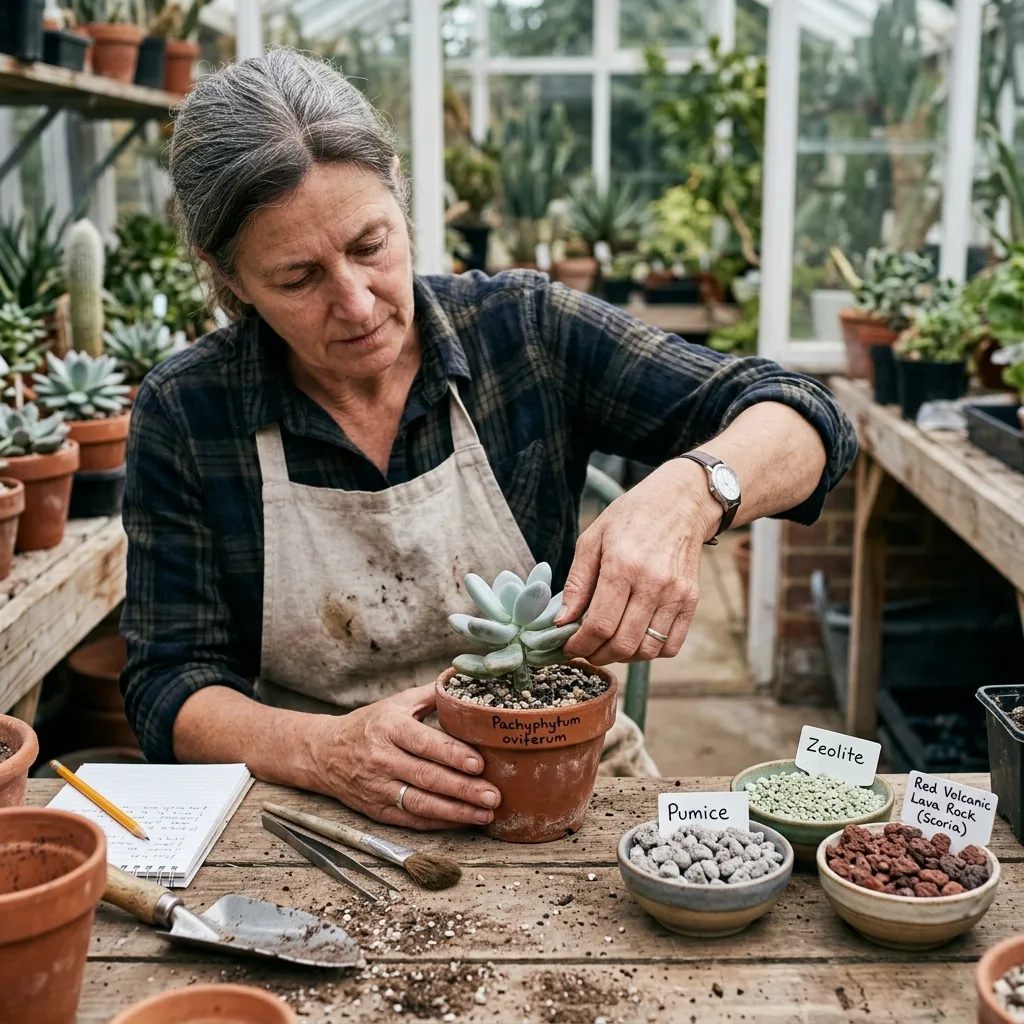
The fibrous root architectures (xylem and phloem conduits) of tender succulents are acutely sensitive to stagnant water pockets. To ensure root cells can respire, you must provide a highly porous, gritty substrate dominated by inorganic mineral aggregates. Standard garden soil or unamended peat moss creates a dense, moisture-trapping environment that inevitably leads to root rot.
| Component | Ratio (%) | Horticultural Function & Botanical Benefit |
|---|---|---|
| Pumice (3–5 mm) | 40% | Creates stable macropores, prevents soil compaction, and maximizes root aeration. |
| Lava Rock / Red Scoria | 20% | Provides structural weight, trace minerals, and promotes rapid internal drainage. |
| Zeolite (Clinoptilolite) | 15% | Buffers excess moisture and binds essential cations (NPK) for sustained nutrient delivery. |
| High-Grade Coir / Washed Peat | 25% | Maintains minimal baseline moisture to support delicate capillary root hairs without staying soggy. |
Container choice is just as vital as the potting mix. Unglazed, porous terracotta pots permit moisture to evaporate laterally through their earthenware walls, significantly reducing the danger of waterlogging. Ensure the container has generous drainage holes at the base.
5. Step-by-Step Leaf Propagation Techniques
The leaves of soft succulents serve double duty: they are moisture reservoirs and complete biological blueprints for new life. Propagating from a healthy, plump leaf is one of the most rewarding experiences in home horticulture:
- Harvesting the Leaf: Select a mature, turgid leaf near the base. Grasp it firmly between your thumb and index finger, wiggling it gently side to side until it cleanly detaches with a crisp 'snap'. Ensure the meristematic tissue at the leaf base remains intact, without leaving tissue behind on the stem.
- Callus Formation: Never place a fresh leaf cutting directly onto damp soil. Allow it to rest in a dry, shaded, well-ventilated space for 3 to 5 days so the severed tissue forms a protective, suberized callous. This step prevents fungal spores from penetrating the wound.
- Dry Bedding: Lay the calloused leaves horizontally across a shallow tray filled with dry, gritty succulent substrate. Refrain from watering entirely during this initial phase; the leaf will metabolize its internal water reserves to generate root initials.
- Rooting and Rosette Emergence: Once delicate pink or translucent root threads and a miniature rosette appear, begin lightly misting or bottom-watering the root zone. Allow the mother leaf to shrivel naturally; do not detach it forcefully until it is completely dry and spent.
6. Common Pathogens, Pests, and Clinical Treatments
Tender, fleshy succulent leaves are prime targets for sap-sucking pests like mealybugs (Pseudococcidae) and opportunistic fungal rot organisms. Softened, over-watered foliage offers an irresistible gateway for infestation.
- Mealybug Infestation: These insects present as white, cotton-like masses nested within leaf axils and beneath rosette bases. Treat localized outbreaks by dabbing individual pests directly with a cotton swab soaked in 70% isopropyl alcohol, followed by a targeted application of cold-pressed neem oil or horticultural insecticidal soap.
- Stem and Root Rot (Soft Tissue Necrosis): If the stem feels hollow or squishy and the lower foliage turns translucent and drops, unpot the specimen immediately. Using a flame-sterilized scalpel, excise all blackened root fragments and diseased stem tissue until you expose clean, pale-green, healthy vascular tissue. Dust the wound with sulfur powder or ground cinnamon (a natural antifungal agent), let it air-dry for 5 days, and replant in bone-dry, gritty mix to stimulate adventitious rooting.
7. Seasonal Botanical Care Calendar
Aligning your routine with the natural phenological rhythm of tender succulents prevents stress-induced leaf softening throughout seasonal transitions:
- Spring (Active Awakening): As photoperiods lengthen, active growth begins. Apply a balanced, low-nitrogen succulent fertilizer diluted to quarter-strength once a month. Gradually adjust watering frequency based on leaf turgor feedback.
- Summer (Heat Semi-Dormancy): When ambient temperatures exceed 35°C (95°F), many tender species slow down CAM photosynthesis to conserve moisture. Protect plants from intense afternoon sun and water exclusively during cool twilight hours.
- Autumn (Peak Vitality): Significant diurnal temperature fluctuations trigger vibrant anthocyanin synthesis, resulting in dazzling leaf coloration. Provide thorough, deep waterings whenever the potting medium dries out completely.
- Winter (Protective Dormancy): Keep tender varieties safely indoors away from cold drafts and temperatures below 8–10°C (46–50°F). Reduce watering to a bare minimum, hydrating sparingly with room-temperature water only when lower leaves exhibit distinct dehydration wrinkles.


Reader Reviews & Comments 3 Reviews
Eleanor Vance
Claire Dupont
Marcus Thorne
Leave a Review & Rating
Share your plant care tips, experiences, or questions with our succulent community.