






Swaying serenely on the mirrored surface of calm ponds, water lilies (Nymphaea) have captivated gardeners across history—from the sacred shores of the Nile River to the humid tropical lagoons of Southeast Asia—as the ultimate symbol of aquatic poise and life emerging from water. Yet, when those lush, glossy floating pads suddenly turn yellow, become riddled with holes, or their stately submerged rhizomes soften and decompose, the balance of the entire water garden trembles. Aquatic ecosystems possess far more sensitive dynamics than terrestrial potting soil; a single misstep here ripples out, directly affecting not only the plant itself but also beneficial aerobic microorganisms, fish, and aquatic insects.
The overwhelming majority of damage observed in water lily cultivation stems from two core biological stressors in aquatic ecology: surface-dwelling pests devouring cellular leaf tissue, and benthic anaerobic (oxygen-deprived) conditions that trigger virulent fungal pathogens within the rhizome. In this comprehensive rescue guide, we will dissect the pathological mechanisms behind every anomaly—from skeletal 'lace' leaf perforations to hidden crown rot beneath the water—and outline safe, targeted restoration steps that nurse your lilies back to vigor without placing your aquatic fauna at risk.
1. Early Diagnostic Symptoms and Microscopic / Visual Clues
The hydrophytic (water-adapted) anatomy of water lilies features adaxial stomata restricted exclusively to the upper leaf epidermis, supported by expansive aerenchyma air channels engineered for buoyant gas exchange. Structural breakdowns across these specialized tissues serve as the earliest footprint of diseases and pests:
- Lace-Like Skeletonization and Surface Holes: Circular or linear surface gouging that gradually strips the upper epidermis until the leaf becomes as fragile and perforated as lace is almost universally the work of both adult water lily beetles (Galerucella nymphaeae) and their feeding larvae.
- Curling and Blackening Leaf Margins: Tight clusters of tiny black or dark-brown specks congregating on tender emergent shoot tips and flower pedicels signal the presence of the water lily aphid (Rhopalosiphum nymphaeae), which punctures and siphons phloem sap. These puncture wounds undergo rapid localized necrosis, causing leaf margins to cup and distort.
- Circular Brown and Reddish Lesions: Rapidly expanding necrotic foci across the leaf blade that develop concentric rings radiating outward point directly to foliar fungal infections, most notably Ramularia nymphaearum or Cercospora leaf spot.
- Rhizome Softening and Sulfuric Odors: When a rhizome lifted from the pond floor feels spongy, yields easily to gentle pressure, sheds disintegrating fibers, and emits a pungent rotten-egg sulfur stench, it provides incontrovertible proof that anaerobic rot or oomycete pathogens such as Phytophthora have decimated the root system.
- Surgically Severed, Joined Leaf Patches: If neat oval or circular sections have been excised from the leaf margins and you notice two floating leaf fragments glued together near the surface, caterpillars of the brown china-mark moth (Elophila nymphaeata) are actively constructing their buoyant protective pupal cocoons.
2. Underlying Root Causes and Environmental Triggers
While water lilies are fundamentally resilient perennials, rapid fluctuations in water quality and pond biotope imbalances strip them of their natural defenses, leaving them vulnerable to opportunistic pathogens:
- Insufficient Sunlight Exposure: Water lilies require a minimum of 5 to 6 hours of uninterrupted, direct sunlight daily to sustain photosynthetic carbohydrate synthesis. In shaded ponds, the leaf cuticle layer remains abnormally thin, cellular walls weaken, and the plant's endogenous immune response against parasites collapses.
- Excessive Water Turbulence and Fountain Spray: Nymphaea are strictly still-water hydrophytes. Continuous splashing from aeration fountains or decorative waterfalls erodes the hydrophobic epicuticular wax layer on the leaf surface, creating a saturated, stagnant microclimate where fungal conidiospores readily germinate.
- Accumulation of Benthic Organic Sludge (Detritus): Decaying foliage, uneaten fish food, and aquatic animal waste settle to the pond floor to form a dense anaerobic sludge blanket. This layer strips the benthic zone of dissolved oxygen, cultivating facultative anaerobic bacteria and destructive root-rotting fungi.
- Elevated Nitrogen Loading and Algal Blooms: Surging dissolved nitrate and phosphate levels induce rapid population explosions among water lily aphids, while also encouraging benthic filamentous algae to carpet lily petioles, effectively suffocating the plant's gaseous exchange.
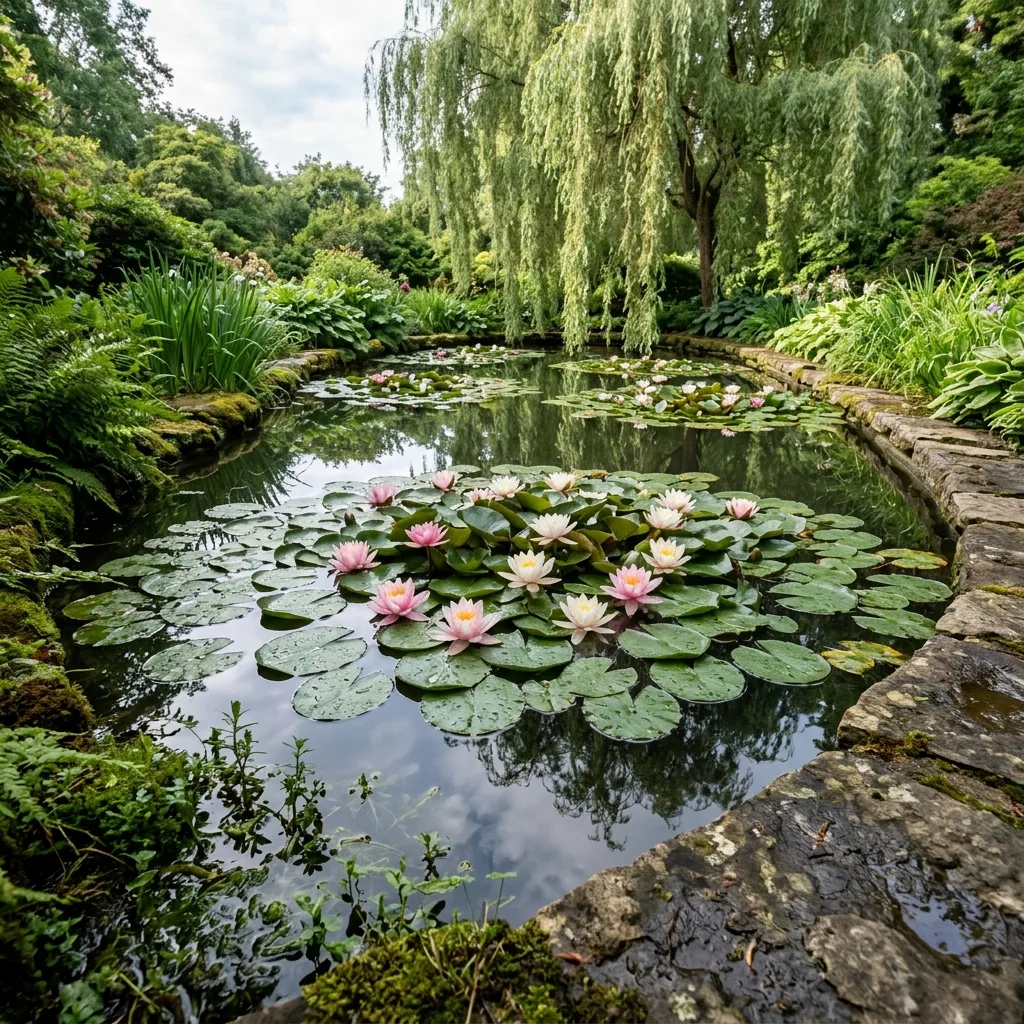
3. Natural and Organic Control Protocols
Because introducing synthetic pesticides directly into an active pond can instantly crash the biological filtration cycle and poison aquatic life, your primary line of defense must always center on ecological, mechanical, and biological remediation:
- High-Pressure Water Stream Dislodgement: Water lily aphids (Rhopalosiphum nymphaeae) can be blasted off the upper leaf surface directly into the water using the sharp stream setting of a garden hose nozzle. Once knocked beneath the surface tension, the aphids drown and quickly serve as a high-protein live snack for goldfish (Carassius auratus) and koi.
- Targeted Mechanical Pruning: Any pad exhibiting heavy clusters of Galerucella larvae or expanding fungal lesions should be excised immediately using sterilized aquatic shears. Make the cut at the base of the petiole, leaving no more than 2–3 cm above the rhizome crown, and dispose of the cuttings far from the pond edge.
- Bacillus thuringiensis (Bt) Application: To eliminate china-mark moth caterpillars, mist an aqueous suspension of Bacillus thuringiensis var. kurstaki over dry foliage during late afternoon. This naturally occurring bacterium disrupts the alkaline digestive tracts of lepidopteran larvae upon ingestion, while remaining completely harmless to fish, freshwater snails, amphibians, and visiting birds.
- Submersion Barrier Technique: To suffocate water lily beetles and moth caterpillars mechanically, affix a clean plastic mesh screen over the pads to submerge them 5 to 10 cm beneath the surface for 24 to 48 hours. Deprived of atmospheric oxygen, the pests drown or are picked off by foraging fish.
4. Chemical and Systemic Treatment Protocols
When severe infestations threaten plant survival and natural measures prove insufficient, water lilies must be transferred out of the main pond into an isolated quarantine treatment basin. All systemic treatments and synthetic compounds must remain confined strictly to this controlled environment.
| Target Pest / Disease | Recommended Active Ingredient | Quarantine Basin Dosage (per Liter) | Application Frequency & Method | Aquatic Life Safety Note |
|---|---|---|---|---|
| Fungal Leaf Spots (Ramularia / Cercospora) | Copper Oxychloride (50% WP) | 1.5 grams / Liter | 2 foliar applications spaced 10 days apart (apply only to dry leaves) | Highly toxic to fish! Never mist or drain into the primary pond environment. |
| Water Lily Beetles & Larvae | Spinosad | 0.5 ml / Liter | 2 contact applications spaced 7 days apart | Toxic to bees and aquatic invertebrates. Allow foliage to dry completely in quarantine. |
| Widespread Aphid Infestations | Potassium Salts of Fatty Acids (Insecticidal Soap) | 5 ml / Liter | Foliar spray applied early morning; rinse thoroughly with fresh water after 2 hours | Prevent direct water runoff into ponds. Rinse foliage thoroughly before returning plant to pond. |
| Rhizome Crown & Root Rot | Thiophanate-Methyl or Fosetyl-Al | 2.0 grams / Liter (Drench bath) | 20-minute submerged root soak following necrotic tissue excision | Rinse rhizome clean with fresh water post-soak; dispose of treatment water safely away from waterways. |
5. Quarantine and Disinfection Procedures
To rehabilitate a compromised water lily without endangering the established ecology of your broader pond, implement this rigorous four-step quarantine protocol:
- Gentle Plant Extraction: Slowly lift the lily basket toward the surface. Immediately slip a shallow catch basin or wash tub underneath the basket before clearing the surface to prevent dislodged anaerobic sediment from contaminating your pond.
- Complete Root Wash and Tissue Debridement: In your quarantine area, gently blast away old benthic clay from the root system with a hose. Using a sterilized scalpel or grafting knife, meticulously pare away all blackened, soft, or foul-smelling rhizome tissue until you reach clean, crisp, pale-cream vascular tissue.
- Potassium Permanganate Sterilizing Dip: Prepare a mild sanitizing bath by adding potassium permanganate crystals to 10 liters of water until the solution turns a light, translucent magenta (approximately 10–15 mg/L). Submerge the entire rhizome and attached petiole bases for 10 minutes to eradicate microscopic snail egg clusters, parasitic nematodes, and surface fungal spores.
- Recovery in an Isolated System: Following decontamination, pot the rhizome in fresh, unamended heavy clay loam and submerge it in an aerated, standalone plastic tank (minimum 60–80 liters). Keep the plant isolated for at least 14 days until vigorous new pad growth unfurls and pest activity is confirmed at zero before reintroducing it to your display pond.
6. Rehabilitation and Convalescent Care
Once freed from parasitic pressure and rot, water lilies demand structural substrate support and targeted nutrition to rapidly rebuild their cellular reserves and buoyant aerenchyma networks:
- Optimal Substrate Composition: Avoid potting mixes containing commercial peat moss, perlite, or lightweight potting soils; these components float, cloud the water, and foster bacterial blooms. The ideal substrate consists of 70% heavy, unamended garden clay (dense loam) blended with 30% coarse washed river sand. Top the potting basket with a 2–3 cm layer of washed river pea gravel to prevent substrate dispersal and stop koi from uprooting the crown.
- Targeted Aquatic Fertilizer Spikes: Convalescing lilies need substantial reserves of chelated iron, potassium, and micronutrients to restore deep chlorophyll pigmentation. Dissolving liquid fertilizers directly into the pond water will only trigger runaway planktonic algal blooms. Instead, press dense, slow-release aquatic plant fertilizer tablets deeply into the clay substrate roughly 5 cm away from the growing crown (twice yearly, in mid-spring and mid-summer).
- Gradual Depth Calibration: Do not submerge a rehabilitating lily directly to full mature depths of 60 to 80 cm. To maximize solar penetration and stimulate rapid photosynthetic cell division, position the basket initially at an intermediate depth of just 15 to 20 cm below the surface. As new floating pads establish and carpet the surface, gradually lower the container to its permanent depth of 40 to 60 cm.


Reader Reviews & Comments 4 Reviews
Eleanor Vance
Marcus Thornton
Julianna Reed
David Sterling
Leave a Review & Rating
Share your plant care tips, experiences, or questions with our succulent community.