






As winter slowly recedes among the misty fjords and towering Douglas firs of the Pacific Northwest, March in Washington State represents both boundless promise and a treacherous pitfall for gardeners. From the humid, maritime microclimates of Seattle (USDA Zone 8b) to the arid, frost-locked high plains of Spokane east of the Cascades (USDA Zone 6a), the earth remains deep in its winter dormancy. Lured by the deceptive warmth of early March sunshine, countless garden enthusiasts make the premature mistake of burying warm-season tomatoes or tender, fleshy succulents into waterlogged beds. Yet, without rigorous biological and thermal soil preparation, planting holes excavated in March become little more than cold, sodden tombs for young seeds and fragile starts.
During this transitional window, outdoor planting in Washington gardens must be strictly reserved for cold-hardy brassicas, peas, spinach, kale, and winter-adapted succulents such as alpine sedums. The true biological ordeal, however, lies beneath the surface in oxygen-starved, water-saturated soils hovering stubbornly between 4°C and 9°C (39°F to 48°F). Opportunistic soil-borne pathogens—predominantly Pythium ultimum, Rhizoctonia solani, and virulent Fusarium species—penetrate the weakened cell membranes of root systems whose metabolic defenses are paralyzed by the cold, unleashing catastrophic damping-off and tissue necrosis within mere days.
1. Early Diagnostic Symptoms and Microscopic / Visual Cues
Root rot stalking March seedlings and early-awakening perennial roots progresses with stealth. Beneath Washington’s relentless late-winter drizzle, above-ground foliage may deceptively appear turgid and green; with ambient temperatures depressed, transpiration rates remain virtually flat. Beneath the soil line, however, a cascade of cellular devastation is already underway.
The earliest clinical indicator of disease is the emergence of water-soaked, translucent, amber-to-brown lesions girdling the hypocotyl right at the soil interface. While the root system of a robust, healthy seedling radiates pearlescent white and bristles with microscopic root hairs, a root compromised by Pythium turns dull straw-yellow before collapsing into dark, slimy brown. Under mechanical tension, the soft outer cortical sheath strips effortlessly away from the central vascular stele like a waterlogged glove. Under the microscope, parenchyma cells exhibit extensive lysis, while thick-walled sexual oospores embed themselves throughout the intercellular spaces. Seedlings abruptly lose turgor at the base, keel over, and disintegrate into a thin, cottony web of white mycelial threads across the mud.
2. Root Causes and Environmental Triggers
The primary culprit behind Washington’s March planting failures is the anaerobic microclimate forged by perpetually cold, water-saturated substrate. When substrate temperatures linger below 10°C (50°F), plasma membrane-bound H+-ATPase enzymatic activity within root cells decelerates drastically. Deprived of the energy required for active transport, root cells cannot take up vital solutes; instead, cellular membranes become leaky, exuding free sugars, organic acids, and amino acids directly into the rhizosphere. These root exudates serve as potent chemotactic beacons, drawing flagellated, water-swimming Pythium zoospores straight to the defenseless tissue.
The secondary trigger is Western Washington’s notoriously dense glacial till. These compacted soils hold ambient moisture like a dense sponge, yet their microporosity severely impedes gravitational percolation. Furthermore, when overeager gardeners sow seeds too deep in an attempt to shield them from frosty air, they inadvertently extend the time required for the coleoptile to breach the surface. This delay grants latent pathogens the exact window needed to colonize and consume the seedling before it ever meets the sun.
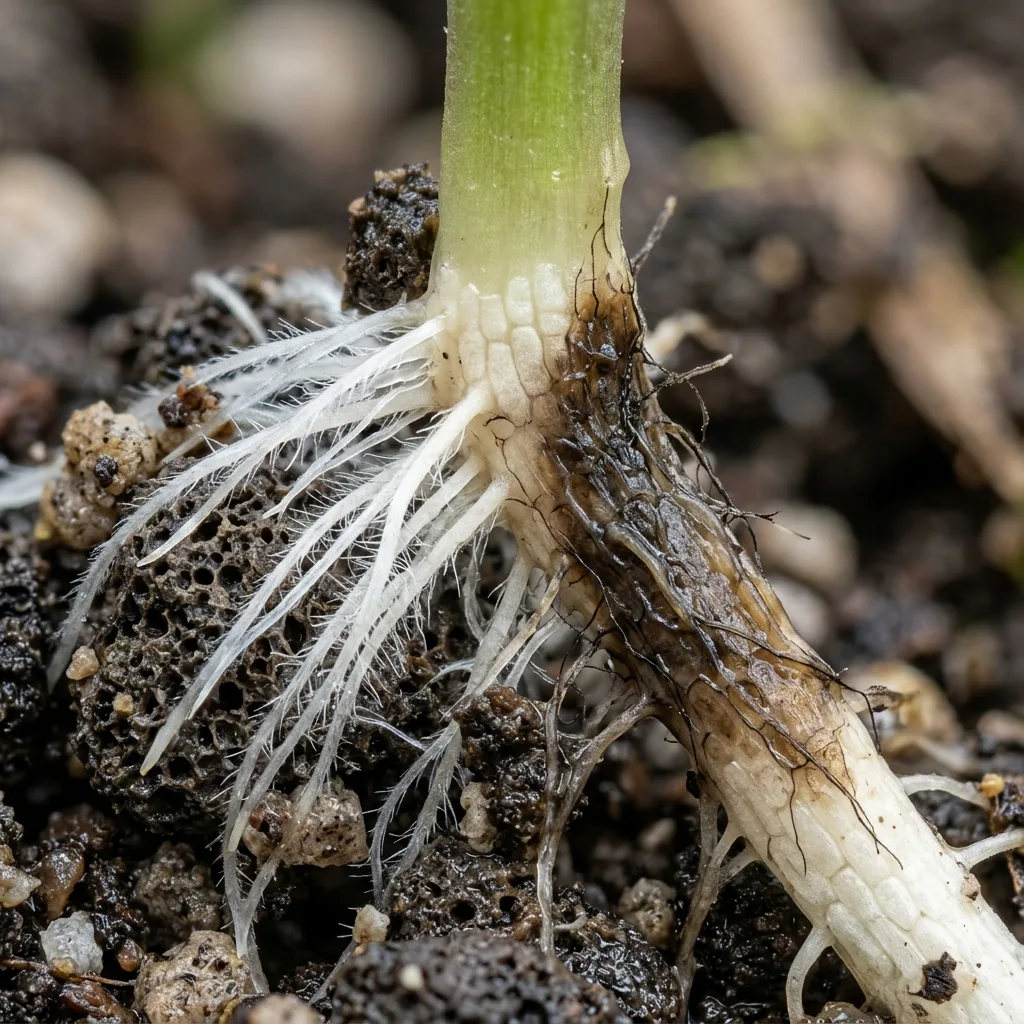
3. Natural and Organic Mitigation Methods
The most resilient organic strategy for suppressing fungal and oomycete pathogens in chilly March ground is establishing a biological shield within the rhizosphere before planting. Prior to sowing, dust seeds and treat planting furrows with concentrated bio-fungicides formulated with beneficial organisms like Trichoderma harzianum (strain T-22) or Bacillus subtilis. These beneficial microbial allies aggressively colonize the root cortex, physically occupying root receptor sites to outcompete pathogens while actively synthesizing chitinase and glucanase enzymes that dismantle fungal cell walls.
Physically, constructing elevated raised beds is non-negotiable for early-season Pacific Northwest success. Raising the cultivation plane 20 to 30 cm above grade harnesses gravitational drainage, rapidly evacuates standing water from root channels, and accelerates thermal gain, warming the soil 3°C to 5°C faster than surrounding grade level. In addition, amending planting zones with a 30% volumetric inclusion of coarse horticultural pumice or crushed volcanic rock permanently ruptures surface tension, ensuring an uninterrupted flow of atmospheric oxygen to respiring roots.
4. Chemical and Systemic Fungicidal Protocols
When environmental pressure overwhelms biological defenses or when preserving rare, high-value perennial specimens, a targeted systemic fungicide protocol becomes necessary. Under the low evapotranspiration conditions typical of early spring, surface contact fungicides prove largely ineffective; active systemic compounds absorbed by roots and translocated acropetally via the xylem stream are essential.
| Active Ingredient | Target Pathogen | Dosage (Per Liter) | Application Method & Frequency |
|---|---|---|---|
| Propamocarb HCl | Pythium, Phytophthora | 1.5 - 2.5 ml | Root-zone drench / Crown soak; Reapply every 10-14 days |
| Mefenoxam / Metalaxyl-M | Water Molds (Oomycetes) | 0.2 - 0.4 ml | Initial transplant drench; Single follow-up at 21 days |
| Azoxystrobin | Rhizoctonia, Fusarium | 0.8 - 1.0 g | Foliar spray and root injection; 14-day intervals |
| Fludioxonil | Seed decay, damping-off fungi | 0.5 ml | Pre-sowing seed coating or bare-root dip slurry |
Prior to administering chemical drenches, verify that soil temperatures measure at least 7°C (45°F). Below this metabolic threshold, root vascular conduits cannot actively transport systemic molecules upward, causing chemical residues to concentrate around the root tips and triggering severe phytotoxicity.
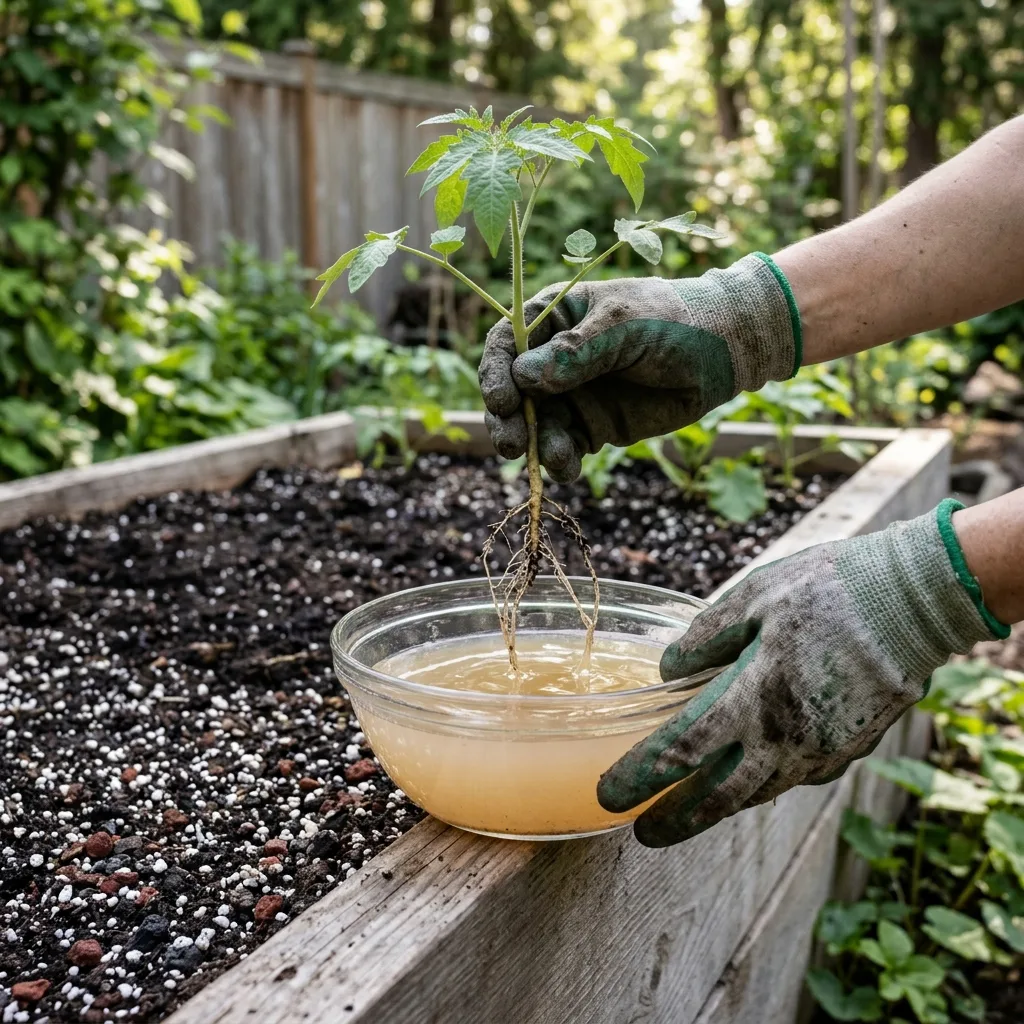
5. Quarantine and Disinfection Procedures
Upon confirming root rot or damping-off within a bed, prompt containment is vital. Carefully excavate the symptomatic plant along with a 15-cm buffer of surrounding soil to capture extending mycelial fronts, and dispose of the mass in municipal trash. Never discard infected materials into home compost piles; typical maritime Northwest compost systems rarely sustain the sustained internal heat of 60°C (140°F) required to denature resting oospores and sclerotia.
Submerge all gardening gear, trowels, dibbers, and seedling flats in a 10% sodium hypochlorite (household bleach) solution or 70% isopropyl alcohol for at least 10 minutes. The contaminated bed should either be solarized using clear UV-stabilized polyethylene once sunshine permits or left fallow for a minimum of 3 weeks, regularly loosening the top layer to encourage deep aeration and natural ultraviolet surface sterilization.
6. Plant Rehabilitation and Recovery Care
Nursery stock or seedlings saved in the early stages of root rot demand uncompromising moisture management. Immediately halt all overhead irrigation and use a hand cultivator to gently fracture the crusted soil surface, introducing air channels into the root matrix. Prune off necrotic, yellowing lower leaves with sterile instruments to decrease transpiration stress on the depleted root system.
Strictly avoid high-nitrogen synthetic fertilizers, which force lush vegetative growth that compromised root systems cannot support. Instead, apply low-concentration foliar sprays enriched with potassium phosphite and pure cold-water kelp (Ascophyllum nodosum) extract. Phosphites stimulate the plant’s innate systemic acquired resistance (SAR) pathways and thicken cell walls, while natural cytokinins in kelp encourage adventitious root-hair regeneration. Shield the convalescing plants from direct, intense sunlight and harsh maritime winds until fresh terminal growth confirms that the vascular system has stabilized.


Reader Reviews & Comments 3 Reviews
Eleanor Vance
Marcus Holbrook
Chloe Campbell
Leave a Review & Rating
Share your plant care tips, experiences, or questions with our succulent community.