






Hailing from the moist riverbanks, limestone outcrops, and subtropical forest floors of southeastern North America, the Southern shield fern (Thelypteris kunthii, often affectionately termed Kunth's maiden fern or normal shield fern) stands out as one of the most distinguished shade perennials in naturalistic landscapes. Beneath filtered light or dappled woodland canopies, its creeping rhizomes weave an ethereal, apple-green tapestry across garden beds. Yet behind this delicate, feathery foliage lies an intricate vascular architecture that is exquisitely sensitive to waterlogging and soil oxygen deficits. For shade gardeners, few heartbreaks compare to watching an expansive, luminous drift of fronds succumb to russet-brown necrotic patches overnight, or finding a colony collapsing from a foul-smelling, softened crown.
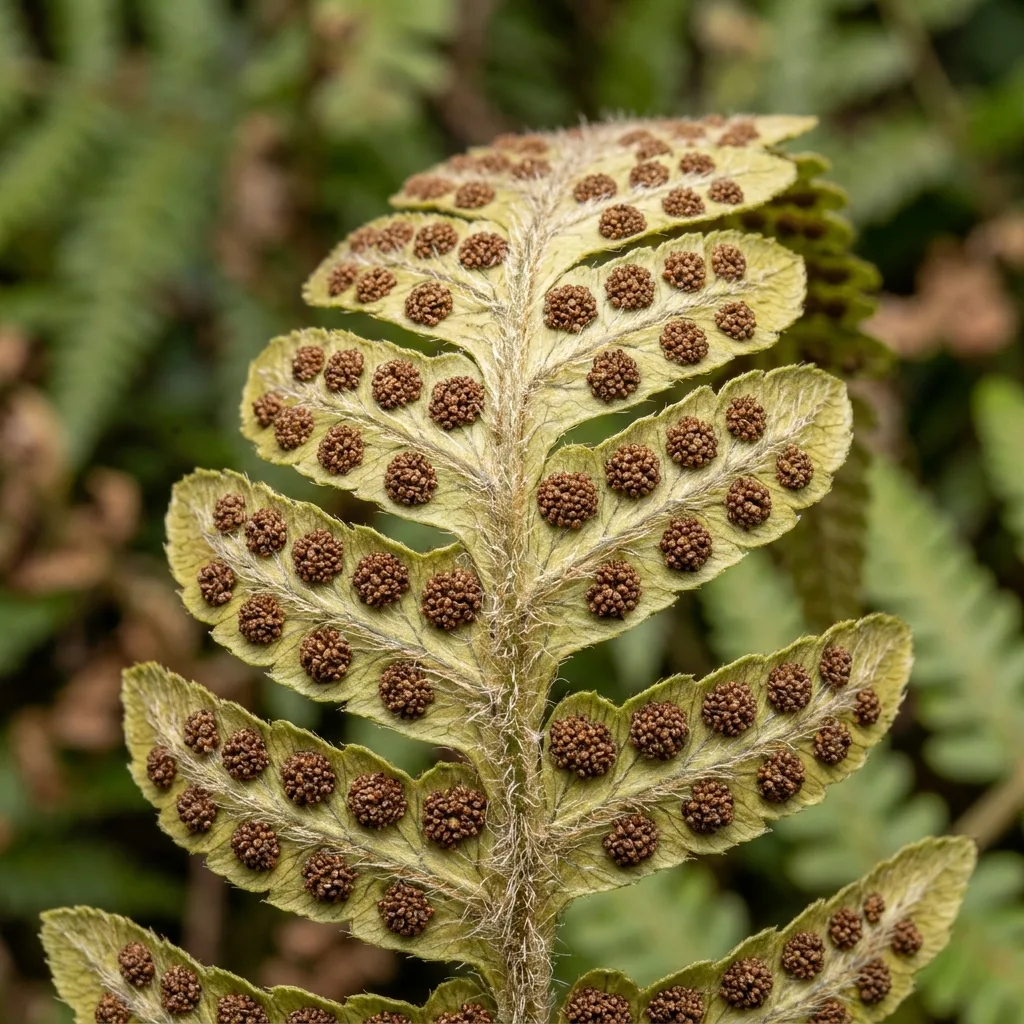
Unlike flowering perennials, ferns do not reproduce via seeds; their life cycle oscillates between spore dispersal from specialized abaxial structures known as 'sori' and a delicate, moisture-dependent gametophyte generation. This reliance on continuous micro-humidity makes their fronds and superficial root systems prime targets for opportunistic airborne fungal spores and aquatic oomycete pathogens. Soil-borne organisms such as Rhizoctonia solani and species of Pythium multiply voraciously in poorly drained, compacted substrates, quickly infiltrating the fragile root hairs. As pathogenic hyphae penetrate the vascular bundles, they obstruct xylem pathways. Even if the surrounding substrate is dripping wet, hydraulic conductance ceases, sending the fern into acute physiological drought—manifesting as rapid desiccation, leaf curling, and blackening.
If your Southern shield fern is beginning to dull, curl along the pinnule margins, or exhibit mushy collapse at the base of the stipes, take heart. Fern rhizomes are resilient, nutrient-dense storage organs equipped with remarkable regenerative potential. With prompt, precise diagnostic discernment and our structured rehabilitation protocol, you can reliably arrest pathogen progression and coax dormant croziers back into vigorous, emerald growth.
1. Early Diagnostic Indicators and Microscopic / Visual Clues
Differentiating biotic disease from abiotic physiological stress is the single most critical step in saving a declining fern. Uninitiated gardeners often misinterpret the wilting, crisping foliage of vascular rot as simple dehydration, responding with heavier watering that accelerates root asphyxiation. To intervene before permanent crown loss occurs, routinely inspect the fronds against the following diagnostic criteria:
- Rhizoctonia Aerial Blight: Irregular, water-soaked brown lesions initiate near the base or middle of the fronds. Under elevated relative humidity, a delicate web of grayish-brown mycelial webbing is discernible spanning across the pinnae.
- Pythium and Phytophthora Root and Crown Rot: Emerging spring croziers (fiddleheads) turn jet-black and collapse into a gelatinous decay before unrolling. The underground rhizome tissue turns dark brown to black, sloughs off easily when gently rolled between fingers, and emits a sour, anaerobic odor.
- Bacterial Leaf Spot (Pseudomonas spp.): Angular, dark-brown lesions delineate strictly along the leaf veins, frequently surrounded by a translucent yellow chlorotic halo. In laboratory settings, cross-sections of these margins display copious bacterial streaming under a microscope.
- Two-Spotted Spider Mites and Mealybugs: During dry, hot summer spells, the abaxial (underside) surfaces of the fronds develop a dull, bronzed stippling. Close magnification reveals microscopic webbing clustered within the axils and tiny pale nymphs sapping cell sap.
2. Underlying Etiology and Environmental Triggers
In its native habitat, Thelypteris kunthii thrives on calciferous, well-aerated slopes rich in decomposed leaf mulch. In cultivated landscapes, pathogenic outbreaks almost invariably stem from three cultural missteps: dense clay compaction, overhead irrigation during late hours, and stagnant air circulation.
When dense garden soil becomes saturated, macro-pore spaces fill with water, displacing gaseous oxygen. Within hours, root cells shift to anaerobic fermentation, depleting cellular adenosine triphosphate (ATP) reserves. As membrane integrity degrades, root tips leak soluble sugars and amino acids into the rhizosphere. This biochemical plume acts as a direct chemotactic lure, drawing flagellated Pythium zoospores toward the compromised tissues.
The second primary culprit is overhead sprinkler irrigation late in the afternoon or evening. The puberulent (finely hairy) fronds of Thelypteris kunthii readily trap moisture film. If fronds remain continuously wet for more than six hours in stagnant air, ambient fungal spores germinate effortlessly, penetrating through open stomata into the spongy mesophyll.
3. Natural and Organic Remediation Protocols
If you identify an infection during its incipience, systemic chemical fungicides are rarely required. You can successfully turn the tide using targeted biological controls and cultural sanitation:
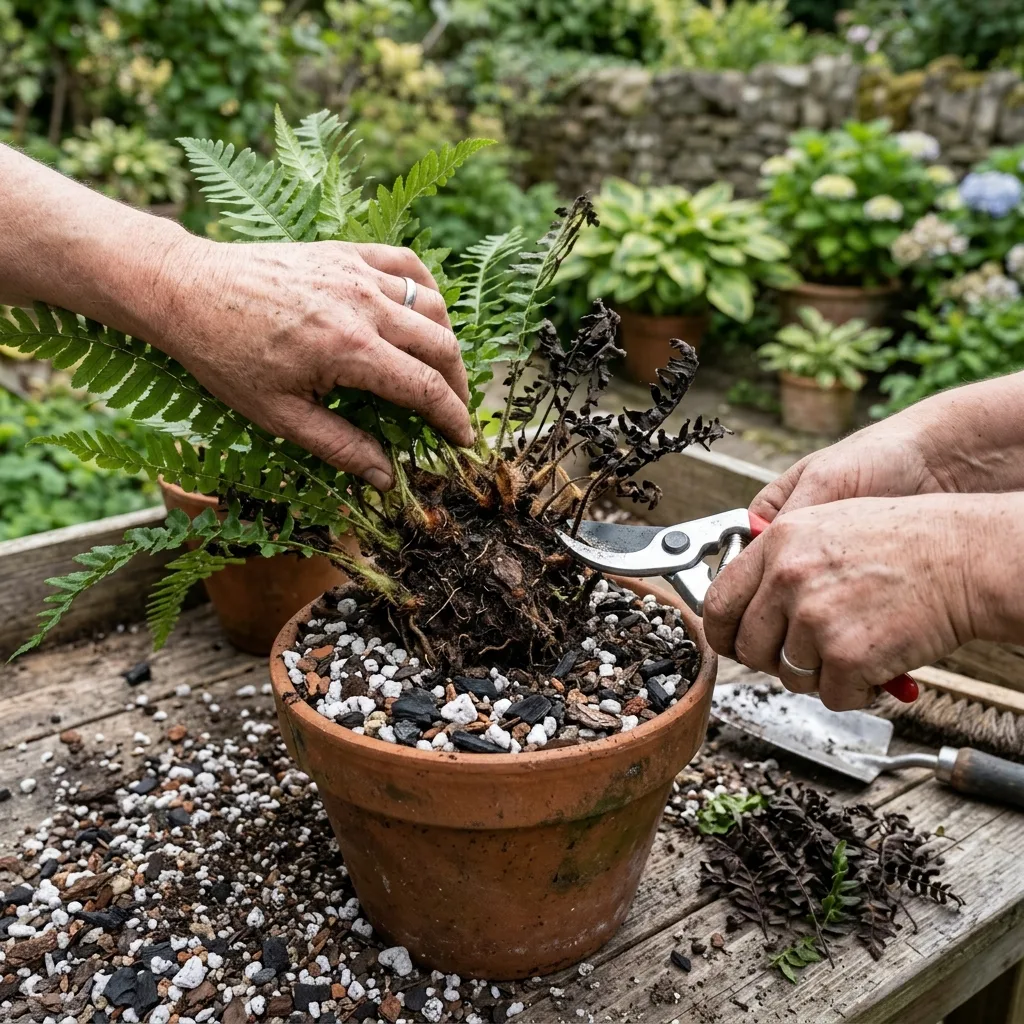
- Surgical Frond Sanitation: Using bypass shears sterilized in 70% isopropyl alcohol, sever all blackened, spotted, or collapsed stipes precisely 1 cm above the rhizome crown. Never tear or yank fronds by hand, as this strips the protective rhizome epidermis and creates gaping pathways for secondary wound pathogens.
- Trichoderma harzianum Inoculation: Drench the root zone with a biological suspension containing beneficial Trichoderma harzianum. This antagonistic fungus aggressively outcompetes pathogenic oomycetes for rhizosphere space, actively parasitizes harmful hyphae, and secretes secondary metabolites that trigger systemic resistance in the fern.
- Organic Copper Soap & Horsetail (Equisetum) Decoction: Brewed horsetail tea, exceptionally rich in bioavailable silicon, reinforces epidermal cell walls against fungal penetration. For initial foliar blights, apply a mild liquid copper octanoate spray as a fine mist to both the upper and lower surfaces of the fronds during early morning hours.
- Crown De-compaction and Exposure: Carefully pull back heavy mulch layers, clay accumulation, or decaying leaf litter suffocating the rhizome neck. Exposing the top few millimeters of the rhizome to ambient air circulation rapidly arrests fungal crown decay.
4. Chemical and Systemic Fungicide Application Protocols
When soft rot reaches the structural core of the rhizome and biological approaches fail to halt spreading necrosis, therapeutic chemical interventions become indispensable. Bear in mind that ferns possess delicate cuticle layers and are distinctly more sensitive to chemical phytotoxicity than woody shrubs; strict adherence to recommended concentrations is mandatory.
| Active Ingredient | Target Pathogen / Disease | Dosage (Per Liter Water) | Treatment Interval | Application Method |
|---|---|---|---|---|
| Metalaxyl-M + Mancozeb | Pythium, Phytophthora (Root Rot) | 1.5 - 2.0 g | 10-14 days (Max 2 cycles) | Targeted soil drench |
| Azoxystrobin | Rhizoctonia aerial blight, rust fungi | 0.5 ml | 14 days | Foliar & stipe spray |
| Fosetyl-Aluminium | Systemic vascular wilt and crown rot | 2.0 g | 21 days | Combined root drench & foliar spray |
| Potassium Phosphite | Systemic Acquired Resistance (SAR) booster | 2.0 ml | Every 15 days (3 cycles) | Foliar mist & root zone drench |
Always conduct chemical treatments in the early morning before ambient temperatures rise and before any direct sunlight touches the fronds. Ensure calm weather conditions to maximize uniform droplet distribution across the abaxial surfaces without drift.
5. Quarantine Measures and Tool Sanitation
Once fungal pathogens take hold of a shield fern specimen, airborne and water-splashed propagules threaten neighboring companions such as hostas, maidenhair ferns, and woodland hellebores. Rigorous isolation protocols must be implemented immediately:
- Surgical Instrument Decontamination: Disinfect pruning shears, trowels, and soil knives between individual cuts by immersing them in a 70% isopropyl alcohol bath or a freshly mixed 10% sodium hypochlorite (household bleach) solution for at least 30 seconds.
- Containment and Disposal of Diseased Biomass: Under no circumstances should infected stipes, fronds, or sloughed rhizome pieces enter your garden compost. The resting oospores and sclerotia of these pathogens easily survive typical backyard compost pile temperatures. Double-bag all excised materials and dispose of them in municipal waste.
- Quarantine Isolation Perimeter: If the fern is potted, immediately relocate it to an airy, shaded staging area away from rainfall and companion flora. For in-ground specimens, gently loosen the soil crust in a 30 cm radius to encourage gas exchange, and trim back any touching foliage from surrounding plants to sever moisture bridges.
6. Rehabilitation Substrate and Long-Term Convalescence
Following disease abatement and surgical pruning, the fern enters a critical convalescent state. The single most fatal mistake during this phase is administering high-nitrogen chemical fertilizers to 'boost' growth. Compromised, reduced root systems cannot process concentrated mineral salts; the resultant osmotic pressure scorches fragile meristematic cells, dealing a fatal blow.
Physiologically Optimized Substrate Formulation: If you are repotting the specimen for monitored recovery or relocating it to a raised shade bed, prepare a porous, biologically active medium: 40% screened, aged leaf mold or premium coarse compost, 30% horticultural pumice (3–5 mm grade), 20% coarse perlite or volcanic basalt grit, and 10% crushed horticultural charcoal. The charcoal actively adsorbs phytotoxic byproducts while preventing localized anaerobic pockets.
Dial back watering frequency substantially. Insert your finger 3 to 4 cm into the medium; water only when the substrate feels merely cool and slightly damp rather than wet. Apply tempered, non-chlorinated water exclusively around the periphery, never pouring directly into the central crown. Within three to five weeks, you will observe tightly furled, snail-like croziers clad in pale green emerging resolutely from the dormant rhizome. This unfurling is nature's undeniable confirmation that your Southern shield fern has successfully bridged the threshold back to life.


Reader Reviews & Comments 3 Reviews
Eleanor Vance
Marcus Sterling
Dr. Julian Thorne
Leave a Review & Rating
Share your plant care tips, experiences, or questions with our succulent community.