






If you have ever brought home a stunning succulent from a greenhouse or local florist only to find a generic tag labeled 'Succulent Mix' or 'Assorted Cactus,' your plant's silent struggle for survival likely began right at that checkout counter. From the fractured limestone cliffs of Oaxaca to the bone-dry, sun-scorched plains of the South African Karoo, wild microclimates have etched a distinct evolutionary blueprint into every succulent species—a genetic survival guide directly encoded within its two-word botanical Latin name. Ignorance of your specimen's true taxonomic identity often leads to disastrous cultural mismatches: irrigating a dormant winter-growing Crassula as if it were a vigorously expanding summer Echeveria, scorching an understory-dwelling Haworthia under blinding midday ultraviolet radiation, or vigorously buffing away its delicate epicuticular wax under the false impression that it is a fungal blight.
Misidentification is far more than a minor taxonomic oversight; it is the primary environmental trigger behind fatal pathologies such as fungal root collapse (Rhizoctonia, Fusarium), devastating mealybug (Pseudococcidae) outbreaks, and severe etiolation—where light-starved tissues stretch, weaken, and collapse. In plant physiology, drenching succulents frequently is never an expression of nurturing care; rather, it floods microscopic pore spaces, asphyxiates the root xylem, and effectively drowns the root system. Within this comprehensive guide, we unpack the scientific rationale behind succulent botanical nomenclature and provide a battle-tested, step-by-step horticultural roadmap to surgically treat, medicate, and nurse your compromised plants back to vibrant health.
1. Early Diagnostic Signs and Microscopic / Visual Biomarkers
Physiological distress caused by mismanaged care regimens manifests primarily within the parenchymal water-storage tissues and the sensitive root crown. When evaluating your succulent with a jeweler's loupe or a dedicated macro lens, you can easily separate parasitic invasions and fungal necrosis from simple abiotic dehydration by observing subtle cellular anomalies:
- Translucent, Jelly-Like Foliage: Extreme intracellular water retention causes excessive turgor pressure that ruptures structural cell walls, turning the leaves into pale yellow, gelatinous mush. Typically observed in Echeveria and Sedum taxa, this condition signals acute waterlogging and represents the inception of water-mold root rot (Pythium ultimum).
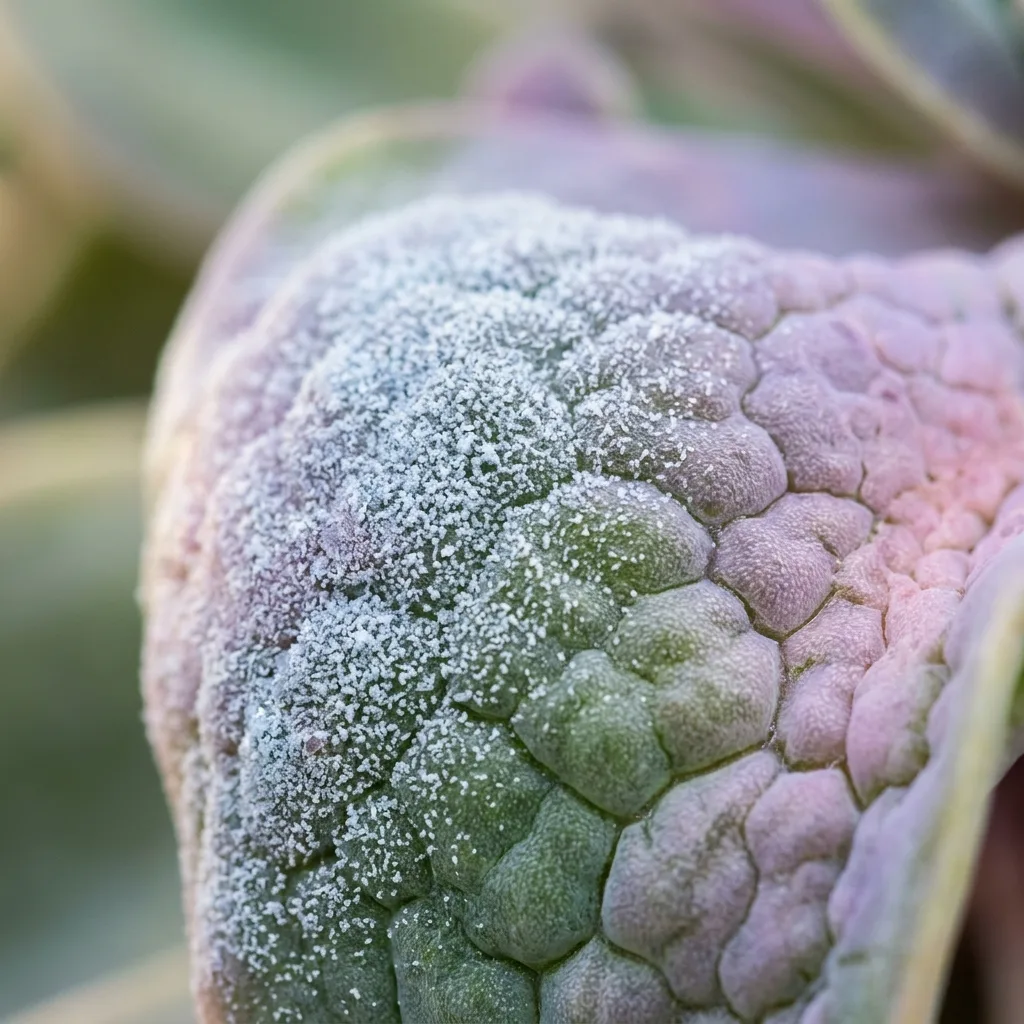
- Compromised Farina (Epicuticular Wax): The silvery, chalky, or powdery bloom coating the leaves serves as an evolutionary, natural sunscreen and water-repellent armor. Never wipe it off with your fingers, and avoid applying harsh chemical sprays that dissolve this epicuticular cuticle. Once stripped of farina, exposed tissues become instantly vulnerable to phototoxic sun scalding and opportunistic fungal spores like Botrytis.
- Darkening and Softening at the Basal Nodes: A blackened, softened stem collar at the soil line indicates that fungal hyphae have fully invaded and blocked vascular xylem conduits (Fusarium oxysporum), signaling that systemic decay is traveling upward.
- White, Cottony Egg Masses: Nestled deep within leaf axils, underneath crowns, and within root zones, mealybugs actively suck out phloem sap, draining the plant's metabolic reserves and leaving behind sticky honeydew that fosters sooty mold infestations.
2. Root Causes and Environmental Triggers
Failing to establish a precise botanical identification places your cultural practices on a direct collision course with the plant's native habitat adaptations. Succulents that rely on Crassulacean Acid Metabolism (CAM) open their stomata exclusively at night to sequester carbon dioxide, keeping them sealed during daylight hours to prevent catastrophic transpirational water loss. If you mistake a summer-dormant Aeonium for an actively growing tropical foliage plant and irrigate it heavily during hot summer heatwaves, its dormant root cells cannot engage in cellular respiration, rapidly falling prey to opportunistic anaerobic pathogens.
Furthermore, indoor microclimates characterized by stagnant air circulation, elevated ambient humidity, and typical commercial potting mixes laden with uncomposted peat moss accelerate this biological decline. When the inorganic mineral fraction (pumice, zeolite, volcanic scoria) drops below 70%, the substrate traps stagnant moisture around delicate feeder rootlets for more than 24 hours, triggering tissue necrosis. These suffocated root systems create the perfect nutrient-dense vector for dormant soil-borne fungal spores to germinate and colonize.
3. Natural and Organic Intervention Protocols
When pathogenic activity is caught in its earliest stages, or when sap-feeding pests such as mealybugs or spider mites maintain low baseline populations, targeted biological and mechanical interventions are your most dependable, low-stress solutions:
- Precision Spot Treatment with Isopropyl Alcohol: Dip a precision cotton swab directly into 70% isopropyl alcohol and apply it straight to mealybug clusters clustered within leaf axils. The alcohol instantly dissolves the pest's protective waxy coating, dehydrating it on contact. Always conduct this treatment away from direct sunlight to prevent chemical foliage burns.
- Cold-Pressed Neem Oil Emulsion: Emulsify 5 ml of organic, cold-pressed horticultural neem oil (containing active Azadirachtin) into 1 liter of lukewarm, settled water, incorporating 2 to 3 drops of pure potassium castile soap as an organic surfactant. Shake vigorously and apply at twilight across both foliage and stems. Azadirachtin functions by disrupting hormonal insect development and halting feeding activity.
- Root Excision and Cinnamon Fungicide: After cutting away all traces of darkened, infected root tissue with sanitized tools, dust the clean surgical wounds with pure, unadulterated Ceylon cinnamon powder or horticultural sulfur dust to stimulate swift tissue sealing and prevent fungal spore colonization.
4. Chemical and Systemic Fungicide Application Matrix
Once pathogenic decay invades the vascular cylinder of the stem, or when subterranean root mealybugs establish entrenched colonies deep within root zones, surface-contact biologicals lose their efficacy. At this inflection point, a rigorous, targeted systemic application regimen becomes non-negotiable.
| Active Ingredient | Target Pathogen / Pest | Dosage (Per 1 Liter Water) | Application Interval & Protocol |
|---|---|---|---|
| Propamocarb Hydrochloride | Pythium spp., Crown and Root Rot | 1.5 - 2.0 ml | Soil drench around the basal root crown; 2 applications, 10 days apart |
| Acetamiprid | Mealybugs (Pseudococcidae), Hard Scales | 0.4 - 0.5 g | Foliar and root-zone drench; 2 cycles spaced 14 days apart |
| Azoxystrobin + Difenoconazole | Anthracnose, Rust, Alternaria Blight | 0.75 - 1.0 ml | Fine foliar micro-mist targeting infected surfaces; 12-day interval |
| Copper Oxychloride | Bacterial Soft Rot (Erwinia carotovora) | 2.0 - 2.5 g | Protective direct contact spray on clean surgical wounds; single intervention |
5. Strict Quarantine and Equipment Sanitization
Isolate any specimen exhibiting active necrotic lesions or vector pest signatures immediately from your main collection. Fungal spores and micro-insects spread effortlessly via ambient air currents, water droplet splashbacks during overhead watering, or through contaminated tweezers, soil scoops, and pruners.
- Spatial Isolation: Relocate the infected plant to an isolated recovery area at least 2 meters away from healthy specimens. The space must feature bright, indirect light and excellent air circulation, completely free of direct harsh sun. Maintain total isolation for a minimum of 21 consecutive days.
- Instrument Sterilization: Thoroughly sterilize scalpels, pruning shears, and tweezers prior to and immediately following every single tissue incision using either 70% alcohol or an open micro-torch flame. Trimming an infected stem and subsequently cutting healthy tissue with the same unsterilized blade directly inoculates the pathogen into clean plant vasculature.
- Pot and Surface Sanitation: When reusing unglazed terracotta or plastic nursery pots, soak them for 30 minutes in a freshly prepared 10% household bleach solution (1 part bleach to 9 parts clean water), scrubbing away mineral deposits, rinsing thoroughly, and allowing them to dry completely. Discard all contaminated substrate immediately into household waste; never attempt to bake, microwave, or compost infected potting soil.
6. Plant Rehabilitation and Long-Term Recovery Care
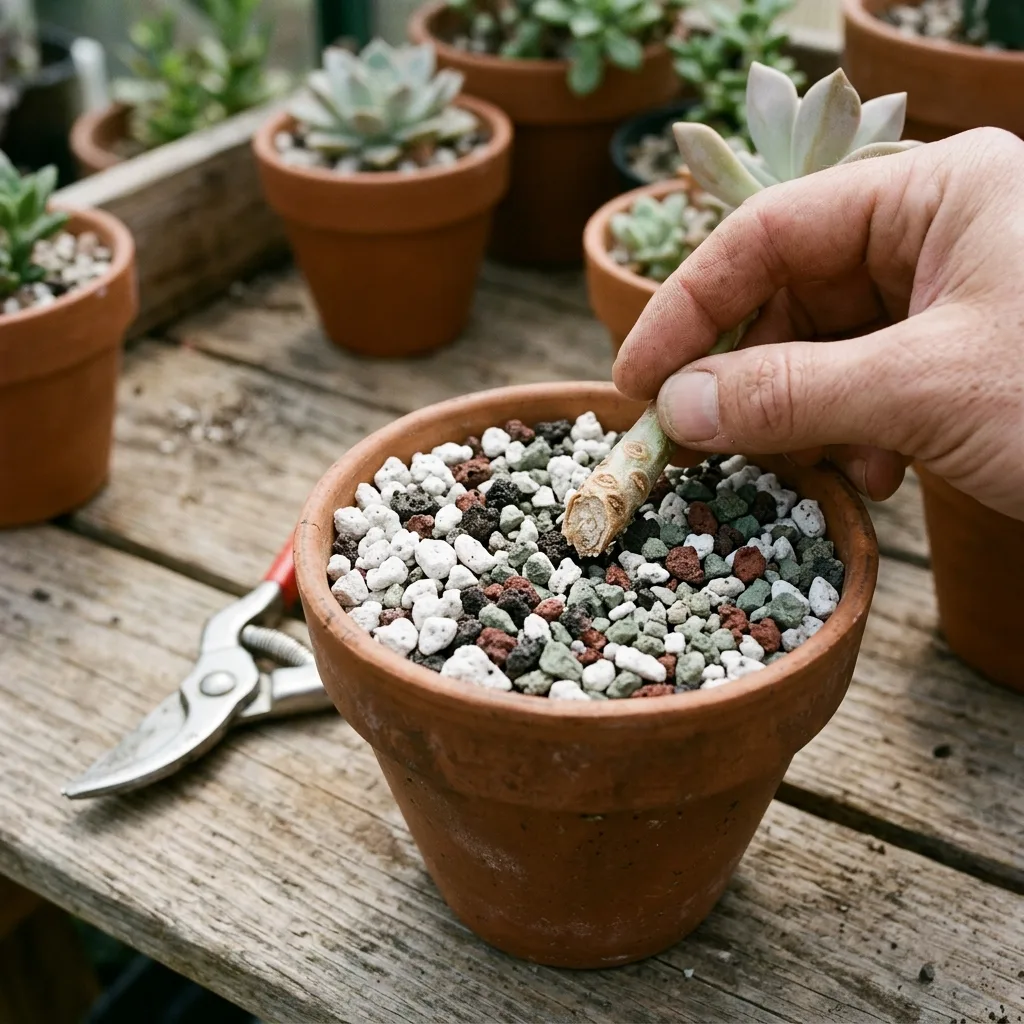
Following surgical debridement and targeted fungicidal administration, helping the surviving specimen regenerate functional root systems and stabilize its metabolic reserve demands a gentle, disciplined rehabilitation environment. Never pot a surgically trimmed cutting directly into moist substrate; the newly exposed wound margin must rest in a dry, ventilated, and shaded space for 3 to 7 full days until a firm, hardened callus forms.
Once suberization and callus development are complete, settle the plant into an optimized, highly porous, inorganic substrate blend:
- 40% Horticultural Pumice (3-5 mm aggregate size – ensures macro-porosity and root oxygen exchange)
- 25% Crushed Volcanic Lava Rock (Scoria) (Provides structural root anchoring and trace minerals)
- 15% Clinoptilolite Zeolite (Enhances Cation Exchange Capacity [CEC] and regulates moisture spikes)
- 20% Washed Coco Coir or screened, disease-free organic composted mulch
Keep the newly repotted cutting completely dry for at least 5 to 7 days post-transplant. When new root activity begins—verified when the plant offers firm physical resistance when gently nudged upward—administer minimal moisture exclusively using the 'bottom-soaking' technique to encourage newly formed root hairs to travel downward. Reintroduce ambient sunlight gradually: start with mild, early morning light for the first two weeks, gradually transitioning to bright, sheer-curtain filtered illumination thereafter.


Reader Reviews & Comments 3 Reviews
Eleanor Vance
Marcus Sterling
Clara Higgins
Leave a Review & Rating
Share your plant care tips, experiences, or questions with our succulent community.