






Would you like to witness nature's quiet resilience right on the corner of your desk, under fluorescent office lights, or on a softly lit living room shelf? Having evolved in some of the most unforgiving environments on Earth—from the semi-arid succulent Karoo of South Africa to the sheer limestone cliffs of Oaxaca—succulents have become the ultimate green companions for contemporary interiors, all thanks to the specialized water-storing parenchyma tissues in their leaves and stems.
While many plant lovers mistakenly classify all succulents as scorching-desert dwellers demanding blaring sun, select genera adapt with extraordinary grace to filtered indoor light and stable room temperatures. Remember: watering a succulent frequently is never an act of love; it deprives delicate root hairs of oxygen and suffocates them beneath stagnant moisture. With the right botanical selections, an open mineral substrate, and the disciplined 'soak and dry' philosophy, you can maintain a thriving indoor succulent sanctuary that preserves its sculptural beauty for decades.
1. Botanical Identity and Morphological Characteristics
Indoor living spaces naturally present restricted air circulation and light intensities that diminish rapidly as distance from windows increases (often dropping between 500 and 2,500 lux). Consequently, indoor-compatible succulents must possess high Crassulacean Acid Metabolism (CAM) efficiency, strong tolerance to shade, and structural resistance to etiolation (the weak, leggy stretching caused by photon starvation). Here are the 15 most resilient botanical species for home and workplace environments:
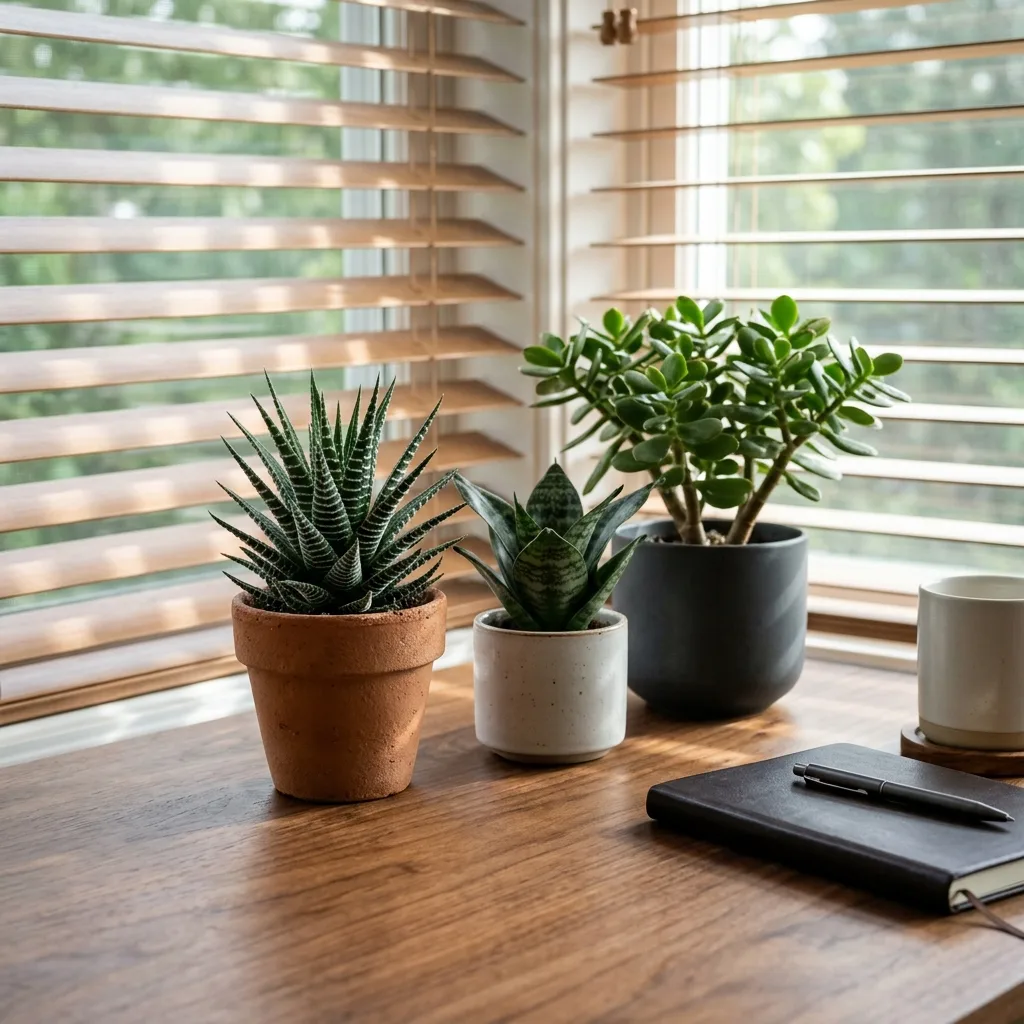
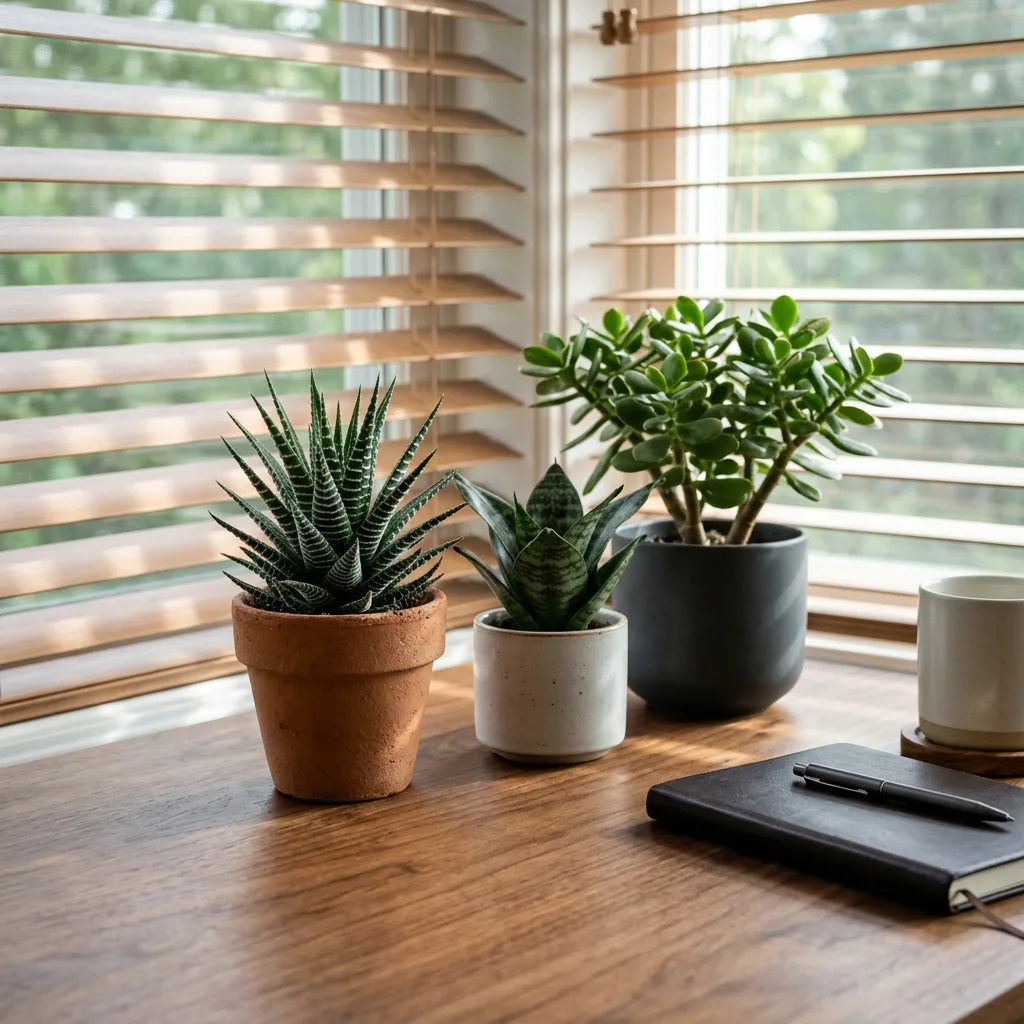
- 1. Haworthiopsis fasciata (Zebra Succulent): Renowned for its raised white pearly tubercles, this South African native thrives in bright, indirect light and naturally avoids harsh sun. Its compact rosette makes it the quintessential desktop centerpiece.
- 2. Sansevieria trifasciata 'Hahnii' (Bird's Nest Snake Plant): Forming a dense, ground-hugging spiral rosette, this dwarf cultivar is virtually bulletproof against low light and sporadic neglect.
- 3. Crassula ovata (Jade Plant): With its thick, woody trunk and fleshy obovate leaves, it offers an effortless bonsai aesthetic. Placed along an east- or southwest-facing windowsill, it can thrive for generations.
- 4. Haworthia cooperi (Window Succulent): Features translucent, chlorophyll-free epidermal leaf windows that act like miniature fiber optics, channeling low ambient light deep into chloroplast-rich internal tissues.
- 5. Gasteria pillansii (Ox Tongue): Its distichous (two-ranked) tongue-shaped leaves are adorned with warty white dots. Slow-growing and durable, it holds its architectural form even in dimly lit corporate offices.
- 6. Zamioculcas zamiifolia (ZZ Plant): A semi-succulent powerhouse featuring thick, subterranean water-storing rhizomes and glossy, wax-coated pinnate leaves that flourish under standard fluorescent lighting.
- 7. Schlumbergera truncata (Thanksgiving / Holiday Cactus): An epiphytic jungle succulent native to Brazilian cloud forests that relishes moderate ambient humidity and bursts into vibrant winter blooms without direct sun.
- 8. Peperomia obtusifolia (Baby Rubber Plant): Thick, cupped, moisture-retentive leaf blades and a fibrous root system endow this species with remarkable tolerance to parched, climate-controlled indoor air.
- 9. Kalanchoe tomentosa (Panda Plant): Densely coated in silvery-white protective trichomes (specialized epidermal hairs) that drastically minimize transpirational water loss while providing a captivating, velvety tactile appeal.
- 10. Sansevieria cylindrica (Cylindrical Snake Plant): Upright, rigid, pencil-like succulent spears deliver a clean, architectural silhouette tailored for minimalist workstations and modern design schemes.
- 11. Crassula ovata 'Gollum' (Gollum Jade): Tubular, trumpet-like leaves with indented reddish tips lend a whimsical, sculptural presence while delivering formidable drought resilience.
- 12. Aloe perfoliata / Aloe brevifolia (Short-Leaved Aloe): Far more compact than common Aloe vera, this dwarf species displays chalky blue-green glaucous foliage and neat rosettes ideal for limited shelf space.
- 13. Epiphyllum anguliger (Fishbone Cactus): A spineless, zig-zag branching epiphyte that introduces lush, undulating botanical drama when displayed in hanging planters near bright, indirect light.
- 14. Senecio radicans (String of Bananas): Elegant cascading vines studded with plump, curved, crescent-shaped leaves; perfect for trailing gracefully down bookshelf edges.
- 15. Euphorbia tirucalli (Pencil Cactus): Photosynthesizing directly through slender, cylindrical green branches with minimal surface area, this African classic demands negligible water indoors.
2. Light Requirements and Indoor Placement
The single most catastrophic mistake indoor succulent growers make is gauging light intensity through the human eye. While human vision adjusts effortlessly to dim interiors, plant chloroplasts require a photosynthetic threshold of at least 1,000–1,500 lux simply to sustain basic metabolic processes.
Genera like Haworthiopsis, Gasteria, and Sansevieria thrive under filtered, indirect bright light (north- or unobstructed east-facing windows). Conversely, members of Crassula and Kalanchoe perform best with at least 3 to 4 hours of gentle morning sunshine or sheer-curtain-dappled exposure. If internodes begin lengthening, leaves turn downward, and the central growth tip stretches pale and fragile toward the nearest lamp, your specimen is experiencing etiolation. Immediately move the plant 50 cm closer to natural light or supplement with a 6500 Kelvin full-spectrum LED desk grow light for 8–10 hours daily.
3. Watering Discipline: The 'Soak and Dry' Protocol
Over 90% of indoor succulent failures are triggered by root rot caused by chronic overwatering. When the parenchymal storage cells are saturated and the surrounding substrate remains waterlogged, root hair cells suffer anoxic asphyxiation, quickly opening pathways for opportunistic fungal pathogens like Pythium and Fusarium.
Follow the uncompromising 'Soak and Dry' protocol. Never water on a calendar schedule, and never judge moisture merely from the surface crust. Insert a wooden skewer deep to the bottom of the root zone; it must emerge completely clean and bone-dry. Discard the teaspoon-watering habit, which keeps root systems shallow and weak. Instead, drench the substrate thoroughly until water drains freely from the pot's bottom drainage holes. Allow it to run through completely, and discard any residual runoff collected in the saucer after 15 minutes.
4. Ideal Soil Substrate and Container Selection
Pre-packaged, peat-heavy potting soils hold moisture for weeks in indoor conditions with sluggish airflow, virtually guaranteeing root suffocation. Because indoor evaporation rates are substantially lower than outdoor levels, your custom potting mix must consist of at least 60% to 70% inorganic, porous minerals by volume.
Regarding containers: unglazed terracotta pots remain the gold standard due to their micro-porous walls, which promote lateral gas exchange and rapid root-zone evaporation. If you prefer decorative ceramic or plastic containers, verify that they feature generous drainage holes at the base.
| Substrate Component | Volume Ratio (%) | Particle Size | Functional Horticultural Role |
|---|---|---|---|
| Pumice (Horticultural Grade) | 35% | 3 - 6 mm | Provides essential root aeration and permanent macro-pore structure |
| Crushed Lava Rock (Scoria) | 20% | 2 - 5 mm | Delivers trace iron and minerals while facilitating rapid drainage channels |
| Zeolite (Clinoptilolite) | 15% | 2 - 4 mm | High Cation Exchange Capacity (CEC) for nutrient buffering and toxin capture |
| Fine Coir / Sifted Coco Peat | 20% | Screened fiber | Provides minimal organic balance and supportive base moisture without compacting |
| Pure Worm Castings (Vermicompost) | 10% | Finely sifted | Delivers gentle, slow-release biological nutrition and beneficial microbes |
5. Step-by-Step Indoor Propagation Techniques
Indoor succulents enter their most active vegetative surge during mid-spring and early summer. Expand your personal collection or share specimens with coworkers using these three reliable propagation methods:
- Stem & Tip Cuttings (Crassula, Kalanchoe): Using a sterile scalpel, slice a vigorous stem just below a leaf node. Never stick fresh cuttings directly into moist soil. Rest them in a warm, dry, shaded spot for 3 to 5 days so the wound forms a protective, suberized calloused seal. Plant into dry mineral grit, waiting 5 days before introducing the first light bottom watering.
- Offset & Pup Division (Haworthiopsis, Gasteria, Sansevieria): Carefully tease daughter rosettes away from the mother plant's rhizome using sterile shears. Retaining intact root fibrils on the offset elevates propagation success to over 95%.
- Leaf Propagation (Crassula ovata, Kalanchoe): Gently twist a plump, mature leaf side to side until it detaches cleanly without tearing the basal meristem tissue. Lay the leaf flat on a shallow tray of dry pumice and perlite. Within 2 to 3 weeks, microscopic pink adventitious roots and miniature rosettelets will emerge from the callous point.
6. Common Indoor Pests, Pathogens, and Treatments
Stagnant indoor air creates prime conditions for opportunistic pests. Swift botanical diagnostics and precise intervention will preserve your collection:
- Mealybugs (Pseudococcidae): Appearing as cottony white webbing tucked inside leaf axils and crown recesses, these sap-feeders stunt growth and warp new leaves. Treatment: Isolate the plant. Dip a cotton swab in 70% isopropyl alcohol and physically dab away every pest. Follow up with a targeted application of cold-pressed horticultural neem oil or insecticidal potassium soap.
- Root Rot and Basal Stem Soft Rot: Lower leaves turn translucent and jelly-soft while the stem base darkens. Treatment: Unpot immediately and trim away all brown, mushy root strings. If rot has reached the stem, cut cleanly upward until you encounter crisp, pure-green vascular tissue. Dust the cut with sulfur powder or ground cinnamon, allow it to callous for 4 days, and re-root in fresh, dry mineral substrate.
- Etiolation (Light Starvation): Outward symptoms include downward-drooping leaves, pale chlorophyll loss, and elongated, spindly stems. Treatment: Etiolated tissue cannot revert to compact form. Gradually transition the plant to a brighter location, behead the stretched apical stem, let the top callous to re-root, and allow the trimmed base to sprout dense, compact lateral rosettes.
7. Seasonal Maintenance Calendar & Expert Horticultural Tips
Even though indoor succulents enjoy relatively stable room temperatures, they remain attuned to seasonal photoperiod fluctuations:
- Spring (March – May): Vegetative awakening. Inspect root development and up-pot by one pot size if rootbound. Administer a balanced, low-nitrogen liquid succulent fertilizer (e.g., 5-10-10 or 10-10-10) diluted to half-strength once a month.
- Summer (June – August): High ambient temperatures accelerate substrate drying. Monitor with the skewer test and water thoroughly as needed, but shield indoor window-dwellers from scorching midday sun, which can heat window panes and cause irreversible epidermal leaf burn.
- Autumn (September – November): Metabolic rates slow. Cease all fertilization and gradually stretch out intervals between waterings.
- Winter (December – February): Quiescent dormancy phase. Keep pots away from forced-air heating vents and drafty windowsills. A light watering once every 4 to 6 weeks is typically all that is required to prevent total root-hair desiccation.


Reader Reviews & Comments 4 Reviews
Eleanor Vance
Marcus Sterling
Clara Higgins
Julian Thorne
Leave a Review & Rating
Share your plant care tips, experiences, or questions with our succulent community.