






Across the dramatic rocky slopes stretching from South Africa's Eastern Cape coastline into the dry thickets of KwaZulu-Natal, a botanical treasure clings to rock crevices and cascades downward with flushed crimson stems: Crassula sarmentosa. Unlike traditional upright jade plants that form stout, rigid trunks, this enchanting succulent chooses to dance with gravity rather than fight it. For discerning collectors, it presents a breathtaking dual personality—cascading like a living waterfall in hanging baskets or sprawling as a resilient, tapestry-like groundcover in arid rockscapes.
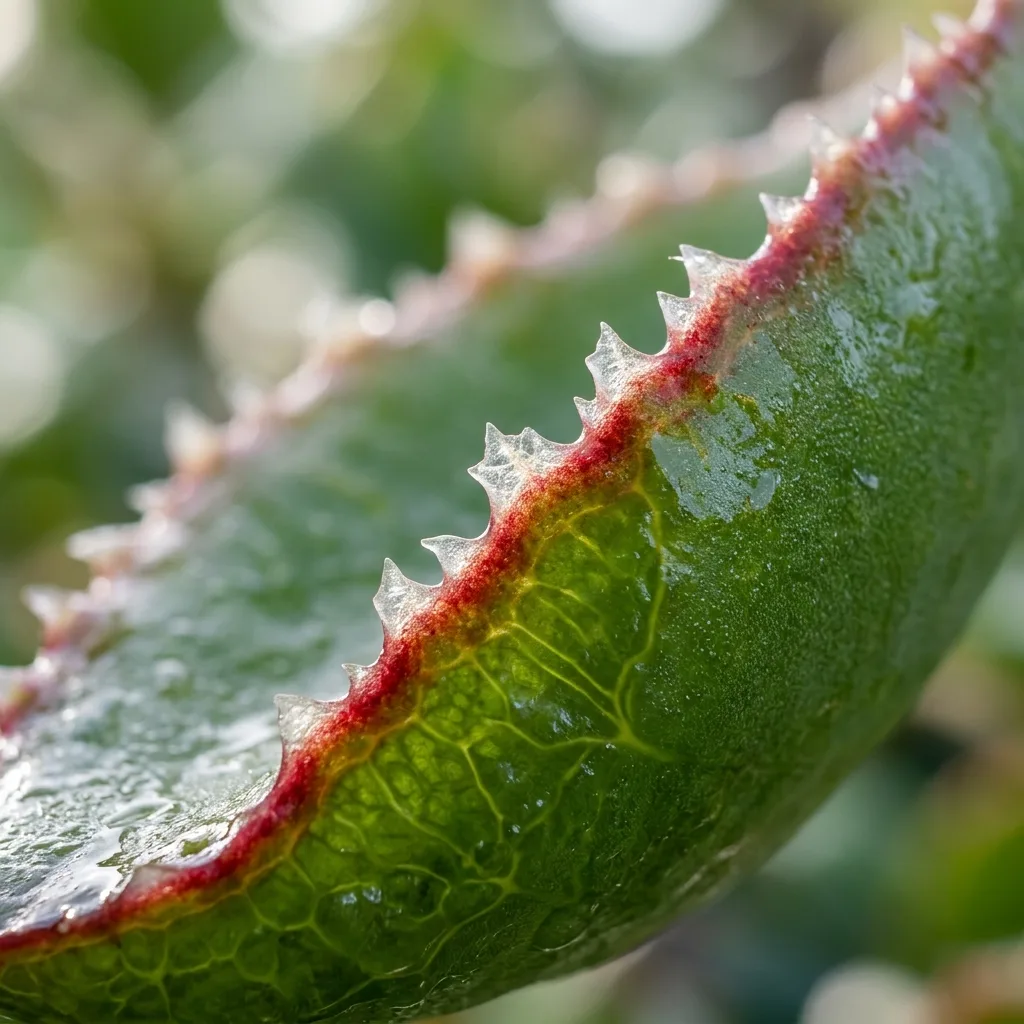
Many plant lovers fall under its spell the moment they lay eyes on the subtle, saw-toothed leaf margins and the vibrant reddish-purple stems that catch fire under bright sun. Yet the true genius of Crassula sarmentosa lies far beyond its aesthetics; it is rooted in an extraordinary physiological resilience honed through millennia of drought and an uncanny adaptability to domestic indoor living. Cultivating this plant from a modest starter cutting into a cascading living sculpture begins with honoring its evolutionary blueprint.
While some succulent species behave like fragile divas demanding constant vigilance, Crassula sarmentosa is a generous companion that takes loving neglect in stride—provided its foundational needs are met. Let us walk together through the nuanced botanical details that will turn your brightest sunlit corner into a thriving sanctuary for this South African jewel.
1. Botanical Identity and Morphological Characteristics
Crassula sarmentosa represents a distinctive lineage within the Crassulaceae family, displaying a trailing, scandent (sarmentose) habit rarely seen in classical jades. The specific epithet sarmentosa derives directly from the Latin word for 'bearing long, flexible runner-like shoots.' In its native cliffside habitats, these slender, cylindrical stems can reach lengths exceeding 1 meter. As the plant matures, the basal sections develop a semi-woody, resilient cortex, while the actively growing apical tips retain their succulent, vibrant reddish-purple pigmentation.
Examining the foliar morphology reveals decussate (oppositely arranged) pairs of ovate to lanceolate, fleshy leaves with conspicuously serrated margins. The internal mesophyll harbors a remarkably developed water-storage parenchyma, transforming each leaf blade into a microscopic reservoir capable of sustaining the plant through prolonged drought cycles. The leaf cuticle is coated in a waxy protective layer that imparts a glossy sheen and curtails moisture loss. Its widely celebrated cultivar, Crassula sarmentosa 'Variegata' (frequently labeled 'Comet'), boasts luminous cream-and-gold longitudinal striping along the margins; under intense light and thermal fluctuations, these non-photosynthetic zones synthesize protective anthocyanin pigments, blushing into breathtaking tones of coral pink.
Metabolically, this species relies on Crassulacean Acid Metabolism (CAM). To eliminate transpirational water loss under the scorching African sun, its stomata remain firmly shut throughout the daytime hours. Only during the cool hours of the night do these pores open, capturing and storing carbon dioxide as organic acids for use during daytime photosynthesis. This evolutionary mechanism explains why the plant rests during intense daytime heat and why it detests stagnant, warm, and humid microclimates.
2. Light Requirements and Strategic Indoor Placement
Crassula sarmentosa is unequivocally heliophilic, but the quality of its light exposure is decisive. Naturally adapted to dappled cliff tops and semi-sheltered bushveld, it thrives under 4 to 6 hours of direct morning sun or all-day bright, filtered natural light. Insufficient illumination triggers etiolation—a distress response where the internodes stretch awkwardly, foliage turns sparse and limp, and the striking crimson tones fade into a dull, uniform pale green.
Inside the home, the golden placement is right against an east-facing window bathed in gentle morning rays, or set back just slightly behind sheer drapery along an unobstructed south- or west-facing sill. During the peak of summer, beware of magnified solar radiation passing through double-pane glass during blistering midday hours; this can induce thermal epidermal burns visible as chalky white or scarred brown lesions. In the low-light months of winter, move your specimen to your brightest possible window or supplement its photoperiod with full-spectrum horticultural LED fixtures positioned 20 to 30 centimeters above the canopy.
3. Watering Discipline: The Science of 'Soak and Dry'
The single most pervasive pitfall in succulent culture is treating watering as a scheduled routine (such as 'every Wednesday'). Watering succulents on an arbitrary calendar does not show love; it deprives root parenchyma of vital oxygen and suffocates root hairs. Crassula sarmentosa laughs in the face of protracted drought, but it has zero defense against prolonged root-zone waterlogging.
The indispensable standard to adopt is the rigorous 'Soak and Dry' protocol. Before offering a single drop of water, insert a wooden skewer or your finger to the very bottom of the pot. If the substrate exhibits even a hint of cool dampness, hold off. When the potting mix is dry throughout the entire profile, water thoroughly until moisture cascades freely from the drainage apertures. Allow the container to drain completely, and empty any accumulated water from the catchment saucer within 15 minutes.
How do you read your plant's internal hydration state? When the basal leaves subtly soften, losing their turgid, rock-hard firmness and developing faint longitudinal wrinkles on their upper surfaces, the plant is gently calling upon its internal water reserves. This subtle, observable physiological signal is your safest, most reliable green light to water.
4. Substrate Engineering and Container Selection
The root system of Crassula sarmentosa is predominantly composed of fibrous, hair-like feeder roots that crave continuous subterranean gas exchange. Traditional peat-dominant potting soils act like waterlogged sponges, suffocating root xylem tissue over days or weeks. Consequently, you must engineer a fast-draining, highly porous substrate dominated by angular inorganic aggregates.
The formulation below provides the exact textural and air-porosity balance recommended in our cultivation trials for both cascading hanging planters and tabletop displays:
| Substrate Component | Volume Ratio (%) | Botanical Function |
|---|---|---|
| Coarse Pumice (3–6 mm) | 35% | Delivers superior macro-porosity, oxygen retention, and structural longevity. |
| Sterile Horticultural Cactus Peat or Coco Coir | 30% | Supplies moderate cation-exchange capacity and light organic structure. |
| Crushed Lava Rock or Zeolite (2–5 mm) | 20% | Micro-porous minerals that stabilize moisture distribution and anchor roots. |
| Coarse Quartz Sand or Perlite | 15% | Prevents substrate compaction and keeps drainage macro-channels clear. |
When selecting a planter, unglazed terracotta hanging pots are without peer for this scandent species. Terracotta's naturally breathable, porous clay walls facilitate peripheral moisture evaporation throughout the entire pot depth, keeping the root rhizosphere aerated. If utilizing decorative plastic, resin, or glazed ceramic containers, verify that multiple generous drainage holes exist across the base to eliminate stagnant water pockets.
5. Step-by-Step Vegetative Propagation
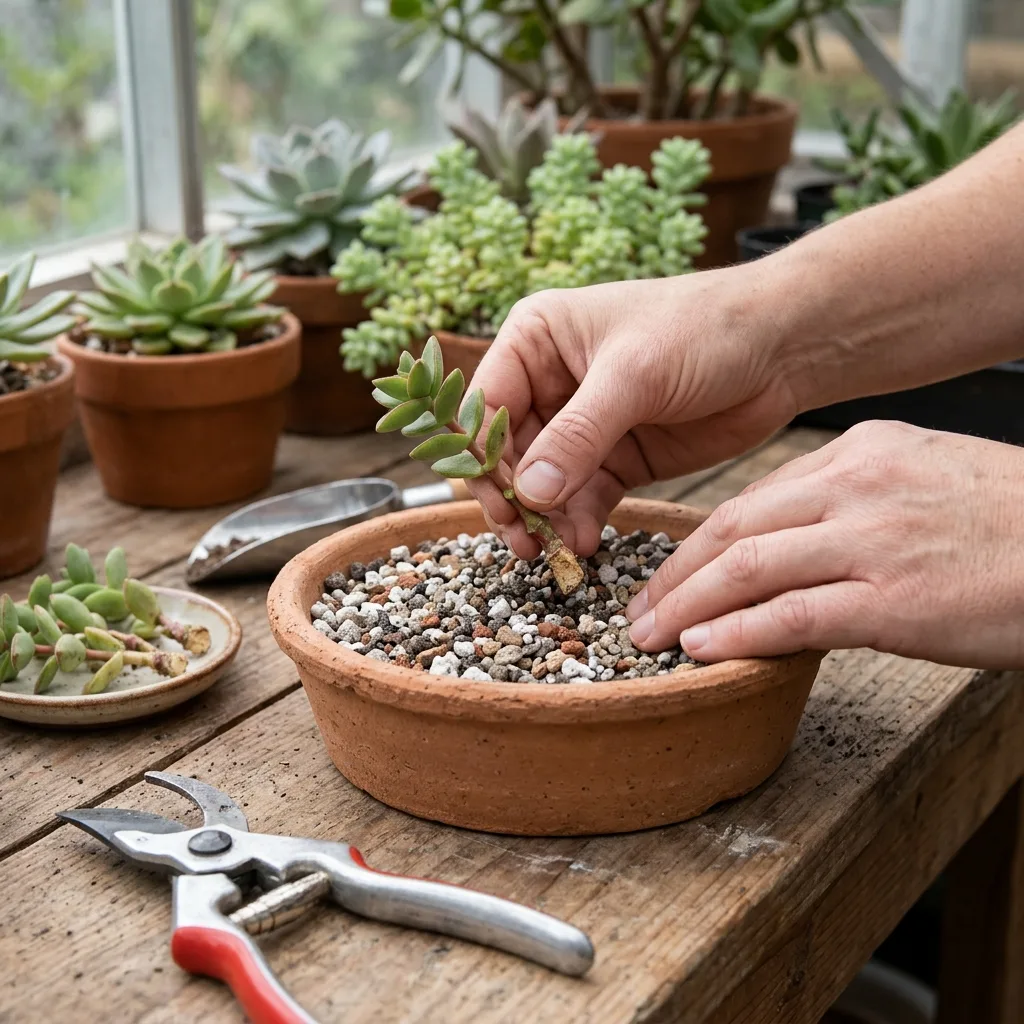
Crassula sarmentosa possesses an astonishing capacity for vegetative regeneration. Periodically trimming leggy stems serves a dual purpose: it stimulates your mother plant to push dense, multi-branched lateral growth while providing you with an abundance of top-tier propagation material.
- Harvesting Stem Cuttings: In mid-spring or early summer, locate a vigorous, non-flowering stem with at least 3 to 4 healthy leaf nodes. Using an ethanol-sterilized, razor-sharp blade, make a clean cut just below a node. Aim for cuttings roughly 8 to 12 cm (3 to 5 inches) in length.
- Node Stripping: Carefully strip away the leaves from the bottom 3 to 4 cm of the stem. These stripped nodal points house the highest concentrations of dormant meristematic cells, which will rapidly differentiate into adventitious roots.
- Callus Formation: Resist the urge to plant immediately! Lay the cuttings across a clean, dry paper towel in a warm, bright spot shielded from direct midday rays. Allow them to dry undisturbed for 2 to 4 days until the wound seals with a firm, leathery callus. This protective barrier is your primary defense against fungal pathogens.
- Planting into Dry Medium: Insert the callused stem 2 to 3 cm deep into completely dry, mineral-rich succulent substrate, gently pressing the particles around the stem for mechanical stability.
- First Watering and Root Establishment: Leave the cutting bone-dry for the first 5 to 7 days. Afterward, begin lightly misting the surface gravel to encourage subterranean root foraging. Robust root development typically occurs within 2 to 3 weeks, quickly followed by fresh chartreuse growth tips emerging from the apex.
6. Diagnostic Guide: Pests, Pathologies, and Interventions
While remarkably robust in comparison to delicate soft succulents, confined indoor microclimates with poor airflow can occasionally attract trouble:
- Mealybugs (Pseudococcidae): These pervasive sap-sucking pests manifest as cottony white webbing tucked tightly into leaf axils and beneath fresh apical foliage. They deplete vascular sap, stunting tender growth. For mild infestations, dab each pest with a cotton swab soaked in 70% isopropyl alcohol. For extensive outbreaks, mist the foliage thoroughly at dusk with cold-pressed neem oil or potassium soap solutions, repeating weekly for three cycles.
- Root Rot (Oomycete & Fungal Infection): Indicated by foliage suddenly turning translucent, dull yellow, and mushy to the touch, dropping at the slightest movement. Unpot the plant immediately, excise all blackened, hollow, or foul-smelling roots with sterilized shears, cut the stem back to sound green tissue, let the cut surface dry completely, and re-root in fresh, dry mineral mix.
- Sudden Leaf Drop: Abrupt temperature drops below critical minimums, severe drafts, or an overly prolonged drought can prompt self-protective foliar shedding. Relocate the plant away from drafty doors or air-conditioning vents and normalize your watering rhythm.
7. Seasonal Horticultural Calendar
To cultivate an award-worthy specimen, synchronize your management routine with the natural seasonal rhythms of Southern Africa:
- Spring (Active Awakening): As photoperiods lengthen in March, the plant enters active vegetative development. This is the optimal window for repotting, root pruning, and shaping cuts. Apply a low-nitrogen, balanced liquid succulent fertilizer diluted to quarter-strength once monthly.
- Summer (Sustained Growth and Heat Shielding): When temperatures exceed 32°C (90°F), growth may slow down during the hottest midday hours. Shield the foliage from harsh, unbuffered afternoon sun and ensure the root zone dries efficiently during warm nights.
- Autumn (Inflorescence Initiation): As daytime and nighttime temperatures begin to diverge, Crassula sarmentosa prepares for its floral display. Terminal cymes develop into delicate, star-shaped, fragrant white-to-pale-pink flower clusters. Maximize bright indirect lighting during this phase.
- Winter (Dormant Rest): Shield the plant from cold drafts below 8–10°C (46–50°F). Cease all nutritional feeding entirely and scale back watering to the absolute minimum necessary to keep stems from shriveling.


Reader Reviews & Comments 3 Reviews
Clara Sterling
Julian Vance
Fiona Gallagher
Leave a Review & Rating
Share your plant care tips, experiences, or questions with our succulent community.