






When encountering a Tillandsia ionantha clinging lightly to wind-swept cliff faces or weathered tree bark across Mexico, Costa Rica, and Guatemala, one cannot help but marvel at how gracefully nature defies gravity. Requiring not a single grain of soil and sustained exclusively by passing mountain fog and morning dew, these captivating epiphytes are fittingly celebrated as 'sky plants' or 'air plants.' Yet, our living rooms rarely recreate the dynamic, moisture-laden breezes of these wild ravines. Confined inside a sealed glass terrarium or a narrow ceramic vessel, an air plant deprived of open atmospheric circulation falls victim to an insidious, rapid decline.
The life cycle and physiological anatomy of Tillandsia ionantha differ dramatically from conventional terrestrial succulents. Its roots do not absorb nutrients or moisture; they serve merely as fibrous, woody anchors designed to secure the plant to bark or rock. The specimen's primary metabolic interface consists of the silvery, velvet-like scales shielding its leaves. Known scientifically as trichomes, these structures act as microscopic hydraulic sponges engineered to capture ambient humidity. However, this delicate structural architecture morphs into a lethal fungal incubator whenever standing water pools inside the rosette core or ambient airflow ceases, allowing virulent pathogens—most notably Fusarium oxysporum and Phytophthora cactorum—to proliferate unchecked.
Few experiences are quite as heartbreaking for a plant enthusiast as touching a prized sky plant one morning only to watch its central foliage slide away into a mushy clump. In this definitive botanical recovery guide, we explore the science of trichome vitality, early diagnosis of core necrosis, organic sanitizing baths, and targeted systemic fungicide interventions to nurse your Tillandsia ionantha back to vibrant life.
1. Early Diagnostic Symptoms and Microscopic / Visual Cues
Unlike standard potted houseplants, rot in air plants does not originate from root systems; it almost invariably initiates at the basal junction of the rosette or within the delicate central growth point (meristem). Left unchecked, rot can liquefy leaf sheaths within 48 hours, causing total structural collapse.
- Basal Blackening and Core Softness: Applying gentle pressure with your thumb to the very bottom of the plant (just above the vestigial holdfast roots) should reveal firm, resilient tissue. If you encounter a spongy, waterlogged texture accompanied by dark brown or black discoloration, crown rot has already established hold.
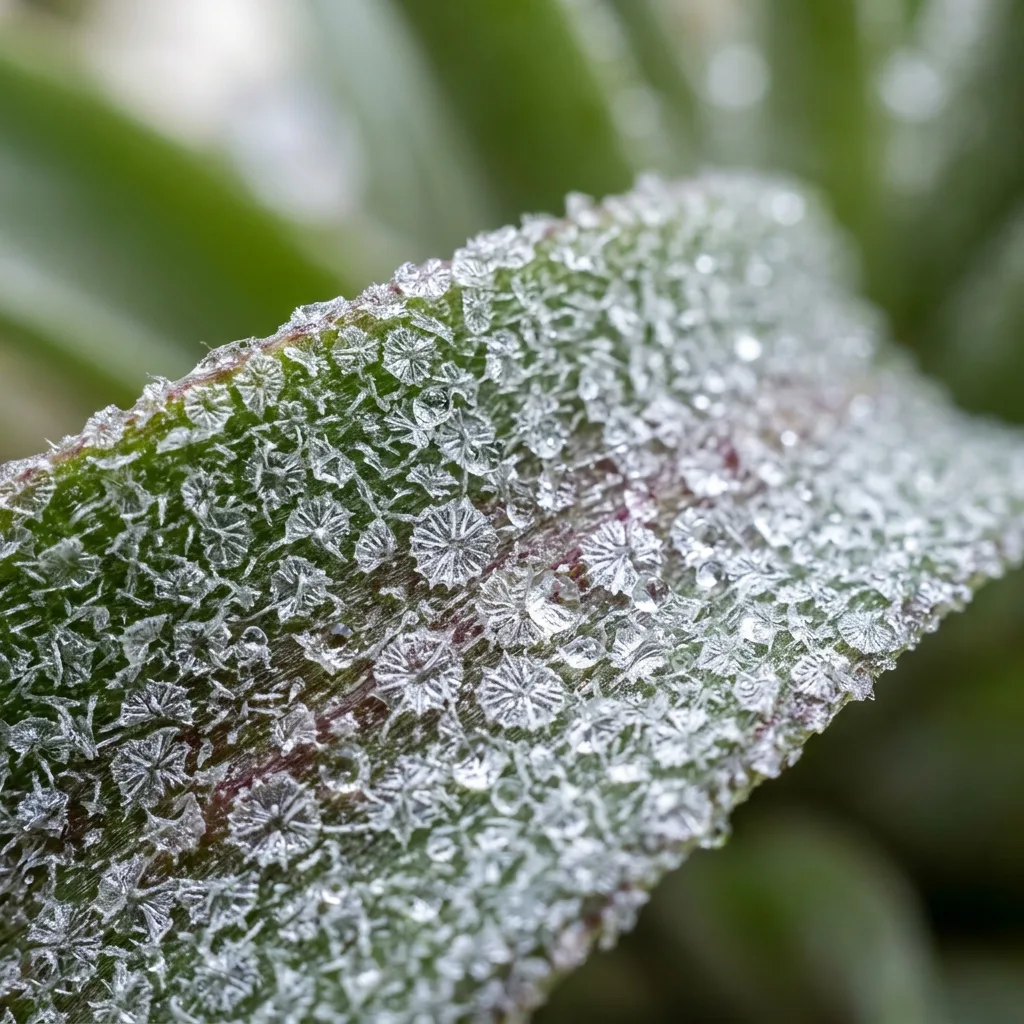
- Trichome Crystal Translucence and Dulling: A healthy T. ionantha displays an opaque, frosted silver sheen courtesy of active trichomes. Under fungal attack, these trichomes collapse and shed, leaving foliage looking unnaturally glassy, wet, and dull green-brown even after drying.
- Meristem Detachment: Gently pull upward on one of the tiny juvenile leaves emerging from the dead center of the rosette. If it slides out effortlessly with a blackened, slimy base, the vascular core and apical meristem have been critically compromised.
- Foliar Tip Dieback (Drought vs. Rot): Inward-curling, straw-colored leaf tips typically signal chronic dehydration. However, when desiccated tips coincide with a dark, damp base, it confirms internal vascular rot—water can no longer be transported upward through damaged cellular pathways.
2. Root Causes and Environmental Triggers
How does a plant that survives torrential tropical downpours in nature rot inside a home after a single light misting? The answer lies strictly in microclimatic dynamics and fluid mechanics.
- Stagnant Air and Restricted Ventilation: In native habitats, Tillandsias enjoy continuous canopy winds. In home interiors—especially when trapped within stagnant corners or enclosed display domes—water remaining trapped between leaf bases for longer than 2 to 3 hours triggers opportunistic fungal spores.
- Drying Without Inversion: Resting an air plant upright on a flat saucer or shelf immediately following a deep soaking bath is a fatal mistake. Gravity inevitably drags liquid straight into the basal leaf crevices, initiating anaerobic bacterial and fungal decomposition.
- Hard, Chlorinated Tap Water: Municipal tap water often carries heavy concentrations of chlorine, chloramines, and dissolved sodium. As moisture evaporates, these salts deposit over delicate trichome pores (salt crusting), suffocating the cells and causing localized necrotic burn.
- Light Starvation and CAM Disruption: Air plants rely on Crassulacean Acid Metabolism (CAM), keeping their stomata closed by day and opening them overnight to exchange gases. Kept in dim corridors, their photosynthetic energy drops, stalling metabolic respiration and devastating their immunological defenses against fungal invasion.
3. Natural and Organic Remediation Protocols
Provided pathogen penetration has not destroyed the deeper vascular core, non-phytotoxic biological remedies can successfully arrest the infection without scorching tender tissue.
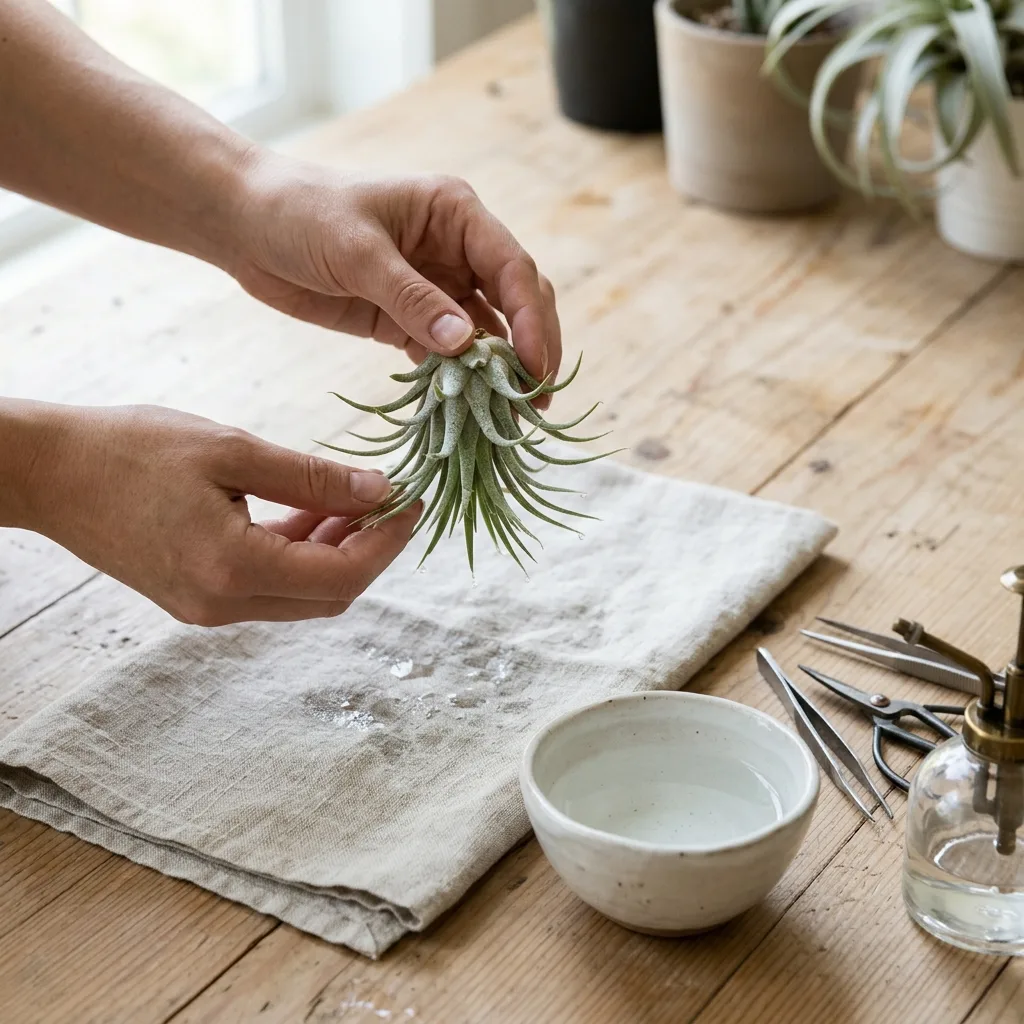
- Mechanical Debridement and Necrotic Tissue Excision: Using flame-sterilized fine tweezers, peel away any blackened, soft outer leaves from the base. Continue clearing until you reveal completely clean, pale-green, firm tissue.
- Cinnamon Powder Treatment (Natural Cinnamaldehyde Barrier): Dust the exposed basal wound and leaf axils lightly with pure Ceylon cinnamon powder using a soft watercolor brush. Cinnamaldehyde disrupts fungal cellular walls, halting spore proliferation effectively.
- Antiseptic Chamomile and Thyme Hydrosol Misting: Mix 1 teaspoon of organic thyme hydrosol or chilled, concentrated chamomile tea into 1 liter of distilled water. This solution provides natural antifungal phenols. Mist the plant lightly, then place it before a gentle oscillating fan to dry completely within 45 minutes.
- Mandatory Inverted Drying Therapy: Every treated specimen undergoing rehabilitation must be suspended or placed upside down on clean paper towels immediately after moisture application, ensuring gravity drains residual moisture away from the core.
4. Chemical and Systemic Fungicide Application Protocol
When dealing with advanced fungal infections characterized by gray mycelial growth or extensive basal softening, organic remedies may prove insufficient. At this stage, targeted systemic compounds that spare delicate trichome cells are required.
| Active Compound | Target Pathogen | Dosage (Per Liter Pure Water) | Method and Frequency |
|---|---|---|---|
| Propamocarb Hydrochloride | Phytophthora & Pythium (Basal/Crown Rot) | 1.5 ml / Liter | 10-minute submerged bath, repeated twice at 10-day intervals |
| Azoxystrobin | Fusarium & Alternaria (Core Necrosis) | 0.8 g / Liter | Ultra-fine foliar mist, 2 applications spaced 14 days apart |
| Copper Oxychloride (Low Concentration) | Broad-Spectrum Bacterial & Fungal Spores | 0.5 g / Liter | Targeted brush application on outer base only (avoid heavy foliar drenching) |
Always formulate chemical applications using distilled, deionized, or reverse osmosis water. Once lifted from chemical baths, specimens must dry swiftly in vigorous air currents; never permit chemical suspensions to pool inside leaf axils for extended periods.
5. Quarantine and Disinfection Procedures
Microscopic fungal spores migrate effortlessly through indoor air currents, posing a direct threat to neighboring air plants and succulent collections.
- Immediate Isolation: Relocate any symptomatic Tillandsia at least 10 to 12 feet away from healthy plants into a bright space with independent, stable air circulation.
- Mount Disinfection: Sterilize mounting bases such as cork oak bark, driftwood, or wire armatures by wiping them thoroughly with 70% isopropyl alcohol or immersing them in boiling water. If hot-melt glue was originally used, detach the specimen carefully using a sterile scalpel blade.
- Tool Sanitation: Sterilize all tweezers, grooming scissors, and razors using pure alcohol or flame exposure between individual cuts to prevent cross-contamination.
6. Long-Term Rehabilitation and Convalescent Care
Halting an aggressive infection expends tremendous metabolic reserves. Once stabilized, implement a dedicated restorative regimen to encourage vegetative recovery and trigger adventitious basal offsets (pups).
Hydration Re-Engineering: Withhold deep soaking baths for the first 2 to 3 weeks following treatment. Instead, lightly mist the plant three times weekly during early morning hours using pure rainwater or distilled water. Place the plant 3 feet away from an ambient USB desk fan to ensure foliage dries fully within 45 minutes.
Optimized Light and Ambient Temperature: Shield healing specimens from harsh, scorch-inducing midday sun. Provide bright, filtered morning illumination or position them 12 inches beneath a 2000-lumen full-spectrum LED grow light running 12 hours daily. Maintain daytime temperatures between 68°F and 75°F (20°C to 24°C).
Epiphytic Nutritional Support: Starting in the fourth week of recovery, introduce a specialized urea-free Tillandsia or orchid fertilizer (formulated exclusively with nitrate and ammoniacal nitrogen) diluted to one-quarter label strength once per month in misting water. This gentle feeding provides essential nitrogen and micronutrients, accelerating the emergence of vigorous new offsets around the convalescing parent crown.


Reader Reviews & Comments 3 Reviews
Marcus Sterling
Julian Vance
Claire Montgomery
Leave a Review & Rating
Share your plant care tips, experiences, or questions with our succulent community.