






In the oceanic microclimates of the Pacific Northwest (PNW) and comparable cool-maritime regions, March heralds the promise of spring while simultaneously subjecting plant root systems to the most unforgiving physiological trial of the entire calendar year. Characterized by soil temperatures fluctuating stubbornly between 4°C and 10°C (39°F–50°F) under weeks of persistent precipitation, ground beds quickly reach full hydrological saturation. Herbaceous perennials, alpine selections, cold-hardy sedums, native Lewisia species, and early-breaking shrubs—naturally adapted to porous talus slopes and rapidly draining volcanic scree—find themselves literally gasping for breath beneath cold, standing surface water.
When soil macropores fill entirely with gravitational water, subterranean gas exchange halts, generating a profoundly hypoxic, anaerobic environment at the cellular level. In this compromised state, pathogenic oomycetes and fungal spores awakening from winter dormancy aggressively infiltrate the delicate cortex of root systems. Watching succulents and garden treasures succumb amidst the dreary March drizzle is by no means an unavoidable fate; rather than abandoning vulnerable root zones to asphyxiation, gardeners must proactively manage and recalibrate the soil’s hydrological equilibrium.
1. Early Diagnostic Symptoms and Microscopic / Visual Clues
In the chilly, rain-soaked March conditions typical of the Pacific Northwest, botanical cries for help are routinely misdiagnosed. A plant drowning from subterranean waterlogging loses functional feeder roots to rot, rendering it physiologically incapable of translocating moisture and essential micronutrients up to its aerial foliage. Consequently, the canopy displays a deceptive, paradoxical picture of 'drought stress.' Early cues include a sudden drop in foliar turgor pressure, loss of vibrant epidermal luster, and progressive interveinal chlorosis across mature leaves.
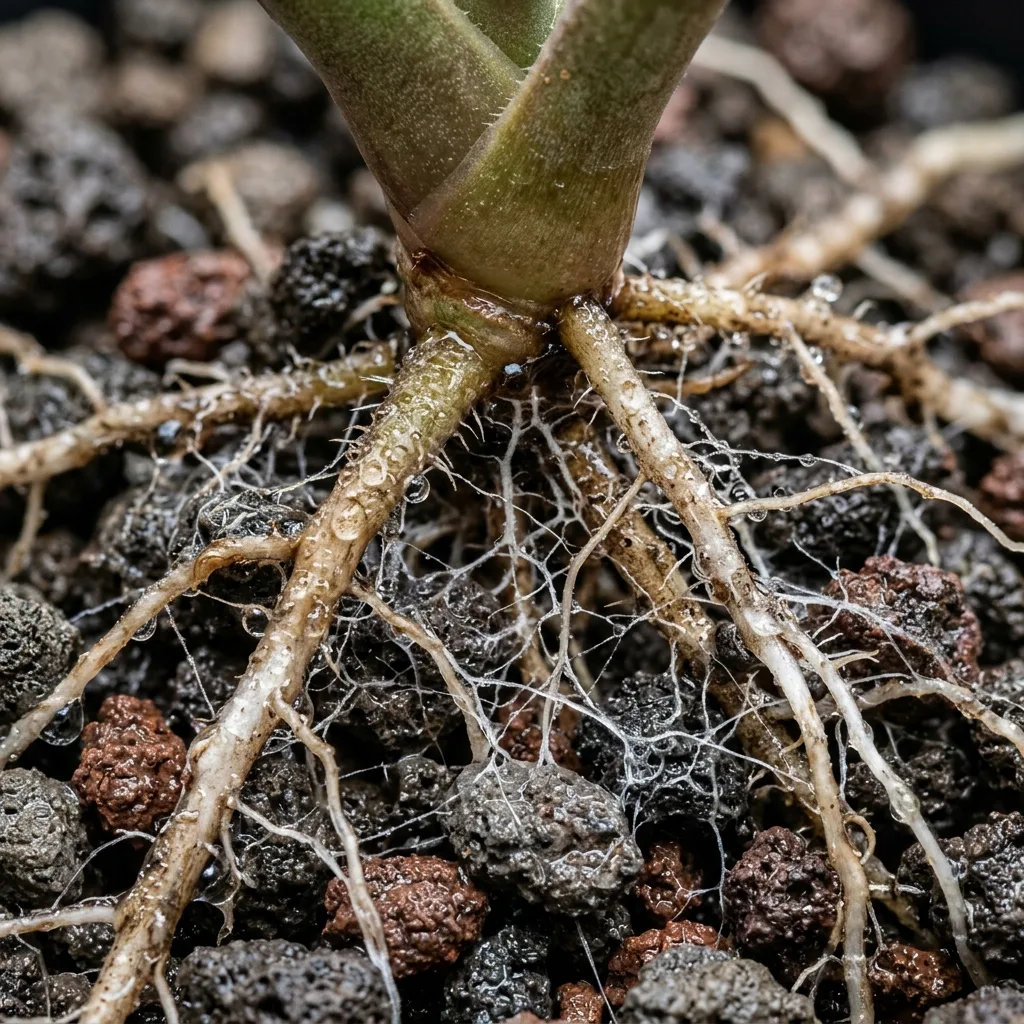
On vulnerable early-season specimens such as Sedum spathulifolium, Lewisia cotyledon, or emerging Helleborus, carefully inspect the soil line. You will frequently detect soft, water-soaked, olive-brown to blackish lesions constricting the root crown. Unearthing the subterranean root architecture for examination under a 10x hand lens or field microscope tells the true story: instead of crisp, glistening white primary roots and healthy root hairs, the cortex sloughs away effortlessly between your fingertips (cortical sloughing), revealing blackened, necrotic vascular bundles (xylem and phloem). At the surface, persistent crusts of liverwort, dense bryophyte moss blankets, and threading white mycelial runners offer undeniable visual confirmation of an escalating fungal assault.
2. Fundamental Causes and Environmental Drivers
The primary culprits behind devastating early-spring losses in PNW gardens are destructive oomycetes—commonly called 'water molds'—most notably Phytophthora cactorum and Pythium ultimum. These organisms thrive in cold soils (5°C to 12°C / 41°F to 54°F) inundated with free water, churning out millions of biflagellate, mobile zoospores. Chemotactically lured by root exudates such as sugars and amino acids, these zoospores swim through waterlogged pore spaces straight toward vulnerable root tips, dissolving outer pectin and cell walls within mere hours.
This biological invasion is greatly accelerated by specific environmental compounding factors:
- Collapse of Soil Porosity: Heavy loam or clay beds enriched with fine compost that lacks stable aggregate structure quickly compact under relentless March rains, obliterating vital aeration pores.
- Stagnant Microclimates and Poor Air Circulation: Plantings positioned in sheltered pockets out of the Pacific breeze, or planted too densely, foster boundary layers with near-100% relative humidity, dropping transpiration and surface evaporation rates to zero.
- Crown Depth Planting Errors: Decomposed bark and organic mulch mounded too high around the crowns during autumn garden prep acts like a sodden compress in March, holding stagnant moisture directly against succulent collars and inducing crown rot.
3. Natural and Organic Mitigation Methods
Before reaching for synthetic chemicals, alter the physical and biological dynamics of your microhabitat. The first intervention is mechanical aeration and drainage relief. Using a sturdy border fork, gently aerate the soil perimeter 15 to 20 cm away from struggling root systems to introduce oxygen pathways, and carefully rake back thick, waterlogged organic mulches from tender collars.
Top-dress the cleared crown zone with a 2 to 3 cm layer of coarse sharp river sand, fractured volcanic scoria, or pure horticultural pumice. This simple mineral collar breaks capillary action, establishing a dry buffer against rot. On the biological front, inoculate damp soils in mid-March with beneficial antagonistic fungi such as Trichoderma harzianum. This biological guardian hyperparasitizes pathogenic fungi and coats feeder roots with a protective bio-barrier. For aerial threats like botrytis or foliar blights, prepare an organic foliar spray containing 5 grams of potassium bicarbonate and two drops of pure castile soap per liter of clean water; this elevates leaf surface pH to an alkaline threshold where fungal spores simply cannot germinate.
4. Chemical and Systemic Fungicide Protocols
When collar necrosis and aggressive root rot threaten rare cultivars or prized collector specimens, an integrated chemical regimen utilizing both systemic and contact fungicides becomes unavoidable. Because vascular transport through xylem and phloem slows dramatically in chilled, moisture-laden soils, applying specific molecules according to an accurate therapeutic schedule is critical.
| Active Ingredient | Target Pathogen | Dosage (Per 1 Liter Water) | Application Interval | Application Method |
|---|---|---|---|---|
| Metalaxyl-M / Mefenoxam | Pythium and Phytophthora | 0.5 ml - 1 ml | Every 14 days (Max 2 apps) | Targeted root drench |
| Fosetyl-Aluminium | Systemic root and crown rot | 2.0 g - 2.5 g | Every 10-12 days | Foliar systemic spray |
| Propamocarb HCl | Damping off, water molds | 1.5 ml - 2.0 ml | Every 14 days | Soil saturation drench |
| Copper Oxychloride / Sulfate | Surface fungal lesions, canker | 1.5 g - 2.0 g | Every 20 days | Stem and crown spray only |

5. Quarantine Protocols and Sanitation Measures
Pathogenic spores and swimming oomycete zoospores spread effortlessly across early-spring gardens hitchhiking on wet tools, boot soles, and muddy gloves. When pruning back diseased crowns or unearthing rotting specimens, observe strict biosecurity protocols:
- Tool Sterilization: Submerge pruners, soil knives, and scoops in 70% isopropyl alcohol or a freshly mixed 1:9 household bleach solution for at least 60 seconds between individual plants.
- Disposal of Infected Biomass: Discard softened crowns, darkened root fragments, and moldy leaves straight into sealed bags for municipal trash disposal or burn them if local ordinances allow. Never deposit compromised plant tissue into the backyard compost pile.
- Potted Plant Isolation: Move saturated potted succulents and alpine containers out from under open skies to sheltered, well-ventilated covered porches or wide eaves, maintaining at least 1 meter of space from unaffected collections.
6. Plant Rehabilitation and Convalescent Care
Once diseased tissue has been excised with an ultra-sharp, sterilized scalpel and fungicide treatments are complete, the patient enters an intensive convalescence phase. Dust all exposed surgical cuts with micronized elemental sulfur or pure ground cinnamon, allowing the wound to dry undisturbed in an airy, shaded spot for 48 hours to initiate robust protective callusing.
If repotting into fresh media is necessary, abandon conventional bagged potting soils in favor of an ultra-porous mineral substrate formulated with 40% coarse pumice, 30% inorganic crushed lava (scoria), 20% horticultural zeolite, and no more than 10% clean, fully decomposed leaf compost. Refrain entirely from applying synthetic liquid fertilizers for the first 3 to 4 weeks, keeping moisture inputs minimal to avoid stressing recuperating root cells. Once nighttime temperatures climb reliably past 10°C (50°F), stimulate natural endogenous root hormones (auxins and cytokinins) by introducing a gentle, dilute drench of cold-water kelp extract (Ascophyllum nodosum).


Reader Reviews & Comments 3 Reviews
Garrett Vance
Claire Holloway
Derek MacIntyre
Leave a Review & Rating
Share your plant care tips, experiences, or questions with our succulent community.