






Picture the sun-scorched limestone plateaus bordering Mexico’s Chihuahuan Desert and the arid, windswept ravines of Hidalgo. In this unforgiving wilderness of crushed gravel, harsh winds, and unrelenting sunlight, evolutionary pressure has acted like a master sculptor, carving one of the most mesmerizing geometries in the plant kingdom: Stenocactus. Commonly known as the 'Brain Cactus' or 'Wave Cactus', this ancient succulent genus features dozens of razor-thin, wavy folds encircling its stem, evoking the intricate pathways of a living labyrinth. Welcoming one of these architectural wonders to your sunlit windowsill is like inviting millions of years of Mexican highland survival right into your home.
Many plant enthusiasts search online for generic succulent care, mistakenly treating this marvel like an ordinary houseplant. However, Stenocactus is an uncompromising desert specialist—programmed down to its microscopic cellular physiology for prolonged drought, extreme mineral density, and sharp diurnal temperature swings. Drawing on thirty years of greenhouse propagation, morning coffee conversations among cacti, and rigorous botanical science, let us explore the precise horticultural practices needed to keep this exceptional species thriving for decades to come.
1. Taxonomic Identity, Areole Architecture, and Spine Morphology
Known for generations under the botanical moniker Echinofossulocactus—a synonym still widely encountered in nurseries and legacy literature—the genus Stenocactus remains one of the most structurally distinct lineages within the Cactaceae family. Its most defining morphological adaptation is its globose stem flanked by anywhere from 30 to over 120 paper-thin, closely packed, undulating ribs (costae) that fold like accordion bellows. This intricate architecture serves far more than an ornamental purpose: by exponentially increasing the stem's surface area, it prevents intense midday solar radiation from hitting the epidermis at direct perpendicular angles, establishing a sophisticated self-shading micro-canopy.
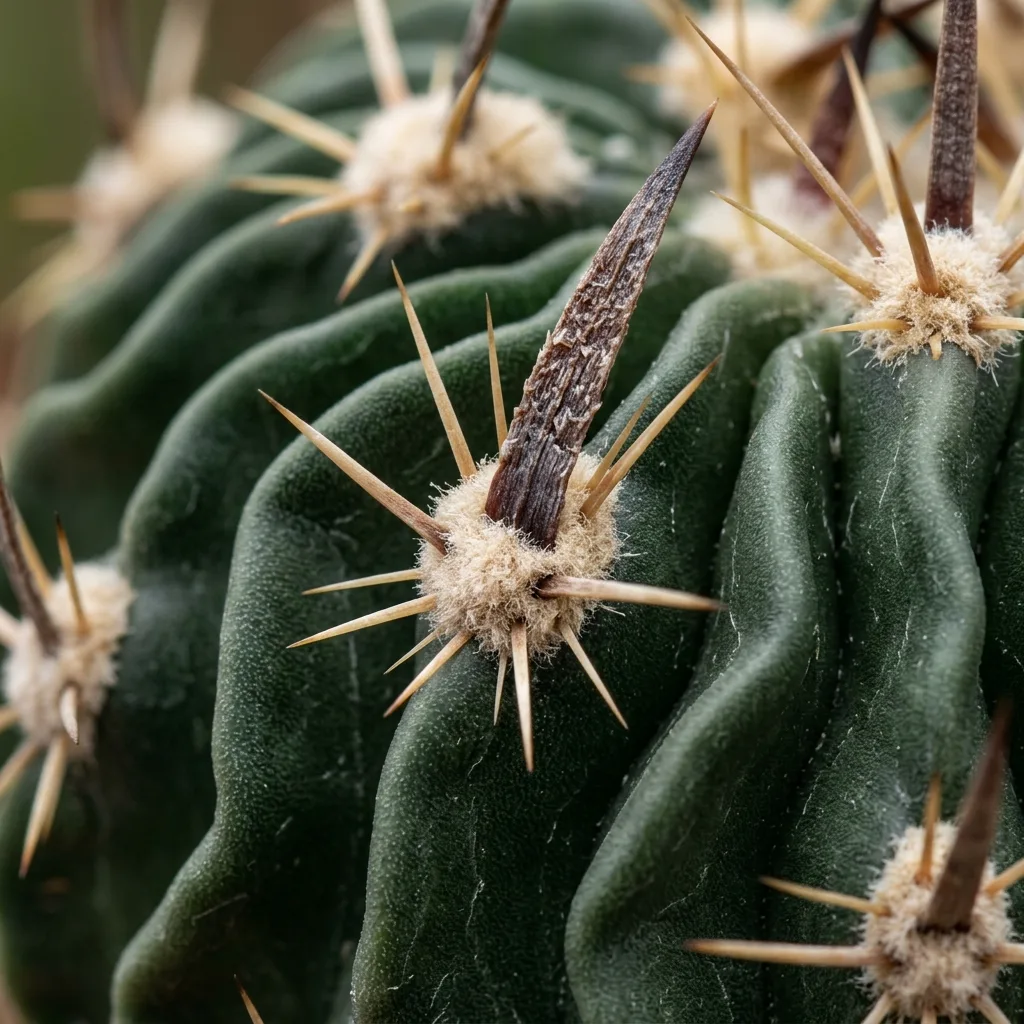
Sparsely arranged along the crests of these wavy folds are the areoles—the specialized meristematic defense hubs of the plant. Central spines typically project upward and outward, exhibiting flattened, papery, or dagger-like cross-sections, while radial spines tend to be finer, needle-like, and paler in hue. This spination acts as a dual-action survival shield: it deflects drying desert winds to preserve stomatal moisture during Crassulacean Acid Metabolism (CAM) gas exchange, while simultaneously channeling ambient morning condensation directly down to the root collar.
2. Light Requirements, Solar Intensity, and Atmospheric Circulation
To sustain vigorous photosynthetic activity, Stenocactus demands abundant light. Nevertheless, a delicate botanical balance must be maintained. In habitat, these plants frequently establish themselves nestled against nurse shrubs or wedged into limestone fissures. Consequently, sudden exposure to harsh, unconditioned summer midday sun—especially magnified behind poorly ventilated greenhouse glass—can break down epidermal chlorophyll, resulting in irreversible pale or brown sunburn scars (epidermal necrosis).
Aim for at least 5 to 6 hours of bright, direct morning or late afternoon sunlight daily. Under insufficient light, the plant will promptly undergo etiolation: losing its compact, flattened-spherical geometry, stretching into an unsightly conical tower, and stretching its tight ribs apart. Air circulation is just as crucial as photons. Stagnant, humid air creates a dangerous breeding ground for airborne fungal spores deep within the shadowy troughs between its ribs. Always position your cactus where fresh, buoyant air circulates continuously.
3. Watering Cycles and the Critical Winter Dormancy Regime
The single most catastrophic mistake in cactus cultivation is watering according to a rigid calendar schedule. For Stenocactus, we abide strictly by the 'Soak and Dry' philosophy. Throughout the active vegetative period (spring through late summer), allow the entire mineral potting mix to dry completely from top to bottom before drenching the container until water flows freely from the drainage holes. Never let the pot sit in standing water; repeatedly saturating succulent tissue does not show love—it suffocates root xylem cells and triggers rapid rot.
From late autumn (late October) until the dawn of spring (mid-March), Stenocactus requires an essential winter dormancy phase to initiate bud development and safeguard internal tissues. During this window, maintain ambient temperatures between 5°C and 10°C (41°F–50°F) and withhold irrigation entirely. Going dry throughout winter causes the stem to soften slightly and draw its wavy ribs closer together. This dehydration response is entirely natural: it concentrates internal cellular sap, functioning as an organic antifreeze to boost cold hardiness.
4. High-Mineral Cactus Substrate and Pot Selection
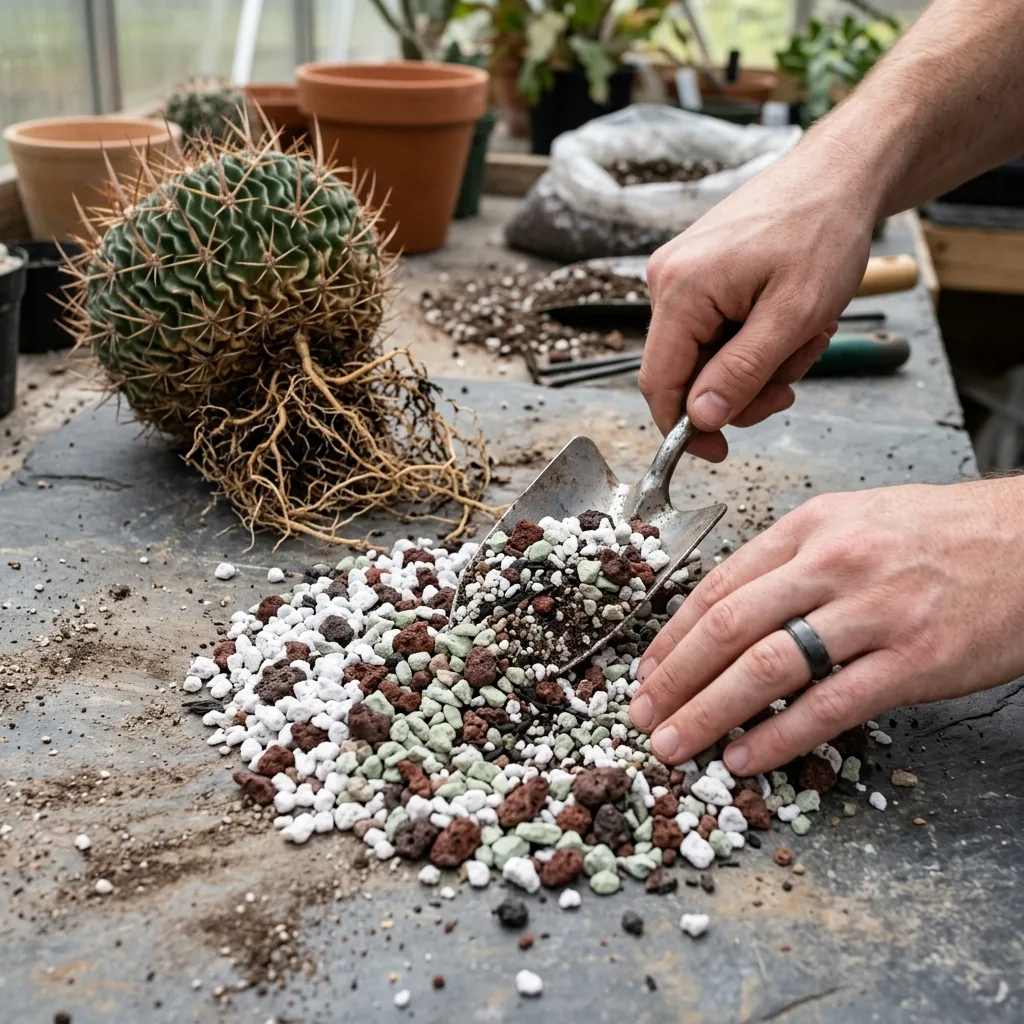
Accustomed to anchoring within limestone scree and volcanic grit across Mexican highlands, Stenocactus cannot survive long-term in dense, peat-dominated potting soils. Standard commercial potting mix acts like a waterlogged sponge, starving root hairs of oxygen and inviting opportunistic pathogens. The ideal substrate must be loose, gritty, fast-draining, and predominantly mineral-based.
The table below outlines our proven greenhouse substrate formulation for cultivating resilient Stenocactus specimens:
| Component | Proportion (%) | Botanical Function |
|---|---|---|
| Pumice (3-5 mm) | 35% | Delivers superior microporosity, root aeration, and swift drainage. |
| Lava Rock (Scoria) | 25% | Provides mineral integrity, iron traces, and structural stability. |
| Zeolite (Clinoptilolite) | 15% | Boosts cation exchange capacity (CEC), locking nutrients and buffering pH. |
| Coarse Quartz / River Sand | 10% | Promotes rapid hydraulic conductivity and firm root anchorage. |
| Screened Low-Organic Peat/Leaf Compost | 15% | Offers minimal organic moisture buffering without waterlogging. |
When selecting containers, porous unglazed terracotta is vastly superior to plastic or glazed ceramic. Terracotta walls breathe, accelerating evaporation and preventing lingering wet spots around the root ball. Choose a pot deep enough to accommodate the plant's fibrous taproot system without crowding, but avoid oversized pots; excessive soil volume holds excess moisture and drastically increases the risk of basal stem rot.
5. Inducing Breathtaking Blooms and Seasonal Fertilization
Species within the Stenocactus complex are among the earliest harbingers of spring in the desert greenhouse. Typically around March or April, flower buds emerge straight from the woolly areoles encircling the apical growing point. The blossoms feature a striking visual pattern: silken white, cream, or pale pink petals split cleanly down the center by vivid violet, purple, or magenta midstripes.
Unlocking an abundant floral display relies on two prerequisites: an uninterrupted cool, dry winter rest, followed by balanced nutrient supplementation as growth resumes. With the first warm sunny days of March, offer a light initial watering paired with a specialized cactus fertilizer low in Nitrogen (N) and rich in Phosphorus (P) and Potassium (K)—such as an NPK 5-15-20 or 4-8-12 formulation—mixed at one-quarter strength. Excessive nitrogen must be strictly avoided; it forces bloated, soft cellular expansion that weakens rib contours and invites fungal collapse.
6. Propagation: Seeds, Offsets, and Grafting
Most Stenocactus species maintain a solitary, unbranched habit throughout their lifespan, rarely producing basal offsets. Consequently, seed propagation stands as the most natural, rewarding, and botanically sound method of cultivation:
- Seed Sowing: In mid-spring, scatter fresh seeds over a pre-sterilized bed of fine pumice and screened grit. Do not bury the seeds; press them gently onto the surface to ensure light exposure. Maintain gentle bottom moisture and temperatures between 22°C and 26°C (72°F–79°F). Germination usually occurs within 7 to 21 days.
- Offset Division: If your mature plant produces a basal pup, sever it cleanly in late spring using a sterilized scalpel. Dust the cut surface with sulfur or powdered cinnamon and allow it to callus in dry shade for 4 to 7 days. Plant into dry mineral grit and refrain from full watering until root tips form, misting only the surface lightly.
- Grafting: Exceptionally slow-growing varieties, variegated forms, or root-damaged rescues can be top-grafted onto fast-growing rootstocks like Myrtillocactus geometrizans or robust Echinopsis to accelerate growth and stabilize compromised tissue.
7. Defending Against Root Rot and Fungal Pests
The primary threats to Stenocactus are root rot complexes triggered by overwatering (typically driven by Fusarium and Phytophthora pathogens) and persistent infestations of mealybugs (Pseudococcidae). The deep, compressed furrows between the ribs offer ideal, hidden refuges for pests. If you spot cottony white masses tucked inside the grooves, spot-treat them immediately using a fine artist's brush dipped in 70% isopropyl alcohol, followed by a systemic insecticide if the infestation is deep-seated.
If the base of the cactus turns yellowish, darkens, or yields under gentle pressure, rot has reached the stem tissue. Unpot the plant immediately and excise all darkened, necrotic vascular rings using a flame-sterilized blade until only crisp, healthy green or ivory flesh remains. Treat the cut generously with sulfur powder, dry the specimen in open air for 10 to 14 days, and re-root it in 100% dry pumice.


Reader Reviews & Comments 3 Reviews
Clara Sterling
Julian Vance
Marcus Thorne
Leave a Review & Rating
Share your plant care tips, experiences, or questions with our succulent community.