






Drifting from the windswept foothills of East Asia, Miscanthus sinensis 'Silberfeder' (popularly celebrated as Silver Feather Maiden Grass or Chinese Silver Grass) introduces an ethereal, kinetic poetry to outdoor spaces with its silky flower plumes shimmering beneath the golden autumn sun. When you juxtapose the graceful, arching vertical lines of this perennial grass against the resolute, geometric architecture of drought-defying succulents, you forge a dynamic living sculpture. This design philosophy harmonizes opposing forces—the kinetic energy of swaying foliage and the serene stillness of succulent rosettes—bringing an unmatched botanical equilibrium to your terrace or balcony.
Far too many horticulturists restrict ornamental grasses to sweeping prairie borders, assuming they cannot thrive in container culture. Yet, a handcrafted, lightweight faux-stone hypertufa trough planter provides the ultimate staging ground for a compact, dramatic focal piece. By thoughtfully engineering micro-topographical zones, the compact, water-conserving Crassulacean Acid Metabolism (CAM) of alpine stonecrops and houseleeks pairs seamlessly with the deep-rooting, warm-season C4 photosynthetic vigor of maiden grass, establishing a harmonious, thriving micro-ecosystem.
In this master guide, we address the botanical requirements of cultivating Silver Feather grass in containers while guiding you step-by-step through building a rugged, frost-proof hypertufa stone trough tailored specifically to companion succulents.
1. Essential Materials, Tools, and Safety Precautions
Evoking the aged, weathered aesthetic of an alpine limestone crevice, a hypertufa trough is a durable yet lightweight composite of Portland cement, peat moss, and perlite designed to endure punishing winter sub-zero temperatures. Constructing this living sculpture unites artisan craftsmanship with root-zone biology.
- Hypertufa Mortar Formula: 1 part pure Portland cement (Type I/II, unmixed), 1.5 parts sifted sphagnum peat moss or thoroughly rinsed coconut coir, and 1.5 parts coarse horticultural perlite or crushed pumice.
- Mold Assemblies: Two nested rectangular plastic containers or dense styrofoam cooler boxes (ensure a continuous 4–5 cm wall thickness between the outer and inner mold forms).
- Botanical Specimens: 1 vigorous, container-grown division of Miscanthus sinensis 'Silberfeder' with healthy rhizomes, paired with hardy companion alpine succulents such as Sempervivum tectorum (Common Houseleek / Hens and Chicks), Hylotelephium spectabile (Showy Stonecrop), or trailing Sedum kamtschaticum.
- Subsurface Drainage & Isolation: 2 lengths of 3 cm diameter PVC pipe (for molded drainage apertures), medium-grit sandpaper, woven non-biodegradable geotextile separation fabric, and coarse volcanic basalt or pumice drainage rocks.
- Personal Protective Equipment (PPE): Particulate respirator (FFP2/FFP3 or N95), heavy-duty chemical-resistant waterproof gloves, and protective eyewear. Dry Portland cement is strongly alkaline and can cause severe respiratory and chemical dermal burns; mix all dry ingredients exclusively outdoors in well-ventilated areas.
2. Material Proportions and Curing Specifications
| Component / Engineering Layer | Volumetric Ratio / Dimension | Functional Role & Horticultural Note |
|---|---|---|
| Portland Cement | 1 Part by Volume | Structural binder matrix providing compressive strength. |
| Sifted Peat Moss / Coco Peat | 1.5 Parts by Volume | Imparts lightweight porosity and an authentic, aged tufa texture. |
| Coarse Perlite (3–6 mm) | 1.5 Parts by Volume | Facilitates gas exchange and subterranean capillary aeration channels. |
| Trough Wall Thickness | 4 – 5 cm (1.5 – 2 inches) | Provides essential thermal buffering against winter root meristem freezing. |
| Primary Mold Curing Time | 36 – 48 Hours | Initial hydration set in shaded conditions, sealed in vapor barriers. |
| Acid Neutralization Period | 10 – 14 Days | Leaching caustic alkaline hydroxide residue with horticultural vinegar rinses. |

3. Step-by-Step Fabrication and Sculpting
Crafting your own hypertufa vessel is a deeply rewarding, meditative endeavor. Follow these systematic stages to build an enduring stone trough:
- Blending the Mortar: Don your respirator and blend the dry cement, sifted peat, and perlite in a wide mixing tub until the dry mass is completely uniform in color. Add clean water incrementally. The target consistency resembles moist, compacted peat: the material should squeeze firmly into a cohesive clump without crumbling, yet release virtually no water droplets between your knuckles.
- Packing the Mold: Pack a flat 5 cm layer of wet hypertufa across the base of your outer mold, tamping firmly to expel trapped air voids. Press two lubricated PVC drainage spacers vertically into the base. Center the smaller inner mold over the base, weighting it with bricks to prevent floating. Pack the moist mixture down into the perimeter walls in sequential 3 cm lifts, consolidating firmly with your fingers or a wooden tamper.
- Primary Vapor Curing: Wrap the entire assembly tightly within a heavy-duty trash bag or stretch wrap to trap internal moisture. Place it in a shaded, warm workshop out of direct sunlight for 48 hours to complete its initial hydraulic set.
- Demolding and Texturing: Gently demold the trough after 48 hours. The concrete matrix will have the hardness of semi-firm cheese. Using a stiff wire brush or rasp, firmly abrade the smooth outer surface to strip away the slick exterior cement cream. This reveals the embedded textured pockets of perlite and organic peat fibres beneath, mimicking the weathered face of natural mountain tufa rock.
- Alkaline Neutralization Protocol: Freshly cured concrete leaches potent alkalinity (often reaching pH 11–12), which is fatal to delicate root hairs. Rinse the container daily with plain water for 10 days, followed by a thorough scrubbing with a 1:4 white vinegar and water solution to lower the surface pH to a plant-safe range of 6.5–7.0.
4. Substrate Layering and Planting the Living Composition
The architectural triumph of this design hinges on deliberate micro-ecological zoning. While Miscanthus sinensis 'Silberfeder' forms an extensive, deep fibrous root mass requiring steady organic nutrients, rock garden succulents require an ultra-porous, lean, gritty substrate where stagnant moisture is physically impossible.
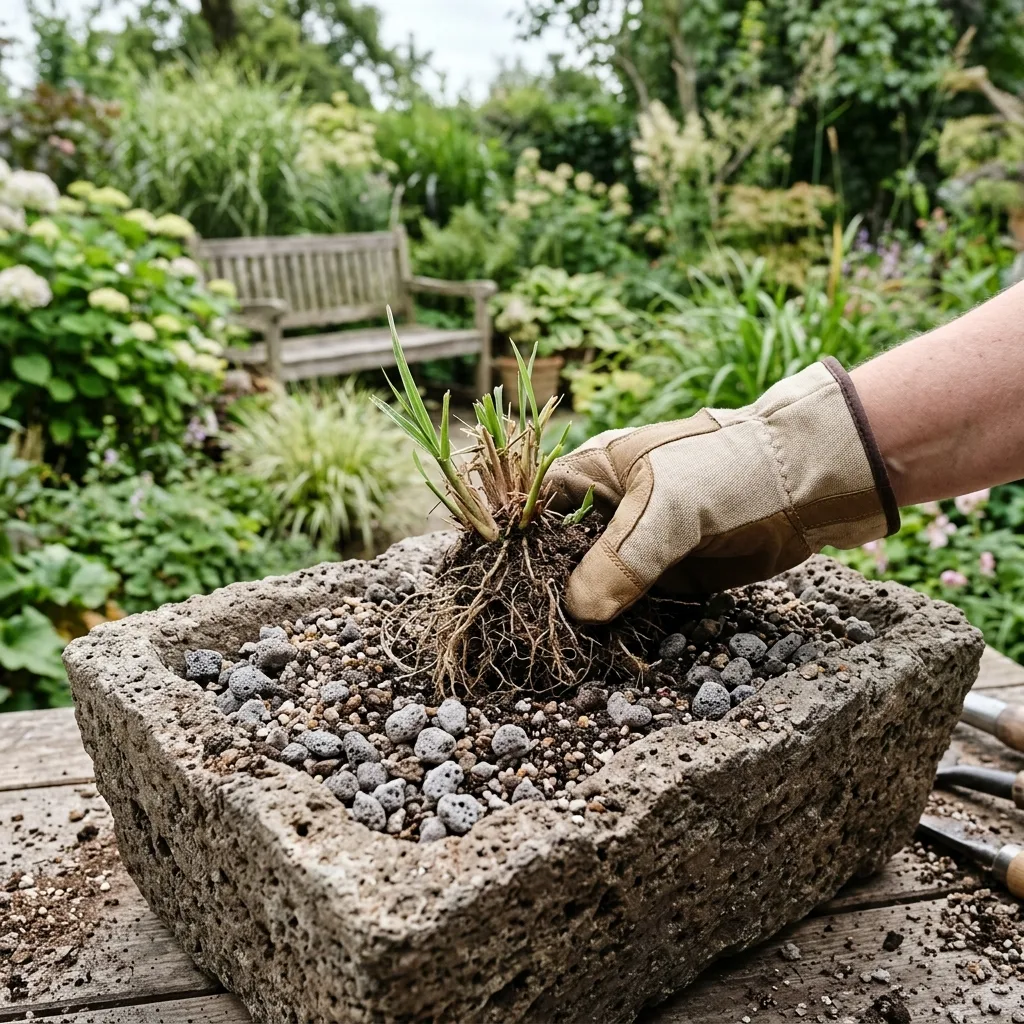
Line the trough base with 3 cm of coarse volcanic lava rock or horticultural pumice, then cover this layer with permeable geotextile fabric to prevent fine soil particles from clogging drainage holes. Designate the deep central or rear third of the trough for your maiden grass. In this central basin, install a rich yet freely draining blend of 40% composted organic loam and 60% coarse inorganic grit (perlite, grit, and pumice), positioning the 'Silberfeder' crown perfectly level with the final grade.
Towards the front and lateral margins of the trough, construct elevated alpine rock berms—miniature terraces that rise above the grass zone. Fill these elevated pockets with a succulent-specific gritty mix containing 80% porous pumice, zeolite, and volcanic rock fines with only 20% organic matter. Nestle your Sempervivum and creeping Sedum specimens into these raised pockets, pinning their root flares between natural pieces of weathered granite, slate, or basalt. This keeps root necks dry while creating a natural alpine valley topography.
5. Targeted Irrigation Strategies and Seasonal Care
Cultivating plants with opposing drought tolerances in one container sounds challenging, but our sculptured micro-topography eliminates the risk when managed correctly:
- Targeted Root-Zone Irrigation: Utilize a narrow-spout watering can to apply moisture directly and exclusively to the base of the central Miscanthus clump. Never drench the raised succulent terraces; the ambient subsurface humidity escaping laterally from the moist root zone provides all the water necessary for hardy succulent roots nestled beneath the rocks.
- Sunlight and Photoperiod Demands: Silver Feather Maiden Grass requires a minimum of 6 to 8 hours of uninterrupted, direct sunlight daily to fuel its C4 carbon fixation pathway and produce its dramatic, silky autumn plumes. In low-light settings, stems stretch, become floppy, and abort floral initiation. Companion succulents will equally benefit from this intense solar exposure, producing protective anthocyanin pigments that reveal their richest crimson and purple hues.
- Seasonal Maintenance and Pruning: Allow the arching parchment-colored foliage and downy plumes of 'Silberfeder' to stand undisturbed through autumn and winter. The dried foliage creates a striking architectural frost silhouette while insulating the basal crown from severe freezing. In late February or early March, just before spring vegetative buds stir, cut the entire grass clump back cleanly with sharp bypass pruners to 8–10 cm above the substrate line.
6. Long-Term Durability and Trough Maturation
Hypertufa matures gracefully over seasons of weathering. As the porous walls breathe, beneficial ambient micro-organisms, lichens, and velvety mosses colonize the tiny pockets of exposed peat, giving your planter the patina of an antique relic salvaged from an alpine botanical garden. To encourage natural moss development, brush the exterior stone walls in early spring with a light wash of organic buttermilk or diluted plain unsweetened yogurt.
During winter freezes, elevate your hypertufa planter onto low slate or stone feet so it does not rest directly on frozen patio pavers. Elevating the container prevents freeze-thaw water locks across the base, ensuring continuous gravitational drainage. Refresh the mineral pumice top-dressing around your succulents every spring to keep the planting clean, crisp, and beautifully balanced against the emerging green blades of your maiden grass.


Reader Reviews & Comments 4 Reviews
Julian Miller
Eleanor Vance
Marcus Thorne
Clara Higgins
Leave a Review & Rating
Share your plant care tips, experiences, or questions with our succulent community.