






Across environments ranging from the sun-scorched limestone escarpments of the Sonoran Desert to the precipitous canyon ledges of Mexico, members of the Cactaceae family have perfected the art of persistence over millions of years. Within these relentless biotopes—where rain may not fall for consecutive months and ultraviolet radiation bakes the bare ground—cacti endure by sequestering moisture within succulent parenchyma tissues and weaving micro-canopies of shade with intricate spine networks. Bringing this ancient architectural resilience into your living room, home office, or sun-drenched windowsill offers psychological, ecological, and botanical rewards that extend well beyond caring for ordinary houseplants.
Whether you are taking your very first steps in indoor gardening or curating an expansive private collection of desert gems, developing an intimate grasp of cactus physiology will fundamentally reshape your horticultural approach. Dousing cacti and succulents with water on a rigid weekly routine is not an expression of attentiveness; rather, it deprives root systems of vital oxygen and suffocates their structural stem parenchyma. In this master guide, we explore the physiological advantages cacti bring to residential ecosystems, optimal species selection, high-porosity mineral substrate formulas, and the strict winter dormancy protocol essential for long-term vitality.
1. Taxonomic Identity, Areole Morphology, and Spine Function
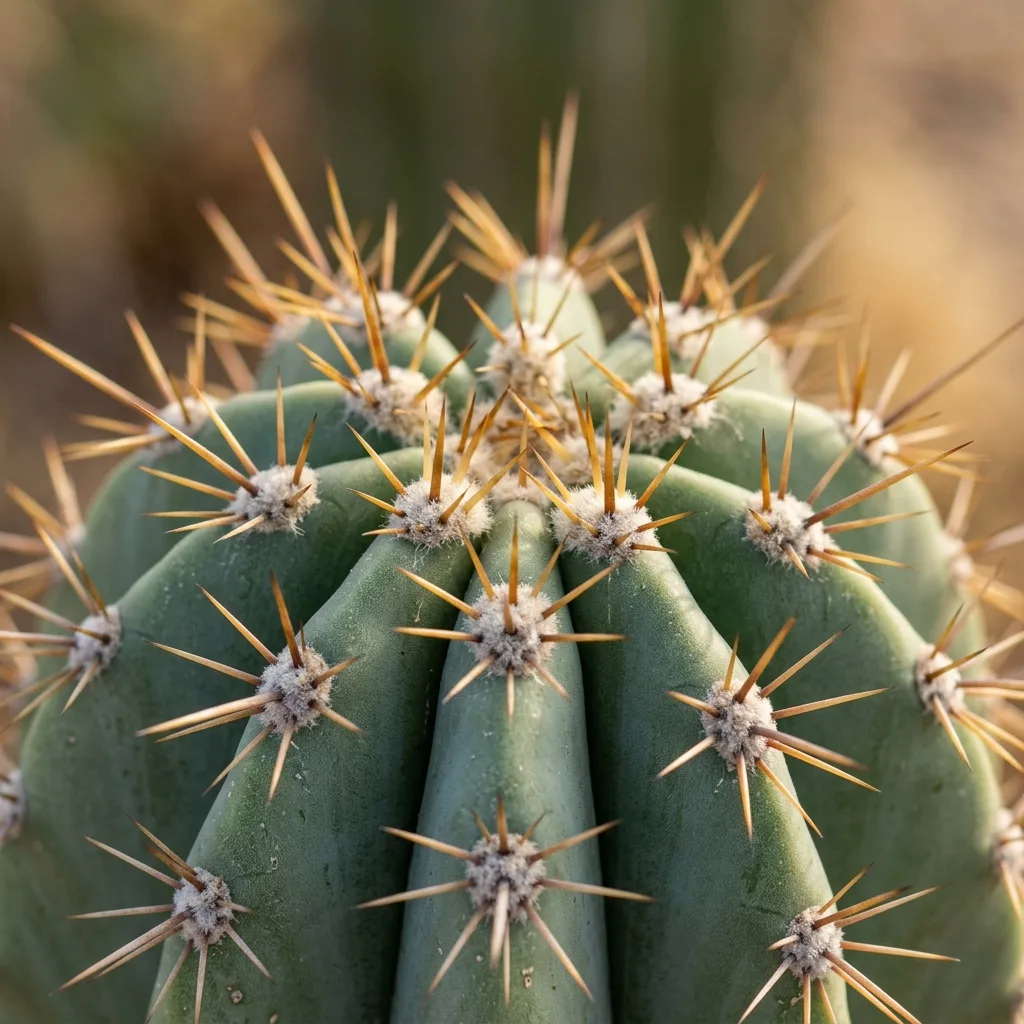
The cardinal taxonomic trait distinguishing a true cactus from any other succulent-stemmed plant is the presence of an organ known as the 'areole'. Areoles are specialized, cushion-like condensed lateral shoot buds found exclusively within the Cactaceae family. Every spine, new lateral pup, and resplendent blossom emerges strictly from these precise vegetative hubs. Spines themselves represent evolutionary marvels: highly reduced, modified leaves that became lignified to prevent moisture dissipation. Beyond forming a formidable barrier against grazing herbivores, spines channel morning condensation directly downward to the basal root collar and cast a microscopic matrix of shade, shielding photosynthetic dermal tissues from acute ultraviolet stress.
One of the most rewarding scientific takeaways of propagating cacti from stem cuttings or seed is the opportunity to directly witness the cellular water storage mechanics of the inner cortex and Krannert tissue. Genera such as Mammillaria, Echinopsis, and Gymnocalycium feature pleated structural ribs that expand accordion-style during periods of moisture abundance and contract during drought to minimize total surface area. This dynamic, accordion-like stem geometry serves as a live, master-class demonstration of environmental water stress management inside the home.
2. Photoperiod, Solar Intensity, and Ventilation Dynamics
One of the greatest biological advantages cacti offer in bright indoor spaces is their capacity to transform high-intensity photon streams into dense, compact biomass. However, the single most widespread indoor cultivation error is relegating these desert specimens to dim interior hallways or stagnant, poorly ventilated alcoves. A cactus denied adequate photon density quickly displays etiolation: abnormal elongation where stems become pale, narrow, and structurally fragile as cell walls stretch desperately toward available light, permanently marring the natural habit of the plant.
To maintain robust spine development, deep pigmentation, and compact growth, desert cacti demand at least five to six hours of direct, unfiltered solar exposure daily—preferably on southern or western window ledges. The delicate, powdery bloom coating the epidermis—known botanically as epicuticular wax or farina—acts as a native broad-spectrum sunscreen. Avoid rubbing or handling the stem directly, as stripped farina exposes the underlying epidermis to solar scurf and does not readily regenerate. Furthermore, maintaining gentle ambient air circulation is your best non-chemical defense, preventing fungal spores from settling into the micro-cavities around dormant areoles.
3. Irrigation Protocols and the Crucial Dormancy Cycle
One of the most scientifically compelling benefits of cultivating indoor cacti is their specialized metabolic pathway: Crassulacean Acid Metabolism (CAM). To minimize daylight transpiration, cacti keep their stomata hermetically sealed beneath the blazing sun. When ambient temperatures drop after dusk, their stomata dilate, sequestering ambient carbon dioxide and storing it as malic acid within their vacuoles. During the following day, this acid is decarboxylated internally to fuel photosynthesis. This nocturnal gas exchange makes cacti peerless nighttime biological air fresheners for bedrooms, workspaces, and quiet reading nooks.
Irrigation must shift dramatically between the vegetative growth flush (spring and summer) and the resting season (late autumn through winter). During active growth, employ a strict 'thorough soak and complete dry-down' routine: hydrate until water runs freely through bottom drainage holes, then completely withhold moisture until the potting substrate has dried through the center. A disciplined winter dormancy period is essential if you wish to see your cacti bloom. Between November and early March, place specimens in an unheated, bright space kept around 8–12°C (46–54°F) and virtually suspend all watering; a tiny splash once every six to eight weeks is more than sufficient to prevent fine root hairs from desiccating entirely.
4. High-Porosity Mineral Substrates and Pot Architecture
Cactus root systems undergo swift asphyxiation when buried in standard commercial potting soils dominated by moisture-retentive sphagnum peat. The blueprint for flourishing roots lies in coarse, free-draining mineral aggregates that maximize air-filled porosity and shed water rapidly. When selecting containers, unglazed terracotta pots featuring ample drainage holes should always take precedence, as their porous ceramic walls allow lingering moisture to evaporate freely from both the base and the sides.
The following balanced mineral formula provides an optimal root environment for indoor desert cacti:
| Substrate Component | Material Specification | Mixing Ratio (%) | Botanical Function |
|---|---|---|---|
| Inorganic Mineral | Horticultural Pumice (3–6 mm) | 40% | Creates macropores and maximizes structural aeration. |
| Inorganic Mineral | Crushed Lava Rock & Zeolite | 25% | Supplies trace minerals and buffers localized moisture levels. |
| Inorganic Mineral | Coarse River Sand / Grit | 15% | Prevents substrate compaction and retains structural pore continuity. |
| Organic Fraction | Screened Coconut Coir or Fibrous Peat | 20% | Provides the baseline cation exchange capacity for root adhesion. |
5. Inducing Floral Induction and Nutrient Management
The ultimate reward of thoughtful cactus care is witnessing vibrant, silk-like, neon-hued blossoms erupt through dense networks of stiff spines. Many indoor growers mistakenly assume that cacti rarely bloom indoors. Yet, provided their physiological triggers are met, even dwarf genera like Rebutia will produce dense halos of vibrant flowers. The primary trigger for floral initiation is the cold, dry winter dormancy period detailed above.
As seasonal temperatures climb in spring and watering resumes gradually, begin feeding with a specialized cactus fertilizer that is low in nitrogen and elevated in phosphorus and potassium (e.g., NPK 5-10-10 or 4-8-12). Excess nitrogen stimulates rapid water retention and causes dermal split fissures while actively suppressing bud formation. Apply fertilizer solely during the active vegetative season, no more than once a month, diluted to half or quarter of the manufacturer's recommended strength.
6. Propagation: Stem Cuttings, Pups, and Grafting Techniques
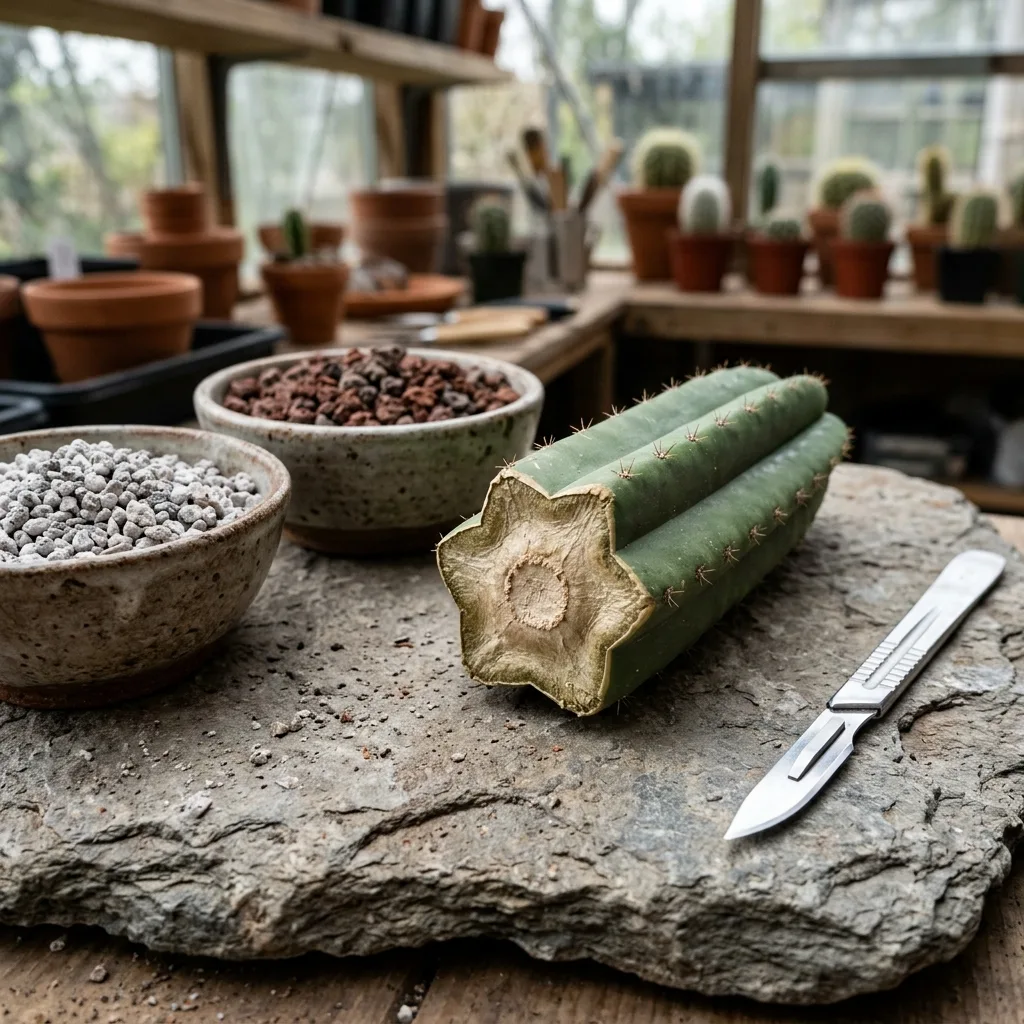
Multiplying your specimen cacti is one of the most fulfilling dimensions of indoor horticulture. The most straightforward vegetative techniques involve harvesting basal pups (offsets) or taking clean stem cuttings. Using a surgical-grade, sterilized blade, sever the cutting smoothly from the mother plant. Never plant a freshly cut succulent specimen directly into damp soil. You must rest the cutting in a shaded, well-ventilated location for 4 to 10 days until the exposed parenchymal cells desiccate and form an impervious, corky callus layer. Once callused, settle the cutting into dry mineral mix; it will generate fresh adventitious roots within 2 to 4 weeks with zero rot risk.
For non-chlorophyllous mutants—such as bright crimson or butter-yellow Gymnocalycium mihanovichii (the Moon Cactus)—grafting is required for long-term survival. The parasitic scion lacks chlorophyll and depends on an adaptable rootstock (frequently Hylocereus undatus) for sustained life. Aligning the exposed vascular cambium rings of both rootstock and scion, and keeping them secured until they knit together, allows nutrient transport across the graft union, sustaining rare mutant varieties that could never survive on their own roots.
7. Combating Basal Rot and Opportunistic Fungal Pathogens
Over ninety percent of domestic cactus losses stem from overwatering disguised as regular care. Chronic saturation fosters an anaerobic root micro-environment where soil-borne pathogens—including Phytophthora, Fusarium, and Pythium—rapidly multiply, culminating in basal stem and root rot. If the base of your cactus exhibits yellowish-brown discoloration accompanied by a soft, sponge-like texture, immediate horticultural intervention is required.
To salvage an infected specimen, unpot it without delay, wash away clinging substrate, and excise all discolored root and stem tissue using an alcohol-sterilized knife until you reach pristine, translucent green vascular tissue. Dust the healthy wound surface generously with activated charcoal or powdered horticultural sulfur, allow the wound to callus completely, and pot the rescued top into an entirely sterile, ultra-mineral substrate. Prompt diagnosis and bold surgical pruning can turn a near-fatal infection into a remarkable survival story.


Reader Reviews & Comments 3 Reviews
Eleanor Vance
Marcus Thornton
Julian Foster
Leave a Review & Rating
Share your plant care tips, experiences, or questions with our succulent community.