






When most of us imagine a cactus, our minds immediately conjure towering silhouettes standing resolute under the scorching Arizona sun, or perhaps quaint, spiny globes sitting on a sunny desk. In reality, the family Cactaceae represents one of the most awe-inspiring genetic archives nature has ever engineered against drought and climatic extremes. According to consensus data in botanical taxonomy, between 1,500 and 2,000 distinct cactus species thrive across 127 to 175 recognized genera. This vast evolutionary tapestry spans from the frost-bitten peaks of the Andes to the limestone valleys of central Mexico, and down into the humid, dappled canopy of Brazilian rainforests.
The potted specimens gracing our windowsills are domesticated ambassadors of this untamed gene pool. Yet answering 'how many types of cactus are there?' demands far more than citing an arid statistic. Every species possesses a distinct stem geometry, customized cellular hydration architecture, and precise ecological expectations. Truly understanding a cactus means deciphering millions of years of evolutionary dialogue and recreating that primordial desert equilibrium right in your living space.
Join us as we explore these masters of drought—not merely through raw numbers, but through their cellular adaptations, areole anatomy, and the scientifically grounded care regimens that ensure they thrive in your home for decades to come.
1. Taxonomic Identity, Areole Architecture, and Spine Morphology
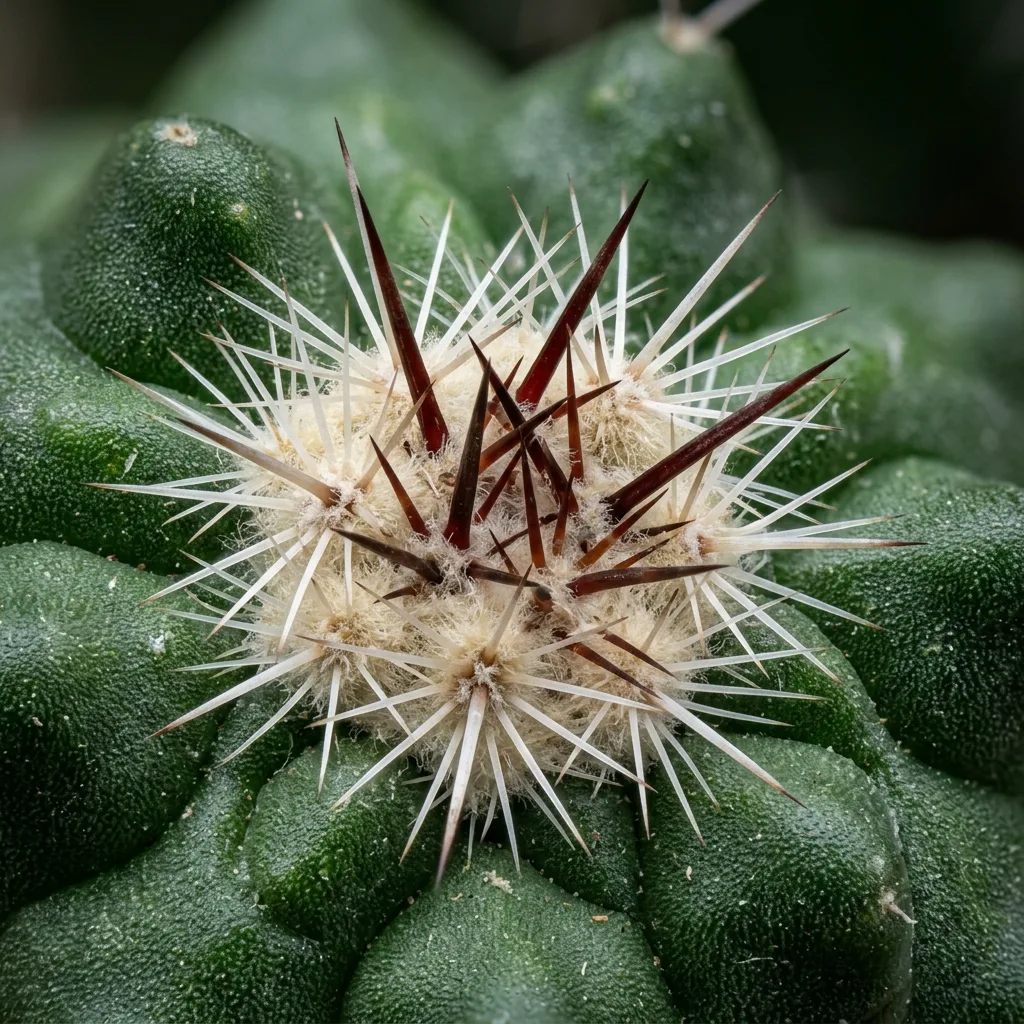
In botany, a single indispensable anatomical hallmark qualifies a plant as a 'true cactus' belonging to the family Cactaceae: the areole. While numerous succulent plants (such as certain members of the spurge family, Euphorbiaceae) sport ferocious thorns, they are not cacti. Areoles are unique, highly specialized, condensed lateral shoot buds arranged at regular intervals along the stem. Flowers, secondary offsets, and spines erupt exclusively from these cushion-like botanical structures.
Cactus species are broadly divided across four primary subfamilies:
- Cactoideae: Comprising roughly 80% of all known cactus species, this is the largest subfamily. It ranges from globose gems like Mammillaria, Echinocactus, and Gymnocalycium to architectural sentinels like Carnegiea gigantea (the iconic Saguaro). Every tissue is optimized for stem succulence and spine deployment.
- Opuntioideae: Renowned for their flattened stem pads (cladodes), this group includes the widespread Opuntia (Prickly Pear). Their most insidious and distinguishing adaptation is the presence of glochids—hair-like, microscopic barbed prickles lodged within the areoles that detach upon the slightest touch.
- Pereskioideae: Often referred to as the evolutionary missing link of the cactus family. The genus Pereskia retains true, broad, non-succulent green foliage, growing as woody vines or scrambling shrubs native to coastal scrub and dry tropical woodlands.
- Maihuenioideae: Forming dense, low-growing mounds in the frigid, wind-swept Patagonian steppes of Chile and Argentina, this primitive subfamily features miniature, persistent leaves and exceptional cold hardiness.
Morphologically, cactus spines are deeply modified, hardened leaves. Their purpose extends far beyond simply deterring hungry herbivores. By creating localized micro-turbulence along the ribbed stem epidermis, they dissipate drying winds, form a protective shade canopy against incinerating ultraviolet radiation, and condense dawn maritime fog into life-giving droplets that drip straight to the feeder roots below.
2. Light Intensity, UV Requirements, and Ventilation Standards
Among indoor growers, the number one killer of desert cacti—surpassing even improper watering—is chronic light starvation. True desert species (subfamily Cactoideae) demand a minimum of 5 to 6 hours of unfiltered, direct sunlight daily. In dark corners, a cactus stretches desperately toward the light, transforming into an unnaturally elongated, pale shadow of itself. Botanists term this metabolic breakdown etiolation. Once cell elongation occurs, the affected tissue will never regain its original stout, spherical, or columnar form.
Conversely, epiphytic jungle species such as Epiphyllum, Schlumbergera (Holiday Cacti), and Rhipsalis evolved beneath tropical forest canopies. They must be shielded from direct, blistering afternoon sun, flourishing instead in bright, filtered ambient light. Exposing them to full desert sun causes photo-oxidation, resulting in bleached chlorophyll, scorched red margins, and irreversible corking.
Equally critical is air circulation. Stagnant, humid indoor air locks up the plant's stomata, crippling gas exchange. Position your cacti where gentle drafts circulate naturally—such as beside an open window. A light breeze is the single most effective tool for evaporating residual moisture around the sensitive root crown.
3. Hydration Cycles and the Vital Winter Dormancy Protocol
Cacti operate via Crassulacean Acid Metabolism (CAM), an exquisite photosynthetic pathway. To eliminate transpirational moisture loss, they seal their stomata tightly throughout the blistering heat of the day. Only when temperatures drop at night do they open their pores, capturing carbon dioxide and converting it into malic acid for daytime synthesis. Thanks to this internal hydraulic vault, they survive prolonged drought effortlessly. Watering them out of habit is not love; it deprives roots of oxygen and suffocates them.
The golden watering rule is simple: 'Soak Thoroughly, Dry Completely'. Never add a single drop of water until the substrate has dried down to the absolute base of the container. On watering day, drench the pot until water drains freely from the drainage holes.
For abundant spring blossoms and long-term vitality, guiding your cactus through Winter Dormancy is indispensable. From November through late February:
- Relocate your specimen to a bright, cool spot maintained between 8°C and 12°C (46°F - 54°F).
- Cease watering almost entirely (a light sip once a month for miniature pots under 2 inches is sufficient; medium and large pots require zero water throughout winter).
- As metabolic activity slows, the plant registers environmental cues that trigger flower bud initiation at the cellular level. Kept in a warm, heated room and watered all winter, a cactus never rests—and will rarely, if ever, bloom.
4. Highly Mineral Substrates and Aerated Potting Dynamics
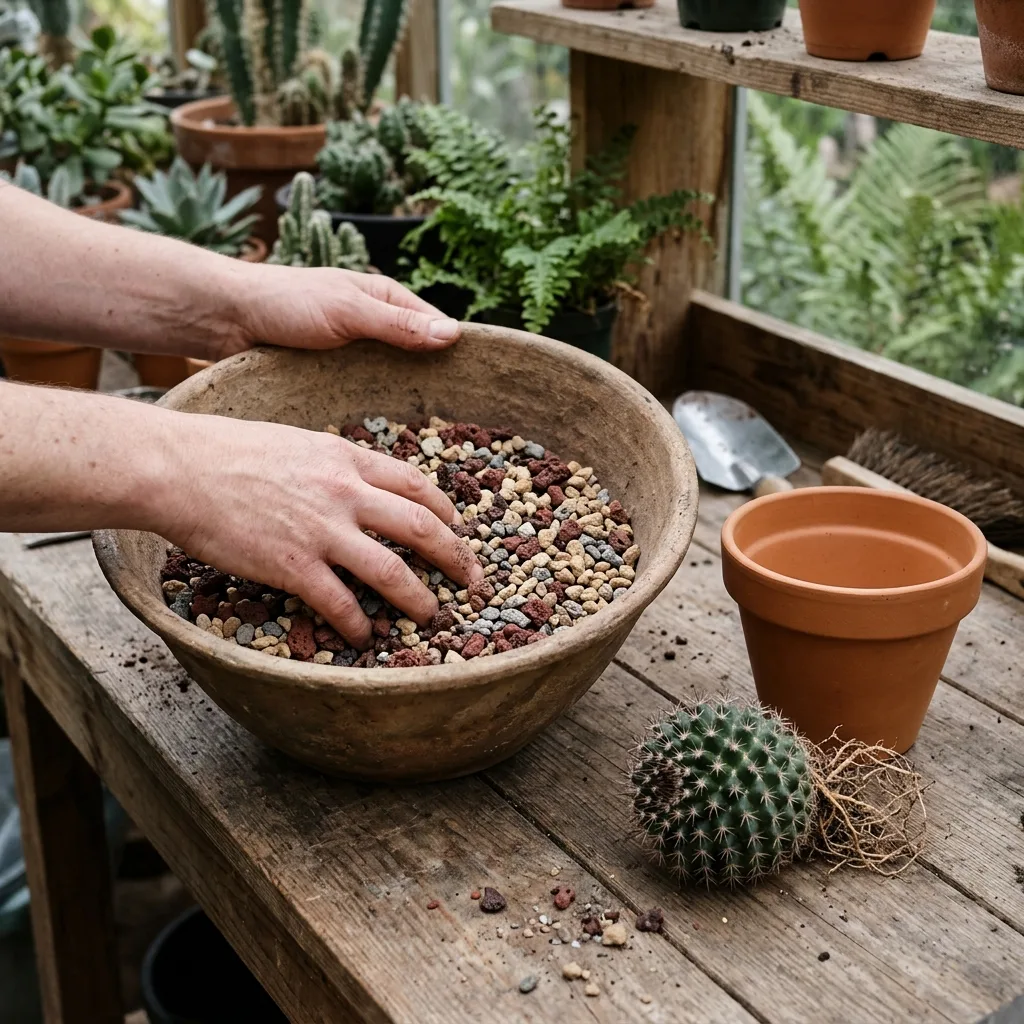
If there is one universal vulnerability shared by desert cactus roots, it is a zero-tolerance policy for waterlogged organic muck. Standard, peat-heavy commercial potting soils function like wet sponges, rotting delicate root hairs within 48 hours. A professional cactus substrate must be composed predominantly of coarse, porous volcanic minerals that flush water instantly and promote subterranean oxygen exchange.
The following balanced mineral formula provides optimal structure for your collection:
| Substrate Component | Desert Cacti Ratio | Jungle Cacti (Epiphytic) Ratio | Botanical Function |
|---|---|---|---|
| Lava Rock (Scoria - 2-4 mm) | 30% | 15% | Porous structure, micro-mineral and iron release, root anchorage |
| Pumice (3-5 mm) | 35% | 20% | Maximal aeration voids and rapid gravitational drainage |
| Zeolite (Clinoptilolite) | 15% | 10% | Cation exchange capacity (nutrient buffering) and toxin adsorption |
| Coarse River Sand / Crushed Quartz | 10% | 5% | Prevents compaction and stabilizes the root flare |
| Coarse Coco Coir / Aged Bark | 10% | 50% (Leaf mulch mix) | Provides essential organic moisture retention without collapsing |
When selecting containers, unglazed terracotta remains the uncontested gold standard. Terracotta’s porous clay walls allow moisture to evaporate laterally through the pot itself, providing insurance against accidental overwatering. Planters lacking drainage holes are death traps for cacti.
5. Inducing Heavy Blooms and Macro-Nutritional Balance
Many plant enthusiasts believe cacti bloom only once every few decades. In reality, genera like Rebutia, Gymnocalycium, Mammillaria, and Parodia produce spectacular crowns of blossoms every single spring and summer when given the right conditions. Flowering hinges on two synchronized triggers: an uninterrupted, chilly winter rest and precise springtime fertility management.
During active growth (April through September), apply a cactus-specific fertilizer once a month diluted to half strength. Scrutinize the NPK ratio: nitrogen must always remain low, while phosphorus and potassium must be elevated (an NPK of roughly 5-10-15 is ideal). Excessive nitrogen forces watery, ballooned growth that ruptures the cuticle, invites fungal pathogens, and halts floral initiation entirely.
6. Propagation: Pups, Stem Cuttings, and Grafting Techniques
The botanical diversity of cacti is mirrored by their remarkable vegetative adaptability, making propagation immensely rewarding:
- Separating Offsets (Pups): Detach basally produced offsets using a flame-sterilized scalpel. Never plant freshly severed pups immediately into soil. Set them in a warm, dry, shaded location for 4 to 7 days until a firm, calloused protective layer forms over the wound. Uncalloused cuttings planted into damp soil quickly succumb to soil-borne pathogens.
- Stem Cuttings: Segmented columnar and pad-forming cacti can be divided cleanly along joints or mid-stem sections. Dust the cut surface with sulfur powder or cinnamon to deter infection. Once thoroughly calloused, position upright in dry mineral grit and withhold water until new adventitious roots anchor the stem (roughly 2 to 3 weeks).
- Grafting: Chlorophyll-deficient cultivars (such as the vibrant red, yellow, or pink Gymnocalycium mihanovichii 'Hibotan') cannot synthesize sugars on their own. These mutants survive by fusing their vascular cambium directly onto vigorous green rootstocks (typically Hylocereus undatus).
7. Fending Off Root Rot and Combating Fungal Pathogens
Approximately 95% of all cactus fatalities stem from root and basal stem rot caused by opportunistic fungi like Pythium, Phytophthora, and Fusarium. The earliest visible warning sign is an olive-yellow or translucent brown discoloration at soil level, accompanied by a soft, mushy texture when gently pressed.
If caught early, unpot the specimen immediately. Using a sterile blade, systematically excise all blackened roots and mushy stem tissue until you reveal crisp, immaculate, bright green flesh. Coat the exposed wound generously with activated charcoal or powdered sulfur, allow it to dry in a well-ventilated room for 10 days to form a hard callus, and repot into fresh, sterile mineral grit. When facing pests, mealybugs tucked deep into woolly areoles represent the primary threat. Manually eradicate them with a cotton swab dipped in 70% isopropyl alcohol, or apply a systemic bio-insecticide for widespread infestations.


Reader Reviews & Comments 3 Reviews
Julian Vance
Claire Sterling
Marcus Holloway
Leave a Review & Rating
Share your plant care tips, experiences, or questions with our succulent community.