






From the arid valleys of Africa to the sheer canyon walls of Mexico, succulents stand as breathtaking botanical marvels that have mastered nature's most ruthless droughts with unmatched grace. Yet, the windowsill in our living room and the baking summer sun or winter frost of our outdoor garden do not demand the same biological adaptations. The most pervasive error among plant lovers is condemning every succulent to an identical microclimate; in truth, shade-tolerant indoor specimens and frost-defying outdoor giants belong to completely different ecological realms.
Cultivating succulents is far more than an aesthetic pursuit—it is the art of mastering a plant's cellular water-storage physiology (Crassulacean Acid Metabolism, or CAM photosynthesis) and engineering substrate aeration. In this comprehensive guide, we dissect the 12 most resilient succulent species tailored for both indoor interiors and outdoor landscapes, ensuring you never face heartbreak whether planting in ceramic containers, balcony planters, or rugged rock gardens.
1. Botanical Identity and Morphological Characteristics
The term 'succulent' does not designate a single botanical family. Instead, it refers to a morphological convergence across diverse lineages—such as Crassulaceae, Asphodelaceae, Apocynaceae, and Euphorbiaceae—that have evolved specialized water-storage tissue (parenchyma) within their stems, leaves, or roots. The 12 best succulents for your home and garden divide into two primary groups based on their ecological tolerances:
The 6 Best Indoor (Houseplant) Succulents:
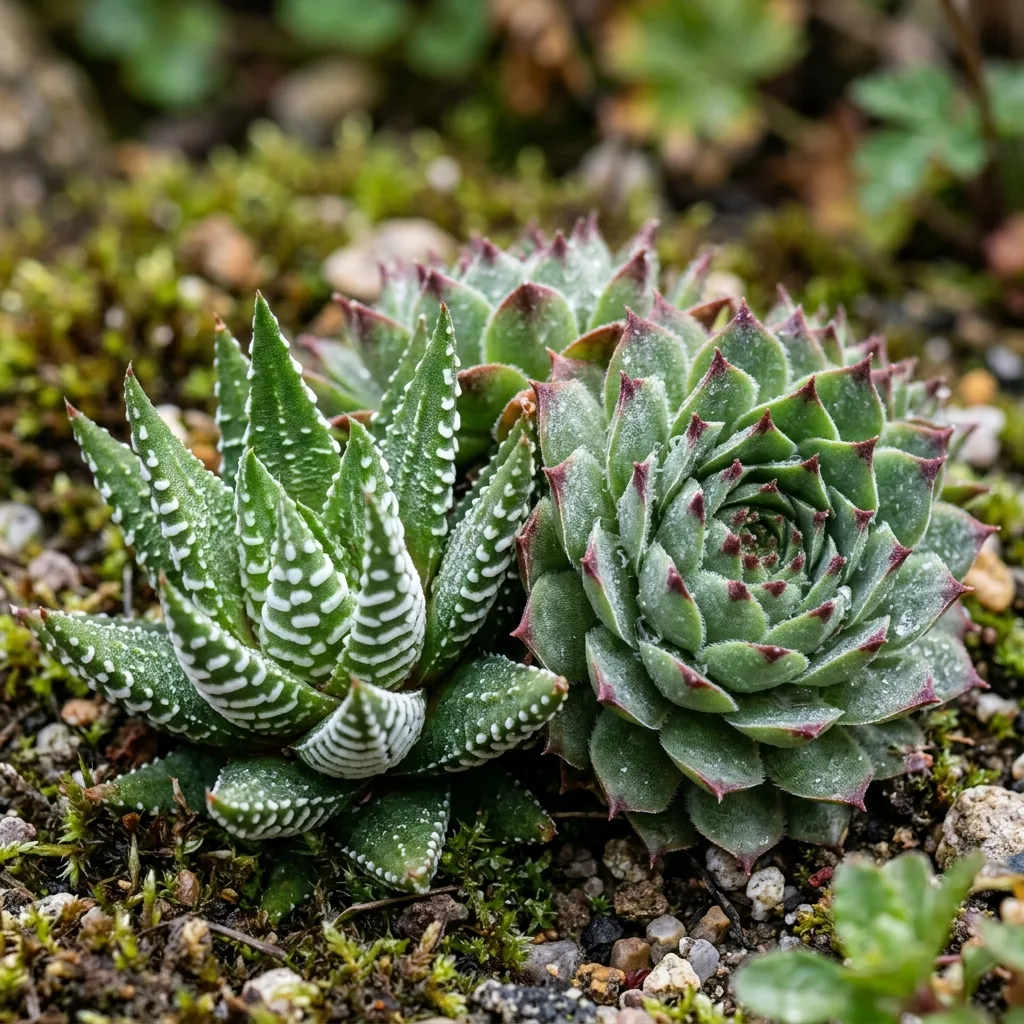
- Haworthiopsis fasciata (Zebra Haworthia): Boasting robust root xylem architecture and compact leaf rosettes naturally resistant to etiolation (stretching from low light), this species is an impeccable centerpiece for interior coffee tables.
- Sansevieria trifasciata (Snake Plant / Mother-in-Law's Tongue): The gold standard of CAM metabolism with nocturnal stomatal opening; it maintains cellular turgor effortlessly even in low-lumen corners.
- Crassula ovata (Jade Plant): With its semi-woody trunk and plump, obovoid water-storing leaves, it brings architectural joy to living rooms illuminated by bright, filtered sunlight.
- Gasteria 'Little Warty': Characterized by slow cell division and an evolutionary lineage adapted to shaded rock crevices, this resilient houseplant does not demand intense direct sun.
- Zamioculcas zamiifolia (ZZ Plant - Succulent Rhizome): Thanks to its thick succulent petioles and underground tuberous rhizomes, it can endure weeks of neglect, low light, and deep drought.
- Schlumbergera bridgesii (Christmas Cactus): An epiphytic succulent hailing from coastal Brazilian tropical rainforests, perfectly adapted to home interiors that avoid scorching direct sunlight.
The 6 Best Outdoor (Garden and Balcony) Succulents:
- Sempervivum tectorum (Common Houseleek / Hens and Chicks): Shrugs off freezing temperatures down to -25°C (-13°F) via protective anthocyanin pigmentation and endogenous antifreeze proteins.
- Sedum spurium (Caucasian Stonecrop): Equipped with vigorous ground-creeping rhizomes and a thick waxy cuticle layer against drought, it is indispensable for garden borders.
- Agave americana (Century Plant): Heavy fibrous leaves with extreme UV defense and an expansive root network allow it to defy brutal winds and blistering full sun.
- Delosperma cooperi (Ice Plant): Bears shimmering, light-refracting bladder cells on its leaf epidermal surface, blanketing rockeries in radiant purple blooms without suffering frost damage.
- Euphorbia tirucalli (Firestick / Pencil Cactus): With photosynthetic cylindrical green-and-orange stems dense with chloroplasts, it provides a striking, high-impact focal point in patio containers.
- Hylotelephium spectabile (Showy Stonecrop): A four-season garden stalwart featuring autumn blossoms that magnetize pollinators, followed by a winter dieback to a sturdy crown that erupts anew each spring.
2. Light Requirements and Indoor Positioning
A succulent's light demand is governed by photosynthetic photon flux density (PPFD). Outdoor rockery species (Agave, Sempervivum, Delosperma) require a minimum of 6 to 8 hours of direct, unfiltered solar radiation each day to sustain their silvery, powdery farina coating and preserve tight, compact rosettes. Starved of sun, an outdoor succulent etiolates rapidly, softens its cellular tissue, and loses its winter frost hardiness.
Conversely, indoor mainstays like Haworthiopsis, Gasteria, and Sansevieria evolved beneath the canopy of arid scrub or within the deep fissures of rocky cliffs. Exposing these varieties to raw, southern-exposure glass creates intense solar heat that causes photo-bleaching and necrotic tissue burn (chlorophyll breakdown). Indoors, position them roughly 50 to 100 cm back from east- or west-facing windows in bright, filtered light. Dull, bronzing foliage signals light saturation, while widening internodes and pale growth tips are an unmistakable biological cry for more photons.
3. Irrigation Discipline: The 'Soak and Dry' Protocol
Sprinkling succulents with frequent, small sips of water is not an act of kindness—it is a slow suffocation that deprives the root system of vital oxygen. Succulent physiology thrives only when we replicate the cloudburst-and-drought cycles of their native habitats through the strict 'Soak and Dry' protocol.
Never irrigate until the substrate matrix has dried out completely down to the bottom tier of the container. When you do water, saturate the soil thoroughly until moisture drains freely from the drainage holes, and always empty the saucer 15 minutes afterward to eliminate stagnant pools. During winter, indoor CAM activity slows down noticeably; extend your watering intervals to once every 3 to 4 weeks depending on ambient indoor temperatures. Outdoors, well-anchored Sempervivum and Sedum species can often survive entirely on natural seasonal rainfall, barring prolonged summer heatwaves.
4. Substrate Formulation and Container Selection
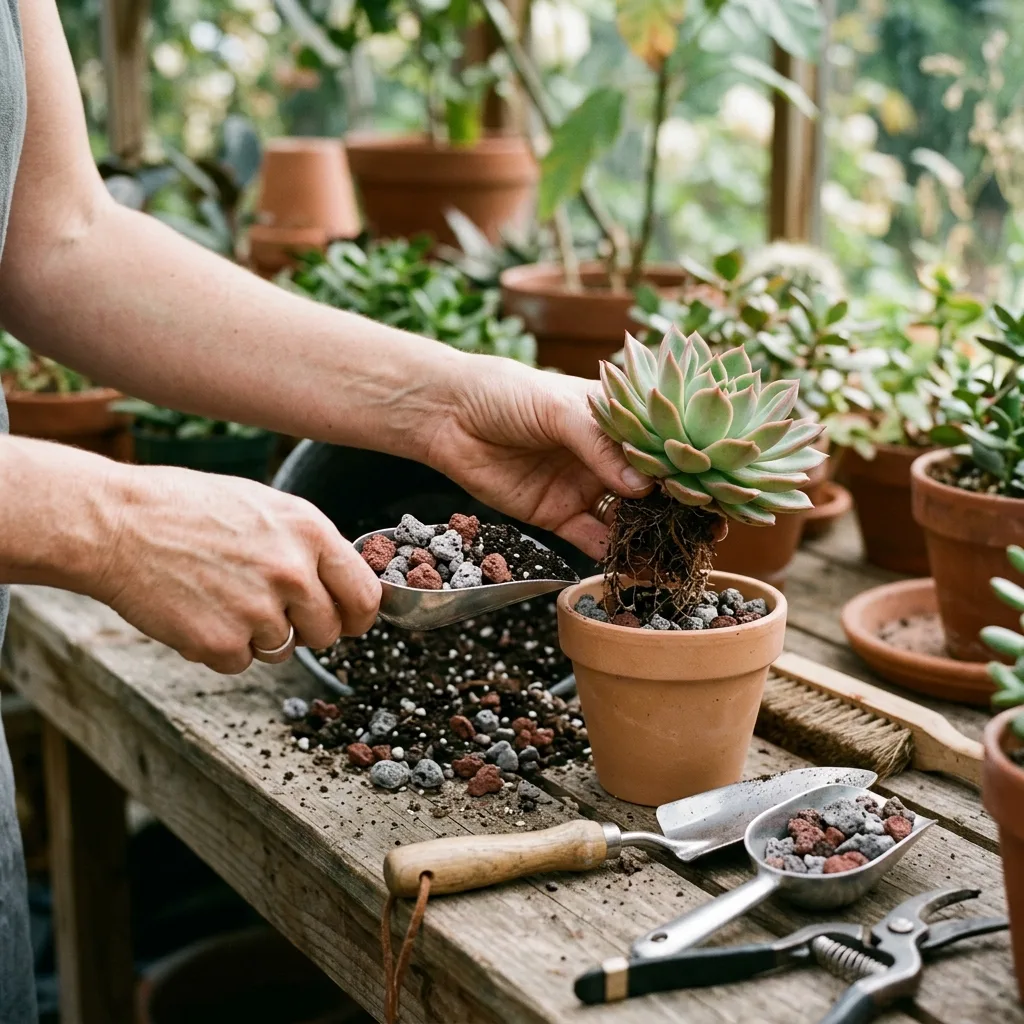
Succulent root hair cells require massive macroporosity and continuous gas exchange to sustain cellular respiration. Conventional, peat-heavy commercial potting soils act like waterlogged sponges, creating severe hydrostatic pressure and catastrophic root rot within the xylem. For potted displays both indoors and out, utilize the following precise mineral-based formula:
| Component | Indoor Mix Ratio | Outdoor Container Ratio | Functional Botanical Role |
|---|---|---|---|
| Horticultural Pumice (3-6 mm) | 40% | 35% | Structural macroporosity and non-collapsing aeration |
| Lava Grit / Zeolite | 20% | 25% | Mineral replenishment and high cation-exchange capacity (CEC) |
| Coarse Perlite | 10% | 10% | Substrate lightening and microscopic air pockets |
| Coarse Blonde Peat / Coco Coir | 30% | 30% | Controlled moisture anchoring and root colonization |
When selecting containers, the golden standard is unglazed terracotta. Its porous clay walls allow continuous moisture evaporation and subterranean gas exchange. Containers devoid of bottom drainage holes are nothing short of a tomb for succulents. If planting directly into native garden soil, construct elevated rockery berms amended heavily with coarse river grit and crushed stone.
5. Step-by-Step Propagation Techniques
Multiplying these 12 standout cultivars is both exceptionally straightforward and botanically gratifying. Depending on the species' natural architecture, two primary propagation avenues yield the highest success:
- Rosette Offset Division (Sempervivum, Haworthiopsis, Agave): Locate the lateral stolons producing miniature offshoots (pups) around the parent plant's base. Sever the connecting stolon close to the pup using a flame-sterilized scalpel. Allow the offset to rest in a dry, shaded room for 2 to 3 days to form a firm suberized callus over the wound. Plant directly into a dry, pumice-rich mixture and withhold water for at least 5 days to stimulate root initiation.
- Stem Cuttings (Sedum, Crassula, Euphorbia): Harvest a firm, healthy 7 to 10 cm stem cutting just below an active node. Carefully strip the lowest leaves to expose clean nodal tissue. Rest the cutting in an airy, shaded location for approximately 4 days until the cut end suberizes completely. Insert the cutting into slightly dampened perlite-peat substrate until adventitious root primordia establish.
6. Common Pests, Diseases, and Clinical Remedies
The most persistent indoor adversary of succulents is the Mealybug (Pseudococcidae) family. These sap-sucking insects shelter in leaf axils and tight crown centers, masquerading as fuzzy, cotton-like clusters while draining phloem sap. For light infestations, dab individuals directly with a cotton swab soaked in 70% isopropyl alcohol. For widespread populations, emulsify cold-pressed horticultural neem oil with pure potassium soap and apply thoroughly at dusk to avoid phototoxicity.
Outdoors, particularly during rainy spring spells, slugs and snails emerge to feed aggressively on the tender succulent margins of Sedum and Delosperma. Ring the periphery of your garden beds or pot bases with food-grade Diatomaceous Earth (DE) to establish an impassable mechanical barrier.
7. Seasonal Maintenance Calendar and Expert Tips
- Spring (Awakening): Active vegetative growth resumes. Repot root-bound specimens into fresh, gritty substrate. Administer a balanced, half-strength succulent fertilizer (such as an NPK 10-10-10 or low-nitrogen 5-10-10) once a month.
- Summer (Peak Energy and Estivation): While landscape succulents thrive, intense heatwaves exceeding 35°C (95°F) can trigger temporary summer dormancy (estivation) in certain genera. Always water at twilight rather than midday to prevent boiling root tissue in heated, saturated soil.
- Autumn (Hardening Off): Outdoor varieties begin concentrating internal cell sap to fortify against frost. Cease all nitrogen fertilization completely. Taper off irrigation frequency to stimulate natural physiological hardening.
- Winter (Dormancy): Relocate frost-tender indoor varieties (such as Crassula and Haworthiopsis) safely away from freezing window drafts and drying heating vents. Situate them by a cool, sunlit aperture and restrict water to absolute maintenance minimums.


Reader Reviews & Comments 4 Reviews
David Miller
Eleanor Vance
Marcus Thorne
Sophie Bennett
Leave a Review & Rating
Share your plant care tips, experiences, or questions with our succulent community.