






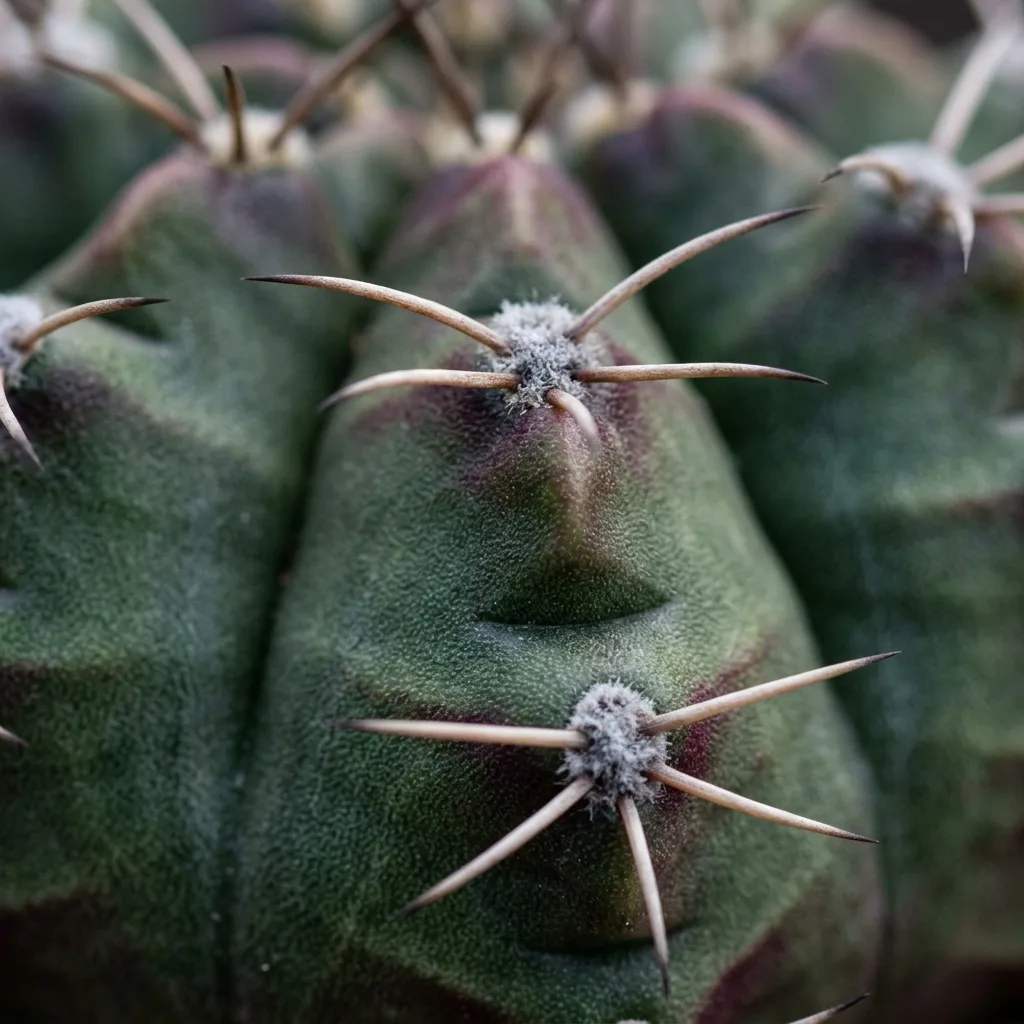
Hailing from the undulating South American pampas and the rocky, gravel-strewn hills skirting the Andes to our windowsill collections, the genus Gymnocalycium holds a uniquely revered place in the hearts of cactus and succulent connoisseurs. Deriving its botanical name from the Greek gymnos (meaning 'naked') and kalyx (meaning 'calyx' or 'bud cup'), these captivating plants stand distinctly apart from other cacti due to flower buds that are entirely devoid of bristles, hairs, or spines. In common horticultural parlance, they are affectionately called 'chin cacti,' named after the swollen, chin-like protuberances and curving tubercles that project distinctly beneath each spine-bearing areole along their ribbed stems.
Cultivating a Gymnocalycium within an indoor setting is akin to stewarding a living, patient sculpture shaped by millenia of evolutionary pressure. Yet, many succulent enthusiasts fall into the perilous trap of assuming these specimens behave like blistering desert denizens, subjected to unrelieved midday sun and terminal arid starvation. In their natural habitat, however, Gymnocalycium species evolved within a semi-sheltered microclimate, nestled in the dappled shade of deciduous scrub and sheltered beneath tall native tussock grasses. Once provided with precisely filtered light and a carefully calibrated mineral substrate, they will reward your stewardship with magnificent, silky-textured porcelain flowers right on your windowsill.
1. Botanical Biology and Physiological Foundations
Unlocking healthy, vigorous growth in Gymnocalycium begins with deciphering its cellular water-storage architecture. Like many specialized xerophytes, this genus operates via CAM (Crassulacean Acid Metabolism) photosynthesis. Under the intense, evaporative heat of daytime, the plant keeps its stomatal pores hermetically sealed, virtually eliminating water loss through transpiration. As the cool nocturnal air settles, the stomata dilate, taking in carbon dioxide and storing it chemically in the form of malic acid inside the vacuoles. When sunlight returns the next morning, this stored carbon is decarboxylated and shuttled into the Calvin cycle, synthesizing glucose without unnecessary hydration loss.
The pronounced ribs and characteristic 'chin' folds are far more than aesthetic contours. They function as a dynamic biomechanical accordion: during prolonged drought, the internal tissue volume safely contracts without damaging the epidermal cells; when seasonal rainfall arrives, the cell walls expand smoothly without tearing the protective cuticular boundary. Beneath the soil, the root architecture features a fibrous, shallow root system optimized for rapid surface absorption. Its xylem vessels possess an acute demand for oxygen; consequently, when placed in dense, organic-heavy, muck-forming soil mixes, the delicate root hairs suffer asphyxiation within minutes, rendering the plant defenseless against soil-borne fungal pathogens such as Fusarium oxysporum and Phytophthora.
2. Accurate Diagnosis and Plant Signals
Early identification of stress signals in Gymnocalycium's physiological cycle is the ultimate defense against specimen loss. While the plant cannot vocalize distress, it communicates fluently through rib turgor, epidermal coloration, and tissue resilience:
- Cellular Dehydration: The stem visibly shrinks and deflates without softening; the ribs draw tight against one another, and the plant subtly pulls itself downward toward the soil line. This indicates dry root zones and signals that irrigation is needed.
- Root Asphyxiation and Rot Alert: The epidermis turns dull yellowish, translucent, or jelly-like, feeling hollow and spongy to the touch. This condition is often accompanied by dark brown or black basal liquefaction near the root-stem transition zone.
- Etiolation (Light Starvation): The plant loses its natural globose or flattened disc form, elongating into an unnatural, pale-green cone or dome as it stretches desperately toward an adequate light source.
- Sunscald (Photo-oxidation): Bleached white or beige, hardened, corky patches appear across exposed ribs. While this necrotic tissue will never revert to green, it will gradually move downward along the base as healthy new growth emerges from the apical meristem.
3. Step-by-Step Cultivation Protocol
To preserve vigorous root health and ensure an abundant flush of pristine flower buds each spring, adhere to this controlled, step-by-step horticultural protocol:
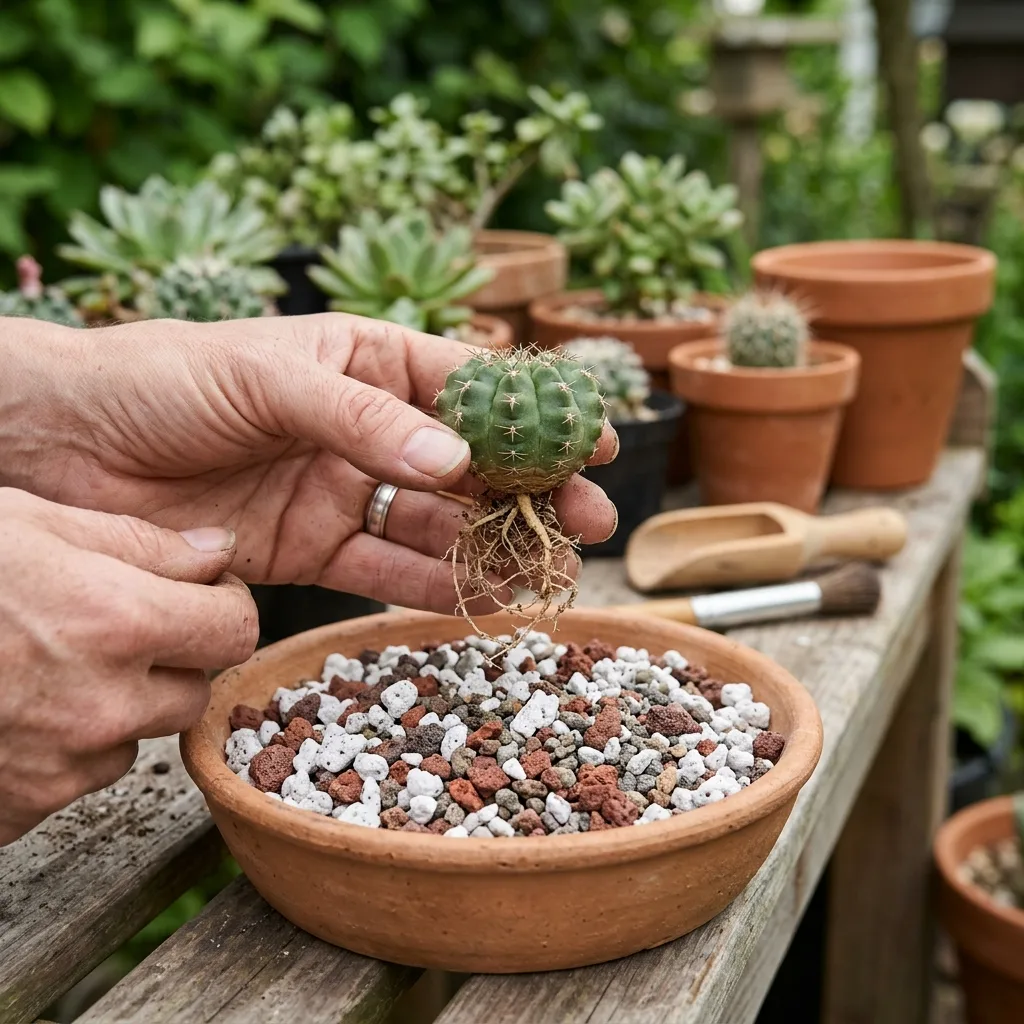
- Root Inspection and Media Stripping: Carefully unpot your newly acquired or bound Gymnocalycium. Gently tease apart and strip away all dense, peat-based industrial nursery plug soil without tearing the main root tap. A dry, soft-bristle artist's brush is exceptionally gentle and effective for this step.
- Sanitary Root Pruning and Callusing: Using sterilized shears, prune away any blackened, desiccated, or tangled capillary root strands. Do not pot the plant immediately into fresh media; instead, place it in a shaded, well-ventilated space for 48 to 72 hours to allow micro-wounds to form a protective suberized callus tissue layer.
- Vessel Selection: Select an unglazed terracotta pot that exceeds the plant's diameter by only 2 to 3 cm, equipped with generous drainage openings. The microporous nature of terracotta allows atmospheric gas exchange through the pot walls, expediting dry-back and optimizing root oxygenation.
- Mineral-Rich Substrate Potting: Line the base with coarse horticultural pumice or porous lava rock. Seat the root zone into your mineral-dominant mix, gently working it between the lateral roots. Ensure the green stem remains entirely above the soil line, anchoring the sensitive root crown exclusively with inorganic top-dressing gravel.
- The Critical Post-Potting Dry Phase: NEVER water immediately following repotting. Wait at least 5 to 7 days to allow any microscopic root fractures to seal against fungal infiltration. Subsequently, administer a thorough, soaking irrigation until water flows freely from the drainage hole, discarding any runoff collected in the saucer immediately.
4. Required Equipment, Substrate Formulas, and Parameters
Cultivation success with Gymnocalycium relies on physical substrate physics and balanced environmental factors. To provide the ideal balance of capillary aeration and moisture release, utilize the following horticultural specifications:
| Component / Parameter | Recommended Ratio / Metric | Physiological Function |
|---|---|---|
| Pumice (3–6 mm) | 40% | Porous structure that supplies abundant oxygen to root xylem with zero waterlogging. |
| Lava Rock (Scoria) | 25% | Heavy, vesicular aggregate that anchors roots and steadily releases trace micronutrients. |
| Zeolite / Calcined Clay | 15% | Enhances Cation Exchange Capacity (CEC), buffering and slowly releasing plant nutrients. |
| Screened Leaf Compost / Worm Castings | 20% | Provides essential organic humates and beneficial microbial biology for CAM metabolism. |
| Light Intensity | 25,000 – 35,000 Lux | Bright, filtered daylight (completely shielded from scorching midday sun). |
| Overwintering Temperature | 8°C – 12°C (46°F – 54°F) | Cold vernalization rest required to trigger latent floral primordia for spring blooming. |
5. 5 Common Cultivation Mistakes and Recovery Protocols
- Mistake 1: Relying Directly on Commercial 'Cactus Soil' Bags: Most mass-market cactus soils are formulated almost entirely of fibrous peat moss, which turns hydrophobic like concrete when dry and retains suffocating moisture for weeks when wet.
Recovery Protocol: Amend any commercial blend heavily by mixing in at least 75% to 80% inorganic grit, such as horticultural pumice, perlite, and crushed volcanic scoria. - Mistake 2: Exposing Plants to Blistering Midsummer Overhead Sun: Gymnocalycium is not an open Sahara desert inhabitant. Prolonged exposure to unfiltered, scorching western or southern sun bleaches cellular chlorophyll, induces thermal shock, and halts cell division.
Recovery Protocol: Relocate the specimen behind a sheer linen curtain or underneath 30% to 40% shade cloth. Acclimate it solely to gentle, direct early-morning rays. - Mistake 3: Continued Winter Watering in Heated Living Rooms: Keeping a Gymnocalycium warm and hydrated through the winter prevents it from entering natural dormancy. The plant responds by producing distorted, weak growth and will fail to initiate flower buds the following spring.
Recovery Protocol: Cease watering almost entirely from November through March (if severe rib shriveling occurs, apply a minor tablespoon of moisture at the soil perimeter every 4 to 6 weeks) and move the specimen to a cool, bright area kept between 8°C and 10°C. - Mistake 4: Overhead Watering that Traps Moisture in the Apical Depression: The apical growth center of Gymnocalycium naturally forms a concave depression. Trapped water droplets within this apical crown invite rapid fungal germination, inevitably causing fatal crown rot.
Recovery Protocol: Always apply water directly to the surrounding substrate or utilize a bottom-soaking method. If moisture accidentally settles in the apex, blot it dry immediately with a clean tissue or clear it with an air blower. - Mistake 5: Burying the Stem Collar in Moisture-Retentive Organic Soil: The fragile epidermal junction where the subterranean root system transitions into the photosynthetic stem is exceptionally susceptible to basal neck rot when exposed to damp organic matter.
Recovery Protocol: Top-dress the top 1 to 2 cm of the pot with coarse, non-reactive quartz gravel or crushed zeolite, physically isolating the soft crown collar from moist potting media.
6. Seasonal Calendar and Long-Term Results
Aligning your horticultural practices with Gymnocalycium's seasonal rhythm yields a resilient specimen that expands gracefully over the decades, rewarding you with uninterrupted floral flushes from early summer straight into autumn:
Spring (Awakening): In mid-March or early April, as ambient ambient temperatures settle consistently above 15°C (59°F), reintroduce light irrigation. As the capillary roots stir, apply a quarter-strength, low-nitrogen, high-potassium and phosphorus cactus fertilizer. The first smooth, hairless floral calyxes will emerge nestled between the areolar chins.
Summer (Vegetative Growth & Flowering): Water thoroughly and deeply, adhering to the foundational rule: 'Allow the substrate to dry entirely before rehydrating.' During extreme midsummer heatwaves (surpassing 35°C / 95°F), the plant may enter a brief aestivation (summer dormancy); widen your watering intervals accordingly. Flowers will open and close over successive weeks in glorious succession.
Autumn (Hardening Off): Beginning in late September, systematically decrease watering frequency and halt all fertilization. This deliberate water restriction concentrates the internal cell sap, elevating dissolved solute levels and lowering the cellular freezing point in preparation for winter cold.
Winter (Dormancy / Vernalization): The restorative resting phase. Substrates are kept completely dry in a cool, bright location. This essential cold stress (vernalization) is the exact biochemical stimulus required to activate dormant flower primordia within the plant's meristem for the coming year.


Reader Reviews & Comments 4 Reviews
Arthur Pendelton
Clara Higgins
Julian Vance
Dr. Beatrice Lowe
Leave a Review & Rating
Share your plant care tips, experiences, or questions with our succulent community.