






Perched upon the windswept slopes of the Bolivian and Argentine Andes between 2,000 and 4,000 meters above sea level, diminutive globular forms cling to the narrowest rock fissures. These botanical wonders belong to the genus Rebutia—extraordinary stem succulents renowned for producing flamboyant, oversized blooms that seem almost disproportionate to their modest bodies. Cultivating these high-altitude treasures at home or on a balcony is akin to welcoming the harsh, yet immensely rewarding, microclimate of the alpine Andes into your living space.
Rebutia cacti—celebrated members of the family Cactaceae—are cherished by collectors worldwide for their compact morphology and ability to blossom profusely even at a very tender age. However, when subjected to generic houseplant watering regimes and relegated to dim, perpetually warm living room corners, they rapidly succumb to etiolation (stretching and thinning due to insufficient photon flux) and basal stem rot. Unlocking their full vitality requires accurately simulating their cellular water-storage mechanisms and the dramatic day-night temperature swings of their mountain habitats.
1. Botanical Biology and Physiological Foundations
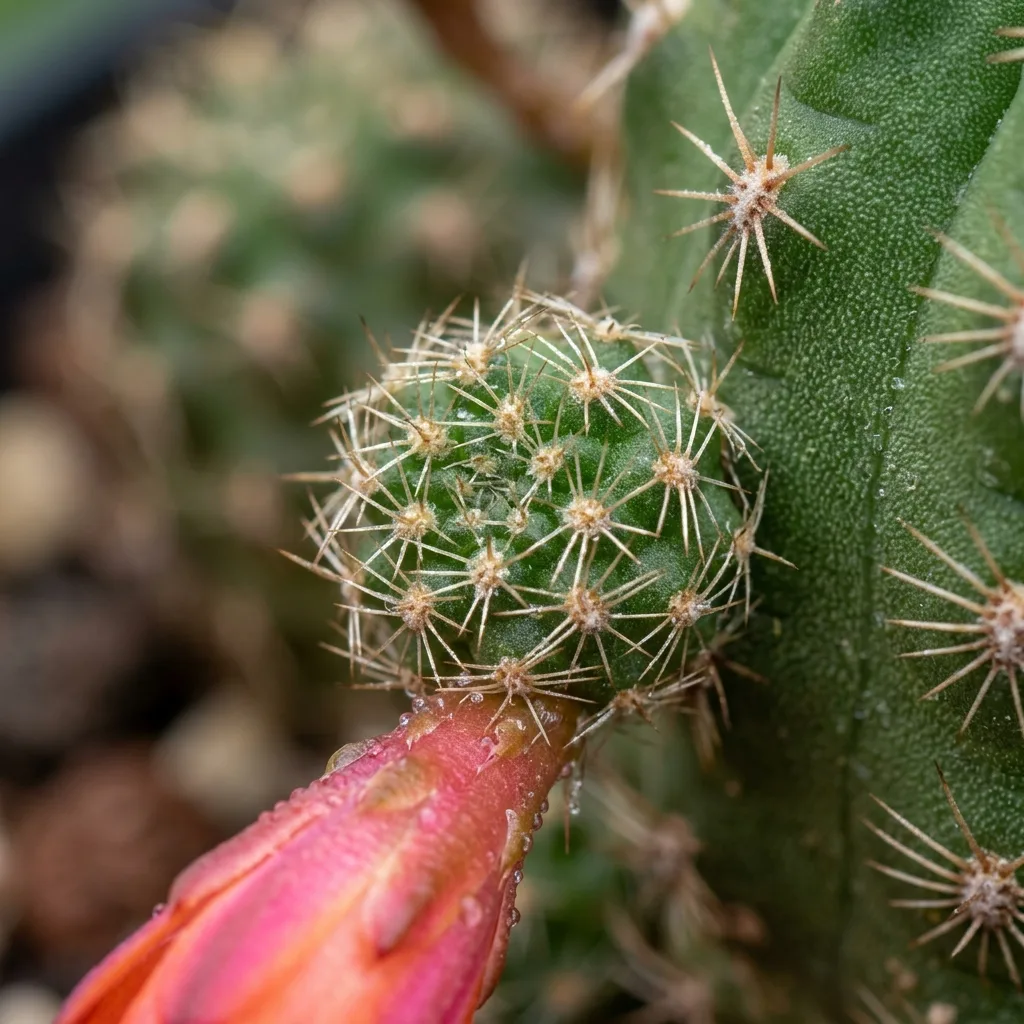
Plants of the genus Rebutia are xerophytic specialists displaying remarkable structural adaptations in their root and shoot systems. Having transformed their ancestral leaves into spines to minimize transpirational surface area, they perform photosynthesis entirely within the green cortical parenchyma of their ribbed stems via Crassulacean Acid Metabolism (CAM). Under CAM physiology, their stomata open strictly during cool, relatively humid night hours to assimilate carbon dioxide and store it as malic acid; throughout the scorching, dry daylight hours, the stomata remain hermetically sealed to eliminate water loss.
Unlike many arid-zone cacti that produce deep taproots, Rebutia relies on a shallow yet remarkably dense fibrous root network designed to anchor into hairline rock crevices. This specialized xylem matrix is biologically calibrated to absorb brief mountain rain squalls within seconds, pumping water immediately into the large vacuoles of the succulent stem cells. If dense substrate holds saturated water around this root zone for multiple days, the root hairs perish from cellular hypoxia, allowing opportunistic anaerobic pathogens—most notably Fusarium and Phytophthora—to invade the basal stem tissues in short order.
Furthermore, floral bud induction relies on an obligate physiological process known as vernalization (winter chilling). To survive winter frosts, Rebutia concentrates its cellular solutes, lowering its internal freezing point. Unless the plant undergoes a dry, chilly winter dormancy with ambient temperatures hovering between 5°C and 10°C (41°F–50°F), it cannot synthesize the essential gibberellin and hormonal cascades required to initiate flower primordia the following spring.
2. Accurate Diagnosis and Symptom Recognition
Your Rebutia communicates physiological imbalances clearly through morphological changes. Learning to diagnose cellular stress early is key to timely intervention:
- Pear-Shaped or Conical Elongation: If the naturally flattened, spherical stem begins tapering upward into a cone, chloroplasts are actively stretching toward light (etiolation). The plant requires immediate, gradual relocation to a higher light intensity.
- Yellowing and Softening at the Base: A spongy, translucent texture accompanied by yellowish-brown discoloration along the lowest stem ring touching the soil is a definitive symptom of basal stem rot.
- Rib Wrinkling and Volume Reduction: When the ribs draw inward and the epidermis develops fine creases, water reserves within the cellular vacuoles are depleted. In the active growing season (spring/summer), this indicates the need for deep hydration; during winter dormancy, however, it is a completely normal, protective physiological shrinkage.
- Dull, Fragile, or Brittle Spines: Inadequate mineral availability (especially potassium and silicon) combined with low ambient light yields weak, undersized, and faded spines on new areoles.
3. Step-by-Step Cultivation Protocol
Follow this precise step-by-step protocol to shepherd your Rebutia from a young specimen into a radiant ring of blossoms:
- Container Selection: Rebutia features a shallow, spreading root system. Deep pots retain anoxic perched water tables at the bottom. Always select shallow succulent pans or unglazed terracotta bowls that feature ample drainage holes and whose width exceeds their depth.
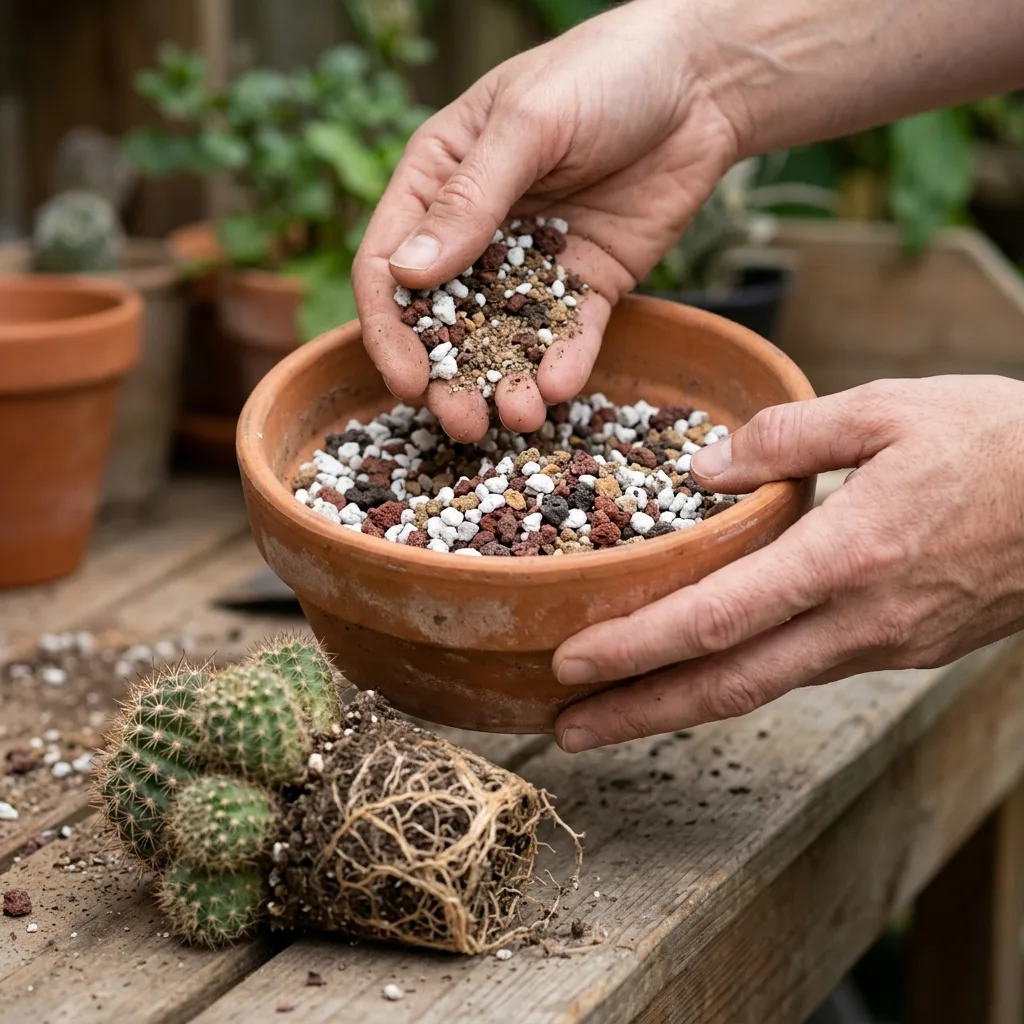
- Formulating an Aerated Mineral Substrate: Avoid standard commercial potting soil. Rebutia demands a highly porous volcanic aggregate where water drains freely within seconds. The ideal formulation: 40% pumice (3–5 mm), 20% crushed lava stone, 15% horticultural perlite or zeolite, and no more than 25% screened organic leaf mold or coconut coir.
- Spring Awakening Protocol: In late March, once nighttime ambient temperatures reliably hold above 10–12°C (50–54°F), gently awaken the plant from dormancy. Administer the initial watering as a light bottom-soak or fine misting; never saturate dormant, cold root hairs abruptly before metabolic uptake resumes.
- Active Growing Season Hydration (Soak-and-Dry): From April through September, allow the potting substrate to dry out entirely down to the bottom before saturating it thoroughly until excess water flows freely from the drainage holes. Discard any runoff sitting in the catchment tray after 10 minutes.
- Light Positioning: A southeastern or southwestern exposure providing direct morning and late-afternoon sunlight is ideal. During blistering summer midday hours (12:00 PM to 3:00 PM), provide roughly 30% light filtration to avoid epidermal solar scarring.
4. Essential Specifications, Equipment, and Parameters
| Parameter / Component | Recommended Standard | Physiological Rationale |
|---|---|---|
| Inorganic Fraction | 70% – 80% (Pumice, Zeolite, Lava) | Prevents root-hair hypoxia and suppresses pathogenic fungal colonization. |
| Organic Fraction | 20% – 30% (Coir / Screened Leaf Peat) | Maintains cation exchange capacity (CEC) and transient root moisture. |
| Substrate pH | 6.0 – 6.8 (Slightly Acidic) | Mirrors Andean scree mineral availability and optimizes micronutrient uptake. |
| Winter Temperature (Dormancy) | 5°C – 10°C / 41°F – 50°F (Dry) | Triggers vernalization pathways for spring flower bud induction. |
| Summer Temperature (Growth) | 22°C – 30°C / 72°F – 86°F (Nights: 15–18°C) | Maximizes nighttime CO2 fixation via efficient CAM stomatal opening. |
| Pot Material | Unglazed Terracotta (Shallow / Pan-type) | Porous walls facilitate lateral moisture evaporation and rapid gas exchange. |
5. 5 Common Pitfalls and Recovery Pathways
- Mistake 1: Compassion Watering During Winter: Panicking over a shrunken, wrinkled Rebutia during winter rest and giving it water is the leading cause of cactus mortality. Roots kept wet in cold conditions succumb to decay within 48 hours.
Remedy: If roots rot, unpot the cactus immediately. Slice away damaged tissue with a sterile blade until only crisp, emerald-green flesh remains. Dust the wound with sulfur powder or ground cinnamon, allow it to callus in a shaded, dry spot for 10 days, and replant into dry pumice. - Mistake 2: Growing in Insufficient Light: Placing a Rebutia on a dim office desk or an unlit bookshelf guarantees failure.
Remedy: Once etiolated, the stretched growth cannot shrink back. Gradually acclimate the plant to bright sunlight to promote dense, compact apex growth; over time, newly produced basal offsets will naturally conceal the elongated base. - Mistake 3: Overfeeding with High-Nitrogen Fertilizers: Excess nitrogen forces rapid, soft cell expansion, causing the structural ribs to split and rendering tissues vulnerable to opportunistic fungal pathogens.
Remedy: Feed exclusively in early spring and early summer using a low-nitrogen, high-potassium/phosphorus cactus fertilizer diluted to half the recommended dosage. - Mistake 4: Overhead Watering During Inflorescence: Wetting the delicate flowers or emerging buds invites Botrytis fungal spotting and causes premature bud drop.
Remedy: Direct the water stream strictly to the soil edge using a narrow-spout watering can, keeping the crown and blossoms completely dry. - Mistake 5: Planting Too Deep in the Substrate: Burying the green basal stem beneath organic soil traps dampness directly against the epidermis, causing rot.
Remedy: Ensure only the subterranean root system is anchored in the soil; the collar of the stem must rest entirely within an inorganic top-dressing layer of lava grit.
6. Seasonal Calendar and Long-Term Projections
The annual life cycle of Rebutia consists of two primary physiological phases: Active Growth and Flowering (Spring–Summer) and Deep Dormancy (Late Autumn–Winter).
Spring (March – May): The season of awakening and explosive flowering. A Rebutia that enjoyed a cold, dry dormancy will develop a crown-like ring of dozens of scarlet, orange, amber, or violet buds around its lower perimeter by mid-April. Hydrate thoroughly whenever the soil dries completely, and apply a dilute low-nitrogen cactus feed once a month.
Summer (June – August): During prolonged heatwaves (above 35°C / 95°F), Rebutia often enters a transient summer estivation to conserve moisture. During this thermal pause, dial back watering frequency slightly and prioritize cross-ventilation. Gentle morning breezes help clear boundary layers and optimize evening stomatal respiration.
Autumn (September – November): As ambient temperatures decline and day lengths shorten, gradually taper off irrigation. By late October, cease watering altogether—or provide at most a tiny sip once a month only if the stem loses structural turgor completely. The goal is to evacuate free cellular water and concentrate intracellular sugars and minerals, conferring natural cold hardiness.
Winter (December – February): Relocate the cactus to a cold (5–10°C / 41–50°F), bright, unheated space—such as an enclosed porch, bright cold frame, or cool windowsill. Keep the substrate completely dry for these three months. This disciplined winter drought is your non-negotiable ticket to a dense ring of spectacular blooms come spring.


Reader Reviews & Comments 3 Reviews
Eleanor Vance
Julian Thorne
Marcus Lindqvist
Leave a Review & Rating
Share your plant care tips, experiences, or questions with our succulent community.