






Hailing from the seasonally dry tropical forests and rocky outcroppings of Central America, Jatropha podagrica—commonly known as the 'Buddha Belly Plant' or 'Gout Plant'—stands as one of the most mesmerizing living sculptures in the succulent world. Its swollen, rugose, flask-like caudex represents nature's architectural masterpiece engineered specifically to conquer prolonged droughts. Crowned with umbrella-like clusters of brilliant coral-red blossoms and broad, peltate foliage, this extraordinary species is an heirloom plant capable of flourishing for generations when given thoughtful, informed care.
Yet, the most frequent heartbreak among growers stems from treating this arid caudiciform like a common tropical foliage houseplant by maintaining continuously moist substrate. Within its swollen stem, Jatropha stores considerable metabolic water; routinely drowning its root zone in stagnant moisture deprives the fragile feeder roots of oxygen, triggering insidious, irreversible internal rot. Drawing from extensive greenhouse observation and physiological principles, this guide outlines the exact botanical requirements and cultural protocols necessary to cultivate a robust, blooming Jatropha specimen.
1. Botanical Biology and Physiological Foundations
The genus Jatropha belongs to the spurge family, Euphorbiaceae. The hallmark swollen stem at the soil line is botanically classified as a caudex. Anatomically, this structure consists primarily of hypertrophied parenchymal tissue. These specialized, thin-walled parenchyma cells act as dynamic hydraulic reservoirs: during tropical rainy periods, they rapidly absorb and store free water, while during dry spells, they contract incrementally to deliver moisture and soluble metabolites to the apical meristems.
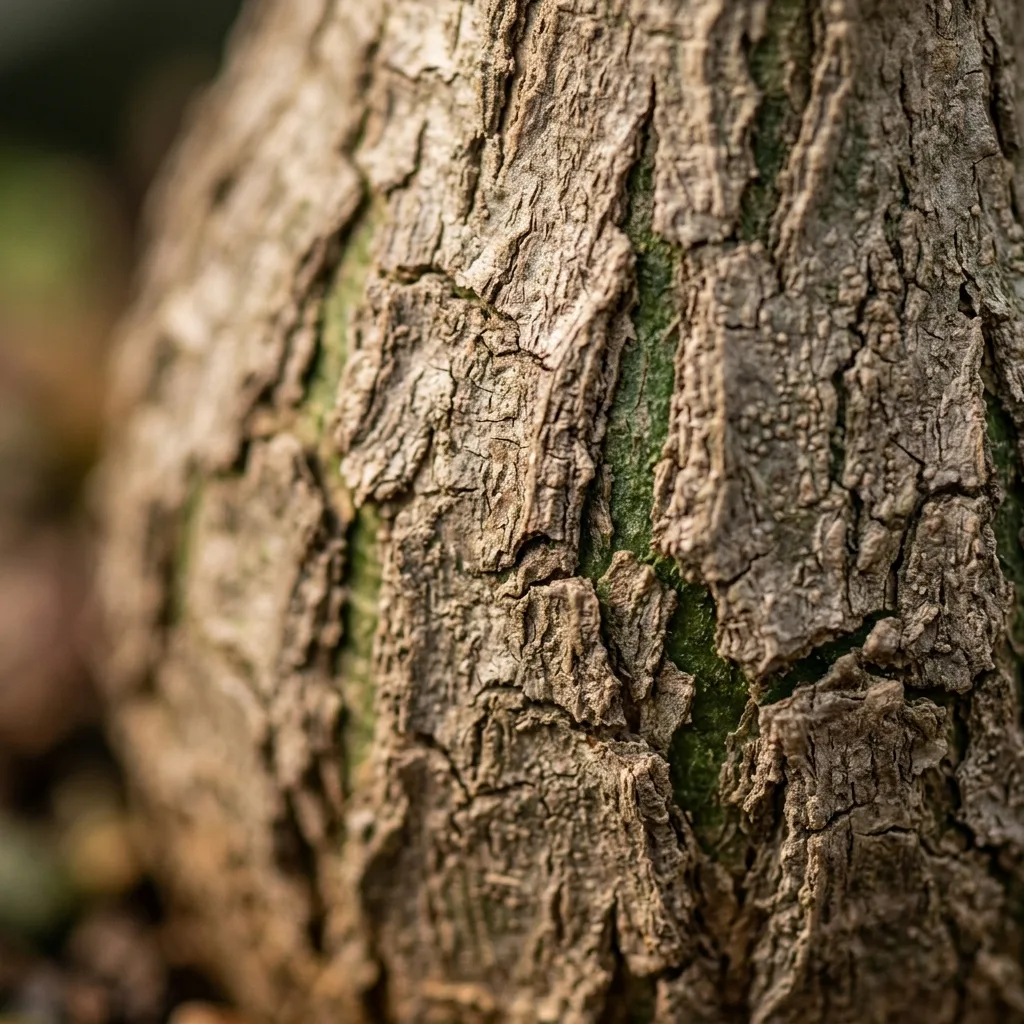
To dramatically mitigate transpiration and survive desiccating conditions in habitat, Jatropha enters an obligate or facultative winter dormancy, during which it cleanly abscises all vegetative foliage. In this leafless state, chloroplast activity shifts from the dropped blades to the greenish chlorophyllous layer (chlorenchyma) beneath the caudex's papery outer bark. Consequently, the plant maintains low-level, basal stem photosynthesis even when completely bare. However, if rootzone aeration collapses due to overly compact soil and waterlogged pore spaces, xylem vessels lose the ability to regulate internal turgor pressure, allowing opportunistic anaerobic pathogens to liquefy the delicate caudex tissue from the core outward.
2. Accurate Diagnosis and Turgor Indicators
Cultivating a flourishing Jatropha relies on accurately interpreting the cellular cues displayed by its caudex and foliage. Stem firmness is your most dependable diagnostic barometer.
- Spongy, Yielding Caudex: If the base gives beneath gentle finger pressure while the potting mix is damp, lethal root rot has initiated. Conversely, if the stem softens while the substrate is bone-dry, the plant simply suffers from reversible cellular dehydration.
- Sudden Leaf Chlorosis and Abscission: During the active spring/summer vegetative flush, sudden yellowing indicates saturated root zones or cold drafts. In late autumn, it is purely a physiological signal of approaching dormancy.
- Elongated, Spindly Growth (Etiolation): Insufficient photon flux density forces the plant to stretch disproportionately toward light, preventing the caudex from developing its signature stocky, swollen girth.
- Vertical Wrinkles Along the Stem: This phenomenon reflects a drop in intracellular turgor pressure as the plant consumes its internal water reserves, signaling that controlled, thorough irrigation is required.
3. Step-by-Step Cultivation Protocol
To nurture a muscular, crack-free bottle caudex and provoke prolific flowering, adhere to this four-step professional protocol:
- Optimal Solar Exposure: Provide a minimum of 5 to 6 hours of bright, filtered sunlight or intense morning and late-afternoon direct sun daily. Shield the upper leaves from harsh, unfiltered midday glass scorch during midsummer heat waves. Without sufficient light intensity, emerging floral buds will abort prematurely.
- Turgor-Driven Irrigation: Never water according to an arbitrary calendar schedule. Verify that the substrate is thoroughly dry to the very bottom of the pot. Gently pinch the caudex: if it feels rock-solid, hold off on watering for several more days; if there is a slight, springy give, provide a deep, saturating soak until water runs freely through the drainage holes.
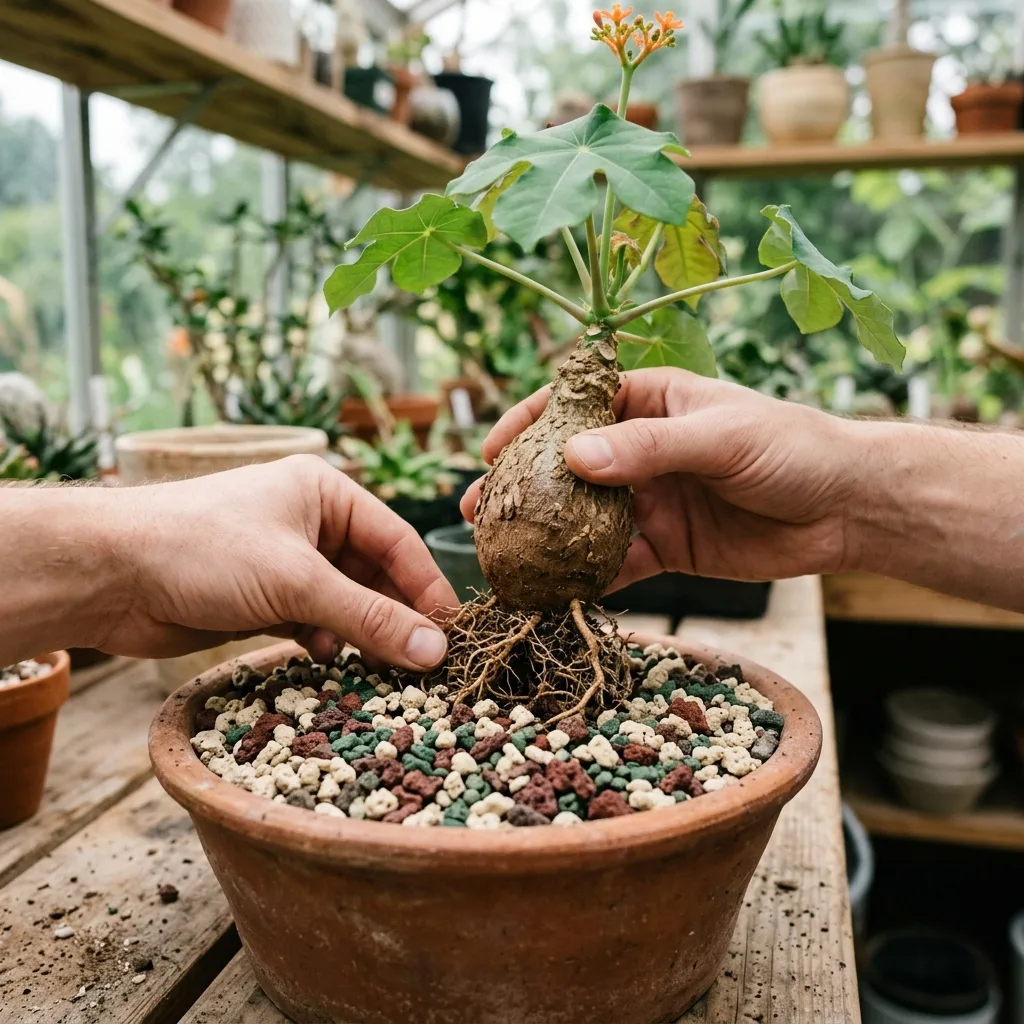
- Formulating an Ultra-Porous Mineral Substrate: To guarantee continuous gas exchange around the sensitive root hairs, the organic fraction should never exceed 30%. The remaining 70% must comprise porous, structural volcanic aggregates.
- Disciplined Dormancy Management: When ambient temperatures decline below 15°C (59°F), the plant sheds its foliage. During this period, restrict watering to a meager sip once a month (or omit entirely in humid environments) and maintain the dormant caudex in a cool (12-16°C / 54-61°F), brightly illuminated space.
4. Equipment, Substrate Specifications, and Physical Standards
Caudiciform succulents possess fibrous, shallow root systems that prioritize lateral breathability over deep vertical penetration. Consequently, wide, shallow, unglazed earthenware containers are strongly recommended.
| Component / Parameter | Recommended Standard / Ratio | Botanical Justification |
|---|---|---|
| Coarse Horticultural Pumice | 35% (3-6 mm particle size) | Forms permanent micro-voids in the root zone, maximizing air exchange and oxygenation. |
| Crushed Lava Rock (Scoria) | 20% (3-5 mm particle size) | Delivers superior physical stability, resists breakdown, and provides trace iron and minerals. |
| Clinoptilolite Zeolite | 15% (2-4 mm particle size) | Acts as an ion-exchange buffer, absorbing excess fertilizer salts while retaining moisture without sogginess. |
| Fibrous Cactus Mix / Coir | 30% (High-grade coco coir or aged leaf humus) | Offers essential organic anchor medium and supports stable rhizosphere biology. |
| Pot Material | Wide-mouth, unglazed terracotta with drainage holes | Porous clay walls permit bilateral moisture evaporation, drastically reducing root rot risks. |
| Growth Temperature Range | 20°C - 30°C / 68°F - 86°F (Winter min: 12°C / 54°F) | Supports cambial cell division and metabolic efficiency while preventing physiological chill shock. |
5. Five Critical Cultivation Pitfalls and Rescue Remedies
- Pitfall 1: Interpreting Natural Winter Defoliation as Desiccation and Overwatering. This fatal mistake is the leading cause of caudex necrosis. Remedy: Cease watering immediately. Check the soil; if muddy, unpot the specimen, clear away wet substrate, and allow the roots to dry on clean paper towels in a shaded, warm room for several days before repotting into dry mineral soil.
- Pitfall 2: Using Non-Draining or Plastic Containers. Plastic pots lock moisture within the lower strata, suffocating and rotting root xylem within days. Remedy: Immediately transition the plant into a breathable, unglazed terracotta pot featuring substantial drainage ports.
- Pitfall 3: Submerging the Caudex Too Deeply into the Soil. Burying the swollen stem base beneath the soil line exposes soft epidermal tissues to virulent damp-soil fungi. Remedy: Re-elevate the specimen so that only the root crown sits below the soil line; at least 75% of the swollen caudex must remain exposed to open air.
- Pitfall 4: Overfeeding with High-Nitrogen Fertilizers. Excessive nitrogen causes rapid, watery cell elongation, resulting in soft, split caudex tissue and leafy growth at the expense of blooms. Remedy: In spring, switch strictly to a dilute, low-nitrogen, potassium- and phosphorus-rich formulation (such as NPK 5-10-10) applied at quarter strength.
- Pitfall 5: Thermal Shock from Freezing Irrigation Water. Applying icy tap water paralyzes micro-root absorption and causes root-hair dieback. Remedy: Exclusively irrigate using room-temperature, dechlorinated or rainwater.
6. Seasonal Phenology and Developmental Milestones
The annual life cycle of Jatropha podagrica cleanly divides into two distinct operational phases: Active Vegetative/Generative Growth (Spring-Summer) and Metabolic Quiescence (Autumn-Winter).
Spring (March – May): The grand awakening. Scarlet floral primordia emerge directly from the crown of the caudex, frequently before the foliage unfolds. Gradually reintroduce water as ambient temperatures rise, supplementing once a month with quarter-strength balanced liquid nutrients to energize new root growth.
Summer (June – August): Peak photosynthetic activity and display. Clusters of coral blossoms attract pollinators while massive umbrella-shaped leaves synthesize copious carbohydrates, translocating sugars straight into the caudex. Water generously once the substrate dries out, and ensure active air circulation to support robust transpirational cooling.
Autumn (September – November): Natural slowdown. As diurnal photoperiods contract, basal leaves develop golden margins and begin to detach cleanly. Taper irrigation frequency by half and stop all nutrient applications to prepare the plant for winter rest.
Winter (December – February): Full physiological dormancy. The plant stands leafless or retains only a solitary mature leaf. Provided the caudex maintains internal firmness, withhold moisture almost entirely (a single modest splash per month is ample). Respecting this dry dormancy is the single most vital factor in guaranteeing explosive coral inflorescences come spring.


Reader Reviews & Comments 4 Reviews
Julian Vance
Clara Sterling
Marcus Holloway
Elena Rostova
Leave a Review & Rating
Share your plant care tips, experiences, or questions with our succulent community.