






When observing the evolutionary cradle of cacti across Mexico's Chihuahuan Desert or along the windswept crags of the Andean slopes, one immutable ecological rule reveals itself: desert cacti never dwell in muddy, depressed basin floors where runoff settles. Instead, they stake their existence upon gravity-drained rock ledges, scree slopes, and airy stony terraces. An outdoor raised bed cactus garden is the direct architectural adaptation of this geomorphological principle, engineered for home landscapes.
Conventional garden ground is all too often clay-heavy, compacted, and prone to retaining chilling winter precipitation for weeks on end. Siting cacti directly into such soils almost invariably leads to root hypoxia, vascular collapse, and lethal fungal rot. Raised bed architecture affords the horticulturist absolute sovereign control over soil physics and chemistry, elevates the delicate root-crown well above subterranean moisture tables, and recreates the pristine, well-ventilated, arid microclimate where desert flora naturally thrives.
1. Taxonomic Identity, Areole Structure, and Spine Morphology
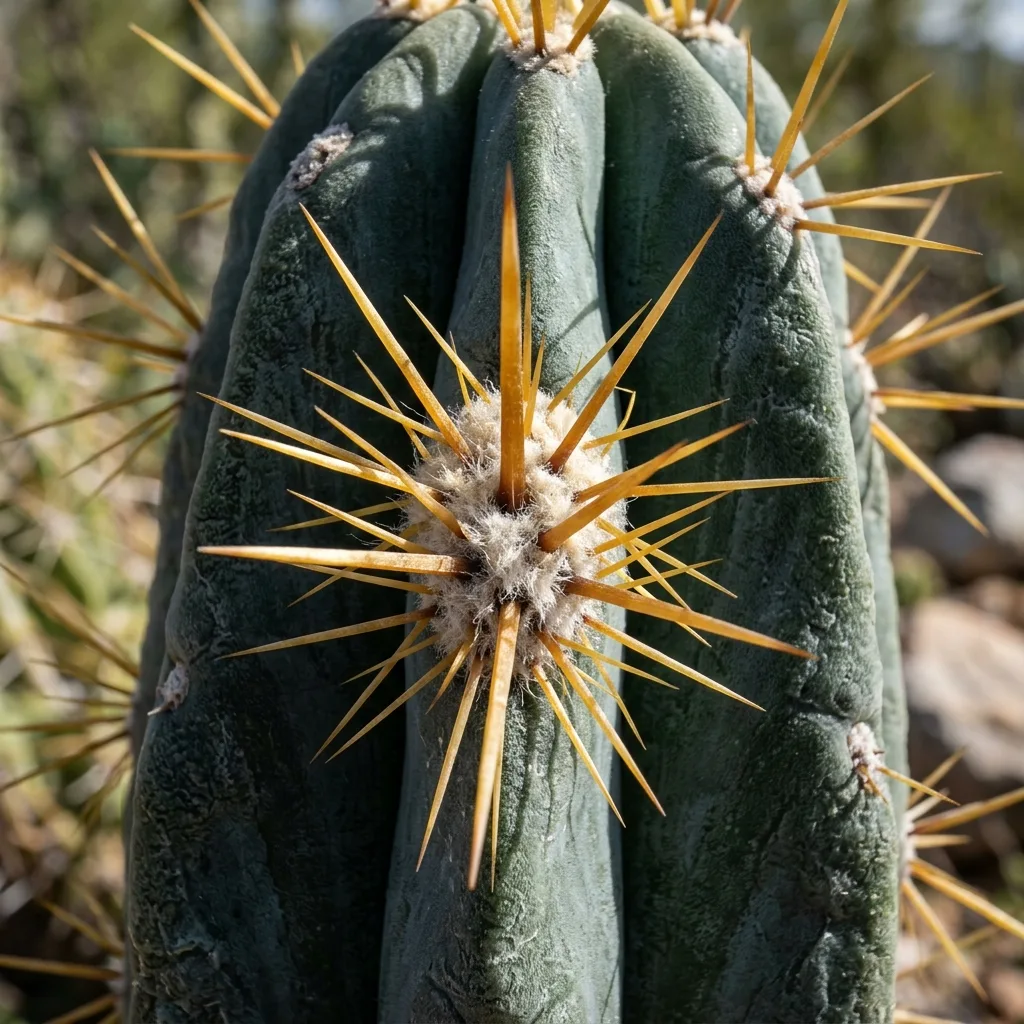
Cacti (family Cactaceae) grown in outdoor raised beds respond with morphological vigor that container-bound indoor plants simply cannot replicate. Exposure to dynamic ambient airflow and unfiltered ultraviolet (UV) radiation triggers intensive physiological activity across their defining taxonomic hallmark: the areole. Areoles are highly condensed, specialized lateral bud cushions from which spines, protective trichomes (downy hairs), offshoots, and blossoms exclusively arise.
In a raised garden bed, spine development becomes notably robust and dense. Resilient, cold-adapted species such as Opuntia phaeacantha, Echinocereus triglochidiatus, or the magnificent tree cholla Cylindropuntia imbricata secrete thicker crystallizations of calcium pectate from their areoles as they weather outdoors. These spines do not merely serve as herbivore deterrents; they function as an ingenious micro-shading scaffolding against midday sun, reduce boundary-layer convective heat loss, and act as dew-harvesting antennae that channel morning atmospheric condensation directly down to the root perimeter.
2. Sun Exposure, Thermal Buffering, and Aeration Dynamics
The microclimatic positioning of your raised cactus bed dictates the survival of the entire planting. Cacti operate on Crassulacean Acid Metabolism (CAM photosynthesis)—tightly sealing their stomata during desiccating daylight hours to halt transpirational water loss, then opening them during cool nights to assimilate carbon dioxide. To maintain this metabolic rhythm and generate sufficient carbohydrate reserves, the bed demands a minimum of 6 to 8 hours of uninterrupted, direct solar irradiance daily.
A south- or southwest-facing aspect within the landscape delivers optimal thermal performance. Constructing the raised retaining walls from natural stone, split-face concrete blocks, or fired brick establishes an invaluable thermal battery. These dense masonry materials soak up solar radiation throughout the day and gradually re-radiate this stored heat into the root substrate throughout cold nights, softening extreme temperature plunges. Furthermore, elevating the soil level 30 to 50 cm above ambient ground grade guarantees sweeping air circulation around the vegetative pads and stems, ensuring that morning dew evaporates rapidly before fungal spores can germinate within areolar grooves.
3. Irrigation Protocols and the Crucial Cold-Dormancy Dynamic
Irrigating an outdoor cactus bed requires total harmony with ambient climatic shifts. During the active vegetative window from late spring through late summer, the bed should receive deep soaking only if 2 to 3 weeks pass without natural precipitation. 'Deep soaking' implies drenching the entire bed thoroughly until moisture permeates into the structural drainage base, prompting feeder roots to colonize deep mineral strata rather than idling near the sun-baked surface.
As early autumn approaches (late September into October), all supplemental irrigation must cease completely. For a cactus to survive freezing conditions, it must actively dehydrate its tissues, expelling surplus water from cellular vacuoles to concentrate its intracellular sap. Packed with natural sugars, pectins, and dissolved minerals, this concentrated sap acts as an organic botanical antifreeze, lowering the internal freezing point. A waterlogged cactus will rupture its cellular walls and turn into gelatinous pulp at a mere -2°C, whereas a properly dehydrated, crinkled Escobaria vivipara can withstand sub-zero conditions down to -20°C with total resilience.
4. Engineered Mineral Substrate Matrix and Bed Architecture
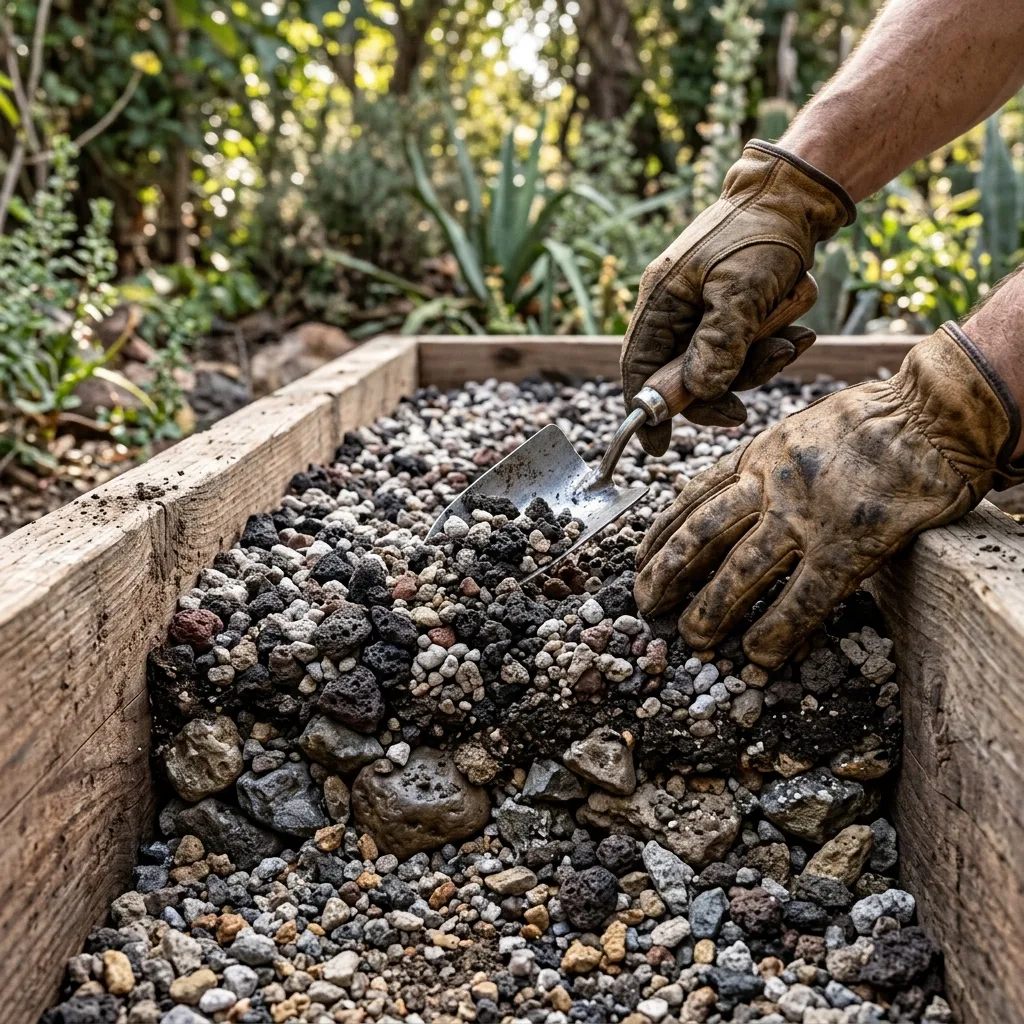
The lasting vitality of a raised cactus installation hinges entirely on the macroscopic porosity of its substrate. Standard landscape loam, garden topsoil, or peat-rich bagged mixes decompose, settle, and consolidate over time, yielding oxygen-starved anaerobic pockets. Deprived of oxygen, the xylem vessels of cactus roots perish from fungal colonization. You must first lay a base foundation of 10 to 15 cm of coarse crushed stone or heavy gravel at the bed floor to serve as an unfailing drainage spine.
The table below details our field-tested, scientifically balanced mineral matrix for long-term outdoor raised beds:
| Component | Ratio (%) | Grain Size | Horticultural Function & Benefit |
|---|---|---|---|
| Pumice | 35% | 4 - 8 mm | Ultra-porous structure; provides aeration while holding minimal non-stagnant moisture. |
| Lava Rock (Scoria/Basalt) | 25% | 3 - 6 mm | Heavy angular mineral; stabilizes bed structure and prevents long-term compaction. |
| Zeolite (Clinoptilolite) | 15% | 3 - 5 mm | Exceptional cation exchange capacity; sequesters nutrients and suppresses fungal pathogens. |
| Coarse River/Quartz Sand | 15% | 2 - 4 mm | Keeps internal percolation chimneys permanently clear; resists silt sedimentation. |
| Sifted Mature Compost | 10% | Fine screened | Provides trace organic biology and gentle microbial colonization without moisture bloat. |
To finish the bed, spread a 3 to 4 cm top-dressing of crushed granite, washed river pea-gravel, or basalt chips across the surface. This mineral mulch isolates the sensitive root collar from wet soil, stops soil splashing during downpours, and gives your installation a pristine, high-desert aesthetic.
5. Inducing Floral Profusion and Controlled Nutrition
The breathtaking spring floral display produced by outdoor cacti is the direct biochemical dividend of winter stress. Flower bud initiation (floral induction) within areoles is triggered precisely by cold winter dormancy paired with absolute drought. Having rested uninterrupted through the cold, the emergence of lengthening spring daylight and intensifying solar warmth triggers explosive blooming.
Fertilization must remain strictly disciplined: apply nutrition no more than twice during active spring expansion (May and early June). High-nitrogen fertilizers must be avoided at all costs; excessive nitrogen causes rapid, bloated cellular expansion, thinning cell walls and leaving the cactus fragile against insect vectors, bacterial pathogens, and winter frost damage. Always utilize an inorganic, low-nitrogen, high-potassium, and high-phosphorus formulation such as NPK 5-10-15 or 4-8-12, enriched with chelated trace micronutrients.
6. Propagation, Division, and Vegetative Establishment
Well-constructed raised beds encourage prolific vegetative development, prompting parent specimens to produce abundant offsets (pups) and lateral pads. Pruning or harvesting these divisions helps balance spatial composition and provides magnificent propagating material for expanding your garden footprint. All dividing and pad harvesting should be scheduled in mid-spring, once ambient temperatures have settled reliably above frost levels.
Planting freshly excised pads or severed offsets directly into moist beds is an invitation to systemic decay. Wounded plant material must rest in an airy, warm, shaded, dry location for 7 to 14 days until a dense, suberized callus forms across the cut tissue. This callused tissue functions as an impermeable shield against soil-borne pathogens. Once fully callused, place the cutting lightly into the gritty top mineral layer of the raised bed, propping it upright with stones, and withhold water for at least two weeks until anchoring roots emerge.
7. Mitigating Root Rot and Vascular Wilt Pathogens
The primary pathogenic threat to outdoor cacti stems from fungal and oomycete infestations following periods of excessive seasonal dampness, notably Phytophthora and Fusarium oxysporum. If you detect basal softening, unusual yellowing, or a spongy discoloration along the base of a stem, swift surgical remediation is vital.
Carefully excavate the affected cactus from the bed. Using a flame-sterilized scalpel or razor, excise all compromised, darkened tissue until clean, bright-green and ivory vascular bundles are reached. Dust the fresh surgical surface liberally with pure sulfur powder or ground cinnamon to neutralize remaining spores. Allow the specimen to desiccate in dry shade for 2 to 3 weeks until thoroughly callused before re-rooting it in pure, dry zeolite or coarse pumice. Concurrently, remove and refresh the surrounding soil pocket within the raised bed to prevent cross-contamination.


Reader Reviews & Comments 3 Reviews
Julian Vance
Marcus Sterling
Eleanor Brooks
Leave a Review & Rating
Share your plant care tips, experiences, or questions with our succulent community.