






Hailing from the rocky slopes of South Africa's semi-arid Little Karoo basin to brighten our interior living spaces, the Bear's Paw (Cotyledon tomentosa) is indisputably one of the most endearing yet delicately temperamental species in the succulent kingdom. The dense, silky trichome hairs blanketing its thick, fleshy leaves—which charmingly mimic the paws of a bear cub—are in fact a sophisticated microscopic shielding mechanism evolved against merciless desert heat and catastrophic transpiration. However, as delightful as these velvet cushions are to admire alongside a morning coffee, they can drop their foliage with alarming rapidity under inappropriate hydration and oxygen-deprived soil conditions, leaving behind a stark, bare stem.
As a dedicated succulent steward, the very first foundational axiom you must internalize is this: frequent watering is not an expression of affection; it is the accidental asphyxiation of vital root systems. Cotyledon tomentosa hoards immense subterranean moisture reserves within its leaf mesophyll cells. Consequently, your relationship with this plant must be anchored in patient tactile observation and a precise mineral balance that facilitates rapid subterranean gas exchange. Drawing upon decades of propagation experience in my production greenhouses, let us methodically unravel the biological intricacies of this captivating South African endemic.
1. Botanical Biology and Physiological Foundations
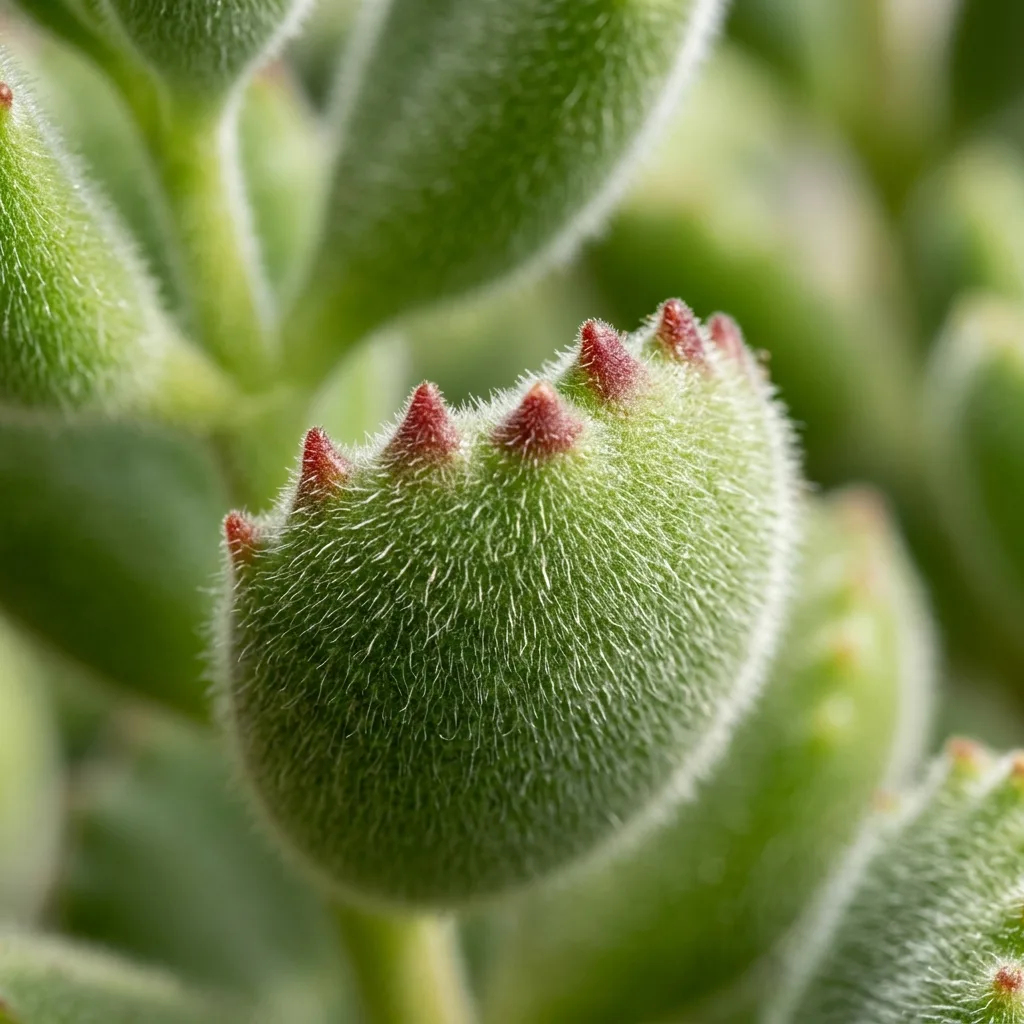
Cotyledon tomentosa is a woody-based succulent subshrub belonging to the family Crassulaceae. What renders this species morphologically peerless is the dense layer of protective trichomes (epidermal hair structures) cloaking every square millimeter of its foliage. These trichomes provide far more than a charming tactile feel: they refract intense solar radiation to suppress leaf surface temperatures by 2–4°C, construct a microscopic boundary layer that curbs transpirational water vapor loss, and capture early morning coastal condensation to channel trace humidity directly into the stomata.
Metabolically, the plant executes CAM (Crassulacean Acid Metabolism) photosynthesis. This adaptation dictates that the plant seals its stomata tightly throughout scorching daylight hours to conserve water. It cracks them open solely during cool nocturnal cycles to capture carbon dioxide, transmuting and caching it as malic acid within vacuoles. Once daytime sunlight resumes, it metabolizes this stored acid into vital carbohydrates with fully closed stomata. Hence, baseline transpirational water loss remains infinitesimally low. The 3 to 10 sharp serrations lining the leaf tips (the iconic bear 'claws') become pronounced when the plant synthesizes anthocyanin sunscreens under high lumen exposure and temperature differentials. When photon exposure proves deficient, these claws revert to pale green, and the cellular lamina thins out significantly.
Examining subterranean anatomy, Cotyledon tomentosa develops a shallow, fibrous root architecture. In nature, these fine rootlets are adapted to rapidly absorb fleeting desert deluges running over sandy, lithic fissures. When root xylem vessels are subjected to prolonged, stagnant moisture in an anaerobic environment, they suffocate rapidly. Opportunistic soil-borne fungal pathogens (such as Fusarium and Phytophthora) migrate upward into the vascular collar, prompting seemingly healthy, plump green leaves to detach and rain down in mere hours.
2. Accurate Diagnosis and Plant Symptomology
The Bear's Paw communicates its physiological equilibrium through foliar turgidity, color shift, and postural habit. During daily assessments, observe these critical bio-indicators:
- Moisture Deficit (Thirst): Lower and mid-tier paw lobes soften slightly, revealing fine vertical micro-wrinkles along the convex leaf backs. Upon gentle lateral pressure between two fingers, the characteristic rubbery resistance feels noticeably diminished. This represents the prime physiological window for irrigation.
- Overwatering and Root Hypoxia: Foliage takes on a translucent, jelly-like yellowish hue and detaches from nodes upon the slightest mechanical bump—even while completely turgid and green. Leaf drop over damp soil is an unequivocal indication of root system collapse due to prolonged oxygen starvation.
- Insufficient Illumination (Etiolation): Internodal distances stretch out awkwardly, vertical stems become frail as they lean toward illumination sources, and the prominent burgundy claws fade into dull, uniform chartreuse.
- Photo-Oxidative Shock (Sunburn): When unconditioned trichomes encounter abrupt, unshaded summer midday solar flares, the leaf surfaces develop bleached whitish patches that rapidly degenerate into dry, brown necrotic scabs.
3. Step-by-Step Cultivation Protocol
To cultivate your Bear's Paw into a robust, densely branched shrub featuring deep mahogany-tipped claws, implement the exact four-stage protocol we maintain in our production greenhouses:
Step 1: Porous Substrate and Container Architecture
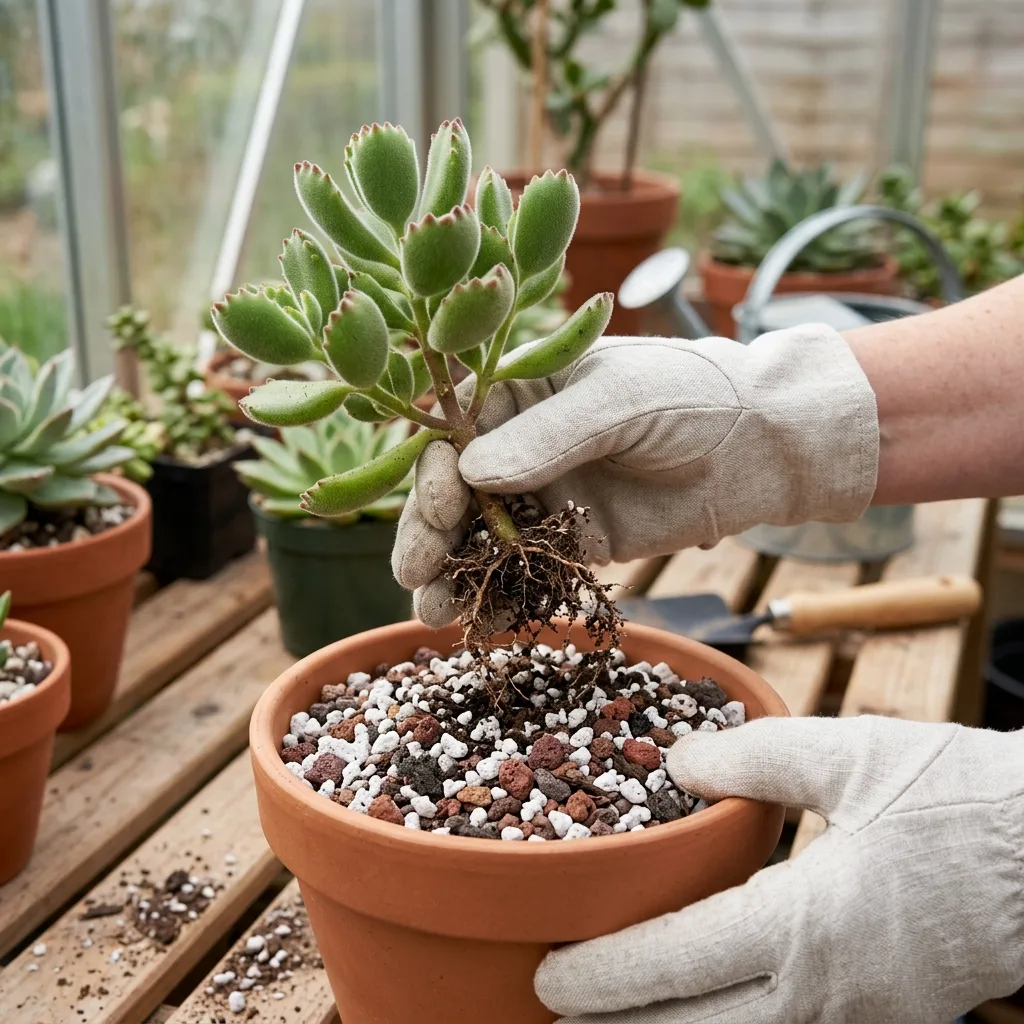
Never rely on generic peat potting soils or unamended garden dirt. Cotyledon root systems require abundant oxygenation. Your container must feature generous basal drainage perforations. Unfinished, porous terracotta is vastly superior to non-breathable plastic or glazed ceramic, as its permeable walls wick moisture outward, cutting the incidence of collar rot in half.
Step 2: The 'Soak and Complete Dry-Down' Cycle
Disregard rigid weekly schedules; rely instead on the wooden skewer or internal soil-probe method. Confirm that the substrate has dried out entirely to the bottom of the pot. Once full dryness is reached, irrigate thoroughly until water flows unhindered through the drainage ports. Empty the overflow saucer completely within 15 minutes; never permit the container to sit in stagnant water.
Step 3: Light Spectrum and Thermal Stress Modulation
Position your specimen on an unobstructed south- or west-facing sill where it receives at least 5 to 6 hours of bright, filtered sunlight daily. To stimulate the biosynthesis of protective anthocyanins that paint the paw tips in deep burgundy-chocolate hues, engineer an 8–10°C diurnal temperature differential during spring and autumn (e.g., 22°C daytime dropping to 14°C at night). This mild environmental stress triggers vibrant coloration.
Step 4: Canopy Airflow and Pruning Management
Active air circulation within indoor growing spaces is vital to prevent airborne fungal spores from lodging within the tomentose leaf coat. In early spring, prune back overgrown, leggy terminal stems using a sterilized scalpel. This encourages dormant axillary buds to activate, resulting in a dense, compact, multi-branched shrub habit.
4. Essential Substrate, Materials, and Cultivation Metrics
Triumphant stewardship of Cotyledon tomentosa relies on balanced soil mechanics and calibrated microclimates. The following technical specifications outline the ideal horticultural parameters:
| Parameter / Component | Recommended Standard / Ratio | Physiological Function |
|---|---|---|
| Inorganic Mineral Base | 70% (3–6 mm Pumice, Crushed Lava Rock, Zeolite) | Facilitates maximum aeration, rapid dry-down, and prevents root hypoxia |
| Organic Moisture Buffer | 30% (Washed Coco Coir / Fine Screened Peat with Perlite) | Provides baseline cation exchange capacity (CEC) and uniform hydration |
| Container Material | Unglazed Terracotta (with basal drainage holes) | Enhances gas diffusion across the root zone and transpires excess moisture |
| Illumination Intensity | 3,500 – 5,000 Lumens / 6 Hours Direct/Dappled Sunlight | Preserves compact internodes, powers CAM metabolism, drives anthocyanin synthesis |
| Irrigation Water Chemistry | Ambient Temperature (18–22°C), Low-Chlorine / Settled Water | Prevents thermal contraction and osmotic shock to delicate root hairs |
5. Five Critical Pitfalls and Emergency Rescues
- Pitfall 1: Overhead Watering That Soaks the Foliage: Trichomes entrap water droplets. In stagnant interior environments, trapped moisture causes basal leaf rot and petiole detachment.
Emergency Action: Switch exclusively to a narrow-spout precision succulent wash bottle, delivering water directly along the interior rim of the pot. Gently wick away any accidental droplets on leaves using the dry corner of a paper towel. - Pitfall 2: Burying the Stem Collar Deep in Soil: Sinking the lower green nodes under organic potting soil leaves the tender woody stem vulnerable to fungal invasion.
Emergency Action: Unpot the specimen, elevate the root crown to rest flush with the substrate surface, and dress the surface with a 1 cm layer of pure pumice or lava gravel to keep the collar bone-dry. - Pitfall 3: Placing Next to Hot Radiators with Frequent Winter Watering: Cotyledon enters a semi-dormant metabolic lull during low-light winter periods. High ambient heat combined with wet roots causes swift collapse.
Emergency Action: Relocate the plant to a cooler, exceptionally bright location (12–15°C) and extend watering intervals out to every 3 to 4 weeks. - Pitfall 4: Attempting Single Leaf Propagation: Unlike Echeveria or Sedum, detached single leaves of Cotyledon tomentosa rarely generate meristematic vegetative crowns; they generally callus, sit dormant, and slowly decay.
Emergency Action: Propagate exclusively via semi-hardwood stem cuttings bearing at least 2–3 mature leaf nodes. Allow the cut stem to callus in dry shade for 3 days before inserting it into lightly moistened pumice. - Pitfall 5: Shunting into Low Light to Prevent Sunburn: Depriving the plant of photon energy leads to rapid internodal elongation, limp stems, and fading paw serrations.
Emergency Action: Gradually acclimate the plant back to bright light by increasing its exposure by 1 hour each day behind a sheer curtain until full light levels are restored safely.
6. Seasonal Calendar and Long-Term Phenology
Attuning your care routines to the natural seasonal rhythm of the Bear's Paw ensures decades of sustained health and visual appeal:
- Spring (Active Vegetative Surge): Spanning March through May, this window marks vigorous stem growth. Irrigate whenever the mineral mix completely dries out. Apply a low-nitrogen, potassium- and phosphorus-leaning diluted succulent fertilizer once per month. This is the optimal window for repotting and shaping cuts.
- Summer (Semi-Dormancy Slowdown): During sustained heatwaves (exceeding 32°C), CAM stomatal conductance slows, and the plant adopts a defensive rest posture. Curtail irrigation intervals, shelter from harsh midday sun, and cease all chemical fertilization.
- Autumn (Color Pigmentation & Flowering): As ambient temperatures stabilize between 15–20°C, the plant enters a secondary surge of vitality. Pendant, bell-shaped orange-to-yellow blooms may emerge, while the leaf claws display rich, deep reddish-brown tones.
- Winter (Cool Rest Period): Maintain ambient temperatures above 8–10°C in the brightest window available. Withhold moisture until the lower foliage indicates clear, tactile softening (often requiring water only once per month).


Reader Reviews & Comments 3 Reviews
Julian Thorne
Eleanor Vance
Marcus Sterling
Leave a Review & Rating
Share your plant care tips, experiences, or questions with our succulent community.