






Tucked away beneath the cool dappled shade of acacia thickets and along steep limestone escarpments in South Africa’s Eastern Cape, the genus Gasteria represents one of the most patient and aristocratic treasures in the succulent kingdom. Taking its scientific name from the Greek word gaster—meaning 'stomach' or 'bellied'—this remarkable succulent is distinguished by its small, curving stomach-shaped blooms and thick, tongue-like leaves adorned with pearly tubercles. While countless desert succulents demand blistering direct sunlight, Gasteria thrives in the calm sanctuary of filtered light and narrow rocky crevices, making it exquisitely suited for modern indoor living spaces.
If you have a bright corner that receives no harsh direct sun and you frequently struggle with succulents stretching out or shedding foliage, you simply have not met Gasteria yet. Drenching succulents on a routine schedule is not an act of love; it deprives their roots of vital oxygen and inadvertently suffocates the subterranean architecture. Once you grasp Gasteria's cellular water-storage mechanics and delicate root biology, nurturing this slow-growing, generational living sculpture turns into a deeply rewarding daily meditation.
1. Botanical Biology and Physiological Foundations
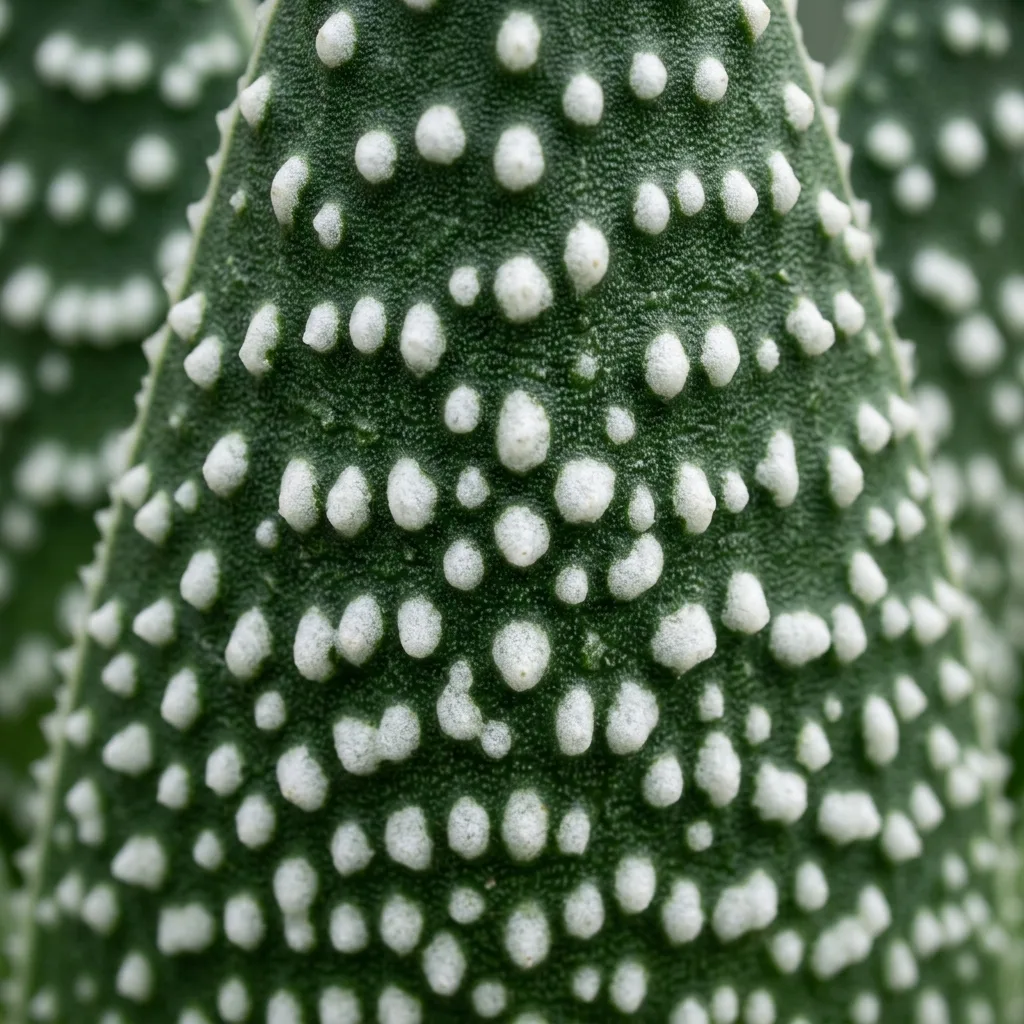
Gasteria species (most notably the prized Gasteria batesiana, Gasteria pillansii, and various intergeneric Gasteraloe cultivars) have evolved physiological adaptations for arid yet shaded microhabitats. The raised white bumps (tubercles) covering their leaf surfaces are far more than aesthetic embellishments; they serve as microscopic optical shields, scattering harsh incoming rays and preventing focal thermal stress on the leaf epidermis.
To minimize water loss, the plant utilizes CAM (Crassulacean Acid Metabolism) photosynthesis. Under this physiological regimen, stomatal pores stay tightly closed during the heat of the day. As night temperatures fall, stomata open to absorb ambient carbon dioxide, sequestering it intracellularly as malic acid. During the following daylight hours, cellular sunlight converters transform this stored malic acid into glucose while the stomata stay shut. Consequently, misting the plant during the day or keeping the substrate continuously saturated disrupts and paralyzes CAM gas exchange cycles.
Subterraneously, Gasteria features thick, fleshy, brittle primary roots adapted to form beneficial mycorrhizal associations. Broad xylem channels swiftly transport moisture up into the leaf parenchyma tissues. However, the moment substrate porosity collapses and oxygen vanishes (an anaerobic state), these fleshy roots suffer cellular lysis within hours, leading to rapid, fatal pathogen-driven decay.
2. Diagnostic Signs and Plant Indicators
While Gasteria is remarkably durable, physiological missteps quickly manifest through specific leaf and root signals. Reading these bio-indicators correctly ensures timely intervention:
- Bronzing, Reddening, or Brown Foliage: Excessive direct sun exposure. The plant mobilizes anthocyanin and protective pigments to shield cellular DNA against UV overexposure. Diffuse the light immediately.
- Thin, Inward-Curling, Deflated Leaves: Severe dehydration or complete root loss from root rot preventing water intake. Parenchyma water reservoirs are entirely depleted.
- Translucent, Mushy, Yellowing Basal Leaves: Classic symptoms of overwatering and root asphyxiation. Internal vacuoles have burst under osmotic overpressure.
- Pale Green, Elongated, and Stretched Form (Etiolation): Inadequate light levels. Cellular elongation occurs as the plant expends energy searching for an adequate photosynthetically active radiation (PAR) source.
3. Step-by-Step Cultivation Protocol
Follow this systematic protocol to maintain optimal health, structural symmetry, and longevity in your Gasteria:
Step 1: Placement and Photoperiod Balance
Position your plant near an east-facing windowsill where it can enjoy gentle early morning rays, or in a bright south- or west-facing room shielded behind a sheer curtain. Completely shield the leaves from unmitigated midday summer sun.
Step 2: Pot Selection and Inorganic Substrate Formulation
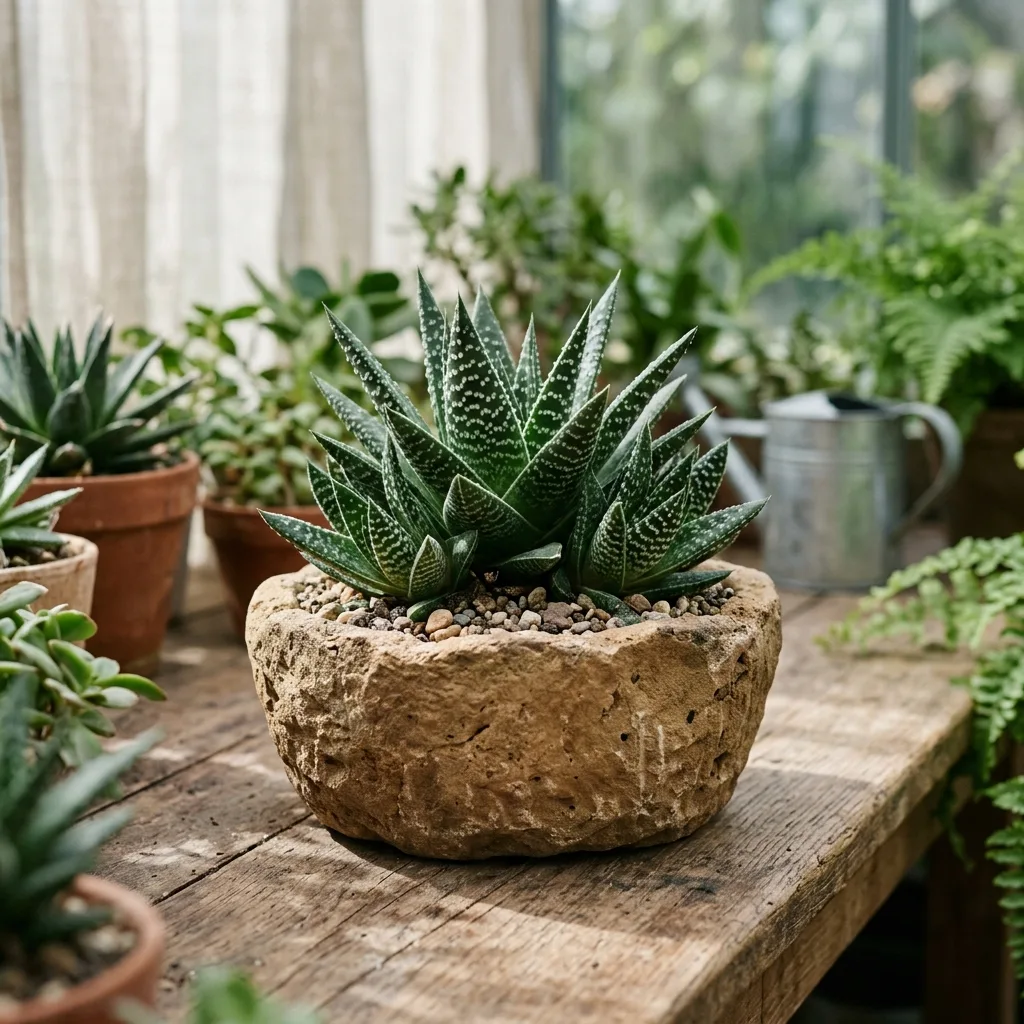
Gasteria anchors itself with deep, anchoring roots, yet its container should be compact—only 2–3 cm (about 1 inch) wider than the leaf span. Always choose containers with ample drainage holes, favoring unglazed terracotta or breathable ceramic. Ensure the substrate consists of at least 60–70% coarse inorganic aggregate (pumice, lava rock, zeolite).
Step 3: The 'Drench and Thorough Dry' Irrigation Regime
Never irrigate on an automated schedule; water only when the pot has dried completely to the bottom. Insert a wooden skewer to the base of the root ball to verify zero moisture remains. If dry, drench thoroughly until water runs freely from the drainage holes. Discard any residual runoff sitting in the saucer after 10 minutes.
Step 4: Dormancy and Seasonal Temperature Management
Gasteria naturally throttles its metabolic rate during extreme summer heat (July–August) and the coldest weeks of winter, entering semi-dormancy. Space out watering significantly during these resting windows and withhold all fertilizers. In active spring and autumn flushes, feed with a quarter-strength, low-nitrogen succulent fertilizer.
4. Essential Substrate Ingredients and Parameters
To safeguard Gasteria's sensitive root systems against fungal pathogens and compaction, adhere closely to the following component proportions:
| Component / Parameter | Recommended Ratio / Metric | Physiological Function |
|---|---|---|
| Pumice (3–6 mm) | 35% | Creates stable macro-pores around root hairs; ensures root oxygenation. |
| Lava Rock or Zeolite | 25% | Prevents anaerobic pocket formation; buffers and slowly releases minerals. |
| Coarse Horticultural Sand / Perlite | 10% | Accelerates gravitational water drainage; prevents substrate crusting. |
| Sifted Succulent Peat / Coco Coir | 30% | Provides baseline organic cation exchange capacity and mild moisture retention. |
| Watering Frequency (Spring / Autumn) | Every 10–14 days | Deep soaking only after the substrate profile has dried out 100%. |
| Watering Frequency (High Summer / Winter) | Every 20–30 days | Restricted sips during metabolic dormancy to protect dormant roots. |
| Ideal Temperature Range | 16°C – 26°C (61°F – 79°F) | Maintains peak enzymatic efficiency and healthy CAM organic acid cycling. |
5. Five Common Cultivation Mistakes and Recovery Steps
- Using Off-the-Shelf Standard Potting Soil: Dense, peat-heavy soils retain excessive moisture like a sponge, quickly decaying fragile roots. Recovery: Unpot the plant immediately, rinse away decaying matter, trim compromised roots, air-dry for 48 hours, and replant into a high-inorganic gritty mix.
- Exposing to Harsh Direct Midday Sun: Direct solar radiation burns leaf cells, causing irreversible scorched brown calluses. Recovery: Move the specimen to bright, indirect dappled light immediately; faded green tones will gradually return to new growth over a few weeks.
- Surface Misting with a Spray Bottle: Spraying merely wets the top layer while deeper roots desiccate, concurrently creating stagnant moisture trapped in leaf axils. Recovery: Cease misting completely; transition to thorough, bottom-up soaking or directional watering along the inner pot rim.
- Planting in an Oversized Container: Excess volume holds excess water reserves that take weeks to evaporate, triggering root necrosis. Recovery: Downsize into a snug, breathable pot that leaves no more than a thumb’s width between the foliage base and the container wall.
- Placing Adjacent to Winter Heat Radiators: Blasts of arid, heated air severely dehydrate leaf parenchyma and induce acute moisture stress. Recovery: Relocate your plant at least 1.5 meters away from active heating ducts or radiators to an area with gentle ambient airflow.
6. Seasonal Cultivation Calendar and Long-Term Care
Gasteria is an exercise in mindful patience, typically producing only 2 to 4 new leaves per growing season. When managed attentively, specimens can easily thrive for over 20 years, continuously yielding healthy basal offsets (pups) that can be shared across generations.
- Spring (March – May): Seasonal awakening and root activation. Gradually increase watering and apply a diluted, low-nitrogen succulent feed once a month. This is the optimal window for repotting and offset division.
- Summer (June – August): High-temperature semi-dormancy. Curtail watering intervals, enhance ambient ventilation, and shield strictly against direct, scorching rays.
- Autumn (September – November): Secondary growth flush. Root structures consolidate strength, and cool night temperatures accelerate CAM metabolic pathways.
- Winter (December – February): Full winter rest. Keep irrigation to an absolute minimum and protect against drafts below 10°C (50°F).


Reader Reviews & Comments 3 Reviews
Eleanor Vance
Julian Foster
Marcus Thorne
Leave a Review & Rating
Share your plant care tips, experiences, or questions with our succulent community.