






The unique maritime microclimate of the Pacific Northwest (PNW) heralds June as a pivotal turning point on gardening calendars; however, for succulent growers, this transitional month can be one of nature's most deceptive pitfalls. The notorious maritime weather phenomenon known as 'June Gloom'—characterized by persistently cool, overcast skies and moisture-saturated air—runs counter to the evolutionary design of succulents native to the arid plateaus of Mexico or the sun-baked semi-deserts of Southern Africa. Trapping succulent root systems in cold, saturated soil before ground temperatures consistently exceed 15°C (60°F) completely disrupts cellular osmoregulation.
Frequent irrigation or burying delicate root balls into dense, moisture-retentive garden beds is not an act of horticultural care; it suffocates root tissues by stripping away vital interstitial oxygen. In the PNW, June outdoor plantings of Stonecrops (Sedum), Hens and Chicks (Sempervivum), Cliff Maids (Lewisia cotyledon), and tender potted gems like Echeveria struggle to coordinate stomatal conductance under low ambient vapor pressure deficits and persistent cloud cover. As hydraulic pressure accumulates excessively within the root xylem, parenchyma cells rupture across the foliage—manifesting as oedema blisters—and swiftly invite lethal, opportunistic fungal pathogens.
In this comprehensive master rescue guide, we examine the physiological mechanics of planting shock, root asphyxiation, and tissue necrosis in cool coastal summer environments, delivering a step-by-step scientific protocol to revive your compromised succulents.
1. Early Diagnostic Symptoms and Microscopic / Visual Clues
Subterranean degradation begins days before visible distress appears on leaf surfaces. Under anaerobic stress, the microscopic root hairs responsible for nutrient and moisture uptake rapidly break down. Careful observation reveals several early warning indicators:
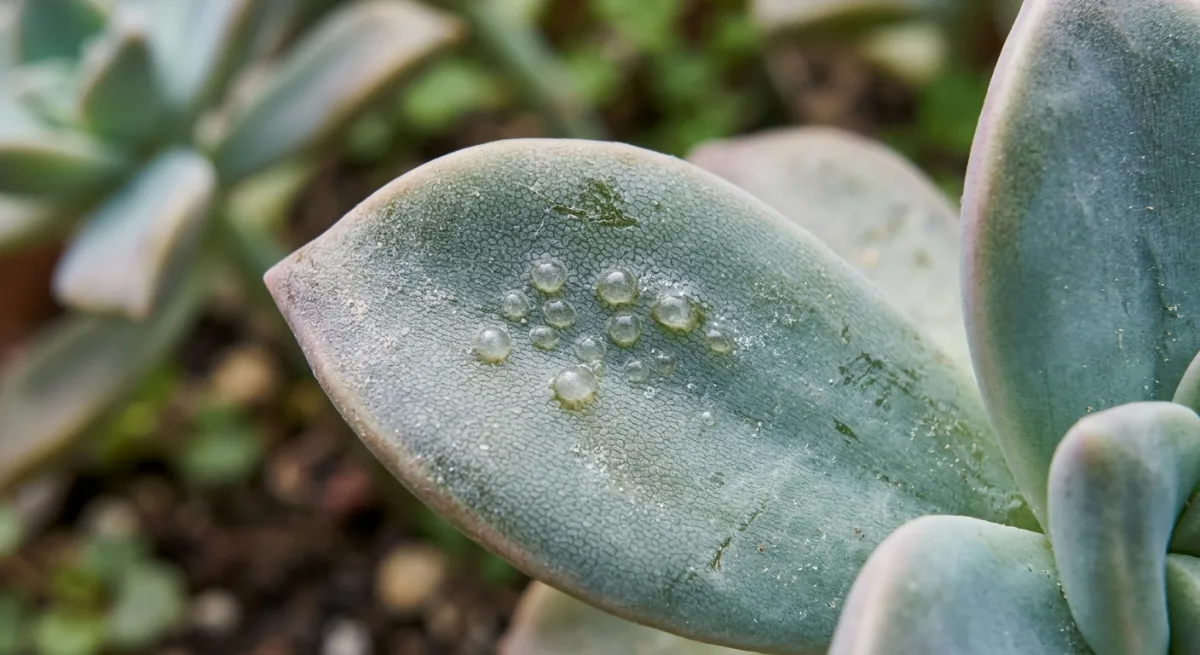
- Translucent, Glassy Leaf Bases: Foliage sheds its vibrant green or chalky silver hues, taking on a waterlogged, translucent appearance reminiscent of gummy candy. This is an unambiguous sign that plant cell walls have ruptured under excessive internal osmotic pressure.
- Physiological Oedema (Edema) Blisters: Corky, raised, wart-like pustules emerge on the abaxial (underside) surfaces of leaves or along primary stems. Because the roots continue taking up water while low transpiration rates prevent atmospheric release, internal cellular pressure bursts through the outer cuticle.
- Black-to-Brown Collapsing Collar (Stem Basal Rot): Stem tissue right at the soil line loses turgidity, collapsing inward under light tactile pressure while releasing a faint, sour odor of anaerobic decay.
- Epidermal Root Sheath Sloughing: Gently lifting the root ball out of the substrate reveals a compromised system: instead of firm, fibrous white or pink root tips, the outer cortical sheath slides right off like wet string, exposing dark brown or black, slimy cores.
2. Root Causes and Environmental Triggers
Along the coastal corridors of the Pacific Northwest, early summer day temperatures hover conservatively around 14–18°C (57–64°F), dropping to 10–12°C (50–54°F) overnight. This specific thermodynamic profile triggers a physiological bottleneck for plants utilizing Crassulacean Acid Metabolism (CAM):
- Anaerobic Substrate Hypoxia: Heavy native clay or standard peat-rich garden soils remain hopelessly waterlogged following frequent drizzle and morning sea fogs. When oxygen in soil micropores is depleted, roots shift to ethanolic fermentation, poisoning root tissues from within.
- Opportunistic Pathogen Flourishing: Prolonged saturation paired with cool soils creates an optimal incubation temperature for virulent oomycetes and fungi, including Pythium ultimum, Phytophthora cactorum, and Rhizoctonia solani.
- Gastropod and Mollusk Predation: The damp June gloom serves as a banquet invitation for native Pacific banana slugs and invasive common garden snails (Cornu aspersum). The ragged lesions left by their radulae serve as instant entry points for necrotrophic fungi like Botrytis cinerea (gray mold).
3. Natural and Organic Mitigation Methods
For early-stage root rot or minor surface infections, targeted biological and chemical-free remediation yields outstanding recovery rates:
- Oxygenated Water (3% Hydrogen Peroxide) Root Drench: After thoroughly trimming necrotic roots, soak the remaining viable root mass in a solution of 1 part 3% household H2O2 to 4 parts non-chlorinated water for 10 minutes. This immediately infuses the rhizosphere with vital oxygen while lysing anaerobic bacterial cells and fungal oospores.
- Dusting with Elemental Sulfur Powder: Apply finely powdered pharmaceutical-grade sulfur directly to fresh tissue incisions using a soft dry brush. Sulfur impairs respiration within fungal cell matrices and triggers rapid wound suberization (callus formation).
- Biological Inoculation (Bacillus subtilis): Reinvigorate compromised substrates with root-colonizing beneficial bacteria. Dedicated strains of Bacillus subtilis form protective biofilms along vulnerable root tips, actively synthesizing antimicrobial lipopeptides that inhibit fungal hyphae.
- Diatomaceous Earth Barriers: Deter destructive mollusks by establishing a continuous perimeter of food-grade diatomaceous earth around elevated planting zones. The microscopically sharp silica fragments score the moist foot of slugs and snails, preventing access to fleshy stems without chemicals.
4. Chemical and Systemic Fungicide Application Protocol
When systemic crown rot threatens prized specimens, specialized fungicides become necessary. Treatments should always be administered early in the morning during a dry weather window.
| Active Ingredient | Target Pathogen | Recommended Dosage (Per Liter) | Application Method & Frequency |
|---|---|---|---|
| Mefenoxam / Metalaxyl | Pythium & Phytophthora (Damping-off & Root Rot) | 0.5 ml / L | Soil drench; maximum 2 applications spaced 14 days apart |
| Fosetyl-Aluminium | Oomycete Fungi & Hypoxic Crown Asphyxiation | 2.0 g / L | Foliar spray or root dip; apply once every 21 days |
| Propiconazole | Foliar Rusts, Stem Rot & Rhizoctonia | 0.4 ml / L | Systemic foliar application; space 10–14 days apart |
| Copper Octanoate | Bacterial Soft Rot & Secondary Oedema Lesions | 1.5 ml / L | Preventative protective spray; reapply after heavy rain |
5. Strict Quarantine and Decontamination Protocols
To prevent localized pathogens from spreading throughout your landscape beds or into indoor collections, practice disciplined sanitation:
- Immediate Isolation: Unearth the symptomatic specimen promptly, or move its container at least 3 meters (10 feet) away from other plants into a dry, well-ventilated, covered shelter away from driving precipitation.
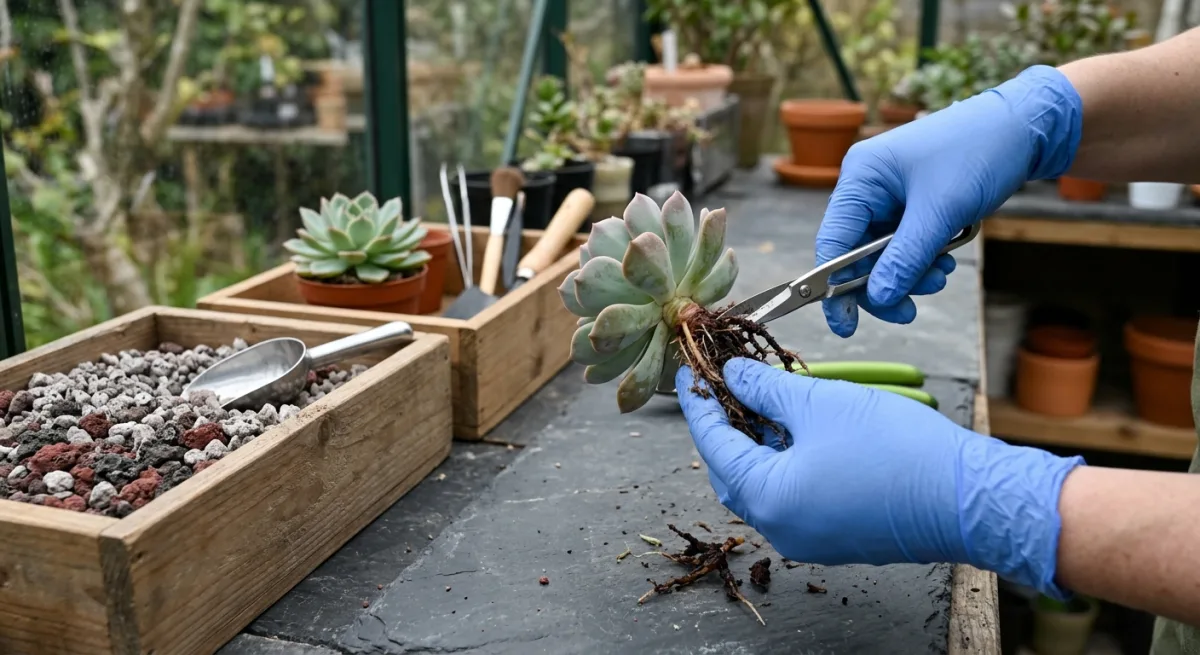
- Tool Sterilization: Thoroughly disinfect bypass pruners, scalpels, and forceps with 70% isopropyl alcohol or flame sterilization before and after every surgical cut. A single contaminated cut can inoculate millions of pathogenic spores deep into vascular bundles.
- Bare-Root Washing and Desiccation: Strip all damp native soil from the root ball under gentle running water. Excise all blackened, hollowed-out, or mushy roots back to healthy, firm, pristine white tissue. Place the cleaned plant onto unbleached paper towels in a shaded, well-ventilated room for 4 to 7 days to allow cuts to form a firm protective callus.
6. Rehabilitation Substrate and Long-Term Care
Once tissue excision is complete and clean callous tissue has sealed all wounds, re-establishing your succulent depends entirely on substrate physics. In cool PNW conditions, standard peat-based potting soils and raw yard dirt are strictly prohibited.
Prescription PNW Rehabilitation Substrate:
- 50% Horticultural Pumice – 3–6 mm particle size (the gold standard of the Pacific Northwest; maintains air porosity even under relentless rain)
- 25% Crushed Lava Rock (Scoria) or Calcined Clay (Turface)
- 15% Fine Zeolite (buffers excess cation moisture and locks away surplus ammonium ions)
- 10% Coarse Coconut Coir Fiber or Sterilized Worm Castings (supplying trace organic stability without compacting)
Seat the callused specimen into this purely porous, dry substrate and withhold all water for a minimum of 5 days. Placing containers over supplemental propagation heat mats set to 20–22°C (68–72°F) will dramatically speed up the awakening of dormant root primordia. When resuming hydration, apply water sparingly along the rim of the pot—never drenching the vulnerable root collar directly.


Reader Reviews & Comments 1 Review
No comments yet. Be the first to share your succulent experience!
Leave a Review & Rating
Share your plant care tips, experiences, or questions with our succulent community.