






If you have grown weary of turning your soil upside down every spring and pampering finicky annual seedlings, it is time to welcome nature's ancient forest floor architecture directly into your landscape. Perennial edibles—anchored by profound chlorophyll reserves, intricate subterranean mycorrhizal fungal networks, and resilient vascular xylem architectures—function as perpetual living ecosystem factories that churn out clean, nutrient-dense nutrition for decades once firmly rooted. However, when designing this perennial sanctuary, the most frequently overlooked physiological vulnerability is that these enduring root systems become primary targets for soil-borne fungal pathogens during sodden winters and stagnant summer swelters.
Unlike traditional agriculture's 'harvest and rip out' dynamic, establishing a perennial food forest leaves your plants tethered to the exact same rhizosphere moisture and nutrient balances year after year. Cultivars such as asparagus (Asparagus officinalis), globe artichoke (Cynara cardunculus), Jerusalem artichoke (Helianthus tuberosus), succulent-leaning edible purslane kin, and perennial chives (Allium schoenoprasum) manifest severe chronic decline whenever drainage falters or ambient fungal spores proliferate. Viewed through an exacting botanical lens, rescuing these long-lived specimens is never accomplished by top-pruning annual growth; salvation lies solely in rehabilitating the root crown and restoring the beneficial soil microbiome.
1. Early Diagnostic Symptoms and Microscopic / Visual Clues
Because perennial plants maintain extensive below-ground energetic reserves, initial cellular distress can remain concealed beneath healthy foliage, frequently misleading novice horticulturists. While the specimen quietly draws upon its subterranean tubers, taproots, or rhizomes, catastrophic vascular occlusions begin to take hold within the vascular bundles. Timely, early diagnosis forms the decisive boundary between losing an entire mature perennial stand and sustaining mere cosmetic, seasonal foliar shedding.
- Root Crown and Rhizome Softening: Applying gentle thumb pressure to the transition zone where the main stem meets the substrate line in asparagus or artichokes should reveal a turgid, cartilaginous firmness. If the tissue feels squishy, water-soaked, spongy, and exhibits a dull brown necrosis, you are witnessing an active Phytophthora or Fusarium invasion.
- Interveinal Chlorotic Yellowing: When upward sap translocating water and vital minerals through xylem vessels is choked by advancing fungal hyphae, foliage develops characteristic V-shaped chlorotic margins that creep inward from the leaf tips toward the primary midribs.
- Pustule Eruptions and Sporulation Dust: Across perennial leeks and heirloom wild alliums (Allium spp.), the sudden appearance of raised, cinnamon-to-rust-colored powdery eruptions (Alliaceous rust - Puccinia allii) progressively destroys the photosynthetic cellular area, starving underground storage organs.
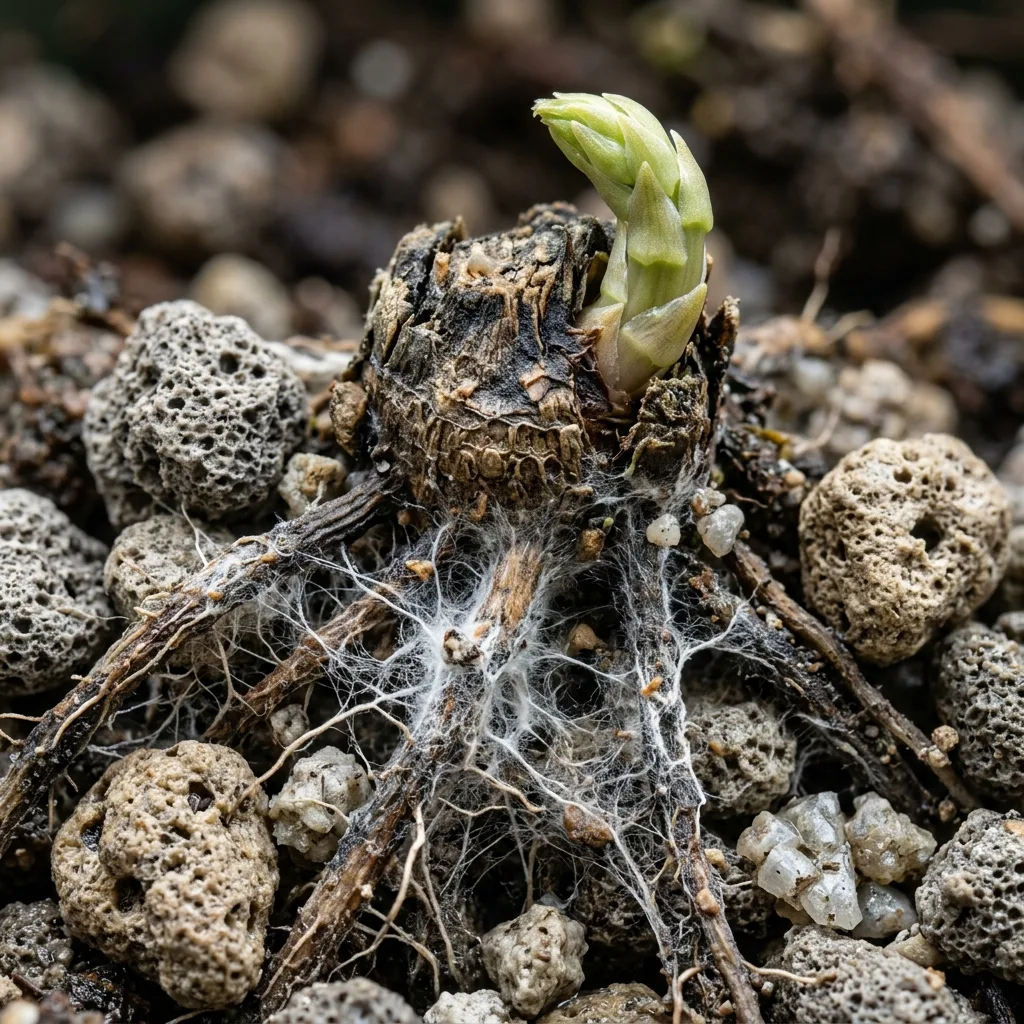
- White Webbing and Sclerotia: Peeling away the protective mulch collar at the soil line to reveal cottony, web-like mycelial fans peppered with tiny, spherical mustard-seed-like sclerotia confirms the destructive presence of southern blight (Sclerotium rolfsii).
2. Root Causes and Environmental Triggers
Nearly 85% of catastrophic declines observed in established perennial edible borders trace back directly to 'over-attentive husbandry' and fundamentally flawed mulching methodologies. The habitual urge to perform deep mechanical hoeing—borrowed from annual bed culture—shreds the delicate feeder capillary root systems lingering just beneath the surface, presenting unhealed open wounds to opportunistic soil bacteria and virulent fungi.
An equally devastating cultural blunder is anaerobic mulch suffocation. Applying dense organic woodchips, heavy sawdust, or raw compost right up against the living root crown (the notorious 'volcano mulching' mistake) drops oxygen diffusion in the immediate collar zone to absolute zero. Starved of oxygen, both CAM and C3 respiratory pathways collapse; cellular membranes destabilize and rupture, weeping intracellular carbohydrates and exudates directly into the soil. This banquet summons opportunistic oomycetes and saprophytic fungi such as Pythium and Rhizoctonia. When heavy, compacted clay substrates fail to discharge torrential cold winter rains, this physiological suffocation degenerates into an unmitigated crown rot disaster.
3. Natural and Organic Remediation Protocols
When curating crops destined for the dinner table, harboring systemic chemical residues in edible shoots is simply an unacceptable compromise. Consequently, our front-line defensive perimeter must rely on aggressive biological exclusion and vetted organic preparations. Mobilizing beneficial mycorrhizae and antagonistic biological bacteria physically shields the root cortex from pathogenic ingress.
- Microbial Inoculation with Bacillus subtilis and Trichoderma harzianum: These soil-dwelling microscopic allies parasitize and metabolically consume the invasive hyphae of Fusarium and Pythium. Dissolve 20 grams of commercial Trichoderma dispersible powder into 10 liters of dechlorinated, resting water and apply it generously as a direct root drench around stressed plants.
- Potassium Bicarbonate and Cold-Pressed Neem Emulsion: To halt powdery mildew and rust across leaf surfaces, blend 4 grams of food-grade potassium bicarbonate, 5 ml of pure cold-pressed neem seed oil, and 2 ml of gentle potassium-based insecticidal soap into 1 liter of lukewarm water. This spray instantly shifts foliar surface pH to an alkaline threshold, arresting fungal spore germination on contact.
- The Inert Drainage Collar: For moisture-sensitive species like mature globe artichokes or sea kale (Crambe maritima), remove organic mulch around the immediate root neck and replace it with a 5 cm radius perimeter of clean river gravel, coarse pumice, or expanded shale to facilitate rapid moisture evaporation right at the crown interface.
4. Targeted Chemical and Systemic Treatment Schedule
Should an insidious epidemic surpass organic containment and threaten irreplaceable heirloom lineages—such as an established ten-year-old asparagus planting—controlled, targeted interventions with rigorous adherence to pre-harvest intervals (PHI) become clinically essential. Respecting these clearance days guarantees culinary safety while rescuing vascular function.
| Active Ingredient | Target Pathogen / Disease | Dosage (per Liter of Water) | Application Interval | Pre-Harvest Interval (PHI) |
|---|---|---|---|---|
| Copper Oxychloride (50%) | Anthracnose, Leaf Spots, Rust | 3 - 4 grams | 10 - 14 days | 21 days |
| Metalaxyl-M + Mancozeb | Crown Rot (Phytophthora Blight) | 2.5 grams (Crown Drench) | 14 days (Max 2 apps) | 28 days |
| Azoxystrobin (250 g/L) | Powdery Mildew, Rust, Vascular Blight | 0.75 - 1.0 ml | 12 - 16 days | 14 days |
5. Strict Quarantine and Sanitation Protocols
Whenever virulent disease breaks out inside an established perennial network, contagion expands with alarming velocity via underground mycorrhizal highways, entwined root systems, and splashback from seasonal rainstorms. Remediation must commence with uncompromising sanitation:
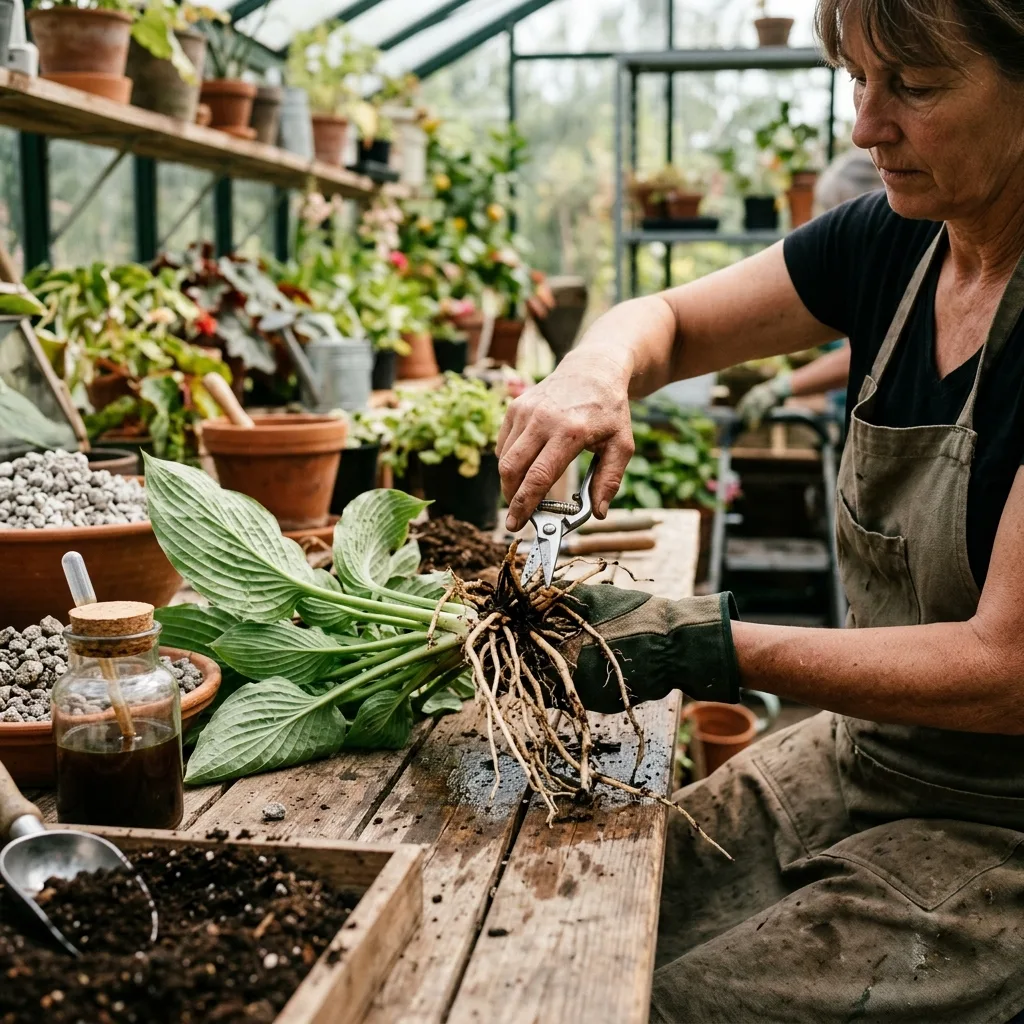
- Surgical Removal and Bio-Hazard Containment: Excavate severely rotten individuals along with a generous 15 cm (6-inch) buffer block of surrounding root-zone soil. Never discard this diseased biological matter onto your compost heap; incinerate it or dispose of it safely in municipal refuse bags.
- Pruning Tool Sterilization: Submerge clean bypass pruners, soil knives, and hori-hori blades into 70% isopropyl rubbing alcohol or a 10% household sodium hypochlorite solution for at least 30 uninterrupted seconds between every single plant. A microscopic smear of sap on a cutting blade can silently inoculate healthy crowns throughout your entire garden.
- Substrate Solarization: Do not hasten to fill the excavated planting void with a fresh, vulnerable specimen. Lay a sheet of transparent, ultraviolet-stabilized polyethylene sheeting over the bare patch, securing the edges tightly to heat the soil via 4–6 weeks of intense midsummer sun (solarization), thermally terminating latent resting spores.
6. Long-Term Plant Rehabilitation and Convalescence Care
Once you break the pathogen's grip, your surviving perennials enter an extended state of physiological exhaustion. The emergence of a few fresh green shoots does not indicate a full recovery; broken vascular xylem and phloem vessels demand sustained rehabilitation before root architecture can handle standard metabolic workloads.
For the initial three weeks of convalescence, mist foliage with cold-water-extracted liquid kelp meal (abundant in natural cytokinins and root-stimulating auxins) to spark active cell division. Recalibrate your irrigation strategy to an unyielding 'infrequent but deep' cadence, scratching the crusted topsoil lightly with a hand fork to break surface compaction and invite fresh atmospheric air back into root channels. Amend the perimeter surrounding the crowns with a calculated blend of 40% coarse pumice, 20% agricultural zeolite, and 40% fully mature worm castings (vermicompost) to dramatically expand macroporosity while recharging the depleted beneficial microflora. Most importantly, cease all culinary harvesting throughout this delicate convalescent season; channel every calorie of manufactured photosynthate straight down into rebuildling foundational root reserves.


Reader Reviews & Comments 3 Reviews
Marcus Sterling
Eleanor Vance
Julian Thorne
Leave a Review & Rating
Share your plant care tips, experiences, or questions with our succulent community.