






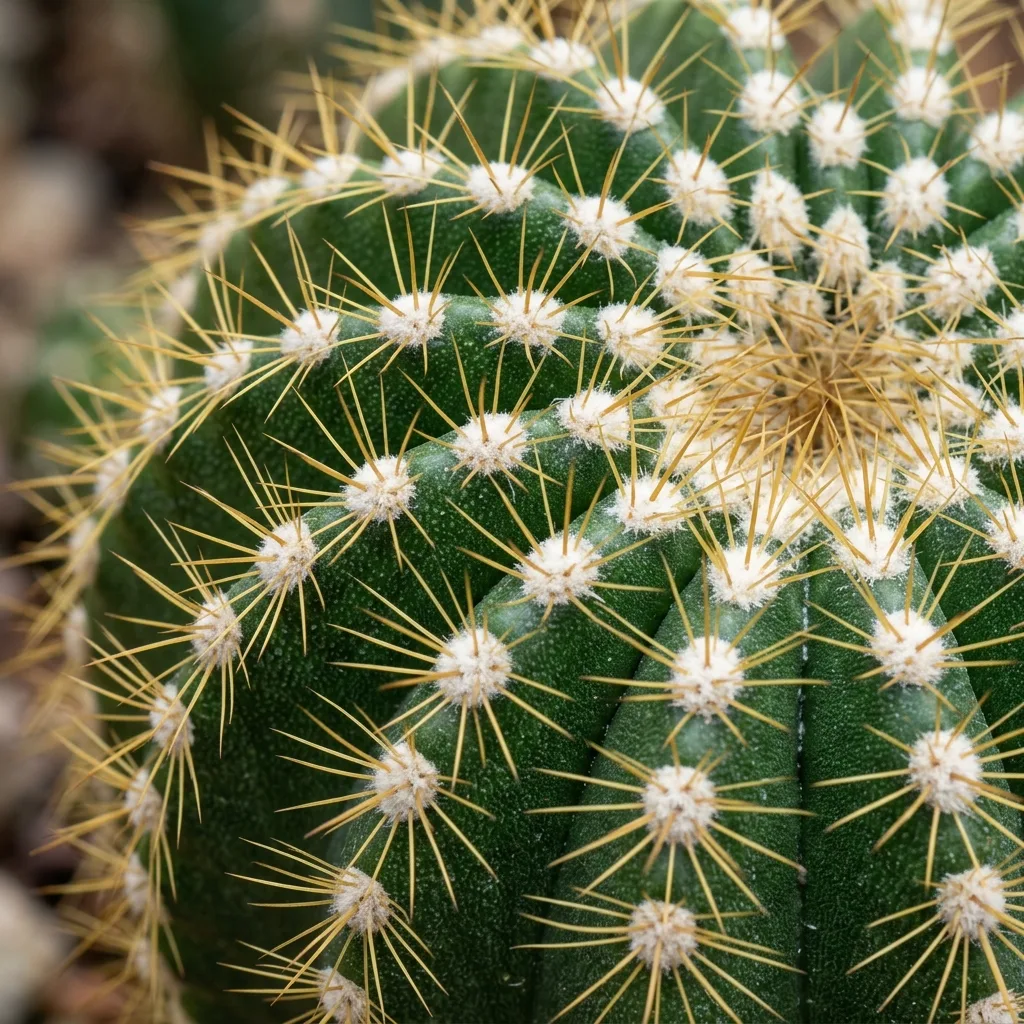
Hailing from the wind-swept pampas plains of South America and the arid rocky knolls of southern Brazil, the genus Parodia (formerly classified under Notocactus) represents one of the most distinguished gems of the succulent and cactus world. Its silky golden spines spiraling along vertical ribs, paired with brilliant yellow, fiery red, and soft salmon blossoms erupting from the apical meristem, reflect an exquisite evolutionary adaptation against severe drought. While plant lovers often ponder whether this botanical marvel is 'a succulent or a cactus,' we must always remember that every cactus is fundamentally a specialized stem succulent engineered to store cellular water reserves.
Cultivating a Parodia indoors is the delicate art of recreating the arid microclimate of its natural rocky habitat on a container scale. This plant possesses a delicate root system that easily succumbs to misplaced affection in the form of frequent, routine watering; saturating desert succulents too often is never an act of care, but rather an unintended asphyxiation of the root hairs in an anaerobic, airless medium. Once you understand Parodia's cellular water equilibrium, its Crassulacean Acid Metabolism (CAM) photosynthetic rhythm, and the physiology of its winter dormancy, you will witness a sculptural monument thrive effortlessly on your windowsill for decades, crowned with spectacular flowers every spring.
1. Botanical Biology and Physiological Foundations
Species within the Parodia genus (such as the widespread Parodia magnifica, the golden-columnar Parodia leninghausii, and the finely spined Parodia haselbergii) concentrate their entire water storage capacity within their globose to shortly cylindrical stems. By evolving leaves into sharp spines, they have dramatically reduced surface area, cutting transpiration losses to absolute biological minimums. The accordion-like vertical ribs (costae) expand smoothly as cellular vacuoles absorb hydration during infrequent precipitation events; during prolonged drought, the stem contracts inward safely without tearing its outer epidermal tissues.
At the cellular level, Parodia operates via CAM photosynthesis. Throughout the sweltering daytime hours, it keeps its stomatal pores tightly shut to prevent evaporative moisture loss. At night, under cooler ambient temperatures, the stomata open to absorb atmospheric carbon dioxide, storing it within vacuoles as malic acid. As daylight returns, this acid decarboxylates, releasing carbon dioxide to fuel the light-driven synthesis of glucose. Because of this nocturnal respiratory rhythm, the rhizosphere (root zone) must remain oxygen-rich overnight. Heavy, saturated, and compacted potting media suffocate root hairs during the night and allow opportunistic phytopathogenic fungal spores (primarily Fusarium and Pythium) to penetrate and occlude the vascular xylem vessels.
2. Accurate Diagnosis and Signs of Distress
Your Parodia communicates clearly; you simply need to observe its stem turgor, spine density, and dermal coloration. Here are the most prevalent physiological disorders and early diagnostic indicators encountered in cultivation:
- Etiolation from Insufficient Light: The globose form elongates into an unsightly conical, pale green apex, accompanied by wider spacing between areoles. Starved of light, the plant accelerates cellular elongation, producing fragile, structurally compromised tissue.
- Turgor Loss and Dehydration: The ribs noticeably collapse inward, losing their plumpness and acquiring a dull, matte appearance. If the potting mix is bone dry, it is time for a thorough watering; however, if the stem softens while the soil is damp, the root system has collapsed from fungal rot and can no longer uptake water.
- Sunburn and Epidermal Necrosis: Abrupt exposure to unshielded midday sun causes bleached, yellowish-white patches that eventually harden into corky, brown necrotic scars. Although spines provide partial shade, sudden environmental shocks burn the delicate epidermis.
- Excessive Nitrogen and Tissue Bloating: High-nitrogen fertilizers cause unnatural, rapid ballooning of the stem, deep blue-green hyper-pigmentation, and stress fractures across the ribs. This bloated tissue is exceptionally fragile and highly susceptible to opportunistic pathogen invasion.
3. Step-by-Step Care Protocol
To cultivate your Parodia with immaculate symmetry, resilient tissues, and abundant spring blooms, implement this five-step botanical protocol:
- Formulate an Aerated, Mineral-Dominant Substrate: Conventional peat-based potting soils are a death sentence for Parodia. Prepare a blend containing at least 70% porous inorganic aggregates (pumice, crushed lava rock, perlite, and zeolite) and no more than 30% screened, low-decay organic matter (coarse blond peat or rinsed coco coir). A particle size between 3-6 mm ensures rapid drainage and optimal aeration.
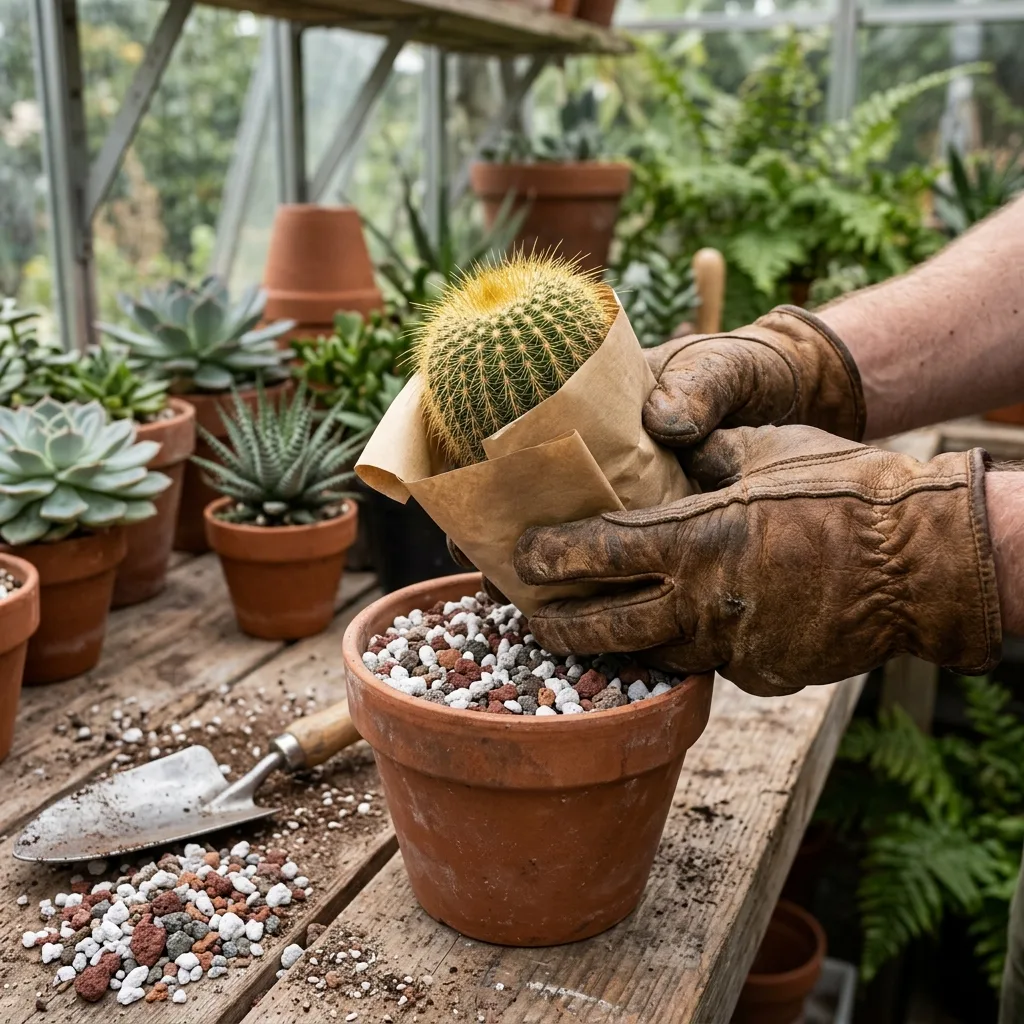
- Select Shallow Pots with Generous Drainage: Because Parodia roots spread laterally rather than plunging deep, tall containers leave an uncolonized, soggy soil reserve at the base. Choose shallow terracotta or unglazed ceramic bowls equipped with wide drainage openings that facilitate rapid evaporation through porous pot walls.
- Acclimatize to High-Intensity Light Gradually: Position your cactus along an unobstructed south- or east-facing windowsill that provides at least 4 to 6 hours of bright, filtered sunlight daily. When transitioning from dim winter conditions to strong spring sun, use a sheer curtain for two weeks so the epidermis can produce protective anthocyanin and carotenoid pigments.
- Implement Cyclic 'Soak-and-Dry' Watering: Always verify that the entire substrate profile has dried down completely to the bottom of the pot using a wooden moisture probe before watering. During the active vegetative season (April through September), drench the pot thoroughly until water drains freely from the base, and empty the drip tray after 10 minutes.
- Provide Essential Winter Vernalization: Apical flower bud initiation requires a mandatory cool resting period (November through March). Drop ambient temperatures to 8-12°C (46-54°F) and either withhold water entirely or provide only a light surface sip every 6 to 8 weeks. Without this cool, dry dormancy, Parodia will remain strictly vegetative and fail to set buds.
4. Required Equipment, Materials, and Benchmarks
The following technical parameters outline the exact chemical and physical environment needed to ensure robust cell walls and enduring root vitality in Parodia:
| Component / Parameter | Recommended Specification | Physiological Function |
|---|---|---|
| Inorganic Mineral Aggregate | 40% Pumice + 20% Lava Grit + 10% Zeolite | Ensures macro-pore aeration, instant drainage, and rot prevention |
| Organic Fraction | 30% Screened Coarse Blonde Peat / Coir | Maintains minimal cation-exchange capacity and micronutrient retention |
| Light Intensity | 25,000 - 40,000 Lux (Filtered Natural Light) | Maintains compact growth, dense spine development, and flower induction |
| Watering Frequency (Summer) | Every 10-14 days (Only after complete desiccation) | Hydrates cellular vacuoles and sustains CAM photosynthesis |
| Watering Frequency (Winter) | Completely dry or light moisture every 45-60 days | Sustains dormancy, prevents freeze injury and vascular decay |
| Nutrient Supplementation | Low-Nitrogen, High-P/K Cactus Fertilizer (1/4 strength) | Strengthens cellular walls and encourages early spring bud formation |
5. Common Pitfalls and Remedial Actions
Here are the five most frequent cultivation mistakes alongside their corrective botanical solutions:
- 1. Growing in Standard All-Purpose Potting Soil: Dense indoor soils retain water for weeks, creating an anaerobic grave for root systems. Remedy: Unpot the specimen, wash away the compacted mud from the root system with tepid water, prune away dead or black roots, let the plant rest in a shaded spot for 48 hours, and repot in the mineral mix described above.
- 2. Maintaining High Temperatures and Watering Through Winter: Kept in a warm, heated room with ongoing irrigation, Parodia cannot enter dormancy. Under weak indoor winter light, it stretches into a pear-shaped silhouette. Remedy: Relocate the pot to a bright, cool area (10-12°C), halt regular watering, and allow cellular rest.
- 3. Surface 'Sip' Watering: Lightly sprinkling the topsoil leaves the deeper root system desiccated while enticing secondary roots to cluster weakly near the surface. Remedy: Adhere strictly to the 'soak-and-dry' principle; moisten the entire root zone thoroughly, then allow total dry-down before repeating.
- 4. Damaging the Root Collar During Repotting: Handling the cactus with metal tongs or squeezing the stem with bare hands tears the epidermis, providing entry points for pathogens. Remedy: Use folded strips of newspaper or thick foam blocks to collar the plant gently without piercing its protective skin.
- 5. Overlooking Basal Rot Until Collapse: Once the lower stem turns soft and mushy, surgical intervention is the only recourse. Remedy: Using a flame-sterilized scalpel, excise the rotting base with horizontal slices until only clean, unblemished vascular bundles remain. Dust the wound with sulfur powder, air-dry in a shaded, ventilated spot for 10-14 days until a firm callus develops, and set the cutting atop dry pumice to induce new roots.
6. Seasonal Calendar and Long-Term Results
The developmental trajectory of Parodia mirrors the natural progression of the seasons:
- Spring (March - May): Awakening phase. Gradually resume watering as light levels rise. By April, woolly areoles at the apical meristem expand and produce vibrant flower buds. Apply a quarter-strength cactus fertilizer once a month.
- Summer (June - August): Peak vegetative growth. Photosynthesis and tissue development reach their maximum. Supply generous morning sunlight; during intense heatwaves exceeding 35°C (95°F), the plant may enter partial summer dormancy, requiring slightly spaced watering intervals.
- Autumn (September - October): Hardening-off phase. Systematically space out waterings to encourage tissue firming. The plant increases intracellular sugar concentrations, building natural frost resistance for winter.
- Winter (November - February): Vernalization period. Keep the specimen in a bright, cold room (8-12°C / 46-54°F) in bone-dry conditions. This dormancy is the definitive trigger for the following spring's crown of blossoms.
By honoring these physiological needs, your Parodia will preserve its flawless geometry year after year, eventually producing basal offsets to form a handsome, clustered colony that graces your home with brilliant flowers every spring.


Reader Reviews & Comments 3 Reviews
Eleanor Vance
Clara Higgins
Julian Thorne
Leave a Review & Rating
Share your plant care tips, experiences, or questions with our succulent community.