






Hailing from the sandy savannas and wind-swept coastal prairies of Texas, Gaillardia amblyodon—popularly celebrated as the Maroon Blanketflower or Red Indian Blanket—represents the pinnacle of monochromatic elegance among wild composites. Unlike the ubiquitous, bi-colored garden cultivars (such as Gaillardia pulchella or G. × grandiflora), its deep, velvety chestnut-maroon hue extends uninterrupted from disc floret to ray floret tips. This striking coloration is not merely an aesthetic marvel; it serves as a concentrated anthocyanin shield evolved to safeguard cellular machinery against punishing solar radiation. For growers cultivating arid landscapes, coastal plots, and succulent borders, this drought-defying wild annual provides the ultimate return on minimal inputs.
While many nursery labels broadly tag blanketflowers as 'carefree,' Gaillardia amblyodon possesses distinct physiological requirements. Dense, water-retentive clay soils, aggressive organic fertilization, and waterlogged root zones will rapidly trigger root collapse in this native xerophyte. However, when you marry the substrate mindfulness of a dedicated succulent grower with the explosive seasonal vigor of an open-prairie wildflower, you unlock an uninterrupted display of rich maroon blossoms from late spring straight through the first killing frosts of autumn.
1. Botanical Biology and Physiological Foundations
Gaillardia amblyodon is an annual (occasionally a short-lived perennial in frost-free, semi-arid microclimates) belonging to the family Asteraceae. The specific epithet amblyodon derives from Greek for 'blunt-toothed,' highlighting the distinctive morphology of the blunt-tipped chaff scales on the floral receptacle and the protective involucral bracts. Mechanically, these modified structures act as resilient armor, insulating developing flower buds against desiccating prairie gales and reducing herbivore pressure.
Beneath the surface, the plant establishes a dual-tier root architecture: a slender, downward-plunging taproot paired with an expansive network of fibrous surface feeder roots. This anatomical strategy allows it to instantly capture fleeting precipitation from flash storms while relying on its taproot to extract deep, residual soil moisture during prolonged hot spells. Above ground, foliar epidermal cells are clad in a protective cuticular wax and fine, microscopic trichomes that drastically diminish transpirational water loss. Conversely, when planted in nitrogen-rich, heavy clay mediums, root xylem vessels quickly become hypoxic, leaving the plant defenseless against soil-borne pathogens (notably Phytophthora and Rhizoctonia species). Under these improper conditions, vegetative shoots stretch excessively, while floral initiation plummets to near zero.
2. Accurate Diagnosis and Plant Signals
Attuned cultivation requires reading cellular stress indicators before systemic failure occurs:
- Light Deprivation (Etiolation and Pigment Loss): Stems lose their rigid, fibrous integrity, becoming weak and decumbent. Internodes lengthen noticeably, and flowering heads diminish to half their natural diameter (falling well below their typical 5–7 cm spread).
- Root Hypoxia and Overwatering: Sudden chlorosis across lower basal leaves, soft petioles, and premature bud blast (where flower buds turn brown and drop without unfurling) indicate an oxygen-starved substrate. The golden rule of succulent cultivation—watering too frequently is not an act of love, but accidental suffocation—applies equally to this xeriscape native.
- Excess Nitrogen Toxicity: Plants develop dense, hypertrophic, emerald-green foliage while floral primordia fail to initiate. The specimen becomes trapped in perpetual vegetative growth at the expense of generative bloom cycles.
- True Drought Stress Limits: While exceptionally drought-resistant, if diurnal foliar wilting persists into the cool evening hours without overnight turgor recovery, fine feeder roots have fully dehydrated. A thorough, deep sub-surface soaking is urgently required.

3. Step-by-Step Cultivation Protocol
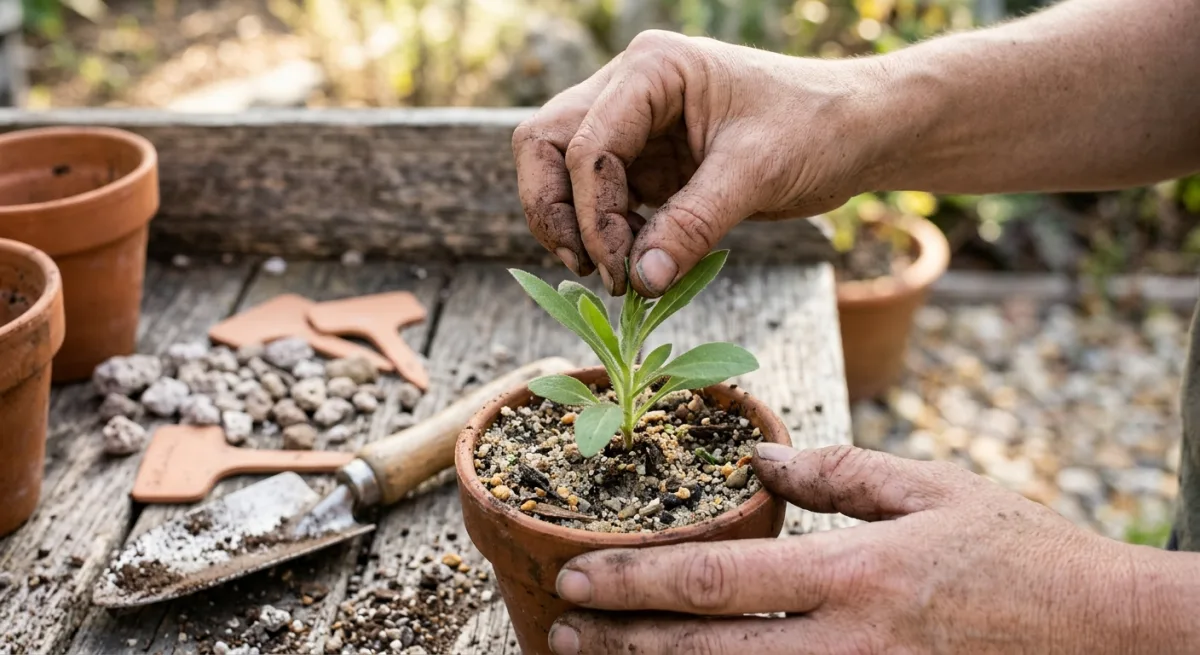
Gaillardia amblyodon propagates eagerly from seed, yet demands cautious handling during transplantation due to its delicate primary taproot. Follow this systematic protocol for optimal field success:
- Seed Sowing Dynamics: Sow seeds indoors 6 to 8 weeks before your last expected spring frost, or direct-sow onto prepared open ground once soil warms. Seeds require light to break physiological dormancy; do not bury them under soil. Gently firm them into the surface with a flat board or fingertips to ensure good contact. Germination takes place at 20–22°C (68–72°F) within 7 to 14 days.
- Seedling Care and Taproot Integrity: Use deep cell trays or biodegradable peat/paper pots to minimize taproot disturbance during staging. Never pull, tear, or aggressively root-prune during transplantation.
- Soil Profile Preparation: In garden borders, loosen the top 30 cm (12 inches) of soil. If working with native clay, incorporate 40% coarse horticultural sand, crushed pumice, or expanded shale to establish vital macropores. For container culture, blend a high-drainage succulent and cactus substrate mix.
- Spacing and Microclimate Airflow: Plant seedlings 30 to 35 cm (12–14 inches) apart. Crowding traps boundary layer humidity around lower leaves during hot summer nights, inviting fungal spores such as powdery mildew.
- Apical Pinching: When young plants reach 15 to 20 cm (6–8 inches) in height, cleanly pinch out the dominant central growing tip. This disrupts apical dominance, inducing vigorous basal branching that transforms a single-stemmed shoot into a densely ramified, floriferous shrublet.
- Targeted Deadheading: Systematically excise spent flower stems just above a leaf node. By preventing resource allocation toward seed production, the plant channels metabolic energy into an endless sequence of fresh floral buds until frost.
4. Substrate Metrics, Equipment, and Parameters
The following physiological parameters ensure maximum photosynthetic yields and robust cellular respiration for Gaillardia amblyodon:
| Parameter / Component | Target Specification | Field Alternative | Physiological Objective |
|---|---|---|---|
| Substrate Formula | 50% Native mineral soil + 30% Coarse sand + 20% Pumice/Lava rock | 70% Gritty succulent mix + 30% Lean garden loam | Optimizes root xylem aeration, rapid percolation, and pore air space |
| Soil pH Range | 6.5 – 7.5 (Neutral to slightly alkaline) | Decomposed granitic or calcareous sandy soils | Maintains micronutrient bioavailability; prevents iron chlorosis |
| Photoperiod & Light | Minimum 6–8 hours unfiltered direct sun daily | South- or west-facing open terraces | Drives robust anthocyanin synthesis and lignified, self-supporting stems |
| Irrigation Rhythm | Drench-and-dry cycle (only after substrate dries) | Once weekly during heatwaves; biweekly in cooler spells | Hydrates the root crown without waterlogging fine feeder hair roots |
| Plant Spacing | 30 – 40 cm between crowns | Minimum 20–25 cm pot depth for single specimens | Maintains dry foliar microclimates, preventing fungal mycelium spread |
| Fertilization | Low-N, high-P/K (e.g., 5-10-10) applied once in early spring | Dilute, un-aerated compost tea (sparingly) | Supports floral bud differentiation without inducing soft vegetative rankness |
5. Five Common Mistakes and Remediation Protocols
- 1. Cultivating in Heavy, Water-Retentive Clay: Heavy soils drown the root crown during summer downpours. Remedy: Lift the root ball immediately, excavate a planting zone 40 cm wide, mix heavily with coarse sand and crushed lava, or rebuild as a raised bed to elevate the crown above water tables.
- 2. Connecting to High-Frequency Drip Systems: Standard turf or ornamental shrub irrigation schedules spell disaster for wild arid composites. Remedy: Cap nearby drip emitters or isolate the plant on a dedicated xeriscape line; permit the topsoil to dry to bone-dry conditions between cycles.
- 3. Sowing Seeds Too Deeply: Seeds buried beneath even half a centimeter of topsoil are deprived of light signals and remain dormant. Remedy: Surface-sow onto moist, tamped sand, mist with a fine spray, and press lightly into the substrate without covering.
- 4. Neglecting Spent Seed Heads: Once disc florets mature into seed heads, systemic auxin/gibberellin shifts signal reproductive completion, halting further bud set. Remedy: Perform weekly deadheading back to the first lateral leaf axil to sustain uninterrupted flower development.
- 5. Growing Indoors or on Sheltered, Shaded Balconies: Low lux levels result in sprawling, weak stems prone to botrytis. Remedy: Relocate specimens to open, full-sun southern or western outdoor exposures with active ambient air movement.
6. Seasonal Phenology and Annual Management
Sync your cultivation schedule with the natural lifecycle of the Maroon Blanketflower:
- Early Spring (March – April): Direct-sow seed outdoors once frosts subside or start in greenhouse trays. Germination initiates rapidly as soil temperatures cross 18°C (64°F).
- Late Spring to Mid-Summer (May – August): Explosive vegetative and floral development. Pinch apical tips in late May. By mid-June, deep maroon blossoms begin unfurling in succession. Maintain clean deadheading and avoid overhead night watering.
- Early to Mid-Autumn (September – October): Peak flowering continues through late season. In late October, discontinue deadheading on select terminal stems to permit natural seed maturation and self-sowing across the bed.
- Winter (November – February): Frost terminates the annual cycle. In mild coastal zones where freezing temperatures are absent, cut basal stems back cleanly to 5 cm; dormant root collars may produce an early spring crown flush.


Reader Reviews & Comments 3 Reviews
Julian Vance
Clara Higgins
Marcus Sterling
Leave a Review & Rating
Share your plant care tips, experiences, or questions with our succulent community.