





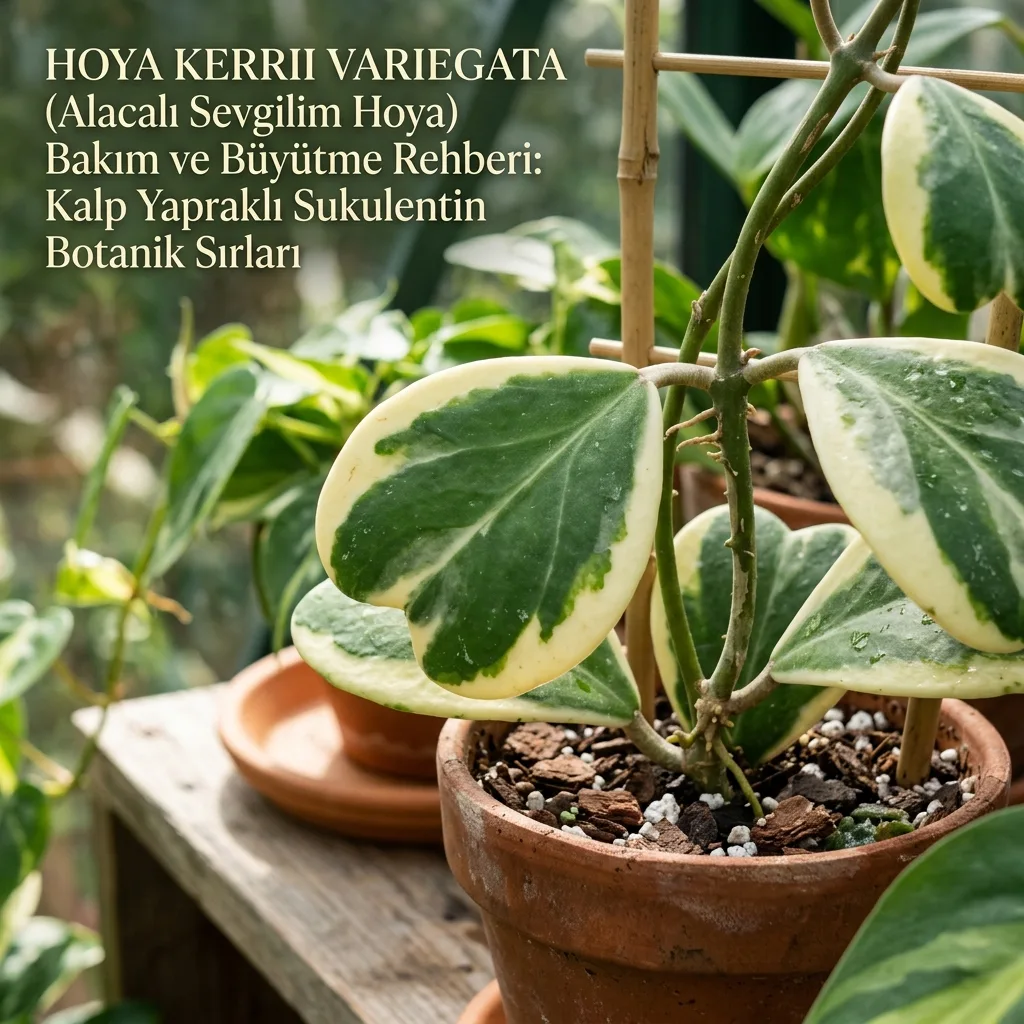
One of the most romantic and distinctive members of the botanical kingdom, Hoya kerrii 'Variegata', commonly celebrated as the 'Variegated Sweetheart Hoya' or 'Valentine Hoya', is a semi-epiphytic, climbing succulent vine belonging to the dogbane family, Apocynaceae. It occurs natively across the high forest canopies of Southeast Asia, particularly throughout Thailand, Laos, Cambodia, and southern China. In its native habitat, it ascends toward the light by anchoring adventitious aerial roots to tree bark and exposed rock faces, captivating collectors worldwide with its immaculate obcordate (reverse heart-shaped) foliage and vivid contrast between creamy-white margins and rich green centers.
While many houseplant enthusiasts first encounter this species as a single, rooted heart-shaped leaf in a novelty pot marketed for Valentine's Day, it is, in reality, a vigorous perennial vine capable of climbing several meters when provided with optimal physiological conditions. However, the presence of marginal variegation and reduced chlorophyll density makes this cultivar noticeably more demanding than the standard solid-green form. At Sukulentler.com, we break down every dimension of its care, from cellular adaptations to seasonal watering cycles, on a strictly botanical foundation.
1. Botanical Identity and Morphological Characteristics
Hoya kerrii 'Variegata' is a perennial climbing succulent vine characterized by thick, highly cutinized, fleshy foliage. The water-storage capacity of its parenchymatous leaf tissue represents its primary anatomical adaptation for enduring prolonged dry spells in canopy microclimates. The adaxial (upper) leaf surface is shielded by a hydrophobic, microcrystalline waxy cuticular layer that minimizes transpirational water loss. This glossy, leathery epidermis efficiently reflects excessive tropical solar radiation, protecting the sensitive photosynthetic mesophyll tissue from photodamage.
Metabolically, the plant utilizes CAM (Crassulacean Acid Metabolism) photosynthesis. Under this biochemical pathway, stomata remain sealed during hot daytime hours to prevent desiccation; they open exclusively at night to take up carbon dioxide, which is then chemically fixed and stored as malic acid within leaf vacuoles. During daylight, this stored malate is decarboxylated and funneled into the Calvin cycle for glucose synthesis using light reactions. Because the variegated margins lack functional chlorophyll, cellular photosynthetic output is roughly 30% to 40% lower than that of the wild-type green form, directly explaining the plant's notoriously slow vegetative development.
2. Light Requirements and Indoor Positioning
Due to the absence of chlorophyll in its variegated segments, Hoya kerrii 'Variegata' demands significantly more bright, indirect light than deep-green Hoya cultivars. In inadequate lighting, the plant attempts to offset its cellular energy deficit via reversion—producing subsequent leaves entirely devoid of variegation in a bid to maximize active photosynthetic tissue.
The optimal domestic placement is directly adjacent to an east-facing window receiving gentle morning sunlight, or just behind a sheer curtain near south- or west-facing exposures. Unfiltered midday sun will swiftly trigger irreversible necrotic sunburns along the tender, cream-colored margins. If adequate natural ambient light is unavailable, provide supplemental lighting using a full-spectrum (6500 Kelvin) LED grow light suspended 30–40 cm above the foliage for 12 to 14 hours per day.
3. Watering Protocol: The 'Soak and Dry' Discipline
Having evolved as an arboreal epiphyte, the root architecture of Hoya kerrii relies on continuous air exchange and cannot endure stagnant, muddy moisture. Because its spongy internal leaf parenchyma can sequester vast reserves of hydration, this plant is vastly more vulnerable to overwatering and anaerobic conditions than to brief periods of drought. The only reliable watering methodology is the 'Soak and Dry' protocol.
Never irrigate until the potting medium has dried out completely (100%) from top to bottom. Confirm desiccation by inserting a wooden probe to the pot base or by lifting the container to assess its weight, rather than relying merely on surface appearance. When moisture levels have completely depleted, thoroughly drench the substrate using room-temperature, dechlorinated water until runoff flows freely from the drainage holes, and ensure that any standing water in the saucer is discarded within 15 minutes.
4. Ideal Substrate Formulation and Pot Selection
Standard indoor potting soil or heavy peat moss is inherently fatal for Hoya kerrii 'Variegata'. Root respiration requires immense interstitial aeration and rapid drainage capabilities. The growth medium must present an open, coarse, and highly structural profile.
| Substrate Component | Ratio (%) | Botanical Function & Benefit |
|---|---|---|
| Coarse Pumice (4–8 mm) | 30% | Porous volcanic aggregate providing structural aeration, root oxygenation, and stability. |
| Chunky Orchid Bark | 30% | Emulates natural epiphytic bark substrates, retaining minimal moisture while ensuring wide air voids. |
| Coarse Coconut Coir / Husk Chips | 20% | Fibrous organic base offering neutral pH, structural elasticity, and gentle buffer capacity. |
| Horticultural Lava Rock (3–6 mm) | 10% | Prevents medium compaction and provides slow-release trace minerals without degrading. |
| Coarse Perlite (No. 2 or Jumbo) | 10% | Reduces overall bulk density and expedites rapid gravity drainage throughout the root column. |
For container selection, unglazed terracotta pots equipped with generous drainage holes are vastly superior, as their microporous clay walls permit bilateral moisture evaporation and oxygen gas exchange. Alternatively, slotted clear plastic orchid pots allow growers to continuously monitor root vigor and moisture distribution without disturbing the root ball.
5. Step-by-Step Propagation Protocols
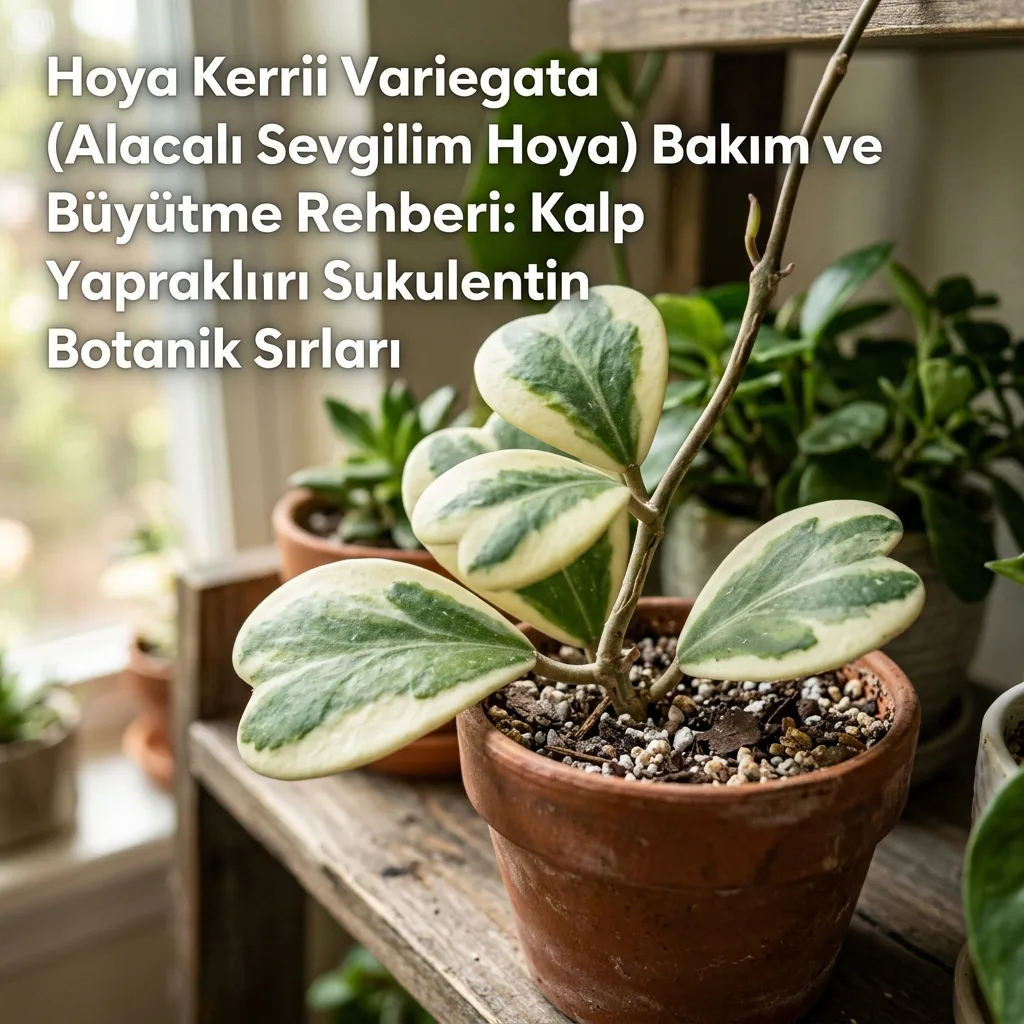
Single-leaf pots sold widely in commercial garden centers represent a frequent horticultural disappointment. A single petiole rooted without accompanying stem tissue can survive for years via adventitious roots, but absent an axillary meristematic bud located on a stem node, it cannot initiate secondary shoots and remains a static 'zombie leaf.' For genuine propagation, adhere to the following sequence:
- Select Viable Material: Harvest a semi-lignified stem cutting that contains at least one prominent stem node and 1–2 healthy, well-variegated mature leaves.
- Sterilization and Callus Formation: Execute clean cuts using a bypass pruner sanitized with 70% isopropyl alcohol. Dust the exposed wound with activated charcoal powder or ground cinnamon to suppress pathogenic fungal spores, allowing it to dry in shade for 24 hours to form a protective suberized callus layer.
- Substrate Selection: Insert the prepared node into a sterile, moisture-retentive yet hyper-aerated medium such as pure pumice, coarse perlite, or a 50/50 perlite-sphagnum blend. Avoid heavy potting soils.
- Establish Microclimate: Maintain an ambient relative humidity around 70% using a ventilated propagation dome or clear plastic enclosure. Place in bright, indirect light at stable temperatures of 22–26°C (72–79°F). Robust adventitious roots and active axillary vine buds typically emerge within 4 to 6 weeks.
6. Common Pathogens, Pests, and Remediation
The sweet, phloem-rich sap and fleshy tissue of Hoya kerrii make it a primary target for sap-sucking pests. The most destructive vectors are mealybugs (Pseudococcidae) and scale insects. These pests congregate in leaf axils, petiole unions, and along the underside of stem crevices, cloaking themselves in protective cottony filaments while depleting sap, leading to chlorosis, stunted nodes, and leaf drop.
Targeted Pest & Disease Management: Treat minor mealybug outbreaks by dabbing insects directly with cotton swabs dipped in 70% isopropyl alcohol. For extensive infestations, alternate weekly applications of horticultural cold-pressed neem oil emulsified with mild insecticidal potassium soap, or administer a systemic insecticide (such as an acetamiprid formulation) through irrigation. If root rot pathogens (Phytophthora or Pythium) strike, decant the plant immediately, excise necrotic, mushy root tissue with sterilized instruments, submerge the viable root system in a dilute hydrogen peroxide solution (1 part 3% H2O2 to 4 parts water) for 10 minutes, and repot into fresh, completely sterile, airy substrate.
7. Seasonal Maintenance Calendar and Expert Tips
Spring and Summer: This represents the period of active vegetative growth. Fertilize every 3 to 4 weeks using a balanced, water-soluble formulation (e.g., NPK 10-10-10) diluted to half or quarter strength, or apply a low-nitrogen, high-phosphorus orchid fertilizer to trigger peduncle development. As transpiration accelerates in warmer conditions, check soil moisture more frequently, but always confirm the core medium has dried completely before rehydrating.
Autumn and Winter: As photoperiod and temperatures decline, Hoya kerrii enters a state of semi-dormancy. Cease all fertilization completely and stretch the watering interval to once every 3 to 5 weeks depending on home ambient humidity. Shield the foliage from sudden cold drafts below 15°C (59°F), and keep plants clear of dry, forced-air heating vents which can cause leaf drop or premature bud abortion.


Reader Reviews & Comments 3 Reviews
Julian Thorne
Eleanor Vance
Clara Higgins
Leave a Review & Rating
Share your plant care tips, experiences, or questions with our succulent community.