






One of the most thrilling and rewarding milestones in cactus cultivation is the moment you spot those fresh, miniature green spheres—botanically classified as offsets or pups—nestled at the base of your mature mother specimen. From the parched valleys of central Mexico to the sun-bleached rocky plateaus of Bolivia, members of the Cactaceae family produce basal shoots to combat prolonged drought and ensure species survival. In habitat, these compact offsets cluster together to create windbreaks against soil erosion and shield each other from scorching UV radiation, or they detach under physical disturbance and tumble into neighboring rock crevices to launch independent colonies.
When our potted domestic cacti produce offsets, how should we steward this generative cycle? Many enthusiastic growers rush to twist off these tender globes and immediately plant them into damp potting soil, only to watch them turn into a brown, liquefying mush within days. Separating and propagating cactus pups is far more than a blunt mechanical excision; it is the deliberate art of orchestrating cellular suberization (callus formation), calibrating mineral hydrodynamics, and aligning with natural seasonal growth hormones.
1. Taxonomic Identity, Areole Architecture, and Spine Morphology
Understanding cactus pups begins with grasping the unique anatomical structure from which they emerge: the areole. Areoles are highly modified, condensed lateral branch buds found exclusively in the family Cactaceae. Every spine, floral primordium, and emerging pup originates from these microscopic meristematic centers. In prolific clumping genera such as Echinopsis, Mammillaria, Rebutia, and Gymnocalycium, shifts in the ratio of endogenous growth hormones (specifically auxins and cytokinins) trigger vegetative budding rather than flowering, prompting the areoles to form offsets.
The spines on juvenile pups are initially pliable and soft, serving as dynamic physical shields that protect fragile stomata and an immature epicuticular wax layer without piercing surrounding tissue. As the pup expands, these spines create a boundary micro-climate that reduces localized transpiration rates. When determining if a pup is ready for harvest, evaluate both its diameter and spine rigidity: an offset that has achieved at least one-third the size of the parent plant and developed firm, characteristic central spines possesses sufficient water reserves and cellular maturity for independent survival.
2. Light Exposure, UV Acclimation, and Ventilation Standards
Freshly harvested offsets lacking their own functional root systems are acutely susceptible to photo-oxidative stress. In their native habitats, offsets spend their early developmental stages sheltered in the partial shade cast by the parent stem. Subjecting unrooted pups to intense, direct afternoon sunlight (between 12:00 and 16:00) rapidly degrades photosynthetic pigments, causing permanent reddish-bronze epidermal sunscald.
During the callusing and root initiation phases, maintain your pups in bright, indirect light providing approximately 6 to 8 hours of filtered illumination daily, paired with continuous, gentle air circulation. Stagnant, humid conditions invite opportunistic airborne fungal pathogens (such as Fusarium and Botrytis) to colonize fresh wounds. Buoyant, moving air speeds up cellular transpiration just enough to stimulate root emergence while delivering the gas exchange necessary for active cellular respiration.
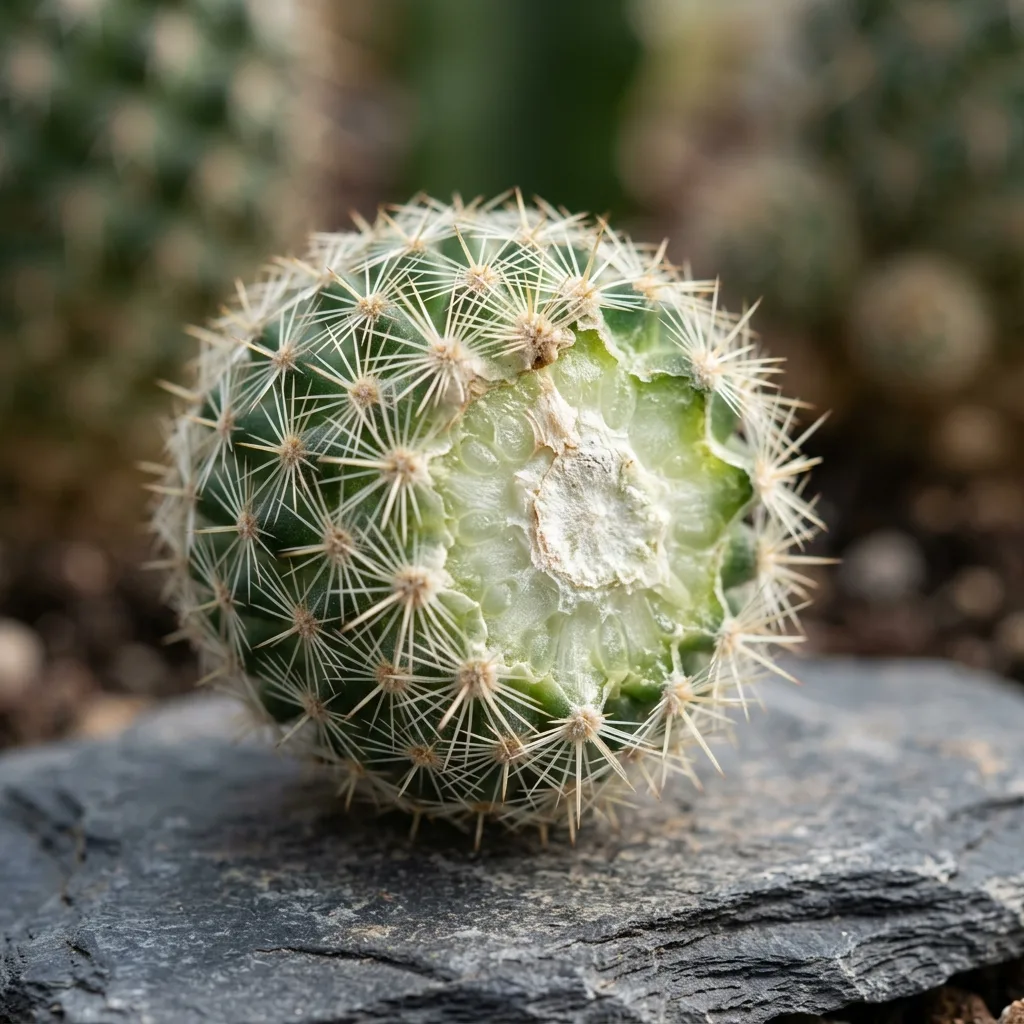
3. Watering Cycles and the Critical Winter Dormancy Period
The optimal seasonal window for taking and rooting cactus pups spans from early spring to mid-summer, when the plant naturally breaks winter dormancy and growth hormones surge. During cold rest (November through February), when temperatures sit between 8°C and 12°C (46–54°F) and irrigation is virtually suspended, cacti channel metabolic energy into survival. Never harvest pups during winter dormancy; with the plant's metabolism dormant, tissue repair stalls and offsets succumb swiftly to baseline rot.
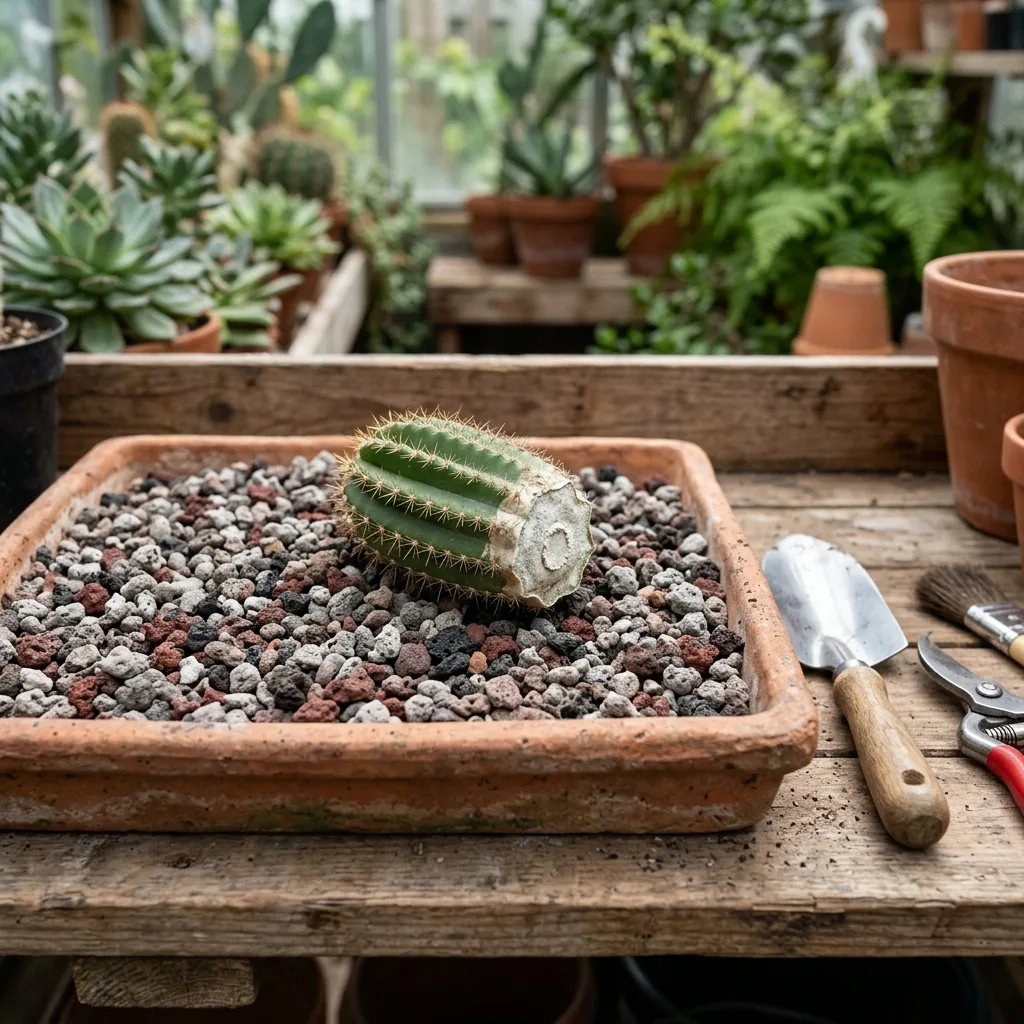
Once detached and placed on substrate, offset irrigation follows an absolute rule of succulent botany: A cactus without roots must never be watered! Supplying moisture to a rootless offset is equivalent to submerging an organism that has no physiological mechanism to absorb it. Moisture trapped beneath the base suffocates callused tissue and initiates anaerobic decay. For the initial 10 to 14 days, the substrate must remain completely dry. If relative humidity is extremely low, lightly mist the surface of the gravel surrounding the offset early in the morning once a week to induce root searching without wetting the basal wound. Once you detect physical resistance when gently nudging the pup, shallow bottom-watering may commence.
4. High-Mineral Cactus Substrates and Container Physics
Tender root primordia suffocate quickly in dense, peat-heavy commercial potting mixes. Your rooting medium must consist predominantly of highly porous, coarse volcanic minerals that drain completely in seconds while preserving internal capillary oxygenation.
| Component | Proportion (%) | Horticultural Function |
|---|---|---|
| Pumice (2–4 mm grade) | 40% | Maximizes macroporosity and structural drainage |
| Lava Grit / Crushed Zeolite | 25% | Provides mineral cation exchange and oxygen retention |
| Coarse Horticultural River Sand | 15% | Prevents substrate compaction and anchors hair roots |
| Sifted Coco Coir / Worm Castings | 20% | Delivers trace organic buffers and gentle moisture holding |
Regarding pot selection, container depth is critical: oversized, deep containers are fatal to propagating pups. Excess volume holds stagnant perched water tables that inevitably rot young tissue. Choose shallow terracotta pots or small nursery plugs that measure only 1 to 2 cm wider than the pup itself. The porous clay walls of unglazed terracotta allow moisture to evaporate laterally through the container fabric, keeping fungal outbreaks at bay.
5. Inducing Future Blooms and Nutritional Support
Cacti propagated from vegetative offsets generally take between 1 and 3 seasons to reach flowering maturity, depending entirely on the genetics of the genus. However, the root integrity established during these early months dictates lifelong flowering vigor. Never apply chemical fertilizers to freshly rooted offsets during their first 8 weeks; tender root meristems burn instantly when exposed to concentrated mineral salts.
Once a vigorous vascular network is established (evidenced by active new growth at the apex), apply a balanced, low-nitrogen, high-potassium liquid cactus formulation (such as NPK 4-8-12 or 5-10-10) at half or quarter strength once a month throughout the spring and summer. Restricting nitrogen prevents excessive, bloated, fragile cellular elongation, while generous potassium promotes dense areole formation and sets the stage for robust floral buds.
6. Mechanical Separation, Propagation Techniques, and Grafting
Depending on how tightly the pup is bound to the central axis, choose one of these three recognized horticultural procedures to harvest your offsets cleanly:
- Gentle Rotational Twisting: Ideal for offsets connected via a narrow basal neck, such as in many Mammillaria and Echinopsis species. Grasping the pup with sterile gloves, foam blocks, or silicone-tipped tongs, gently twist clockwise and counterclockwise until the connective vascular strand detaches naturally. This yields the smallest possible wound area.
- Excising with a Sterile Blade: Necessary for offsets broadly fused to the mother stem. Using a carbon-steel scalpel or razor sterilized with 70% isopropyl alcohol, make a single, precise cut close to the mother plant without scoring the main stem. Dust both severed surfaces immediately with sulfur powder or natural cinnamon to establish an antiseptic barrier.
- Grafting Chlorophyll-Deficient Mutants: When a mother plant produces highly variegated or fully albino offsets (such as the vibrant red, pink, or yellow pups of Gymnocalycium mihanovichii f. variegata), these pups lack photosynthetic chlorophyll and cannot survive on their own roots. They must be grafted directly onto a hardy rootstock (typically Hylocereus undatus or Myrtillocactus geometrizans), matching their vascular cambium rings precisely while fresh.
7. Defending Against Basal Rot and Pathogenic Fungi
The primary hazard during offset establishment is collar rot triggered by lingering dampness around the base. If an offset shows signs of discoloration, basal yellowing, or a spongy consistency when pressed lightly, fungal decay has penetrated the central cylinder. Intervene decisively: using a sterilized blade, slice horizontally across the base in thin increments until every speck of brown or orange necrotic tissue is removed, leaving only clean, pristine green vascular rings. Reseal the fresh wound with elemental sulfur and recommence the drying cycle for another week.
To inoculate your setup against rot from day one, always top-dress your propagation pots with a 1 cm layer of coarse lava grit or zeolite. This mineral mulch holds the offset upright, separates its green epidermis from moist organic substrate, and allows primary roots to reach down into moisture while keeping the neck perfectly dry.


Reader Reviews & Comments 4 Reviews
Clara Higgins
Julian Vance
Marcus Bennett
Sophia Reynolds
Leave a Review & Rating
Share your plant care tips, experiences, or questions with our succulent community.