






Hailing from the arid limestone hills of Mexico's Chihuahuan and Hidalgo deserts, Opuntia microdasys offers an unparalleled botanical silhouette for indoor and greenhouse collections. Its iconic, symmetrical branching pattern—evocative of playful rabbit ears—charms plant enthusiasts at first sight. Yet beneath this velvety, tactile allure lies one of the desert biome's most formidable defense mechanisms. From the hundreds of specimens we have nurtured across the Sukulentler.com greenhouses, the core lesson is unambiguous: cultivating a desert native indoors relies entirely on balancing extreme natural adaptations with precise indoor microclimate simulations.
Welcoming this striking species into your living space or sunroom means looking beyond generic houseplant care. With its specialized parenchymal water storage, nocturnal Crassulacean Acid Metabolism (CAM), and root xylem tissue acutely prone to hypoxia, Opuntia microdasys is a masterclass in structural engineering. In this guide, as if sharing notes over hot coffee at our greenhouse potting bench, I will walk you through the exact horticultural practices needed to keep your Bunny Ears cactus plump, rigid, and thriving for decades.
1. Taxonomic Identity, Areole Architecture, and Spine Morphology
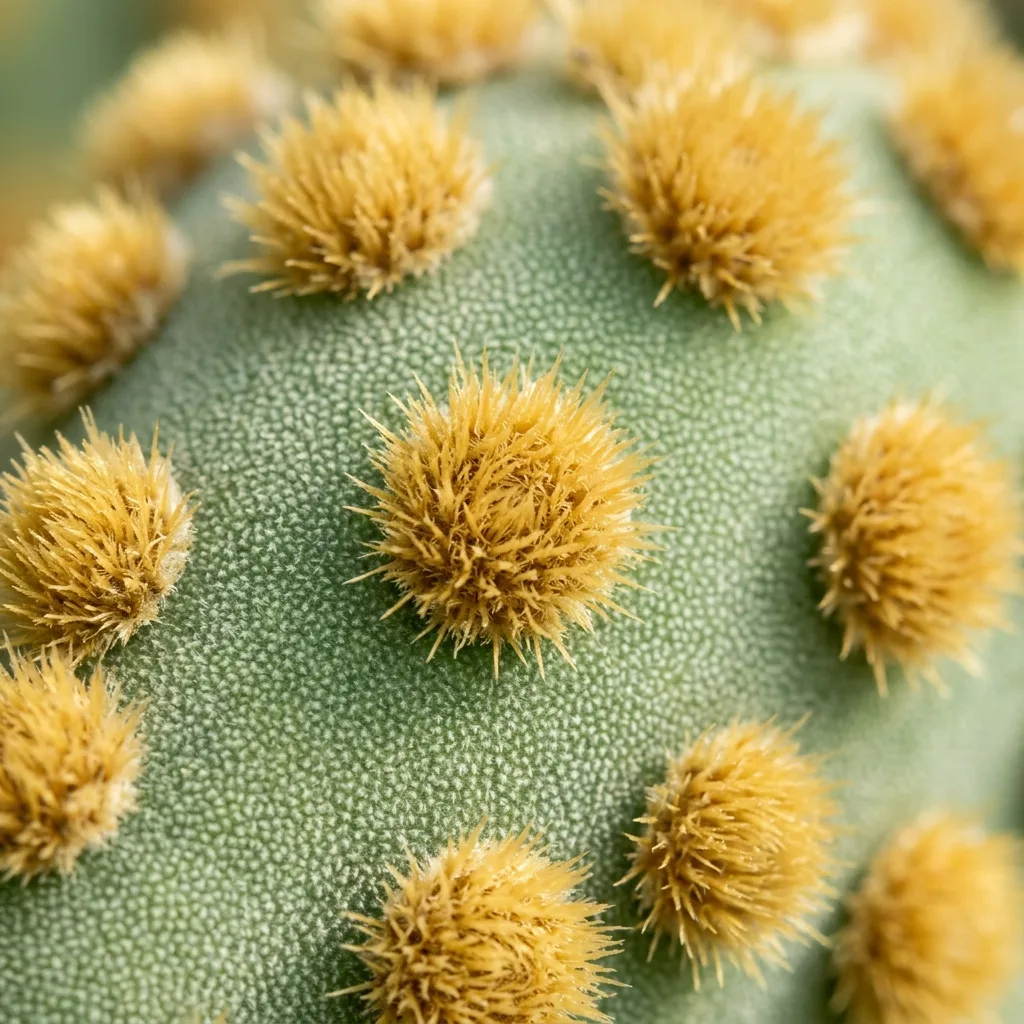
Classified under the subfamily Opuntioideae within the family Cactaceae, Opuntia microdasys diverges noticeably from typical columnar cacti by omitting long, sharp, central spines. Instead, its flattened photosynthetic stem segments—technically known as cladodes—are covered in geometrically spaced areoles. Nestled within each areole are hundreds of microscopic, hair-like bristles known botanically as glochids.
While glochids initially resemble harmless, golden tufts of downy fleece, cellular examination reveals an aggressive architecture: backward-pointing, barbed micro-harpoons. Engineered to detach at the gentlest brush or stiff desert breeze, they lodge instantly into mammalian dermal tissue. In habitat, this biological armor wards off browsing herbivores; in domestic cultivation, it demands hands-off respect. Beyond the classic golden-yellow glochid type, growers cherish stunning botanical varieties such as the copper-tinted Opuntia microdasys var. rufida and the snow-white Opuntia microdasys var. albispina (commonly called Angel's Wings).
2. Irradiance, Sunlight Intensity, and Aeration Standards
As an obligate heliophyte, Bunny Ears requires intense, uninterrupted light to sustain photosynthetic efficiency and maintain compact, fleshy cladodes. Direct solar exposure of at least 6 hours daily—such as an unobstructed south- or southwest-facing window—serves as the baseline requirement. When light levels fall short, the specimen quickly experiences etiolation: newly emerging pads fail to expand into broad discs, transforming instead into narrow, pale, attenuated tubes desperate for lumens.
Equally critical is dynamic air movement. Stagnant, humid microclimates cause condensation to settle around the bases of the areoles, creating an entry point for fungal spores. From mid-spring through late autumn, placing your cactus on an airy patio, screened porch, or next to an open, sun-drenched window strengthens cell walls, hardens cuticle tissues, and produces dense, tightly clustered areoles.
3. Irrigation Dynamics and the Essential Winter Dormancy Regime
When orchestrating watering schedules, remember this foundational desert rule: "Frequent watering is never an expression of plant love; it deprives the root rhizosphere of oxygen and guarantees systemic rot." Bunny Ears stores abundant mucilage and water within its cortical cells. During the active vegetative window of spring and summer, implement a rigorous 'soak and dry' technique. Never apply water until the potting profile has dried out completely to the bottom of the container.
As ambient autumn temperatures descend toward 12–15°C (54–59°F), the plant prepares for winter rest (dormancy). Throughout winter, irrigation must be halted almost entirely. Housed in a cool (8–12°C / 46–54°F), dry room, the cactus naturally evacuates surplus cellular moisture, causing pads to wrinkle slightly and deflate. This is a natural physiological freeze-protection strategy. Supplying water during dormancy renders the root collar soft and susceptible to lethal basal decay.
4. High-Mineral Substrate Formulation and Container Selection
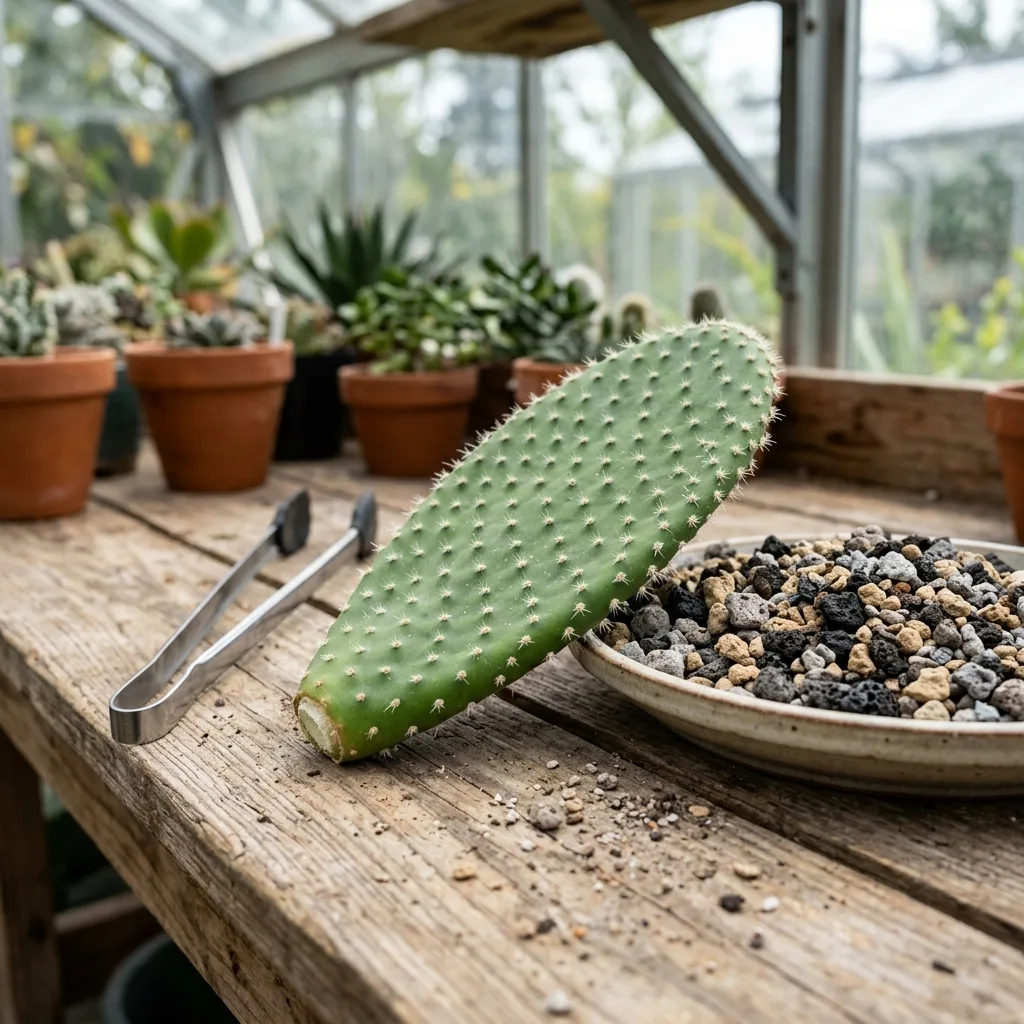
The root system of Opuntia microdasys asphyxiates rapidly in peat-heavy commercial potting soils. Optimal root health requires an open, gritty substrate through which excess water drains within seconds under gravity, while micro-porous aggregates hold trace moisture for fine root hairs. Plastic and glazed ceramic pots seal in moisture and should be avoided; porous, unglazed terracotta containers are indispensable for cellular gas exchange and root transpiration.
| Substrate Component | Ratio (%) | Horticultural Function and Root Benefit |
|---|---|---|
| Horticultural Pumice (3–6 mm) | 35% | Superior porosity, macro-pore aeration, and structural stability |
| Crushed Lava Rock / Zeolite | 25% | Microporous mineral retention, cation exchange, and pH buffering |
| Coarse Sharp River Sand | 15% | Accelerated hydraulic drainage and anti-compaction |
| High-Grade Succulent Peat / Coco Coir | 25% | Supplies essential base organic matter and micro-nutrient buffering |
Pot sizing requires restraint: placing a modest root ball into a large, deep planter creates an oversized reservoir of wet soil that takes weeks to dry. Choose shallow to medium-depth containers with generous drainage holes that comfortably accommodate the root mass with only 2–3 cm of perimeter room.
5. Inducing Desert Blossoms and Nutrient Protocols
Indoor blooms on an Opuntia microdasys are an uncommon spectacle, yet achievable with strict botanical discipline. In late spring and early summer, mature specimens develop radiant, lemon-yellow cup-shaped blossoms along the upper perimeter of top cladodes. Initiating these floral buds requires a cold vernalization period over winter. Keeping the plant completely dry at roughly 10°C (50°F) for several months triggers dormant floral primordia once sunlight increases in spring.
Nutritional input must remain lean. High-nitrogen fertilizers cause rapid cellular expansion, weakening the epidermis and leaving tissues vulnerable to rupture and pathogen entry. Between April and July, apply a low-nitrogen, high-phosphorus/potassium liquid fertilizer (such as NPK 5-10-10) diluted to one-quarter strength once per month. Cease fertilization entirely by late summer to allow autumn tissue hardening.
6. Safe Propagation and Vegetative Cutting Protocols
Propagating Bunny Ears cactus via terminal cladodes is among the most rewarding techniques in arid horticulture. Select a mature, turgid, disease-free pad. To avoid glochid transfer during severance, handle the pad using silicone-tipped tongs, folded layers of thick newspaper, or specialized nitrile cactus gloves.
- Detaching the Pad: Grasp the mature cladode gently at its base where it joins the parent pad. Give a clean, lateral twist until the joint snaps cleanly off. If using a blade, ensure it is sterilized with 70% isopropyl alcohol.
- Callus Formation: Never plant freshly severed pads into damp substrate! Place the cutting in a shaded, well-ventilated, dry area for 5 to 7 days, allowing the parenchymal wound to dry, seal, and develop a firm, protective suberized callus.
- Dry Rooting: Position the callused pad upright 1–2 cm deep into an unmoistened, 70% mineral cactus soil mix. Use a small bamboo stick for stabilization if necessary.
- Initial Watering: Withhold all moisture for the first 10 to 14 days. This stimulates the cladode's vascular bundles to initiate adventitious root primordia in search of moisture. After two weeks, begin misting or adding small amounts of water around the rim of the pot to anchor the root system.
7. Mitigating Fungal Rot and Pest Management
The primary mortality factor for indoor Bunny Ears is root and basal stem rot instigated by water mold pathogens, notably Fusarium and Phytophthora species. If the lower margins of the pads turn translucent, yellow-brown, or squishy, take immediate corrective action. Unpot the plant, excise compromised sections back to firm, healthy green tissue using a sterile scalpel, dust wounds with powdered sulfur or cinnamon, and air-dry before rerooting.
Mealybugs (Pseudococcidae) also present a distinct challenge, frequently nesting inside the dense glochid clusters of the areoles beneath protective cottony secretions. Avoid mechanical rubbing, which can launch glochids. Instead, dab each pest colony directly using a cotton swab dipped in 70% isopropyl alcohol to dissolve their protective waxy layer. For pervasive infestations, apply a systemic soil-drench insecticide during the active growing season.


Reader Reviews & Comments 3 Reviews
Eleanor Vance
Marcus Thorne
Clara Higgins
Leave a Review & Rating
Share your plant care tips, experiences, or questions with our succulent community.