






Stretching from the sweeping tallgrass prairies of North America into our modern xeriscape compositions and rocky succulent displays, Eastern Gamagrass (Tripsacum dactyloides) stands as the closest living wild ancestor to domesticated maize (Zea mays). Possessing an extensive root architecture that dives meters below the surface, arching blue-green foliage that glimmers beneath blistering summer heat, and an imposing architectural stature, this perennial warm-season C4 grass establishes an exquisite, swaying backdrop behind water-storing succulents. In an era where ecological naturalism and water-wise gardening are reaching new heights, cultivating this resilient botanical powerhouse from seed requires a harmonious blend of patience and nuanced horticultural precision.
In its wild habitat, Gamagrass seeds enter a formidable dormancy locked inside fortified woody seed casings, lying dormant through frozen winter soils. Without deliberate moist-cold stratification, this deep slumber can easily bewilder even the most enthusiastic gardener. Yet, once you decode the biochemical triggers that arouse the dormant embryo within, you unlock an unyielding green column that combats soil erosion, demands virtually zero pampering, and thrives with majestic vitality for decades.
1. Botanical Profile and Morphological Architecture
Eastern Gamagrass is a robust, warm-season perennial grass belonging to the Poaceae family and the genus Tripsacum. It operates on specialized C4 photosynthetic machinery. This biochemical pathway allows the plant to close its stomata during scorching daytime temperatures and low relative humidity, slashing transpirational water loss while fixing atmospheric carbon with peak efficiency. Consequently, it easily shares the microclimatic niches and drought stressors experienced by arid succulents, agaves, and columnar cacti.
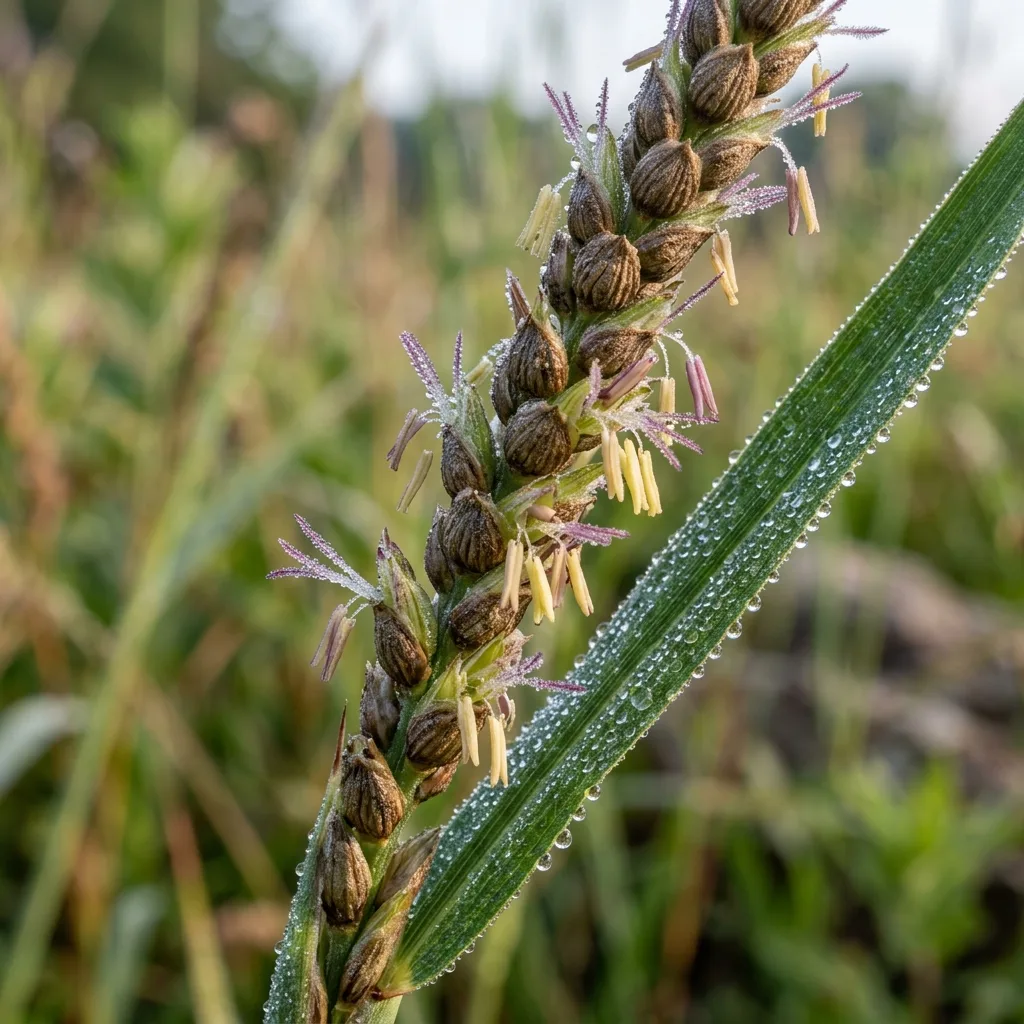
The plant spreads through dense, knotty, subterranean rhizomes, forming monumental anchored clumps. Its primary root network can penetrate 2 to 3 meters deep even in compacted clay or fractured limestone, wrapping Gamagrass in an impervious shield against prolonged drought. The leaf blades measure 1 to 3 cm in width, accented by a striking, bright white central midrib. Blooming from mid-to-late summer, the inflorescences are monoecious; the lower portions of the spikelike racemes bear female florets encased in hardened, bony cupules, while the upper sections flaunt pendulous male spikelets dusting the breeze with pollen via golden-purple anthers.
2. Sun Exposure and Microclimate Positioning
Eastern Gamagrass is metabolically driven by direct, unfiltered sunlight. Its C4 photosynthetic cycle generates maximum biomass and structural rigidity under full-sun conditions. Outdoor south- or west-facing landscapes, expansive rock gardens, and oversized open-air terrace planters that receive at least 6 to 8 hours of direct sun daily represent its ideal habitat.
When placed in deep shade or dimly lit indoor environments, the culms suffer severe etiolation; the internodes stretch, the arching leaves flop over from cellular weakness, and the basal rhizome crown fails to densify. If you are integrating Gamagrass into an outdoor succulent garden, position it boldly behind Agave americana, upright Yucca, or towering cereoid cacti. In this vantage, it functions as an organic windbreak while basking in unobstructed, all-day sun.
3. Irrigation Protocol: The Deep-Soak and Complete-Dry Method
Throughout its early seedling stage, Gamagrass benefits from consistent, even moisture while its juvenile root system establishes. However, once those anchoring roots drill into deeper soil strata, you must transition to the classic succulent protocol: 'soak deeply, then dry out thoroughly.' Superficial, frequent sprinkling forces roots to linger near the topsoil, severely compromising the plant's legendary drought resistance.
Overwatering—especially in heavy, undrained containers—leads directly to crown and root rot initiated by pathogens such as Pythium and Rhizoctonia. When containerized, saturate the substrate until water flows unhindered from the drainage holes, and allow the core root zone to dry out significantly before applying moisture again.
4. Engineered Substrate Formulation and Container Selection
Although Eastern Gamagrass exhibits broad adaptability in native soils ranging from wet bottomlands to rocky calcareous hillsides, superior drainage and continuous root aeration are non-negotiable under cultivation. Amending the soil with porous inorganic materials prevents moisture stagnation and encourages vigorous rhizomatous spread.
| Substrate Component | Ratio (%) | Botanical Function & Drainage Merit |
|---|---|---|
| Loamy Garden Soil / Neutral Coir | 40% | Base moisture buffering, nutrient exchange, and mechanical anchorage |
| Pumice (3–6 mm) | 30% | Pore matrix maintenance, superior aeration, and rot prevention |
| Lava Rock / Zeolite | 20% | Trace mineral replenishment, pH buffering, and structural permeability |
| Coarse River Sand / Graded Grit | 10% | Rapid hydraulic transit and compaction prevention |
Container selection demands careful attention to depth. Unlike shallow-rooted desert succulents that thrive in shallow dishes, Gamagrass roots drive vertically downward. Choose deep, robust, unglazed terracotta or high-fired ceramic vessels outfitted with generous basal drainage holes to accommodate this extensive vertical root exploration.
5. Step-by-Step Propagation: Sowing Eastern Gamagrass from Seed
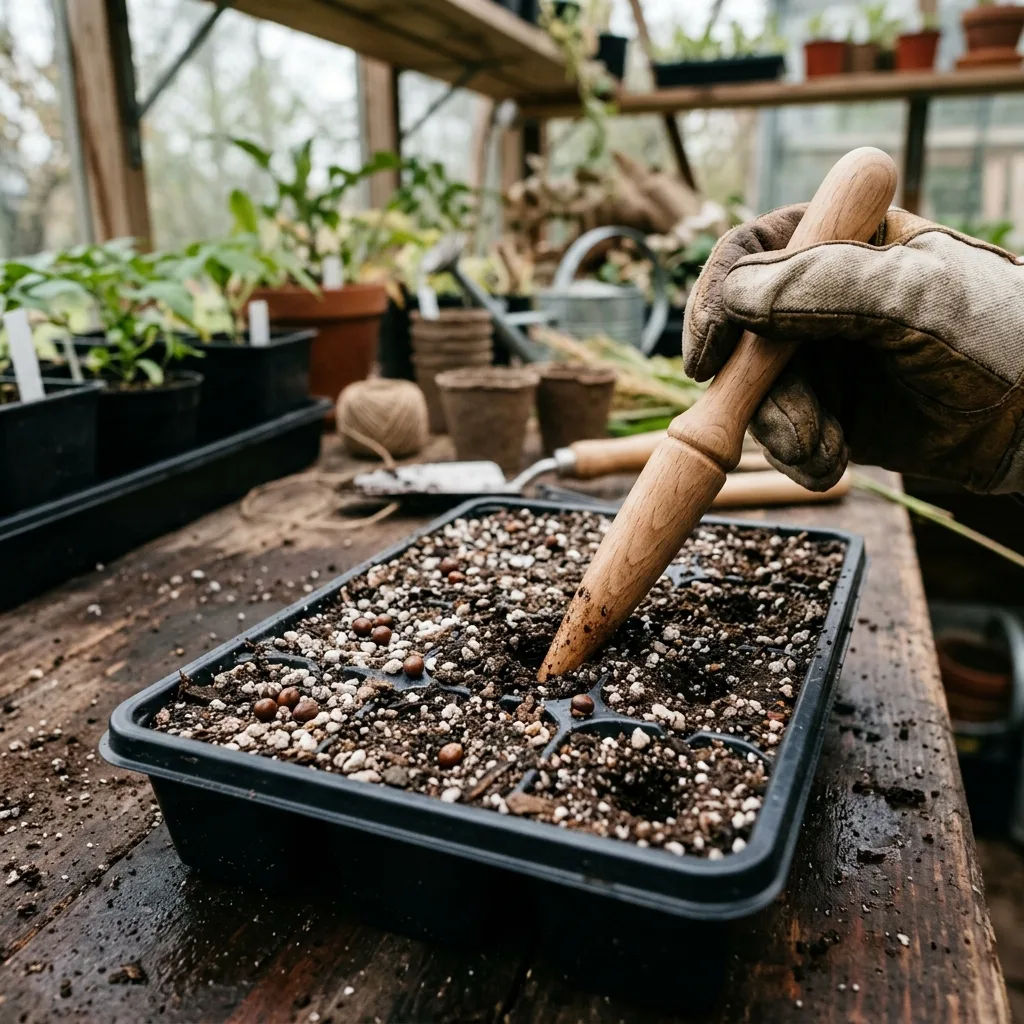
Due to the robust physiological dormancy embedded within the seed casing, propagating Eastern Gamagrass from seed demands a methodical protocol. Follow these scientific steps to achieve consistent, high-percentage germination:
- Inhibitor Leaching & Pre-Soak: Immerse the intact seed units in clean, room-temperature water for 24 hours. This initial step softens the bony cupule and begins leaching water-soluble germination inhibitors, specifically abscisic acid (ABA).
- Cold-Moist Stratification: Gamagrass seeds require an artificial winter to trigger the production of gibberellic acid. Mix the pre-soaked seeds with lightly dampened horticultural perlite or sterilized sand, seal them inside a polyethylene bag, and store them in the refrigerator at +4°C (39°F) for 4 to 6 weeks.
- Seedbed Preparation: Fill deep nursery cells with a fine, free-draining germinating blend composed of screened seedling peat and 40% fine pumice. Lightly tamp the substrate to eliminate large air pockets.
- Sowing Depth: Plant the stratified seed segments approximately 1.5 to 2 cm (0.6 to 0.8 inches) deep. Cover with the gritty substrate; the embryo requires darkness to sprout effectively along with sustained gas exchange.
- Germination Temperature and Moisture: Maintain a bottom-heat substrate temperature between 24°C and 28°C (75°F–82°F). Mist the surface evenly, cover with a transparent humidity dome, and place beneath gentle grow lights or indirect warmth. Germination typically manifests within 14 to 28 days.
6. Common Pathogens, Pests, and Curative Solutions
While Eastern Gamagrass is a remarkably bulletproof ornamental grass, improper cultural practices can induce physiological stress and invite opportunistic pests:
- Rhizome and Crown Rot (Rhizoctonia & Fusarium): Manifests as blackened, softening crowns and decaying rhizomes in waterlogged, poorly aerated mixes. Solution: Cease irrigation immediately, excise decayed tissue with a sterile scalpel, dust wounds with sulfur, and repot into an inorganic, pumice-rich substrate.
- Rust Fungus (Puccinia tripsaci): Appears as powdery, reddish-orange pustules on foliage surfaces during prolonged periods of high humidity and stagnant air. Solution: Eliminate overhead splashing, maximize cross-ventilation, and apply a copper-based botanical fungicide if infection persists.
- Spider Mites and Mealybugs: These pests may proliferate inside the tight leaf sheaths of indoor or greenhouse plants experiencing hot, stagnant, dry air. Solution: Treat leaf sheaths thoroughly with an emulsion of cold-pressed organic neem oil and mild potassium soap.
7. Seasonal Stewardship Calendar
The annual phenology of Gamagrass synchronizes gracefully with the turning of the seasons:
- Spring (Awakening): Cut back the withered foliage and dead culms of the previous year to about 10–15 cm (4–6 inches) above the crown. As the soil absorbs spring warmth, fresh shoots will emerge from the rhizomes.
- Summer (Active Growth & Inflorescence): The period of maximum structural development. Support growth with an occasional application of diluted organic compost tea or a low-nitrogen, high-potassium cactus fertilizer. Water deeply but infrequently.
- Autumn (Seed Ripening & Coloration): Inflorescences mature into hardened, segmented spikes while the foliage takes on rich bronze and russet tones. If collecting seed, harvest the seed heads as they turn pale golden-tan and cure them in a dry, ventilated room.
- Winter (Dormancy): Aboveground growth dies back completely as carbohydrate reserves retreat into subterranean rhizomes. The dormant crown comfortably endures sub-zero temperatures down to -25°C (-13°F). If potted, shelter the container beneath an overhang to guard against heavy winter precipitation.


Reader Reviews & Comments 3 Reviews
Julian Vance
Clara Higgins
Marcus Sterling
Leave a Review & Rating
Share your plant care tips, experiences, or questions with our succulent community.