





Whenever you welcome a new cactus into your collection or gaze quietly at that silent green companion that has graced your windowsill for years, have you ever caught yourself asking: 'Who, exactly, are you?' Stretching from the sheer limestone crags of Mexico and the blistering sands of the Sonoran Desert to the mossy crooks of ancient trees in Brazil’s humid Atlantic forests, the family Cactaceae represents one of evolution’s most astonishing triumphs, boasting over 140 genera and nearly 2,000 distinct species. Diagnosing a cactus accurately is never merely an intellectual curiosity; it is the vital prerequisite for respecting its root anatomy, parenchyma water-storage cells, and seasonal dormancy demands.
Too many plant lovers assume that every spiny, succulent plant is a cactus, or they mistakenly trap desert xerophytes and tropical epiphytes within the exact same dense potting mix, suffocating their roots. Yet nature has stamped unmistakable identity cards onto the epidermis of every single species. In this guide, we will step into the shoes of a botanical detective—tracing clues from the mysteries of areoles to rib geometry, spine arrays, and floral structures—to help you identify distinct cacti step by step.
1. Taxonomic Identity, Areole Morphology, and Spine Architecture
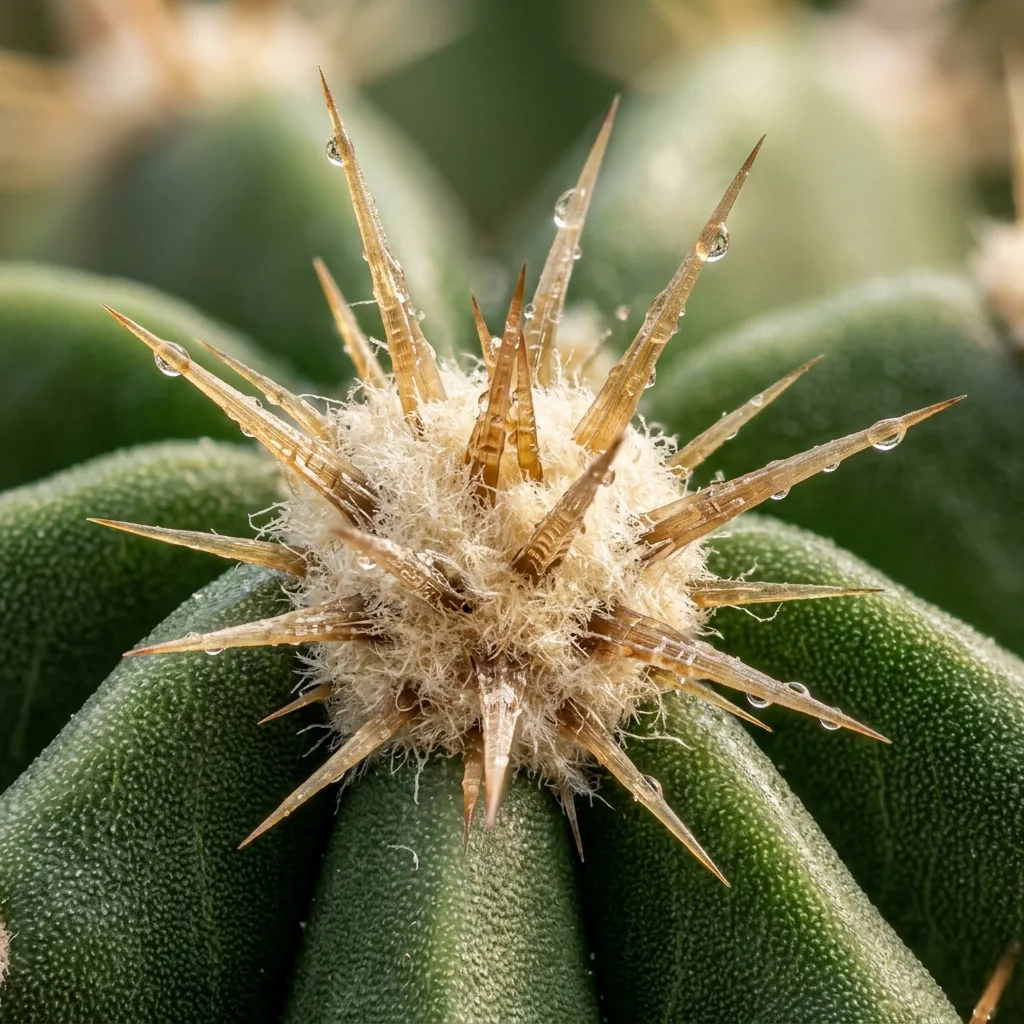
When discerning whether a specimen is a true botanical cactus, there is an absolute, unshakeable golden rule: the presence of the Areole (areola). If a plant lacks areoles, no matter how thorny, succulent, or desert-adapted it appears (such as succulent spurges in the genus Euphorbia), it is not a cactus in the botanical sense. Areoles are highly specialized, evolutionary modified lateral bud meristems unique to cacti. Typically presenting as circular or oval felted cushions, these compact structures give rise to spines, trichomes (hairs), glochids, vegetative side branches, and floral buds.
When differentiating cactus species, focus closely on these core morphological traits:
- Spine and Glochid Morphology: In the subfamily Opuntioideae (prickly pears), areoles harbor not only conventional spines but also glochids—minute, barbed, deciduous bristles that detach upon the lightest touch. In contrast, genera like Mammillaria feature prominent spines arranged in two distinct tiers: radial spines (radiating outwards in a star pattern) and central spines (stouter, pointing outward, often hooked).
- Ribs versus Tubercles: Genera such as Echinocactus and Cereus develop pronounced vertical ribs that run longitudinally down the stem. These ribs function like an accordion, swelling outward when the plant absorbs water and pleated inward during droughts. Conversely, genera like Mammillaria and Thelocactus replace continuous ribs with spirally arranged, nipple-like conical projections known as tubercles (podaria).
- Stem Architecture: Columnar forms (cereoid cacti: Carnegiea, Trichocereus, Pachycereus), globose shapes (spherical: Echinopsis, Parodia, Gymnocalycium), flattened stem segments (cladodes or pads: Opuntia), and leaf-like pendulous ribbons (epiphytes: Schlumbergera, Epiphyllum).
2. Light Exposure, Solar Intensity, and Ventilation Dynamics
The moment you accurately identify your cactus species, you can calibrate its lighting requirements with surgical precision. True desert cacti (such as Ferocactus, Echinocactus grusonii, and Opuntia) synthesize protective cuticular waxes (epicuticular farina) and photoprotective anthocyanin pigments. These species demand at least 6 to 8 hours of intense, unfiltered sunlight daily. When lighting falls short, the stem apex stretches, narrows, and pales—a physiological distortion known botanically as etiolation, which permanently compromises the structural integrity and aesthetic form of the plant.
In contrast, tropical forest cacti (such as Rhipsalis, Schlumbergera, and Hatiora) evolved in the dappled understory canopy of humid jungles. Exposed to harsh, direct afternoon sun, their chlorophyll bleaches, protective red pigmentation flares excessively, and cellular sunburn occurs. These epiphytic species thrive in bright, filtered light with generous ambient humidity. Regardless of the ecological group, all cacti employ Crassulacean Acid Metabolism (CAM photosynthesis), keeping their stomata sealed during the scorching heat of the day and opening them at night to capture carbon dioxide. Because night-time gas exchange requires fresh air movement, stagnant, stale air can prove lethal—make steady ambient ventilation a baseline rule.
3. Irrigation Cycles and the Critical Dormancy Regimen
Frequent, habitual watering is never an expression of love; it disrupts osmotic cell pressure and suffocates the root cortex in anoxic conditions. The root xylem vessels of arid-zone cacti are biologically wired to absorb sudden torrents of rainwater swiftly, store the moisture in the stem's cortical parenchyma, and enter a state of metabolic rest once the soil dries out. The golden irrigation rule is simple: soak thoroughly, then allow the root zone to dry out completely. Do not apply a single drop of water until the substrate has dried down to the very base of the pot.
The catalyst that governs flower bud induction and natural longevity is the winter Dormancy (rest period). From late autumn through early spring (typically November to March), desert cacti should receive little to no water—suspended entirely or reduced to an occasional conservative misting—while ambient temperatures are brought down to roughly 8–12°C (46–54°F). This cold, arid resting phase downregulates vegetative growth hormones and stimulates floral primordia inside the areoles. A cactus kept in a warm, heated living room and watered regularly throughout the winter cannot initiate dormancy, resulting in zero spring blossoms.
4. High-Mineral Substrates and Container Requirements
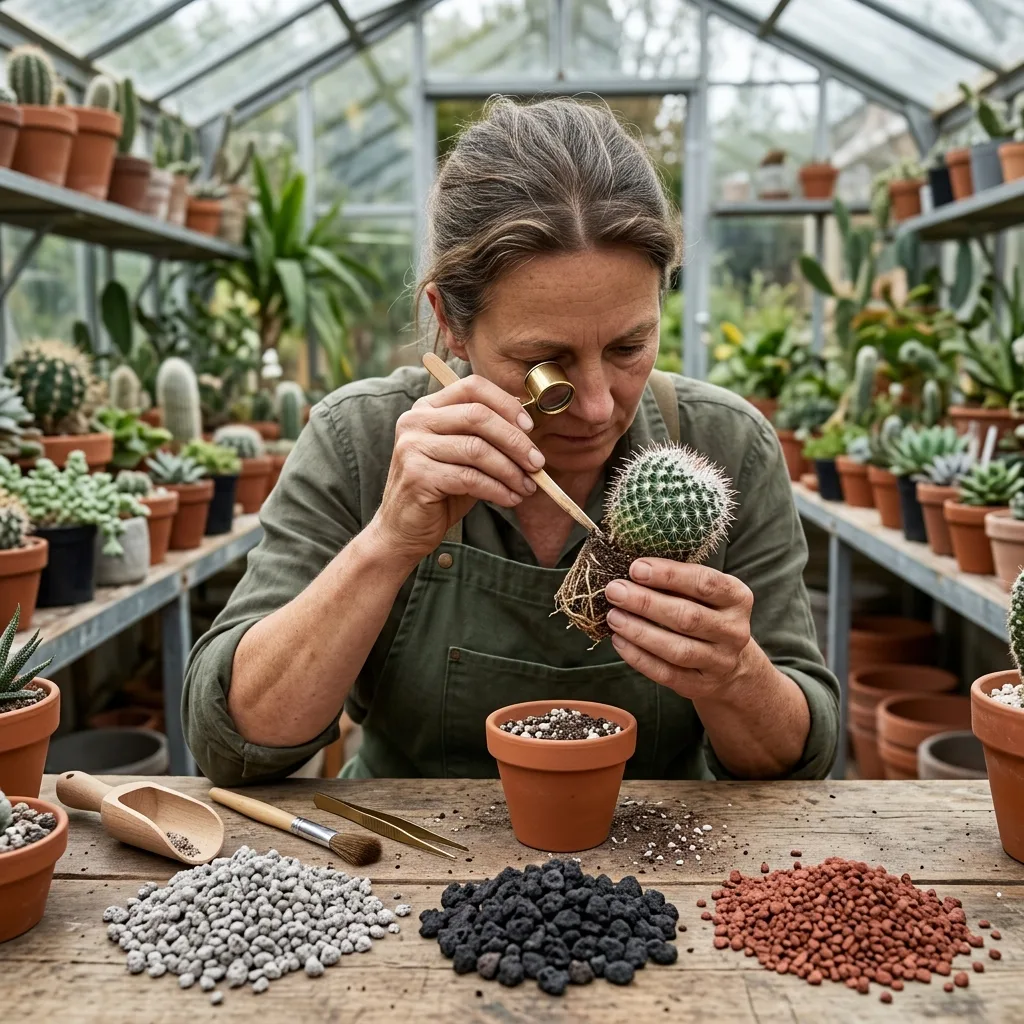
Substrate composition is the thin line between vibrant health and irreversible root decay. Standard commercial potting soils and peat moss hold water far too long, depriving roots of vital oxygen. Your goal is to recreate the natural habitats of cliff crevices, weathered volcanic tuff, and decomposed granite gravel. Cactus roots require high porosity, structural stability, and abundant oxygenation.
Use this professional substrate matrix tailored to distinct ecological groupings:
| Cactus Group / Genus | Inorganic Mineral Ratio | Organic Component Ratio | Recommended Mineral Blend |
|---|---|---|---|
| Sensitive Desert Species (Ariocarpus, Lophophora, Astrophytum) | 85% – 90% | 10% – 15% Screened Peat / Leaf Mold | Pumice, zeolite, crushed lava, calcined clay (akadama) |
| Classic Desert Cacti (Mammillaria, Echinopsis, Ferocactus) | 70% – 75% | 25% – 30% Coarse Coco Coir / Leaf Peat | Coarse pumice, horticultural perlite, quartz grit, lava rock |
| Tropical Epiphytic Cacti (Schlumbergera, Epiphyllum, Rhipsalis) | 40% – 50% | 50% – 60% Fine Pine Bark & Coarse Peat | Fine orchid pine bark, perlite, chopped sphagnum moss |
Regarding containers, unglazed porous terracotta pots with generous drainage holes should always remain your first choice. Terracotta wicks moisture away through its breathable walls, accelerating dry-back cycles and shielding fragile roots from fungal pathogens.
5. Inducing Floral Blooms and Strategic Nutrition
The moment of anthesis—flowering—offers the most incontrovertible identification key for any cactus. For example, the genus Gymnocalycium exhibits smooth, scaleless flower tubes lacking spines or bristles (hence its Greek name meaning 'naked calyx'). Mammillaria produces delicate halos of pink, cream, or yellow blossoms encircling the crown like an ornate wreath, whereas Echinopsis produces massive, nocturnal, trumpet-shaped blossoms that exude rich fragrances.
To coax your cacti into glorious bloom:
- Gradually reintroduce watering in early spring as daytime temperatures rise, waking the root system from dormancy.
- During the active growing season (April through August), administer a specialized, low-nitrogen, high-phosphorus, and high-potassium fertilizer (such as NPK 4-10-15) once per month. Excessive nitrogen inflates cells, softens tissue, invites pests, and halts flower bud formation completely.
- Avoid overpotting. Keeping root systems slightly snug in appropriately sized pots instills a sense of mature root stability, encouraging the specimen to divert metabolic reserves toward floral reproduction.
6. Propagation, Offset Division, and Grafting Techniques
Different cactus lineages reproduce through distinct vegetative adaptations. Genera such as Mammillaria and Echinopsis produce basal offsets, affectionately known as pups. Using a sterilized scalpel, sever these offsets cleanly from the mother plant and allow them to rest in a dry, shaded area for 4 to 7 days to form a firm, protective suberized callus. Cuttings inserted into moist soil without a cured callus will rapidly succumb to bacterial rot.
Variegated or chlorophyll-deficient mutants (such as the vibrant red or neon yellow 'Moon Cactus', Gymnocalycium mihanovichii f. variegata) cannot photosynthesize independently and cannot survive on their own roots. These specimens require grafting onto a vigorous, chlorophyll-rich rootstock (commonly the triangular-stemmed Hylocereus undatus). Grafting involves aligning and securing the vascular cambium rings of both rootstock and scion, allowing them to fuse into a single functional circulatory system.
7. Defending Against Basal Rot and Fungal Infections
The primary hazard threatening any cactus collection is the onset of fungal pathogens (notably Fusarium, Phytophthora, and Rhizoctonia) provoked by waterlogged, anaerobic conditions. If you detect yellowing, a soft or spongy base, or sunken epidermal tissues, act without delay—unpot the plant immediately.
Wash the root mass to inspect the tissue, cutting away blackened, hollowed, or rotting root fibers. If the rot has already ascended into the base of the stem, use a razor-sharp, alcohol-sterilized blade to make clean horizontal slices, progressing 1 to 2 cm above the discolored decay until you reach purely clean, bright-green vascular tissue without any brown flecking. Dust the cut surface with sulfur powder or ground cinnamon (a natural antifungal desiccant), and allow it to cure in a dry, well-ventilated spot for at least 10 to 14 days. Once a tough, concave callus has formed, set the cutting atop dry, pure pumice to stimulate adventitious root development.


Reader Reviews & Comments 4 Reviews
Eleanor Vance
Marcus Sterling
Julian Miller
Clara Thorne
Leave a Review & Rating
Share your plant care tips, experiences, or questions with our succulent community.