






Tracing an ancient lineage from the scorching limestone shelves of the Sonoran Desert to the sunniest sills of our living rooms, cacti stand as nature's most sophisticated hydraulic engineering triumphs against extreme drought. Many of us, while packing for an extended vacation or caught in the whirlwind of a demanding workweek, quietly wonder: 'Just how long can the cactus on my windowsill survive without water?' Simply answering 'it will live for months' is a dangerous oversimplification that frequently leads to the silent decline and structural collapse of your prized specimen.
Drought resistance in cacti is neither an absolute shield nor botanical sorcery; it is a meticulously coordinated hydraulic equilibrium orchestrated by Crassulacean Acid Metabolism (CAM), accordion-like stem ribs, and specialized parenchymal water-storage tissue. In an indoor setting, confined container volumes, stagnant air circulation, and ambient indoor heating drastically alter the survival thresholds observed in native ecosystems. Rather than subjecting your cactus to an endurance test of neglected desiccation, unlocking a genuine understanding of how it deploys and safeguards its internal cellular reservoir proves infinitely more rewarding.
Step up to our greenhouse workbench with us as we systematically examine species-specific anatomical capacities, the cellular responses triggered by prolonged drought, and the precise, step-by-step horticultural protocols required to revive a shriveled cactus without sending its fragile root system into fatal shock.
1. Taxonomic Identity, Areole Architecture, and Spine Morphology
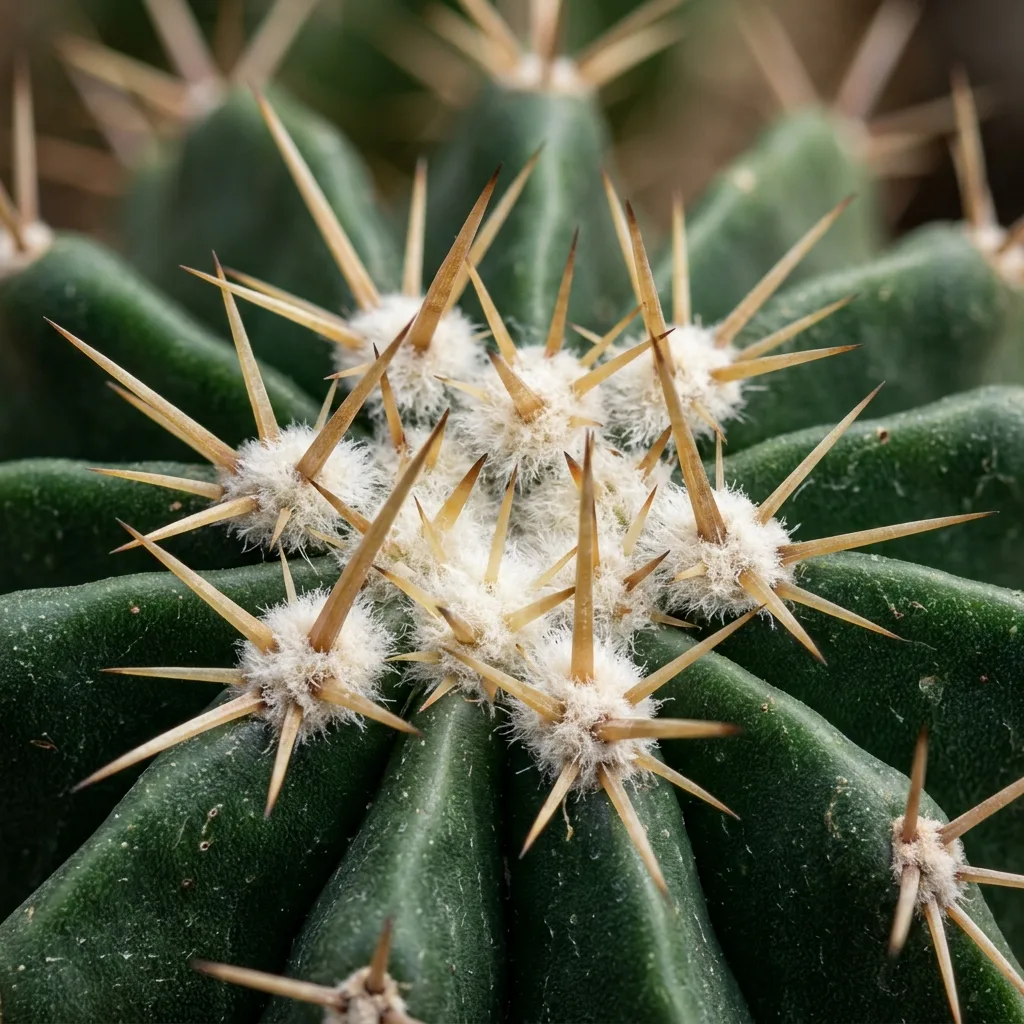
At the very heart of the extraordinary drought tolerance displayed by cacti (family Cactaceae) lies a unique morphological organ that definitively separates them from all other succulent plant groups: the areole. In plant anatomy, areoles represent highly modified, condensed lateral shoot buds that give rise to spines, glochids, trichomes, and flower buds. By reducing true leaves into hardened spines over millions of years of evolutionary selection, cacti reduced their transpirational surface area practically to zero.
Spine morphology serves as far more than mere herbivore defense; at a microscopic scale, spines act as hydrological fog collectors, condensing morning vapor from coastal or desert breezes and channeling droplets down to the root collar, while simultaneously casting a fractured micro-climatic shade screen across the dermal tissue. The accordion-style ribs of the stem function as an elastic water tank: expanding effortlessly following infrequent rains and folding inward during dry spells to minimize exposed dermal surface area. For example, a mature spherical Echinocactus grusonii (Golden Barrel), endowed with a high volume-to-surface-area ratio, can endure 1 to 2 years completely dry. Conversely, epiphytic jungle cacti such as Schlumbergera (Holiday Cactus) suffer irreversible cellular collapse after just 3 to 4 weeks of absolute desiccation.
2. Light Exposure, Solar Intensity, and Ventilation Benchmarks
The rate at which a cactus consumes its internal water supply is inextricably linked to ambient lux levels, photosynthetic radiation, and atmospheric air exchange. Cacti perform CAM (Crassulacean Acid Metabolism) photosynthesis, tightly sealing their microscopic stomatal pores throughout the blistering heat of the day and opening them exclusively under cooler nighttime temperatures to uptake and store carbon dioxide as malic acid. When a cactus is sequestered in a dim, stagnant room, its metabolic machinery decelerates; while it may theoretically appear to survive longer without water, this state forces feeder roots into irreversible dormancy and leaves internal tissues structurally frail.
A cactus receiving at least 6 to 8 hours of direct, unfiltered sunlight daily during its active growing season metabolizes stored stem reserves at a brisk pace to support cellular division and structural growth. The ideal horticultural environment combines generous southern exposure with continuous, gentle air circulation wafting around the epidermis. Cultivating desert cacti in enclosed glass terrariums or stagnant corners induces lethal overheating and internal tissue cooking long before pure dehydration ever claims the plant.
3. Watering Cycles and the Critical Winter Dormancy Regime
The definitive answer to 'How long can a cactus survive without water?' hinges entirely on the seasonal calendar. Within the biological rhythm of desert cacti, the winter months represent dormancy—a resting phase characterized by near-zero metabolic water uptake. From late October through early March, positioned in a bright space kept reliably between 8°C and 12°C (46°F–54°F), your desert cactus can rest safely for 3 to 5 continuous months without a single drop of water. Winter watering is not an act of kindness; it saturates cold, inactive root zones and universally culminates in fatal root rot.
Come spring and summer, elevating temperatures trigger growth hormone synthesis. Throughout this active phase, provide thorough, drenching irrigation only after the potting substrate has dried out completely from top to bottom (typically every 10 to 15 days depending on pot size and ambient heat). Subjecting a desert cactus to 2 or 3 months of complete summer drought will not kill it instantly, but it triggers emergency defenses: growth halts, microscopic root hairs desquamate and die back, and the main body can lose up to 40% of its fluid mass, puckering deeply along its longitudinal ribs.
4. High-Mineral Cactus Substrates and Container Physics
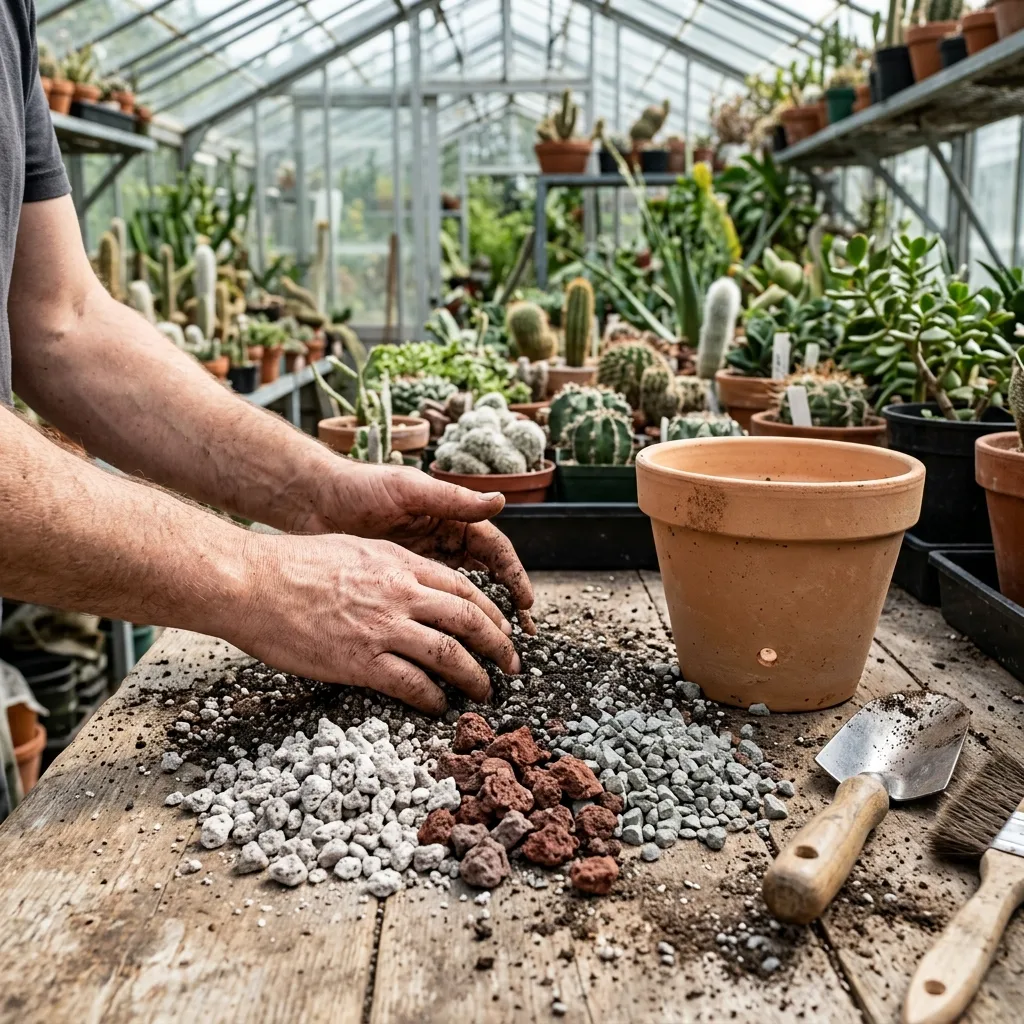
A cactus's ability to withstand prolonged drought is directly tied to substrate dry-down dynamics. Peat-heavy commercial potting soils that fail to emulate native desert mineralization retain excess moisture like dense sponges, inevitably suffocating and rotting roots. The primary mission of a professional cactus substrate is to ensure rapid gravitational drainage while maintaining abundant oxygen cavities around root hairs.
| Mineral Component | Ratio (%) | Functional Horticultural Contribution |
|---|---|---|
| Coarse Horticultural Pumice (3–6 mm) | 40% | Exceptional macroporosity, vital air pockets, and moisture-buffering balance |
| Crushed Lava Rock (Scoria) | 25% | Root aeration, physical ballast, and porous iron-rich mineral release |
| Clinoptilolite Zeolite | 15% | High cation-exchange capacity (CEC), toxin binding, and root protection |
| Sifted Coco Coir / Aged Leaf Mold | 15% | Minimal organic baseline for sustained, controlled moisture transfer |
| Coarse River Sand (Calc-Free) | 5% | Substrate textural cohesion and fine capillary drainage channel prevention |
Regarding container selection, unglazed terracotta remains the undisputed gold standard. Terracotta’s porous ceramic walls permit evaporative 'breathing' across the entire pot circumference, eliminating residual perched water tables and preventing root hypoxia. Plastic pots trap moisture indefinitely, and containers devoid of drainage holes serve as an unavoidable death sentence for any arid-adapted cactus.
5. Inducing Blossoms and Targeted Nutrient Ratios
An enchanting botanical paradox frequently overlooked by novice growers is that desert cacti actively require controlled winter thirst and chilling temperatures to initiate flowering buds! A cactus that rests cold and completely dry throughout winter interprets the rising spring temperatures and the return of deep moisture as an urgent ecological signal to propagate, erupting with vivid flower buds bursting forth from mature areoles.
From mid-spring through late summer, integrate a low-nitrogen, high-phosphorus, high-potassium mineral fertilizer (such as an NPK 5-10-10 or 4-8-12 formulation) diluted to half-strength into every second or third watering. Steer clear of high-nitrogen formulas designed for foliage houseplants; excessive nitrogen forces soft, bloated, excessively watery epidermal tissues that exhibit zero drought resilience and succumb swiftly to opportunistic pathogen attacks.
6. Propagation, Callusing, and Grafting Dynamics
The phenomenal cellular drought resilience of cacti is your greatest tactical ally during vegetative propagation. When detaching an offset (pup) or taking a clean stem cutting, the most disastrous mistake is inserting the freshly severed wound directly into moist potting media. Cut tissue must be positioned in a dry, warm, shaded nursery area without water for 7 to 14 days to develop a firm, suberized cork layer known as a callus.
Once thoroughly callused, place the cutting atop a bone-dry, highly gritty mineral mix. Drawing solely upon its internally stored hydraulic reserves, the cutting will spend weeks seeking moisture, driving adventitious root anchors downward before requiring its initial watering. Chlorophyll-deficient ornamental mutants (such as neon-colored Gymnocalycium mihanovichii f. variegata cultivars) cannot synthesize energy or survive drought independently; they rely entirely on being grafted onto robust, drought-adapted rootstocks like Hylocereus.
7. Defending Against Root Rot and Opportunistic Fungal Pathogens
In cultivation, true death by dehydration is a prolonged, agonizingly slow process spanning many months; conversely, substrate-induced root rot can reduce a prized cactus to a hollow, foul-smelling, black jelly within 48 to 72 hours. Soilborne fungal pathogens such as Fusarium and Phytophthora proliferate aggressively in waterlogged, anaerobic conditions, consuming delicate root tips. Intriguingly, a plant with completely rotted roots will exhibit identical visible symptoms to a dehydrated cactus—wrinkling and collapsing—because its ruined vascular system can no longer channel water upward.
To discern the difference, inspect tissue turgidity and coloration. A dehydrated cactus takes on a matte, slightly dull or grayish hue, and its ribs yield with a firm, elastic sponginess. A rotted specimen displays yellowed, translucent, or darkened basal margins that feel slick, mushy, and liquified under gentle pressure. If rot is detected, immediately unpot the plant, excise all necrotic root and stem tissues back to pristine white vascular bundles with a flame-sterilized blade, dust open wounds generously with sulfur powder or ground cinnamon, and allow the remaining healthy tissue to dry completely unpotted for at least 5 to 7 days before replanting into sterile, bone-dry mineral substrate.


Reader Reviews & Comments 4 Reviews
Marcus Thorne
Eleanor Vance
Julianna Ross
Dr. Arthur Pendelton
Leave a Review & Rating
Share your plant care tips, experiences, or questions with our succulent community.