






Picture the Sonoran or Atacama Desert: the sun ascends over the horizon like a shield of fire, relative humidity plummets near absolute zero, and the parched earth fractures under unrelenting heat. In this unforgiving landscape where the cells of most temperate plants would suffer catastrophic plasmolysis and desiccate within minutes, cacti rise tall, rigid, and brimming with metric tons of life-sustaining water. This awe-inspiring sight is no accident; it marks the crowning triumph of one of the most radical evolutionary departures ever documented in the plant kingdom, a journey that began roughly 30 to 35 million years ago.
Descended from leafy ancestors that once inhabited humid, subtropical forests, cacti adapted step by step to encroaching aridity as continental plates shifted and precipitation regimes collapsed. They surrendered their broad foliage, converted their fleshy stems into sophisticated reservoirs, and deferred their photosynthetic gas exchange to the cover of night to slash transpirational water loss to near zero. Every charming specimen perched quietly on our windowsill carries inside its tissues the ancient, hard-won survival code of the deep desert.
Truly understanding your potted cactus means learning to speak the language of its native habitat. When we fail to replicate this cellular armor and evolutionary logic inside our living rooms, root rot, tissue collapse, and irreversible deformities inevitably follow. Let us place the cactus under the botanical microscope to decode this marvelous anatomy, then translate the desert's timeless wisdom into an exact, actionable home care protocol.
1. Taxonomic Identity, Areole Architecture, and Spine Morphology
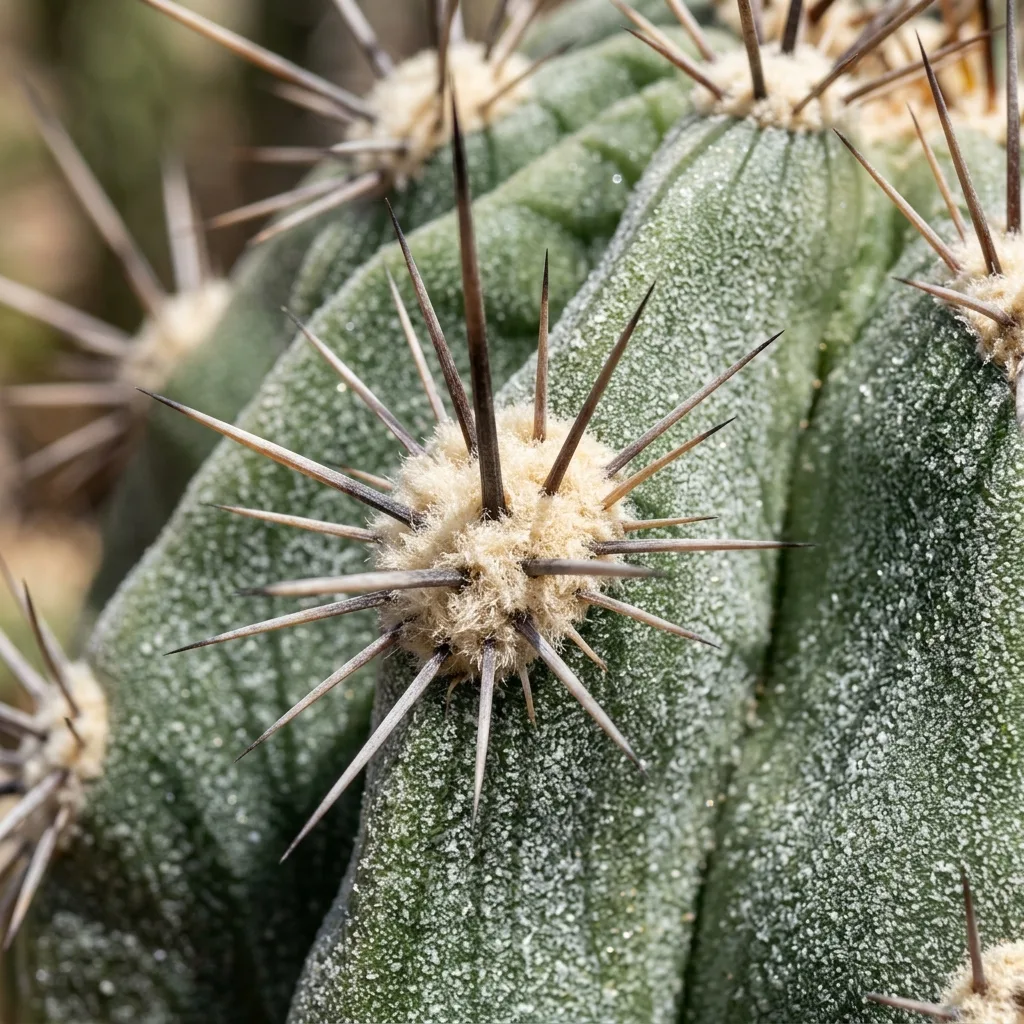
The single anatomical hallmark that definitively separates the family Cactaceae from every other succulent plant on Earth (such as the convergent euphorbias or aloes of arid Africa) is the presence of the areole. Areoles are highly condensed, specialized bud cushions arranged symmetrically across the ribs and tubercles of the cactus stem. Spines, flowers, fruits, and vegetative offsets (pups) originate exclusively from these specialized meristematic centers.
What exactly Are Cactus Plants Poisonous to Dogs? A Botanical Safety Guide for Dog Owners">Are Cactus Fruits Good for You? Botanical Species, Nutritional Power, and Cultivation Guide">are cactus spines, and how did they adapt to arid extremes? In evolutionary botany, spines are drastically reduced, sclerified (hardened) leaf modifications designed to eliminate moisture loss. While a broad, tender leaf canopy drives massive transpiration under intense sunlight, the cactus abandoned foliage altogether, shifting all photosynthetic responsibility to its succulent green stem. Spines do far more than merely deter grazing herbivores; they perform three vital thermodynamic tasks:
- Micro-Shading: The dense mesh of spines forms an intricate lattice that filters out 15% to 40% of direct ultraviolet (UV) radiation before it strikes the living epidermis, preventing sunscald.
- Wind Disruption: Spines break high-velocity desert winds, creating a calm, stagnant micro-pocket of air (the boundary layer) against the skin, which significantly minimizes convective moisture loss.
- Fog and Dew Condensation: The spine tips of certain species—such as Copiapoa native to the hyper-arid coastal Atacama Desert—feature microscopic grooves. These channels harvest nocturnal ocean fog and condensing dew, funneling suspended moisture droplets straight down to the areole base and root zone.
The ribbed, fluted, or accordion-pleated structure of cactus stems represents another stroke of hydraulic brilliance. When rare, torrential rains arrive, the fibrous root system takes up water instantly, allowing the stem ribs to expand outward like bellows. During prolonged drought, the stem gradually shrinks inward as cellular reserves are consumed. This flexible accordion mechanism allows the plant to fluctuate dramatically in volume without rupturing its cell walls.
2. Illumination, Solar Irradiance, and Ventilation Standards
Desert cacti evolved beneath open, cloudless skies, soaking up 8 to 12 hours of uninterrupted, high-energy photon bombardment every single day. By far the most common and devastating mistake made in domestic cactus care is treating these light-hungry succulents like decorative indoor foliage, relegating them to dim coffee tables, dark shelves, or deep interior corners.
Deprived of adequate light, a cactus is driven by an instinctual survival impulse to stretch frantically toward any available light source—a pathological condition known as etiolation. Globular specimens stretch into pale, cone-shaped spires, the green epidermis fades to an anemic hue due to arrested chlorophyll synthesis, and new spines emerge weak, sparse, and fragile. Etiolation causes permanent cellular deformation that cannot be reversed once formed.
The premier indoor position for a desert cactus is directly on an unobstructed south- or west-facing windowsill that receives direct morning and afternoon sunlight. However, be cautious: intense solar radiation focused through double-paned window glass without adequate airflow can create a magnifying-lens effect, scorching epidermal tissue and leaving permanent necrotic lesions. The desert is defined by constant thermal air circulation. Cacti have zero tolerance for stagnant, stuffy, and humid microclimates. In the summer months, crack your windows or maintain gentle air movement to disperse stagnant heat around the stem.
3. Irrigation Dynamics and the Critical Winter Dormancy Period
At the very heart of cactus evolution lies CAM (Crassulacean Acid Metabolism) photosynthesis. Conventional plants open their stomata (microscopic leaf pores) during the heat of the day to take in carbon dioxide, losing copious amounts of water vapor in the exchange. Cacti, by contrast, keep their stomata tightly sealed throughout the blistering daylight hours. Only when twilight arrives, temperatures drop, and relative humidity rises do they crack their stomata open to harvest $CO_2$, converting and storing it overnight as malic acid. The following day, with stomata sealed tight, they utilize daytime photons to convert this stored acid into energetic sugars. This remarkable nocturnal metabolic shift slashes transpirational water loss by over 90%.
To support this evolutionary rhythm at home, align your watering habits strictly with their natural cycle:
- Active Growth Phase (Spring through Summer): Follow the 'soak and dry' method. Water the root zone thoroughly until moisture drains freely from the bottom holes, and empty the drip saucer completely within 15 minutes. Never apply sips of water on a set weekly schedule; desert biology operates on the feast-or-famine principle of rare, drenching flash floods followed by thorough drying out.
- Winter Dormancy (Late Autumn through Winter): Desert winters bring freezing night temperatures and relentless drought. As daylight wanes and temperatures fall, the cactus brings its cellular metabolism to a near-complete standstill. Relocate your cactus to a cool, bright area kept consistently between 8°C and 12°C (46°F–54°F), and suspend watering completely from November through late February, or limit it to a few minimal drops for tiny juvenile pots. Watering a cactus in a warm, heated room during winter tricks it into breaking dormancy; lacking sufficient winter sunlight, it etiolates into a weak, spindly shape and succumbs rapidly to basal stem rot.
4. Highly Porous Mineral Substrates and Pot Selection
Natural desert soils are practically devoid of decomposing organic matter; they are lean matrices composed of coarse sand, weathered gravel, volcanic pumice, decomposed granite, and porous limestone minerals. Commercial potting mixes packed with standard peat moss or garden topsoil act like damp sponges, retaining moisture around sensitive root systems for days or weeks—a lethal death sentence for a desert cactus. Fine cactus root hairs are built to drink up rapid deluges and then quickly return to dry, oxygenated surroundings.
When selecting a container, always choose unglazed, porous terracotta pots over plastic or glazed ceramics. The micro-pores in unglazed earthenware allow water to evaporate laterally through the pot walls, preventing residual moisture pockets around the root collar. Adequate drainage holes at the base are completely non-negotiable.
| Component Type | Material & Grain Size | Mix Ratio (%) | Botanical Function |
|---|---|---|---|
| Inorganic Mineral | Horticultural Pumice (3–6 mm) | 40% | Maximizes root aeration, prevents soil compaction |
| Inorganic Mineral | Lava Grit (Scoria) & Zeolite (2–4 mm) | 30% | Trace mineral release, ultra-fast drainage backbone |
| Inorganic Mineral | Coarse Quartz Sand or Perlite | 10% | Accelerates water runoff and mechanical root anchoring |
| Organic Matter | Sifted Coco Coir or Mature Forest Compost | 20% | Gentle nutrient retention and minimal moisture buffer |

5. Catalysts for Bud Formation and Nutritional Strategy
One of the most frequent laments among indoor growers is: 'My cactus stays healthy, but it hasn't bloomed in years.' In habitat, flowering is an urgent evolutionary mandate for genetic continuity. To initiate bud set, a cactus requires two primary physiological triggers: an authentic winter resting period (dormancy) and a low-nitrogen, mineral-focused feeding regimen.
If a cactus spends the winter in a warm, artificially lit living room and receives ongoing watering, it remains metabolically confused and fails to initiate floral primordia within its areoles. That crisp, bone-dry winter rest at approximately 10°C (50°F) primes the plant. When warm spring sunshine and the first deep watering arrive, the areoles respond with a prolific flush of vibrant buds.
When it comes to nutrition, steer clear of all-purpose houseplant fertilizers high in nitrogen. Surplus nitrogen forces rapid, bloated, watery cell elongation that weakens the stem walls, invites fungal attack, and completely suppresses flowering. During late spring and mid-summer, feed no more than once a month with a specialized cactus fertilizer featuring an N-P-K ratio around 1-2-3 or 5-10-15, diluted to half or quarter strength, ensuring generous levels of phosphorus, potassium, and trace minerals.
6. Propagation: Offsets, Stem Cuttings, and Grafting
To survive harsh desert conditions, cacti have evolved an astounding capacity for vegetative regeneration whenever pieces are broken off by rockfalls or browsing animals. You can harness this cellular tenacity for clean propagation at home:
- Harvesting Offsets and Cuttings: When detaching an offset from the mother plant or taking a stem cutting with a sterilized blade, you create an open, vulnerable wound. The single greatest mistake is immediately potting this fresh, wet cut into moist soil, where soil-borne pathogens will rot the unsealed vascular bundle within days.
- Callus Formation: Store the cutting in a dry, warm, and shaded location with ample air movement for 4 to 10 days. The exposed wound will dry, pale, and form a firm, leathery shield known as a callus. This suberized tissue acts as a biological seal against infection and excessive water loss.
- Dry Potting and Root Initiation: Once fully callused, set the cutting upright onto completely dry, mineral-rich pumice mix. Withhold water entirely for 10 to 14 days. The drought signal stimulates root primordia to break out from the areoles and basal bundle; once new roots appear, introduce light bottom-misting to guide them downward.
- Grafting: Chlorophyll-deficient mutants (such as the bright scarlet or neon yellow Gymnocalycium mihanovichii 'Moon Cactus') or fragile, slow-growing desert gems (like Aztekium or Lophophora) cannot survive on their own weak roots. By aligning their vascular cambium ring with that of a vigorous, fast-growing columnar rootstock (such as Hylocereus or Echinopsis), the hardy base pumps water and soil nutrients straight up into the delicate scion.
7. Combating Fungal Pathogens and Stem Rot
Having evolved in dry desert atmospheres, the Achilles' heel of any cactus is susceptibility to aggressive soil-borne water molds and fungi, notably Fusarium, Phytophthora, and Pythium species. Rot is notoriously deceptive: by the time the base of the stem feels soft, brown, and squishy to the touch, the internal vascular bundle has often dissolved into necrotic mush.
Step-by-Step Surgical Rescue Protocol:
- Unpot the plant immediately. Carefully wash away all clinging, soggy soil from the root zone using lukewarm water to assess the damage.
- Prune away all blackened, slimy, or water-soaked roots using a scalpel sterilized with rubbing alcohol. If rot has reached the stem base, perform clean horizontal cross-cuts through the body until the core shows pure, uniform green and white tissue without a single fleck of brown or orange vascular staining.
- Dust the pristine cut generously with activated charcoal powder or micronized sulfur, both of which serve as potent natural antifungal agents to seal the wound.
- Allow the amputated top to dry in a bright, shaded room for at least one to two weeks until a thick, firm callus forms, then root it anew in freshly baked, sterile pumice substrate.
Honor the evolutionary ingenuity built into every cell of your cactus. Shield it from stagnant indoor air, respect its winter sleep, banish heavy organic potting soils, and provide the brilliant light it craves. In return, these stoic sentinels will stand strong on your sill for decades, rewarding your patience each spring with blossoms that rival the finest gems in nature.


Reader Reviews & Comments 4 Reviews
Clara Higgins
Arthur Pendelton
Julian Vance
Evelyn Reed
Leave a Review & Rating
Share your plant care tips, experiences, or questions with our succulent community.