






On tidal mudflats where ocean waters recede beneath crystallizing salt crusts, the emerald-green articulative stems of Glasswort (succulent halophytes of the genus Salicornia, also celebrated colloquially as sea pickle, pickleweed, or marsh samphire) rise toward the sky, embodying one of the botanical world's most enthralling paradoxes. While the overwhelming majority of succulents navigate hyper-arid deserts by hoarding metabolic water reserves, Glasswort stands knee-deep in moisture while enduring extreme physiological drought induced by severe osmotic stress. Successfully cultivating this luminous, glass-translucent, segmented oddity on your windowsill or patio demands setting aside conventional desert cactus axioms and embracing the biochemistry of a saline wetland ecosystem.
If you have ever attempted to grow Glasswort only to watch it blacken, collapse, and dissolve within weeks under standard cactus potting grit and plain tap water, take heart: you are not alone. Glasswort is an obligate halophyte (a true salt-requiring plant) that survives by actively compartmentalizing sodium cations within its vacuoles to establish water-drawing potential. Once you grasp the mechanics of root-zone osmosis, intracellular turgor dynamics, and precise mineral ratios, nurturing this crystalline sea jewel into vigorous indoor health transforms from an intimidating challenge into a deeply rewarding botanical journey.
1. Botanical Biology and Physiological Foundations
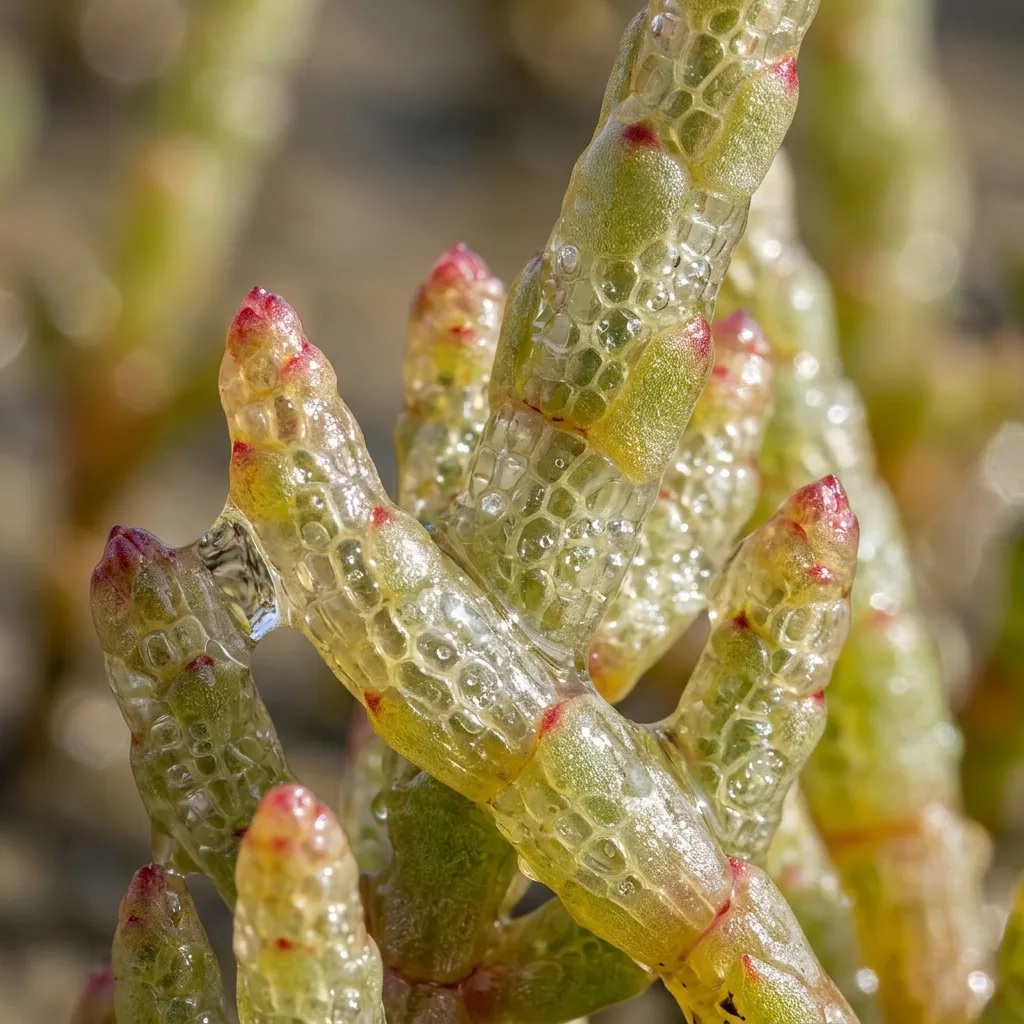
Deciphering Glasswort's physiological blueprint is the single most vital prerequisite to keeping it alive. Over evolutionary epochs, Salicornia species reduced their true leaves to microscopic, collar-like scales; photosynthetic machinery is localized almost exclusively within the cylindrical, articulated, fleshy stem segments (internodes). These photosynthetic segments are packed with specialized water-storing cortical parenchyma cells that harbor colossal central vacuoles.
The plant's crowning evolutionary adaptation is osmotic adjustment. When an ordinary glycophyte (salt-sensitive plant) is placed in saline substrate, the high solute concentration outside draws water out of the root cortex, causing the plant to desiccate even when surrounded by wet soil. Glasswort, conversely, deploys specialized tonoplast Na+/H+ antiporters in its root cells to actively pump sodium (Na+) and chloride (Cl-) ions across cellular barriers and seal them into the vacuolar lumen. By loading its vacuoles with salt, the plant lowers its internal osmotic potential below that of the surrounding wet substrate, essentially creating an osmotic suction pump that draws moisture and dissolved nutrients inward into the xylem stream. To safeguard delicate cytosolic enzymes and cellular proteins from salt damage, the plant synthesizes protective compatible organic solutes, primarily proline and glycine betaine.
2. Diagnostic Symptoms and Physiological Indicators
To determine whether your potted Glasswort is in prime metabolic balance or sliding into acute cellular distress, observe the color, texture, and structural rigidity of its stem internodes with a watchful eye:
- Vibrant Emerald Green and Turgid Segments: Indicates optimal osmotic equilibrium and active photosynthetic electron transport. Internodes feel plump, firm, and snap with crisp, succulent tension when gently palpated.
- Crimson-to-Burgundy Color Shifts: Reflects either natural autumnal senescence or high-light and elevated salt stress. The plant synthesizes betacyanin and anthocyanin pigments as cellular sunscreen and antioxidant scavengers to stave off photo-oxidative stress. Mild reddening is normal and visually striking; however, shriveling internodes signal that substrate salinity has surpassed tolerable thresholds.
- Translucent, Mushy Chlorosis (Yellowing and Softening): Most frequently caused by sustained irrigation with zero-salinity tap water, or by dense, anaerobic potting soil that deprives roots of oxygen, triggering rapid bacterial necrosis.
- Basal Desiccation and Premature Lignification: Stems turn woody, dry, and brittle from the substrate level upward. This is an unmistakable cry for moisture, indicating that the sand medium dried out completely and fried the delicate root hairs. Remember: Glasswort is an estuary plant, not a Chihuahuan Desert cactus; its substrate must never bake bone-dry.
3. Step-by-Step Cultivation Protocol
Replicating a miniature coastal salt flat in a domestic container requires orchestrating the correct balance of grain size, water chemistry, and capillary replenishment. Follow this protocol when propagating from seed or rooted cuttings:
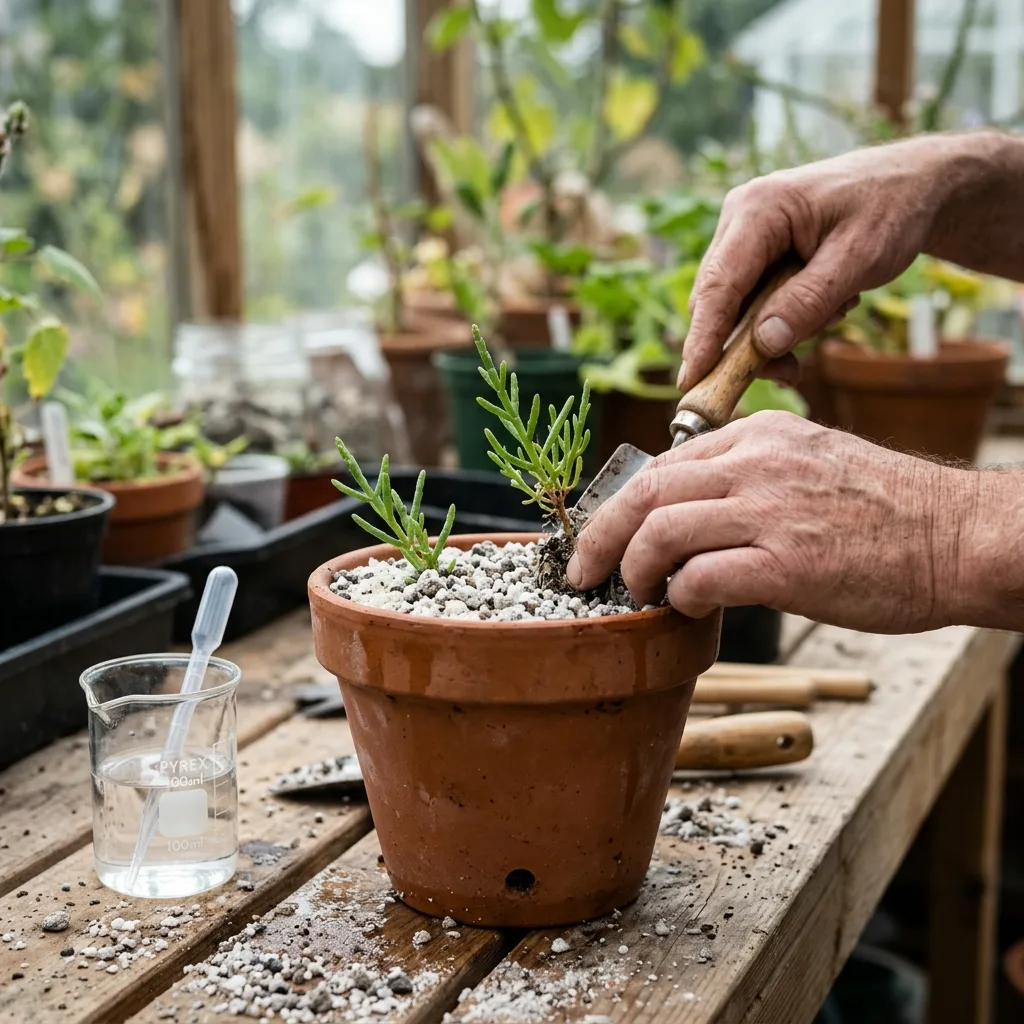
- Substrate Formulation: Blend 2 parts thoroughly washed coarse quartz or river sand, 1 part agricultural pumice or perlite, and 1 part low-nutrient blonde peat moss or washed coconut coir. The medium must be exceptionally porous, permitting rapid vertical drainage while retaining uniform capillary moisture.
- Saline Solution Preparation: Dissolve 10 to 15 grams of natural sea salt into 1 liter of dechlorinated water (yielding a salinity of roughly 10–15 ppt / electrical conductivity around 15–22 mS/cm). For young, newly germinated seedlings, temper this solution to 5–8 grams per liter until root systems mature.
- Sowing and Placement: Surface-sow fine seeds on wet sand, pressing them gently into the grain bed with a very thin dusting of sand atop; propagate stem cuttings by stripping the lowest segment and inserting the nodes 2–3 cm into the moist sand mix.
- Capillary Sub-Irrigation Management: Defying standard succulent protocol, keep 0.5 to 1 cm of the prepared saline solution in the container's saucer at all times. Capillary wicking keeps the root matrix evenly damp, while the coarse sand and pumice ensure oxygen pockets remain accessible to root tissue.
- Photoperiod and Insolation: Situate the container in a south-facing exposure receiving a minimum of 6 to 8 hours of unfiltered sunlight daily, or place it under a broad-spectrum LED fixture delivering 300–400 µmol/m²/s PAR at canopy height.
4. Cultivation Parameters and Substrate Benchmarks
Achieving vigorous cellular growth in Glasswort relies on calibrating physical aeration and chemical solute availability. The matrix below provides target metrics for maintaining long-term container cultures:
| Parameter | Target Cultivation Range | Critical Function & Practical Notes |
|---|---|---|
| Substrate Sand Proportion | 50% - 60% (Coarse Quartz/River Sand) | Emulates natural littoral sediments; guarantees rapid drainage and structural stability. |
| Inorganic Aeration (Pumice) | 20% - 30% (1-3 mm fraction) | Supplies macropores so roots remain aerated even with standing water in the saucer. |
| Irrigation Salinity | 10 - 18 ppt (g/L sea salt) | Maintains vacuolar osmotic potential; prevents cytological shock and tissue softening. |
| Substrate pH | 7.2 - 8.2 (Mildly Alkaline) | Reflects coastal calcareous and marine mineral deposition environments. |
| Daily Light Integral (DLI) | 14 - 18 mol/m²/day (Direct Sun) | Insufficient photon flux causes weak, spindly, non-fleshy internodes prone to lodging. |
| Temperature Range | 18°C - 28°C (64°F - 82°F Active Growth) | Growth slows below 12°C (54°F); susceptible to damage under freezing conditions. |
5. Five Critical Mistakes and Rescue Strategies
- 1. Treating Glasswort Like an Arid Desert Cactus: Withholding water until the substrate hardens into dust will desiccate the succulent segments from the base up. Rescue: Immediately bottom-soak the container in a shallow bath of mild saline water for 30 minutes to re-hydrate the root core, then maintain baseline capillary moisture.
- 2. Constant Use of Pure Distilled or Rainwater: Rinsing the root zone with ion-free water ruptures the internal osmotic balance, causing tissues to lose firmness and turn translucent. Rescue: Resume watering with a solution of 10 g/L non-iodized sea salt, raising the mineral concentration gradually over two weeks.
- 3. Potting in Heavy Organic Garden Soil: Heavy compost blocks gas exchange and generates anoxic pockets, breeding soft rot around the root crown. Rescue: Gently wash the muddy residue from the root system, excise any blackened roots with a sterilized razor, and repot into a free-draining 70% sand-and-pumice blend.
- 4. Utilizing Additive-Laden Culinary Table Salt: Anti-caking agents and chemical iodides act as systemic toxins to halophyte roots. Rescue: Flush the potting container thoroughly with lukewarm, dechlorinated water to leach out the chemicals, then re-saturate with an authentic marine aquarium salt mix.
- 5. Depriving the Plant of Direct Sunlight: Placing the pot in low ambient room light induces severe etiolation—segments grow skinny, lose their snap, and collapse horizontally. Rescue: Progressively acclimate the specimen toward an unobstructed south window or position a focused grow light 20 cm above the canopy.
6. Seasonal Phenology and Indoor Life-Cycle Management
In temperate littoral zones, Salicornia europaea is an annual succulent: it sprouts during damp spring thaws, expands its succulent branching network throughout sunny summer months, turns brilliant crimson in autumn while opening tiny embedded florets, sets seed, and senesces with the onset of winter frost. Indoors, however, you can steer this cycle using light and temperature manipulation:
Spring (March – May): The prime window for seed germination or rooting lateral shoot cuttings. Maintain photoperiods at 14–16 hours under moderate salinity (8–10 g/L) to encourage vigorous root initiation and crisp vegetative branching.
Summer (June – August): The phase of maximum vegetative vigor. Increase solution salinity to roughly 15 g/L to intensify succulence and mineral density. Ensure the saucer always holds a shallow pool of saline solution to meet high transpiration rates. Stems will radiate a glossy, vibrant green sheen.
Autumn (September – November): As light intensity shifts, the plant accumulates betacyanin, transforming into a vivid ruby-red marvel. If seed production is desired, allow the embedded inconspicuous flowers to mature into dark seed capsules. To extend the vegetative lifespan, keep day lengths strictly set to 14+ hours using grow lamps to stall terminal flowering.
Winter (December – February): For plants kept under steady indoor conditions, reduce bottom-watering volume—keep the sand slightly damp to the touch without standing water in the saucer. If your plant completes its natural life cycle and dies back after seeding, collect the dried pods and subject the seeds to 3–4 weeks of cold, damp stratification in the refrigerator to prepare for the spring crop.


Reader Reviews & Comments 3 Reviews
Julian Thorne
Marcus Vance
Elena Rostova
Leave a Review & Rating
Share your plant care tips, experiences, or questions with our succulent community.