






If you are only familiar with the delicate, herbaceous morning glories (Convolvulaceae) of temperate gardens, encountering the caudiciform Ipomoea species native to Madagascar, the arid savannas of Southern Africa, and the dry plains of South America is an unforgettable botanical revelation. Their swollen, bottle-like caudices—evolved as subterranean water reservoirs to withstand prolonged continental droughts—create a breathtaking architectural contrast against their ephemeral silk flowers and climbing annual vines. However, sustaining these living sculptures in domestic interiors or greenhouse environments demands a physiological mindset completely divorced from standard vine cultivation.
The single most lethal mistake when cultivating succulent morning glories (most notably Ipomoea bolusiana and Ipomoea platensis) is misjudging the lush, herbaceous foliage and treating the plant like a thirsty garden climber. Frequent, habitual watering is never an expression of care; it deprives the root system and the semi-woody caudex of oxygen, systematically suffocating them. Once you master reading the hydrostatic turgor pressure within the internal parenchyma storage cells of the caudex, your plant transforms into an enduring, generational botanical treasure.
1. The Botanical Biology and Physiological Foundations
The survival strategy of succulent Ipomoea relies upon a specialized bipolar anatomy: a subterranean (or partially raised) woody-fleshy caudex (water-storing swollen stem-root axis) and vigorous, annual photosynthetic climbing shoots that erupt from the crown each spring. The caudex is packed with specialized parenchyma tissue engineered to store metabolic water reserves sufficient to carry the organism through months of severe aridity. Beneath this reservoir, the xylem vessels of the root system are optimized to uptake water with extreme rapidity following sporadic rains and funnel it directly into the storage core.
Throughout the active vegetative cycle (late spring to late summer), the plant utilizes efficient C3 photosynthesis, launching its twining stems toward the sunlight. It synthesizes vast amounts of carbohydrates—primarily sucrose and starch—and transports them downward to fuel caudex expansion. However, as day lengths shorten and temperatures plummet in autumn, the plant triggers endodormancy (seasonal rest). Transpiration drops to near zero, stomata remain sealed, and cell membranes within the caudex stiffen to endure drought. Introducing even a modest cup of water during this physiological shutdown causes osmotic rupture of cell membranes, inviting opportunistic pathogens such as Fusarium and Pythium to trigger rapid, irreversible wet rot.
2. Accurate Diagnostics and Symptom Manifestations
Monitoring the vitality of your succulent Ipomoea relies on tactile inspection rather than mere visual cues from the leaves. The caudex communicates hydraulic stress and root health well before the foliage shows symptoms:
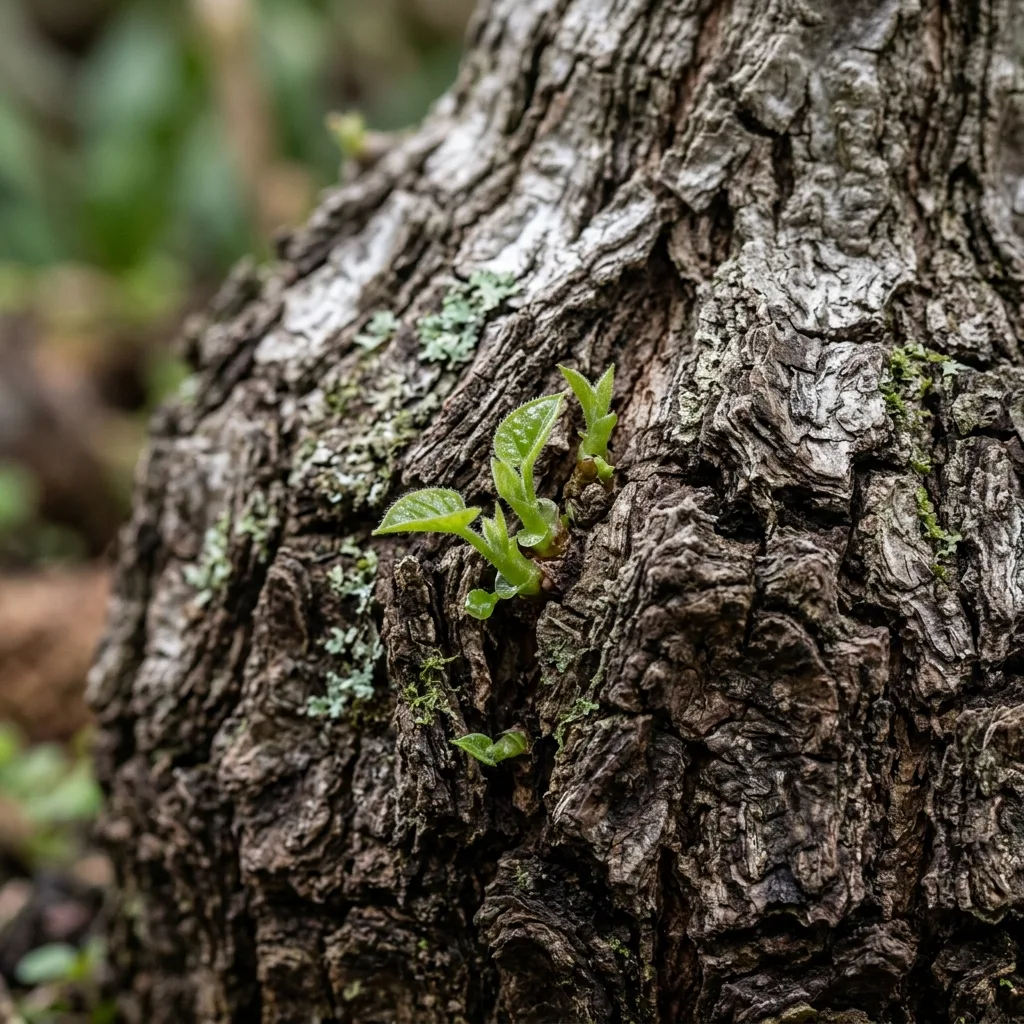
- Optimal Turgor Pressure: The caudex feels rock-hard to gentle finger pressure, the corky bark is taut, and dynamic reddish-green growth shoots emerge rapidly from the apical nodes in spring.
- Physiological Dehydration: The caudex develops a slight mechanical elasticity, yielding marginally when gently squeezed. Tendril leaves may cup or droop during peak daytime heat but recover by nightfall. This confirms it is safe to initiate a thorough irrigation cycle.
- Substrate Hypoxia & Incipient Rot: The base of the caudex (at the substrate line) turns spongy or dough-like, displaying dark brown-black discoloration accompanied by a faint, fermentative odor. This calls for emergency surgical intervention.
- Etiolation (Insufficient Photosynthetically Active Radiation): Shoots become excessively elongated with stretched internodes, leaves turn pale chlorotic green, and the caudex remains slender and depleted of starch reserves.
- Dormancy Induction Cues: Widespread foliar yellowing in mid-autumn is not a disease; it is the natural reabsorption of mobile nutrients from the vines back into the caudex before annual dieback.
3. Step-by-Step Implementation Protocol
To cultivate an expansive, healthy caudex while eliminating the threat of fungal collapse, adhere strictly to this five-stage cultivation protocol:
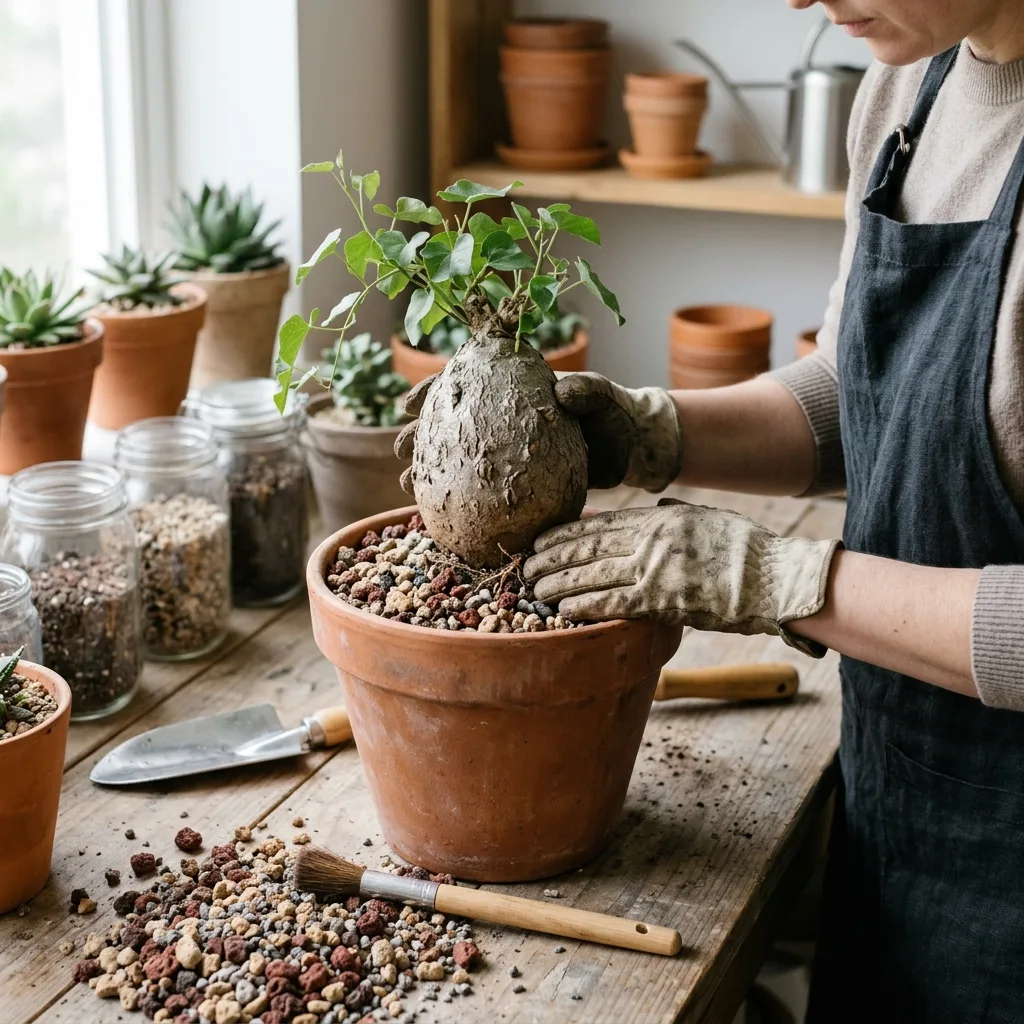
- Formulate an Ultra-Porous Mineral Substrate: Prevent root hypoxia by blending 75% inorganic volcanic minerals (equal parts pumice, volcanic lava grit, and zeolite) with 25% thoroughly sifted, low-fertility fibrous peat or coco coir. Topdress the upper 2 cm surrounding the root collar exclusively with coarse volcanic scoria to keep moisture away from vulnerable surface tissues.
- Pot Selection and Caudex Positioning: Use unglazed terracotta containers equipped with generous drainage openings. The porous clay walls encourage rapid lateral moisture evaporation throughout the root zone, reducing the incidence of stagnant moisture and root pathogens by up to 80%.
- Active Season Soak-and-Dry Irrigation: From late spring through late summer while vines are actively elongating, irrigate deeply only after the entire substrate core has dried out completely. Apply water around the perimeter of the pot rather than directly over the summit of the caudex.
- Vine Architecture and Growth Redirection: Left unchecked, succulent Ipomoea vines can effortlessly scale 1 to 2 meters. Train them onto slender bamboo trellises or copper wire hoops. To accelerate the thickening of the caudex, pinch out the terminal growth point (apical meristem) in midsummer when the vines reach roughly 40–50 cm; this halts vertical shoot elongation and drives photosynthetic assimilates directly into the subterranean reservoir.
- Dormancy Quarantine Protocol: When night temperatures drop below 12°C (54°F), phase out irrigation entirely. Once the foliage has fully yellowed, sever the dry vines roughly 2 cm above the caudex using a sterilized surgical blade. Overwinter the dormant caudex in a bright, dry location maintained between 10°C and 15°C (50°F–59°F), withholding water completely throughout the winter rest.
4. Required Equipment, Materials, and Metric Parameters
The following physiological matrix outlines the ideal environmental baseline for caudiciform Ipomoea cultivation:
| Parameter / Component | Target Specification | Physiological Rationale |
|---|---|---|
| Substrate Composition | 40% Pumice (3–5 mm) + 25% Lava Grit + 10% Zeolite + 25% Organic Fiber | Provides maximum macro-porosity and root oxygenation while preventing waterlogging. |
| Light Intensity | 5–6 hours minimum of filtered direct sunlight (40,000–55,000 Lux) | Maximizes C3 photosynthetic carbohydrate synthesis for storage in the caudex. |
| Container Material | Unglazed Red Terracotta / Porous Ceramic | Enhances transpiration through pot walls, keeping the root core cool and aerated. |
| Active Growth Temperature | 22°C to 34°C (72°F to 93°F) | Optimizes enzymatic activity and initiates rapid seasonal vine elongation. |
| Dormancy Temperature | 10°C to 14°C (50°F to 57°F; never below 5°C / 41°F) | Prevents intracellular freezing damage and cold-associated fungal infection. |
| Fertilizer Profile | Low Nitrogen, High Potassium (NPK 5-10-15) at 1/4 strength | Excess nitrogen causes caudex splitting; potassium fortifies storage cell walls. |
5. 5 Common Mistakes and Rescue Protocols
- Mistake 1: Exposing Young Caudices to Direct Midday Sun. Raising an immature, smooth-barked caudex too early results in thermal blistering and irreparable bark lesions. Rescue: Provide dappled shade with light linen cloth or build a decorative barrier of crushed pumice around the neck until thick periderm bark develops.
- Mistake 2: Winter Irrigation Out of 'Dry Soil' Anxiety. Applying water to a leafless, dormant caudex in cold soil is fatal. Inactive roots cannot take up moisture. Rescue: If accidentally watered, immediately move the pot to a warm room with strong air circulation; if the soil stays wet, unpot the specimen and air-dry the root mass on absorbent towels.
- Mistake 3: Growing in Glazed or Plastic Pots Without Adequate Drainage. Non-porous containers trap moisture at the base, rotting the taproot and lower caudex unseen. Rescue: Repot immediately into dry, unglazed terracotta with a high-mineral pumice blend.
- Mistake 4: Administering High-Nitrogen Houseplant Fertilizers. Nitrogen forces weak, hyper-elongated vines while leaving the caudex structurally soft and prone to opportunistic bacterial rot. Rescue: Flush the substrate thoroughly with purified water to remove salt deposits and shift exclusively to potassium- and silicate-rich micronutrient fertilizers.
- Mistake 5: Hesitating When Soft Rot Appears. Caudex rot never heals spontaneously. Rescue: With a flame-sterilized scalpel, excise every trace of brown, macerated tissue until only clean, crisp white flesh remains. Dust the open wound generously with sulfur powder or ground cinnamon, allow it to dry and form a protective callus for 5 days in a warm, dry room, then replant in bone-dry pumice.
6. Seasonal Calendar and Long-Term Results
Cultivating caudiciform morning glories is an exercise in seasonal harmony. Follow this yearly rhythm:
- Spring (March – May): The awakening phase. When tiny reddish-green growth buds break at the apex of the caudex, administer the first conservative bottom watering. Gradually increase frequency as daylight expands, moving the pot to a bright southern exposure.
- Summer (June – August): Peak metabolic activity and flowering. Feed twice a month with diluted low-nitrogen nutrients. Trellis the vigorous climbing shoots. Prune the tips to encourage caudex swelling, and provide copious water whenever the substrate dries thoroughly.
- Autumn (September – November): Dormancy preparation. Taper watering significantly. Cease all fertilization. Allow foliage to naturally senesce and turn yellow. Relocate indoors before nighttime ambient temperatures drop below 12°C (54°F).
- Winter (December – February): Absolute rest. All vines are pruned back cleanly. The plant rests in a cool, bright, moisture-free room. Withhold water completely.
Adhering to this disciplined regimen yields extraordinary rewards: year after year, your caudex will broaden in girth, developing the deeply furrowed, fissured bark reminiscent of an ancient oak, crowned each summer with vibrant, funnel-shaped blossoms.


Reader Reviews & Comments 3 Reviews
Julian Vance
Clara Higgins
Marcus Thorne
Leave a Review & Rating
Share your plant care tips, experiences, or questions with our succulent community.