






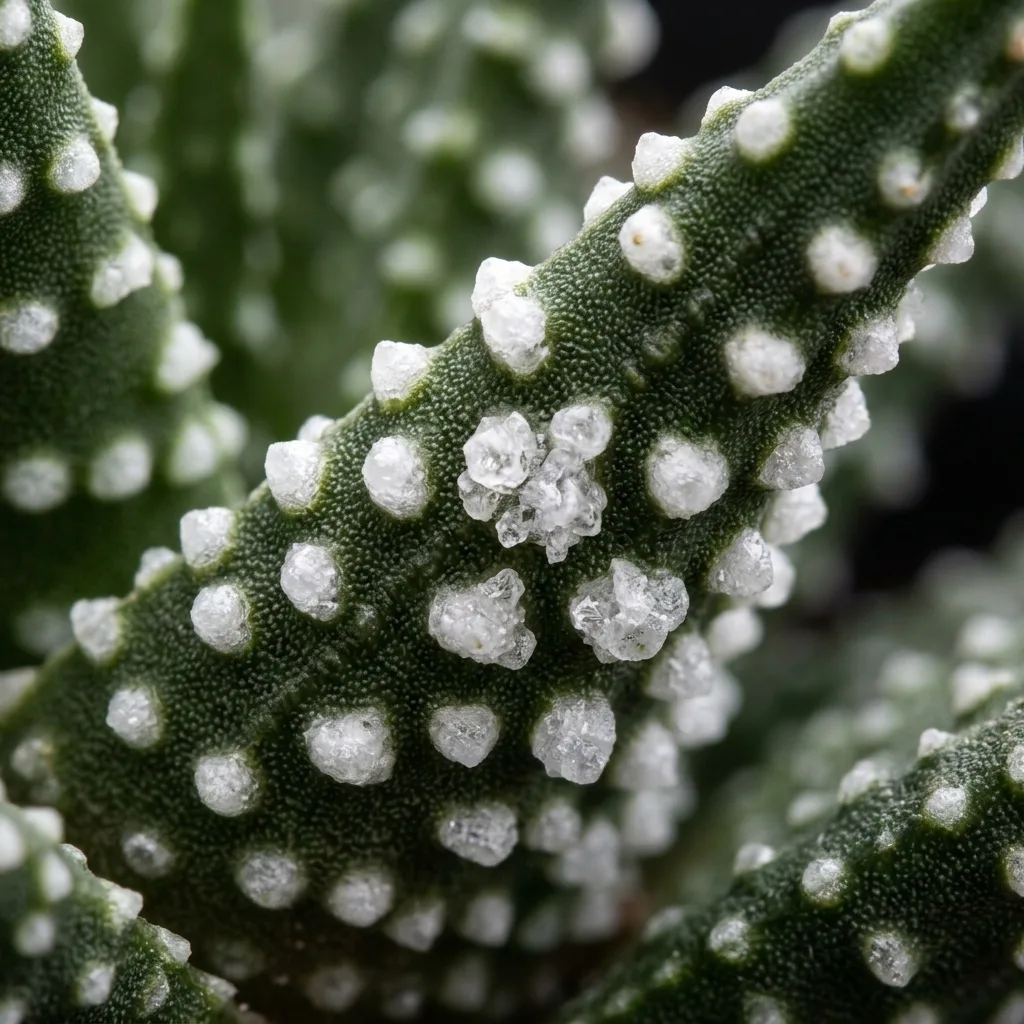
Tucked away in South Africa's Robertson Karoo, sheltered beneath steep quartz outcrops and scrubby bushes, the genus Tulista (formerly classified under Haworthia subgenus Robustipedunculares) stands as one of nature's most resilient and sculptural marvels. The pearlescent white tubercles ornamenting its leaf surfaces are far more than ornamental jewelry; they function as sophisticated natural diffusion lenses, scattering harsh direct solar radiation to protect the delicate underlying mesophyll tissue from thermal stress. Cultivating a Tulista on a bright windowsill or in a dappled conservatory invites millions of years of arid, mountain-slope patience straight into your living space.
Many succulent enthusiasts casually lump Tulista together with conventional Haworthia species. However, Tulista produces significantly tougher, more fibrous, and thicker-walled succulent foliage. While this anatomical ruggedness makes the plant exceptionally tolerant of neglect, the single most devastating mistake made in home cultivation is mistaking this armor for invincibility and drowning it with excessive water. In heavy, suffocating potting soil, a Tulista root system can collapse into decay within days; conversely, anchored in an open inorganic aggregate with a seasonally responsive watering rhythm, it transforms into an heirloom plant capable of thriving for decades across generations.
1. Botanical Biology and Physiological Foundations
Tulista species (such as Tulista pumila, Tulista margaritifera, and Tulista opalina) are strict practitioners of Crassulacean Acid Metabolism (CAM). During the scorching daylight hours, they keep their stomata tightly sealed, reducing transpirational water loss virtually to zero. As night falls and ambient temperatures drop, their stomata open to take up carbon dioxide, which is temporarily sequestered in cellular vacuoles in the form of malic acid. Once sunlight returns the following morning, this stored carbon is released internally and driven through the photosynthetic machinery without exposing cellular moisture to dry air.
The prominent white 'pearls' or tubercles crowning Tulista's epidermal layer are specialized clusters of modified cells heavily enriched with calcium and silicate crystal deposits. By acting as optical diffusers, they scatter incoming irradiance, shielding chloroplasts against photoinhibition and chlorophyll bleaching under intense light. Below ground, Tulista relies on thick, fleshy, contractile roots. In their native habitats, these roots shrink longitudinally during extended droughts, physically pulling the entire rosette closer to the soil surface or beneath the rocky substrate. In a pot, what these roots crave above all else is continuous access to fresh oxygen via macro-pores. In waterlogged, silty soil where root cells are starved of respiratory oxygen, the xylem vessels quickly succumb to opportunistic fungal pathogens—most notably Fusarium and Pythium.
2. Accurate Diagnosis and Plant Signals
Establishing a healthy dialogue with your Tulista requires learning to interpret its subtle morphological signals. While the plant cannot speak, its cellular turgor pressure and pigment shifts reveal its precise physiological state:
- Under-Watering (Loss of Turgor): Leaves lose their plump, rigid stance, developing concave troughs along their upper surfaces. The entire rosette draws inward, curling into a protective ball. Upon touch, the foliage feels leathery and flexible without any softness or foul odor. If the potting medium is bone dry, a thorough, controlled soak is warranted.
- Over-Watering and Root Suffocation: The basal leaves turn translucent, pale yellow, and take on a soft, waterlogged, jelly-like texture. With minimal touch, these damaged leaves detach cleanly from the stem axis, often accompanied by dark discoloration at the root collar. This is an urgent red flag requiring immediate intervention.
- Insufficient Light (Etiolation): While Tulista is not as prone to extreme stretching as some desert succulents, inadequate light causes the emerging center leaves to grow pale, weak, and devoid of distinct tubercles, destabilizing the compact geometric rosette.
- Photothermal Burn: Sudden, unacclimated exposure to harsh midday sun produces permanent, bleached white or scabby brown necrotic patches across the leaf surface.
3. Step-by-Step Cultivation Protocol
To cultivate a vigorous Tulista specimen, safeguard its fleshy root architecture, and foster that signature crystalline pearl definition, adhere closely to the following sequence:
- Container and Exposure Selection: Unglazed terracotta pots equipped with generous drainage holes are the gold standard for Tulista. The porous clay walls breathe, allowing excess moisture to evaporate from all sides. Position the container where it receives bright, indirect morning or late afternoon sun, ideally filtered by a sheer curtain if situated in an intense south- or west-facing window.
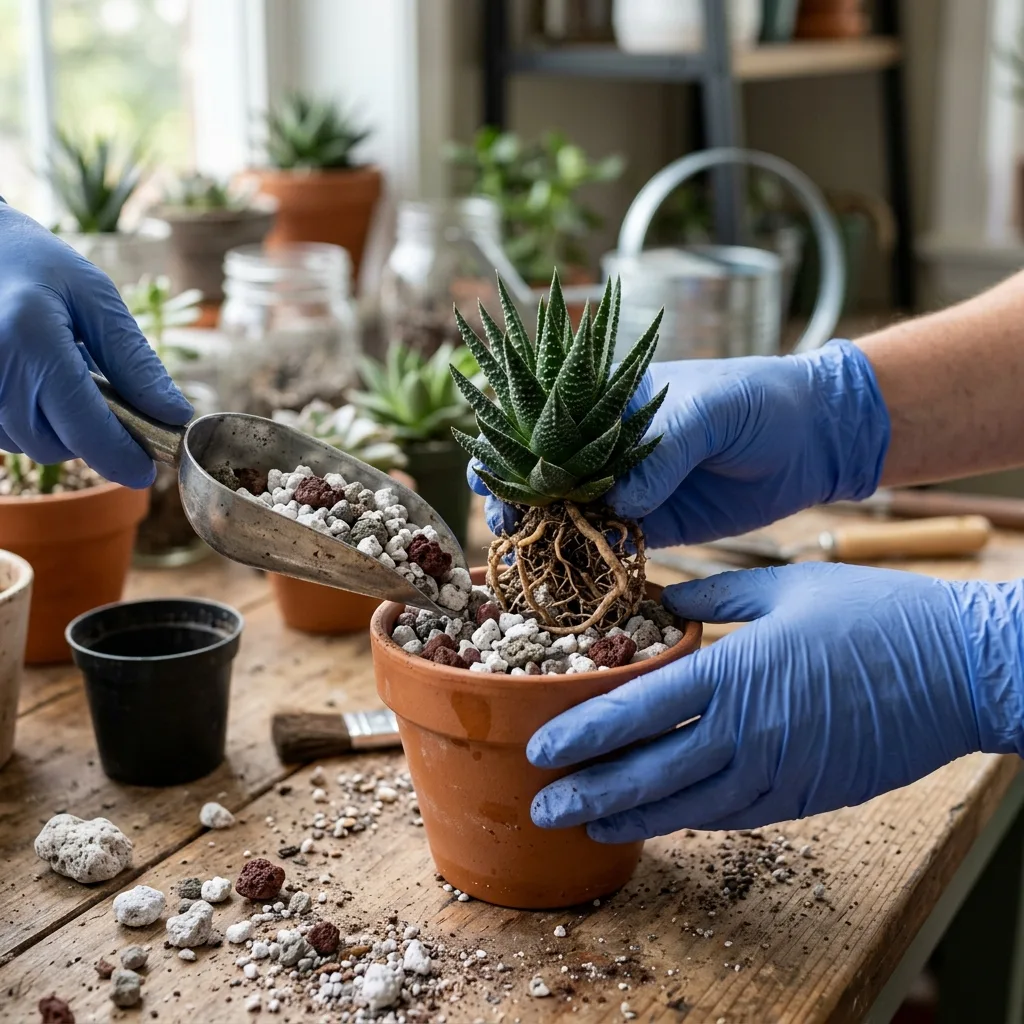
- High-Porosity Mineral Substrate: Never pot Tulista in standard commercial potting soil or pure peat moss. To guarantee adequate gas exchange around the roots, formulate a blend composed of at least 70% gritty inorganic components—such as pumice, volcanic scoria, and zeolite.
- Bottom-Soaking or Targeted Perimeter Watering: Never pour water directly into the center of the leaf rosette. Trapped water in the central crown during cool evenings is an open invitation to crown rot. Instead, water the pot from below by submersing the base in a shallow tray, or use a narrow-spout watering can to apply water exclusively around the soil perimeter. Saturate the pot until water runs freely from the drainage holes, then discard any water collected in the saucer within 15 minutes.
- Maintaining Active Air Movement: To disrupt humid microclimates around dense leaf axils, ensure consistent, gentle air circulation within the room. Stagnant, humid corners are the primary breeding ground for systemic mealybug infestations.
- Controlled, Low-Nitrogen Nutrition: Tulista exhibits a very slow metabolic growth rate. High-nitrogen fertilizers force unnatural cellular expansion, softening the firm cell walls and warping the rosette's compact symmetry. In early spring and autumn, apply a quarter-strength cactus and succulent fertilizer with balanced potassium and phosphorus levels.
4. Essential Components, Materials, and Parameters
In Tulista cultivation, nothing should be left to guesswork; the physical balance of your substrate dictates root viability. The optimal horticultural parameters are summarized in the table below:
| Parameter / Component | Recommended Standard | Botanical Rationale |
|---|---|---|
| Inorganic Aggregate | 70% (Pumice, Volcanic Scoria, Zeolite, 3-6 mm) | Maintains rapid drainage and structural oxygen channels around roots. |
| Organic Fraction | 30% (Sifted Coco Coir + Worm Castings) | Provides gentle, temporary moisture retention and trace micronutrients. |
| Pot Material & Sizing | Unglazed Terracotta (2-3 cm wider than rosette) | Encourages wall evaporation and prevents cold, soggy soil dead zones. |
| Light Intensity | 20,000 - 35,000 Lux (Bright, Filtered Sunlight) | Stimulates tubercle development while preventing etiolation and sunburn. |
| Watering Frequency | Active Growth: Every 10-14 days; Dormancy: Monthly | Substrate must reach 100% dry status throughout the depth of the pot first. |
| Temperature Range | 16°C – 26°C (Winter minimum: 8°C / 46°F) | Enters semi-dormancy above 32°C (90°F); has zero tolerance for freezing frost. |
5. Five Common Mistakes and Emergency Solutions
- Mistake: Planting in Standard Peat-Based Soil.
Consequence: Substrate stays soggy for weeks; roots suffocate from hypoxia, and fungal rot ascends into the caudex.
Remedy: Immediately unpot the plant and gently wash all peaty residue from the roots. Trim away hollow, blackened roots using sterilized shears. Allow root cuts to callus in a dry, shaded location for 24 hours, then repot into a 70% pumice mix. Keep dry for the first week. - Mistake: Pouring Water Straight into the Rosette Center.
Consequence: Water pools in the apical meristem, encouraging rapid crown rot.
Remedy: If water collects in the center, wick it away immediately using the twisted corner of a paper towel or blow it out with a hand-squeeze air blower. If central decay has begun, excise blackened tissue with clean tweezers and dust the wound with sulfur powder. - Mistake: Keeping the Plant in Low-Light Rooms.
Consequence: Pearl tubercles become sparse, foliage shifts from rich jade to washed-out pale green, and structural compact geometry collapses.
Remedy: Do not abruptly shock the plant by placing it under direct desert sunlight. Gradually increase light intensity over two weeks, moving it closer to an unobstructed eastern exposure. - Mistake: Overwatering During Mid-Summer Heat.
Consequence: When temperatures reliably exceed 32°C (90°F), Tulista slips into summer dormancy. Roots cease nutrient and water uptake; standing water destroys the dormant root hairs.
Remedy: Restrict watering during July and August to brief, minimal moisture applications during cool evening hours solely to prevent leaf desiccation. - Mistake: Choosing an Oversized Planter.
Consequence: Soil untouched by roots retains moisture indefinitely, acting as a chilly, waterlogged sponge.
Remedy: Downsize to a shallow terracotta pot only 2-3 cm wider than the plant itself. Tulista roots establish far more reliably when snugly contained.
6. Seasonal Calendar and Long-Term Results
Tulista species are opportunistic, cool-season growers. The moderate temperatures of spring and autumn trigger the peaks of their cellular division, root rejuvenation, and flower spike elongation.
- Spring (March – May): Commencement of primary vegetative growth. Water deeply once the potting mix dries out completely. Feed once a month with quarter-strength succulent fertilizer. This is the optimal window for repotting and separating rooted offsets.
- Summer (June – August): High ambient temperatures induce a semi-dormant state. Lengthen watering intervals, cease fertilization entirely, and shelter the plant from scorching noon sun in a well-ventilated location.
- Autumn (September – November): Second active growth surge. As daytime temperatures settle into the comfortable 20-25°C range, Tulista resumes root development. Re-establish routine watering. Slender, wiry, and remarkably sturdy inflorescences will begin to rise.
- Winter (December – February): Light levels decline. Maintain the plant in a cool, bright location around 10-15°C (50-59°F). Reduce watering to a bare minimum (a light application every 3-4 weeks); always remember that cold combined with wet roots is fatal to Tulista.
By synchronizing your care routine with this physiological rhythm, your Tulista will expand its architectural rosette in a mesmerizing spiral, develop crystalline, porcelain-white pearls, and reward your attentive stewardship with healthy basal offsets for decades to come.


Reader Reviews & Comments 4 Reviews
Julian Vance
Marcus Sterling
Eleanor Brooks
Hannah Lindqvist
Leave a Review & Rating
Share your plant care tips, experiences, or questions with our succulent community.