






From the wind-swept granite fissures of the Sonoran Desert to the hyper-arid limestone slopes of the Atacama, cacti have evolved to survive in some of the most unforgiving environments on our planet. In their native habitats, their root networks do not interact with rich, dark, moisture-laden loam; instead, they anchor themselves into fractured volcanic rock, coarse gritty sand, and mineral scree that dries within hours. When we welcome these desert marvels into our living rooms and pot them into off-the-shelf, peat-based houseplant soil, we are not treating them with hospitality—we are sentencing their roots to an oxygen-depleted, suffocating bog.
The single most devastating mistake made in cactus husbandry is obsessing over the succulent, water-storing green stem while completely disregarding the fragile subterranean root architecture beneath. Conventional potting compost acts like a dense sponge, retaining free water for weeks on end. While a tropical maidenhair fern would thrive in that constant moisture, a desert cactus experiences cellular asphyxiation followed by catastrophic root rot. So, do cacti truly require special soil? The short answer is an unequivocal yes. However, 'special' does not imply buying expensive designer bags; it means honoring the physiological and biophysical demands of the cactus root system.
In this master horticultural guide, we dissect subsurface plant biology—from xylem water uptake kinetics to subterranean gas exchange dynamics. Whether you are cultivating a Mexican Mammillaria on a sunny windowsill or letting an epiphytic Rhipsalis cascade down a shaded shelf, you will discover the science-backed, field-tested recipes needed to provide roots with absolute longevity.
1. Taxonomic Identity, Areole Architecture, and Spine Morphology
The botanical family Cactaceae encompasses roughly 127 genera and well over 1,750 recognized species. The definitive morphological hallmark that separates true cacti from all other succulent plant families (such as Crassulaceae, Euphorbiaceae, or Aizoaceae) is the presence of specialized organ complexes called areoles. Morphologically speaking, areoles are condensed, highly modified lateral vegetative buds. Spines, glochids, branch segments, cephalium wool, adventitious roots, and delicate floral structures emerge exclusively from these specialized sites.
Cactus spines are actually structurally modified, non-photosynthetic leaves honed by millions of years of selective pressure. Their function extends far beyond deterring herbivorous animals. On a microclimatic scale, dense spines create a boundary layer of shaded, turbulent air pockets around the stem, dramatically diminishing convective heat loss and desiccation from desert winds. Furthermore, in coastal fog deserts, spines intercept dew droplets, coalescing moisture that trickles down directly to the superficial feeder root collar. Because the stem minimizes transpirational moisture loss with remarkable efficiency, the root network evolved strictly for 'rapid pulses' of moisture. Roots take up water swiftly, swell with cellular hydraulic pressure, and expect the surround medium to drain and re-oxygenate almost instantly.
2. Illumination, Radiant Energy, and Ventilation Parameters
Your choice of cactus substrate cannot be isolated from lighting conditions and ambient air movement. Utilizing Crassulacean Acid Metabolism (CAM), desert cacti open their stomata primarily at night to capture atmospheric carbon dioxide, converting it into organic malic acid. During the heat of the day, their stomata remain sealed tightly against water vapor loss. While CAM allows them to withstand scorching diurnal heat and radiant solar loads, robust metabolic cycling requires generous photosynthetic photon flux.
Classic desert taxa (such as Ferocactus, Echinocactus, or Astrophytum) require a minimum of six hours of direct, unfiltered solar radiation daily. When kept indoors in subpar ambient light, substrate water evapotranspiration rates plummet, leaving the core root ball damp for perilous lengths of time. A persistent cold, humid boundary layer around the basal root neck invites opportunistic pathogenic hyphae (predominantly Fusarium oxysporum and Phytophthora cactorum) to breach the dermal root barrier. Vigorous ambient ventilation coupled with an ultra-porous mineral mix accelerates soil drying, ensuring safety even in modest indoor conditions.
3. Hydration Cycles and the Vital Winter Dormancy Protocol
Drenching a desert cactus on a rigid calendar schedule is not horticultural care—it is slow aquatic strangulation. Root hair cells depend on diffusion gradients within soil micropores to drive cellular respiration and fuel active nutrient ion transport. When saturated garden peat blankets these spaces, roots suffer instant anoxia, culminating in cellular collapse and necrotic tissue death.
The quintessential hydration maxim is the 'soak and dry' method: wet the substrate thoroughly until water drains cleanly from the base, and never moisten it again until the root zone is completely dry down to the base of the pot. Beyond seasonal watering, navigating winter dormancy (hibernation) is the pivot point between failure and spectacular longevity:
- Dormancy Conditions: From late autumn through early spring (November through March in the Northern Hemisphere), desert cacti should be staged in a bright, crisp environment held between 8°C and 12°C (46°F–54°F).
- Zero-Watering Rule: Under cool temperatures, cellular respiration rates plateau and CAM idling sets in. Substrate must remain bone-dry during this cycle. Exposing a dormant cactus to wet soil in a cool room is a guaranteed death sentence via fungal root melt.
- Spring Awakening: Once temperatures steadily climb to 18°C–20°C (64°F–68°F) and the apical areoles show fresh, active tissue growth, resume watering gradually using tepid, low-mineral water delivered from below.
4. High-Mineral Cactus Substrates and Terracotta Containers
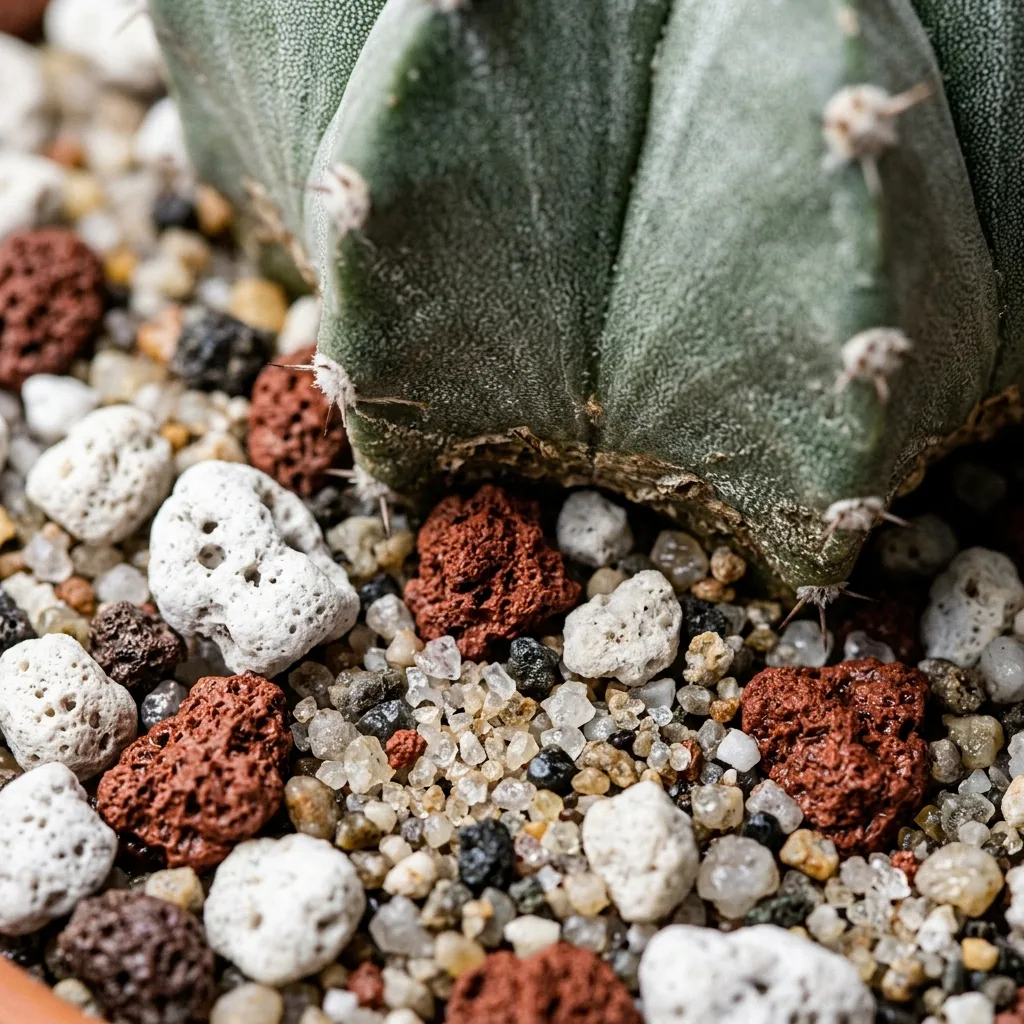
Why do cacti fail in garden soil or typical indoor potting dirt? Off-the-shelf potting soil consists of finely milled peat moss, coir dust, and composted bark. These organic fibers swell upon contact with moisture, matting together and crushing delicate subterranean aeration networks. Cactus roots, by evolutionary design, demand loose, coarse, aggregate-rich media where gravity flushes water out within seconds.
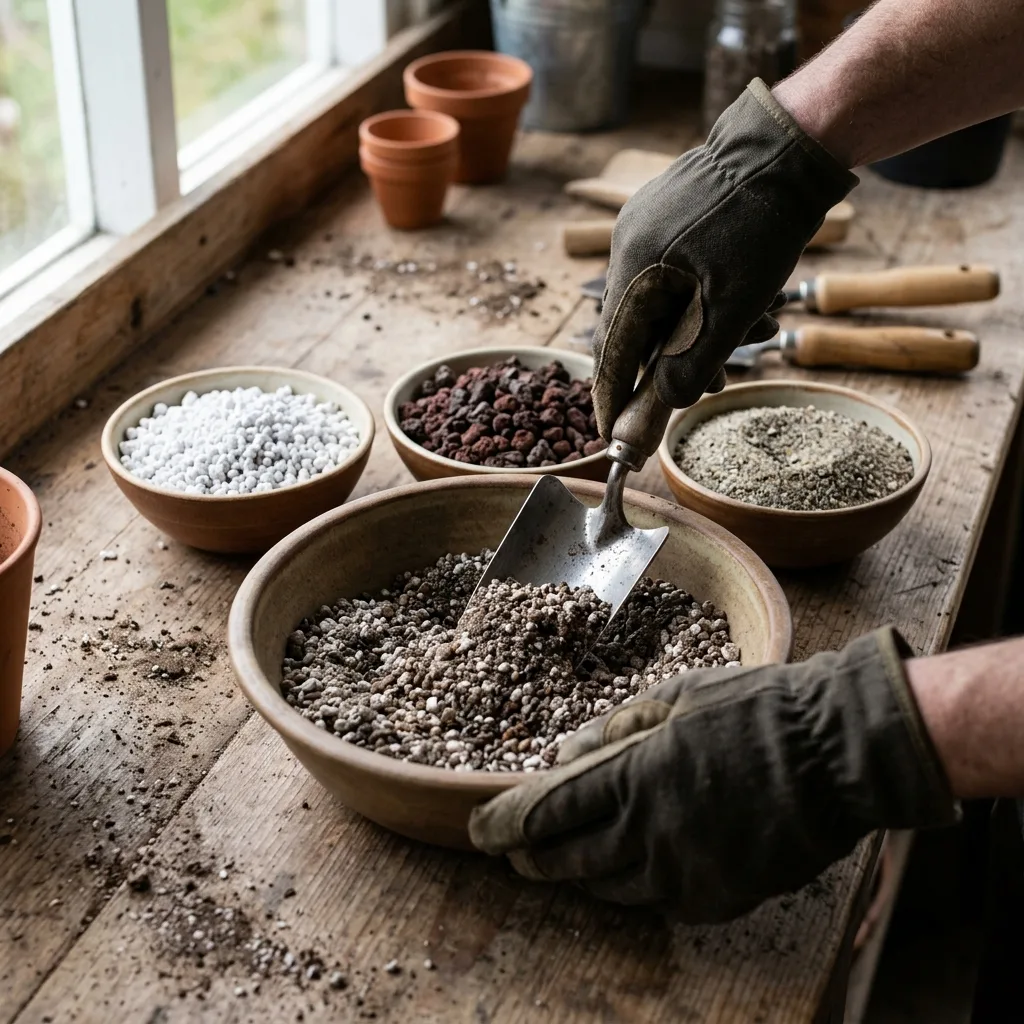
An ideal desert cactus medium relies primarily on inorganic, structural minerals: coarse pumice, expanded shale, zeolite, volcanic lava rock (scoria), and decomposed coarse river grit. As for containers, unglazed, porous terracotta is vastly superior to glazed ceramic or plastic. The natural porosity of unglazed clay wicks excess moisture outward through the sidewalls, preventing basal stagnant pools and cooling the root zone via evaporative dissipation. Large drainage holes are mandatory.
| Cactus Ecological Guild | Inorganic / Mineral Ratio | Organic Component (Screened Coir/Leaf Compost) | Representative Genera |
|---|---|---|---|
| Hyper-Arid Desert Specialists | 80% – 90% (Pumice, Zeolite, Scoria) | 10% – 20% (Fine Screened Coco Peat or Sifted Leaf Mould) | Astrophytum, Ariocarpus, Lophophora, Copiapoa |
| Standard Desert & Mountain Cacti | 70% – 75% (Pumice, Coarse Grit, Crushed Lava) | 25% – 30% (High-Grade Aged Leaf Compost) | Mammillaria, Echinopsis, Ferocactus, Gymnocalycium |
| Tropical Epiphytic Rainforest Cacti | 40% – 50% (Coarse Perlite, Horticultural Charcoal, Pine Bark) | 50% – 60% (Fibrous Peat, Decomposed Orchid Humus) | Schlumbergera (Holiday Cacti), Epiphyllum, Rhipsalis |
5. Flowering Induction Tactics and Nutritional Optimization
The lament, 'My cactus grows, but it hasn't bloomed in years,' almost always traces back to heavy organic soils and the absence of a cold, dry dormancy. To initiate reproductive floral primordia at the areoles, cacti require two consecutive physiological triggers: a cold, water-deprived winter rest, followed by balanced phosphorus and potassium availability as light intensity returns in spring.
Standard peat mixes slowly leach excess organic nitrogen into the plant tissue, fueling weak, bloated, watery vegetative growth that prevents flowering and invites insect attack. For specimens situated in mineral-rich, well-draining media, supplement monthly throughout the active growth phase (April through August) with an inorganic, low-nitrogen liquid cactus fertilizer (such as an NPK 5-10-10 or 4-8-12 formulation) diluted to half strength. Remember: the powdery, bluish-white waxy sheen (farina or epicuticular wax) on many cacti is their natural ultraviolet shield. Never mist liquid fertilizers over the epidermis; feed strictly at soil level.
6. Propagation, Callusing, and Grafting Protocols
Propagating cacti requires an even more sterile, free-draining substrate than adult care. When striking stem cuttings or detaching basal offsets (pups), precision and patient desiccation are essential:
- Clean Incision & Callus Development: Using a surgical scalpel sterilized in 70% isopropyl alcohol, detach the lateral pup or cut the pad cleanly. Never plant a fresh, weeping wound into soil! Place the cutting in a dry, ventilated, shaded area for 4 to 10 days until a tough, dry, corky barrier tissue (the wound callus) completely seals the exposed parenchymal layers.
- Rooting Substrate: Gently set the callused cutting upright atop a sterile mix consisting of 90% fine pumice or horticultural coarse perlite. Do not soak the container; keep the base strictly dry, occasionally misting only the surface perimeter to stimulate adventitious root geotropism.
- Grafting Horizons: Chlorophyll-deficient mutations (such as ruby-red Gymnocalycium mihanovichii f. variegata) or extraordinarily slow-growing desert gems can be union-grafted onto vigorous rootstocks like Hylocereus undatus or Trichocereus. Long-term vitality of the scion rests entirely on the rootstock inhabiting a fast-draining, mineral substrate.
7. Rot Eradication and Emergency Subterranean Rescue Protocol
Root rot is the undisputed number-one killer of containerized cacti. Once anaerobic conditions suffocate root hairs, dormant water molds take advantage of non-functioning tissue, moving rapidly up into the central vascular cylinder. Warning signs start quietly: an unsettling dulling of the epidermis, basal yellowing, a spongy or soft tactile response when squeezed gently, and finally, a sudden structural tilting of the stem.
If you suspect that poor, waterlogged soil has initiated root rot, execute this emergency botanical triage without delay:
- Unpot the specimen immediately and rinse away all old, muddy, peat-based soil under running lukewarm water until the roots are bare.
- Examine the subterranean system under bright light. Using a flame-sterilized blade, cut away all dark brown, black, slimy, or hollow papery roots right back to clean, white, firm vascular tissue.
- Dust the exposed root surfaces and collar generously with horticultural sulfur powder or organic cinnamon powder to eliminate residual fungal spores. Lay the bare-root plant on clean paper towels in a warm, shaded room for 2 to 3 days to dry.
- Re-pot the cactus into fresh, entirely inorganic substrate (75%+ pumice/crushed lava) inside a clean, unglazed terracotta pot with ample drainage. Withhold all water for at least 7 to 10 days post-potting to allow any microscopic handling abrasions to seal.


Reader Reviews & Comments 4 Reviews
Clara Higgins
Julian Vance
Eleanor Brooks
Marcus Sterling
Leave a Review & Rating
Share your plant care tips, experiences, or questions with our succulent community.