






Evolving within the calcareous fissures of the Mexican highlands and along the scorching, limestone-strewn ridges of the Chihuahuan Desert, the genus Coryphantha represents one of the pinnacle achievements of succulent and cactus morphology. While at first glance it may evoke the classic silhouette of solitary globular cacti, it holds a distinct botanical identity marked by ribless tubercles (fleshy, conical protuberances) and the characteristic longitudinal grooves that develop along mature tubercle surfaces. Welcoming a Coryphantha to your windowsill invites millions of years of evolutionary drought resilience into your living space; yet concealed beneath this rugged, sculptured stem lies a fleshy, deep taproot architecture that remains exquisitely sensitive to stagnant container moisture.
The familiar lament among passionate hobbyists—'my succulent suddenly liquefied right at the base'—almost invariably stems from misinterpreting Coryphantha's innate biological thirst rhythm and subterranean oxygen demands. Truly loving a plant does not mean dousing it with daily water; it means curating the precise pore space, aeration, and native mineral equilibrium its root system requires. In this guide, we will deconstruct Coryphantha's cellular hydration strategies and establish an uncompromising, rot-free cultivation protocol designed to shepherd your specimen toward its breathtaking, crown-centered flowering phase in hues of vivid yellow to delicate rose.
1. Botanical Biology and Physiological Foundations
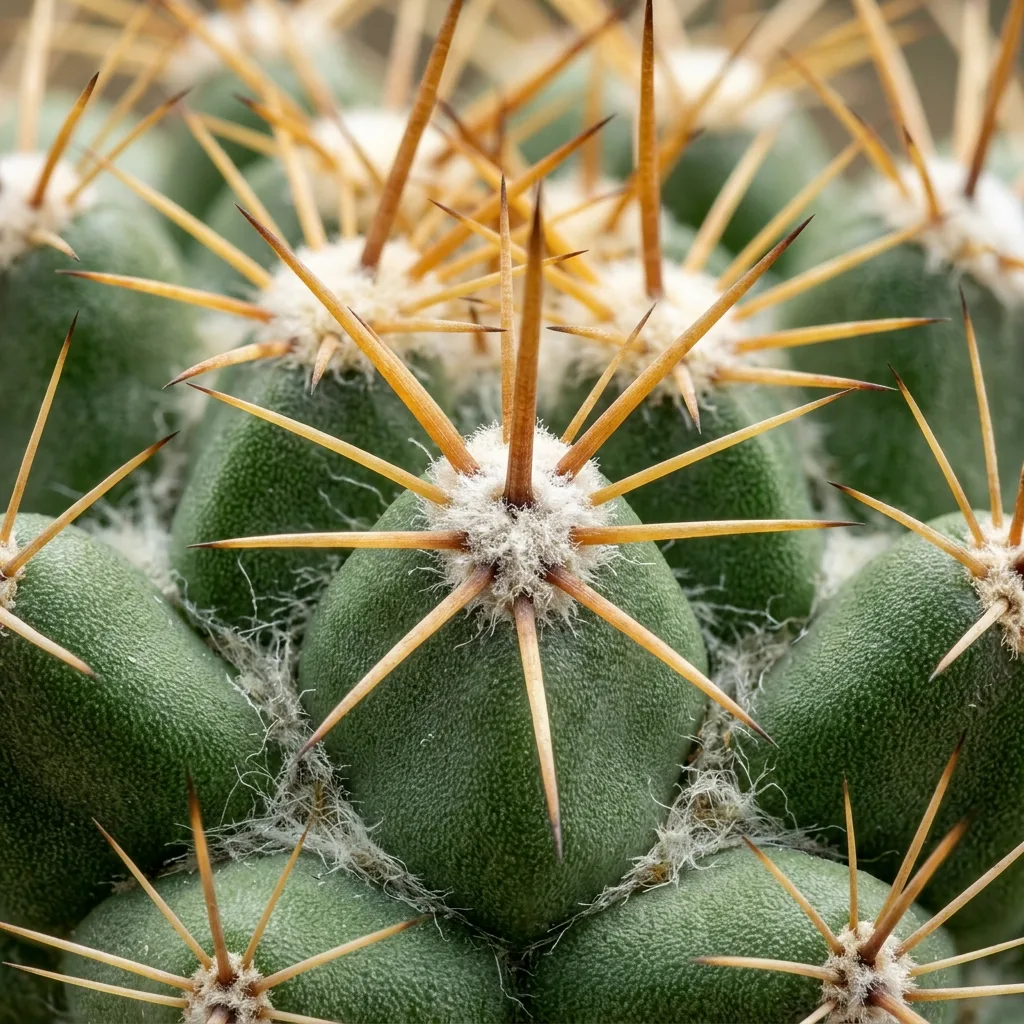
While botanically classified within the family Cactaceae, Coryphantha species function as specialized xerophytic stem succulents whose fleshy tubercles serve as high-capacity water storage vessels. The most defining morphological trait of the genus is its dimorphic areolar organization: areoles are split into two distinct, interconnected sectors. The spine-bearing areole sits at the apex of the tubercle, while the flower- and vegetative offset-producing areole resides at the basal axil. Connecting these two zones is a narrow, felted furrow or groove—affirming the Greek etymology (koryphe meaning summit or head, and anthos meaning flower), where blooms erupt dramatically from the plant's apical crown.
Below the soil line lies the true engine of survival. Most Coryphantha species develop a substantial, fleshy taproot (napiform root) system capable of storing two to three times the water volume held within the visible aerial globe. In habitat, this contracting taproot physically pulls the body downward into the limestone substrate during acute dry spells, shielding delicate epidermal tissues from blistering solar radiation. However, this magnificent adaptation presents a heightened hazard in container cultivation: fleshy taproot tissues rapidly succumb to cellular hypoxia (oxygen starvation) when potted in organic-rich, slow-draining mediums. Deprived of oxygen, cell walls collapse, creating an open gateway for opportunistic fungal pathogens (notably Fusarium and Phytophthora) to infiltrate the vascular cortex and liquefy the plant from the core outward.
Furthermore, Coryphantha utilizes an obligatory Crassulacean Acid Metabolism (CAM) pathway, opening its stomata strictly under the cover of night. Nocturnal carbon dioxide uptake is converted and stored as malic acid within cellular vacuoles, and during daytime hours, stomata seal hermetically to thwart transpiration while light-driven photosynthetic reactions complete internally. Consequently, irrigating during intense midday heat or allowing roots to sit in dense, anaerobic sludge paralyzes the plant's respiration and acid decarboxylation cycles.
2. Diagnostic Symptoms and Visual Indicators
In Coryphantha cultivation, external morphology offers real-time diagnostic readings regarding internal turgor pressure and subterranean root health. Cultivating an experienced eye allows you to interpret these visual cues with clinical precision:
- Turgor Loss and Lateral Tubercle Wrinkling: A slight softening and horizontal creasing of the tubercles indicates depleted internal water reserves and a decelerated CAM cycle. If the substrate is completely bone-dry throughout, this symptom signals a clear request for a thorough, deep soaking.
- Epidermal Yellowing and Translucence (Basal Soft Rot): If the stem base touching the substrate turns yellowish or glassy and yields with a squishy, fluid-filled sensation under light fingernail pressure, the taproot cortex has decayed and the vascular ring is compromised. Immediate surgical triage is mandatory.
- Stem Elongation and Tapering (Etiolation): A healthy Coryphantha retains a depressed-globular to spherical geometry. If the apex begins to taper upward into a narrow, conical shape accompanied by paler green tissue, the photosynthetically active radiation (PAR) is insufficient, driving chloroplasts to stretch the stem in an energy-draining quest for light.
- Extrafloral Nectar Secretion and Sooty Mold: Certain species (such as Coryphantha macromeris) exude glistening droplets of sweet nectar from specialized glands nestled within their tubercle grooves. The Art of Scientific Stem Cuttings and Rooting">This is an entirely natural physiological display; however, if ambient air circulation is sluggish, airborne fungal spores can colonize these sugary secretions, forming unsightly black sooty mold. This serves as an immediate warning of stagnant ventilation.
3. Step-by-Step Cultivation Protocol
Establishing an enduring, bloom-inducing, and rot-free environment for your Coryphantha relies on reproducing the mineral-dominant conditions of its natural desert home:
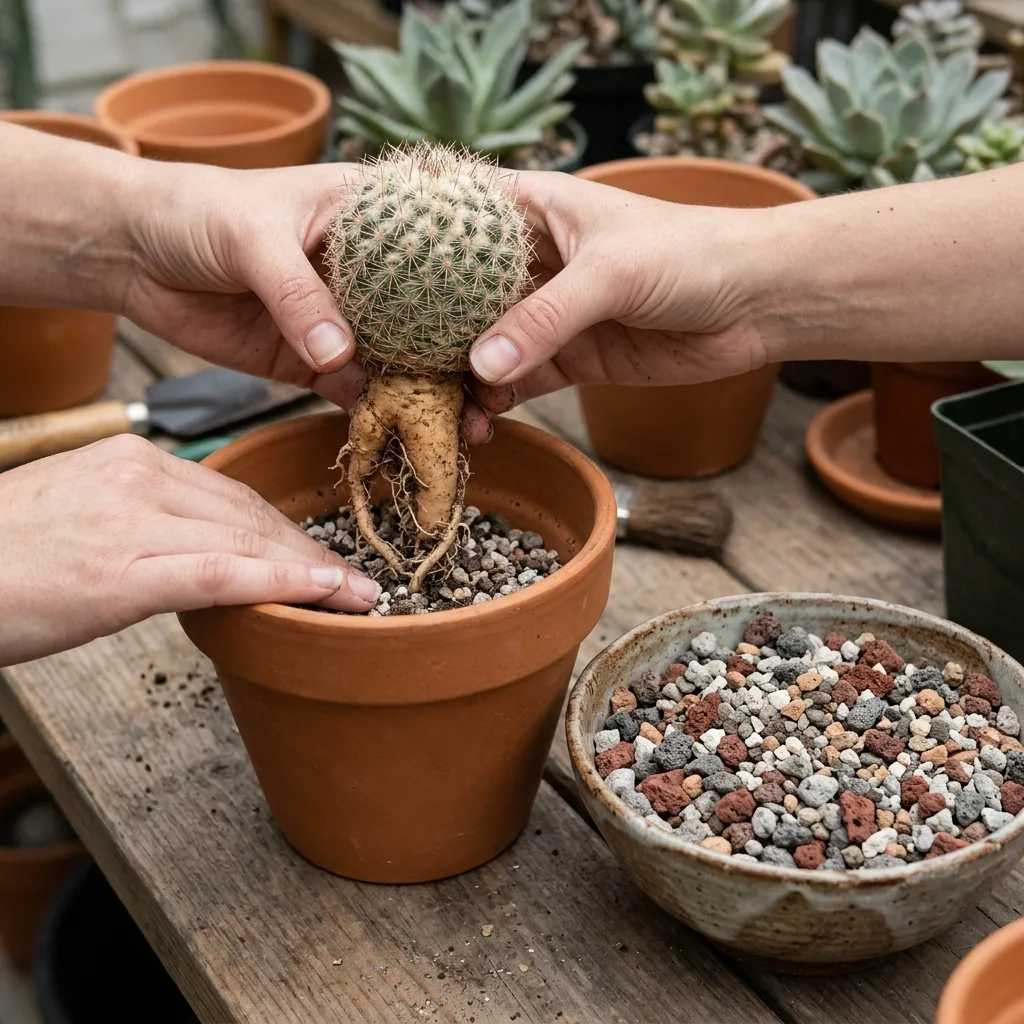
- Container Architecture: To comfortably accommodate the vertical growth vector of the primary taproot without forcing it into unhealthy contortions, bypass shallow succulent saucers. Select an unglazed terracotta pot whose depth measures at least 1.5 times its diameter. The microporous clay walls encourage lateral moisture evaporation and provide indispensable gas exchange to the root core.
- Mineral Substrate Formulation: The potting matrix must consist of at least 80% coarse, porous inorganic minerals (pumice, crushed volcanic scoria, zeolite, and calcified limestone chips). Restrict the organic component strictly to 15–20%, utilizing screened coconut coir or well-aged leaf mold. Never introduce unrefined peat moss, garden loam, or heavy potting soils.
- Root Neck Collar Isolation: During potting, seat the taproot securely into the gritty mineral mix, but ensure that the vulnerable transition zone—where the green subterranean neck meets the stem base—does not contact organic material. Encase the top 1–2 cm of the crown entirely in coarse pumice or washed granite chips. This inert top-dressing acts as a physical barrier, eliminating crown rot risks by roughly 90%.
- The Post-Potting Callus Rule: Whenever a Coryphantha is repotted or root-disturbed, micro-fractures in the fragile root hairs are inevitable. Keep the newly potted specimen completely dry in bright, indirect light for a minimum of 7 to 10 days. This dry respite allows cellular callusing over root abrasions before moisture is introduced.
- The Soak-and-Dry Hydraulic Cycle: Throughout the active spring and summer growth intervals, water thoroughly until run-off drains freely from the pot base, ensuring the gritty matrix is evenly saturated. Crucially, discard all water gathered in catch trays immediately. Allow the medium to dry out 100% from surface to bottom before offering the next drink, and suspend irrigation entirely during winter dormancy.
4. Essential Specifications and Substrate Ratios
The following reference table outlines the microclimatic standards and substrate metrics optimized through extensive greenhouse cultivation to support healthy, balanced Coryphantha development:
| Parameter / Component | Target Specification / Formula | Botanical Rationale & Cellular Impact |
|---|---|---|
| Inorganic Substrate Fraction | 40% Pumice (3–5 mm) + 25% Volcanic Lava Grit + 15% Zeolite | Maximizes structural pore space; continuously supplies oxygen directly to xylem channels. |
| Organic Substrate Fraction | 20% Fine-screened coco coir with perlite fines | Facilitates cation exchange capacity (CEC) and supports beneficial mycorrhizal root colonization. |
| Lighting Requirements | 6–8 hours of direct, unfiltered sunlight daily (10,000+ Lux) | Promotes compact tubercle development, dense central spine armature, and floral bud initiation. |
| Spring/Summer Irrigation | Every 10–15 days (Only when substrate is 100% bone-dry) | Re-establishes cellular turgor; powers the metabolic malic acid flux of CAM photosynthesis. |
| Winter Dormancy Irrigation | Completely dry (Zero water) or minimal misting once a month | Prevents intracellular ice formation; provides absolute defense against cold fungal root rots. |
| Container Selection | Deep, unglazed terracotta with large drainage apertures | Accommodates taproot depth; enables rapid radial moisture dispersion via wall transpiration. |
5. 5 Common Pitfalls and Emergency Recovery Protocols
- Mistake 1: Utilizing Standard Commercial Peat-Based Cactus Soil: Peat-heavy mixes inevitably turn hydrophobic when parched or collapse into dense, swampy sludge when damp, rapidly suffocating Coryphantha's sensitive taproot.
Recovery: Unpot the specimen immediately and rinse all clinging organic debris under lukewarm water. Excise necrotic or soft root tissues with a flame-sterilized scalpel, dust wounds with sulfur or ground cinnamon, let the plant callus in dry shade for 5 days, and replant into an 80% mineral substrate. - Mistake 2: Watering During Low-Temperature Winter Dormancy: When ambient temperatures fall below 12°C (54°F), Coryphantha enters metabolic dormancy, shutting down water transpiration. Adding water at this stage drowns the root system in cold moisture.
Recovery: If unintentionally watered in winter and the pot remains wet, shift the plant to a well-ventilated space maintained at roughly 20°C (68°F), away from direct heating elements. Alternatively, pull the plant from its container and let the root mass dry bare-root in open air. - Mistake 3: Insufficient Sunlight Exposure (Deep Shade): Without intense solar irradiation, the plant loses its squat globular profile, stretching weakly upward into a distorted cylinder while tubercle spacing weakens.
Recovery: Do not thrust an etiolated cactus immediately into scorching afternoon sun, as damaged cells will suffer severe epidermal necrosis (sunburn). Instead, incrementally acclimatize the plant over several weeks, moving it closer to higher light intensities every 4 days. - Mistake 4: Overhead Spraying Directly Over the Crown: The dense, felted wool clustered between apical tubercles acts like a sponge for standing water. Under intense sunlight, trapped droplets focus light rays like miniature magnifying lenses, causing epidermal scorch or apex rot.
Recovery: Always direct irrigation solely to the soil line using a narrow-spouted watering pitcher, or utilize bottom-wicking by setting the pot in water until moisture reaches the lower root zone before letting it drain completely. - Mistake 5: Excessive Application of High-Nitrogen Fertilizers: High-nitrogen plant feeds force unnatural, rapid tissue expansion, thinning out cell walls and making the plant prone to splitting, bursting, and fungal attacks.
Recovery: Feed strictly during active summer growth (May through July) using a low-nitrogen, high-potassium/phosphorus formulation (such as NPK 4-10-15), diluted to one-quarter the manufacturer's recommended strength.
6. Seasonal Calendar and Long-Term Milestones
Aligning your cultivation practices with the rhythmic pacing of natural seasons ensures your Coryphantha lives for decades, rewarded every summer by an exquisite crown of funnel-shaped blossoms:
Spring (March – May): As daylight hours lengthen and temperatures climb in mid-March, commence seasonal watering with a light, measured application. As the taproot stirs, supplement with low-nitrogen minerals in early April. Soon, nascent flower buds will begin emerging from the deep wool of the central tubercle grooves.
Summer (June – August): This marks the apex of metabolic vitality. Under full, drenching sunlight, cellular walls harden and central spines develop rich pigmentation, turning deep shades of amber, red, or coal-black. Maintain a disciplined soak-and-dry irrigation routine, letting the substrate dry bone-dry between waterings.
Autumn (September – November): As evening temperatures drop, photosynthetic activity decelerates. Pare back watering intervals to roughly once a month. Cease all irrigation entirely by late October, allowing cellular sap to concentrate sugars, which lowers the freezing point of plant fluids and induces natural cold resistance.
Winter (December – February): The absolute dormancy phase. Position the cactus in a bright, bone-dry location where temperatures remain between 5°C and 10°C (41°F–50°F). Without a cold, dry winter rest, Coryphantha cannot trigger the hormonal shifts needed to generate flower buds the following spring. Moderate cellular shrinkage and slight wrinkling are completely normal and will reverse with your first spring watering.


Reader Reviews & Comments 3 Reviews
Julian Vance
Clara Sterling
Marcus Thorne
Leave a Review & Rating
Share your plant care tips, experiences, or questions with our succulent community.