






Most plant enthusiasts envision blistering Arizona deserts or sun-baked Mexican plateaus whenever cacti are mentioned; yet nature's power of botanical adaptation knows no bounds. Across the high-elevation slopes of the North American Rocky Mountains, the windswept plains of southern Canada swept by bitter blizzards, and the frost-chilled foothills of Patagonia, there thrive cacti so resilient that they comfortably survive buried beneath a dense mantle of snow. Rather than succumbing to sub-zero temperatures, these extraordinary plants manufacture an intracellular biochemical antifreeze and enter a deep seasonal dormancy until the warm light of spring returns.
If you cultivate a garden in continental climate zones—such as the inland plains, mountainous regions, or coastal belts that experience severe freezing winters—you do not need to haul your cactus collection indoors when frost arrives. By selecting genuinely cold-hardy species, designing high-mineral open drainage, and honoring nature's seasonal rhythm, you can establish an awe-inspiring outdoor rock garden that endures year-round. Let us closely examine the cold-hardy cactus species that can serve as the unsung heroes of your winter garden, alongside the sophisticated botanical mechanisms that shield them from frost damage.
1. Taxonomic Identity, Areole Morphology, and Spine Structure
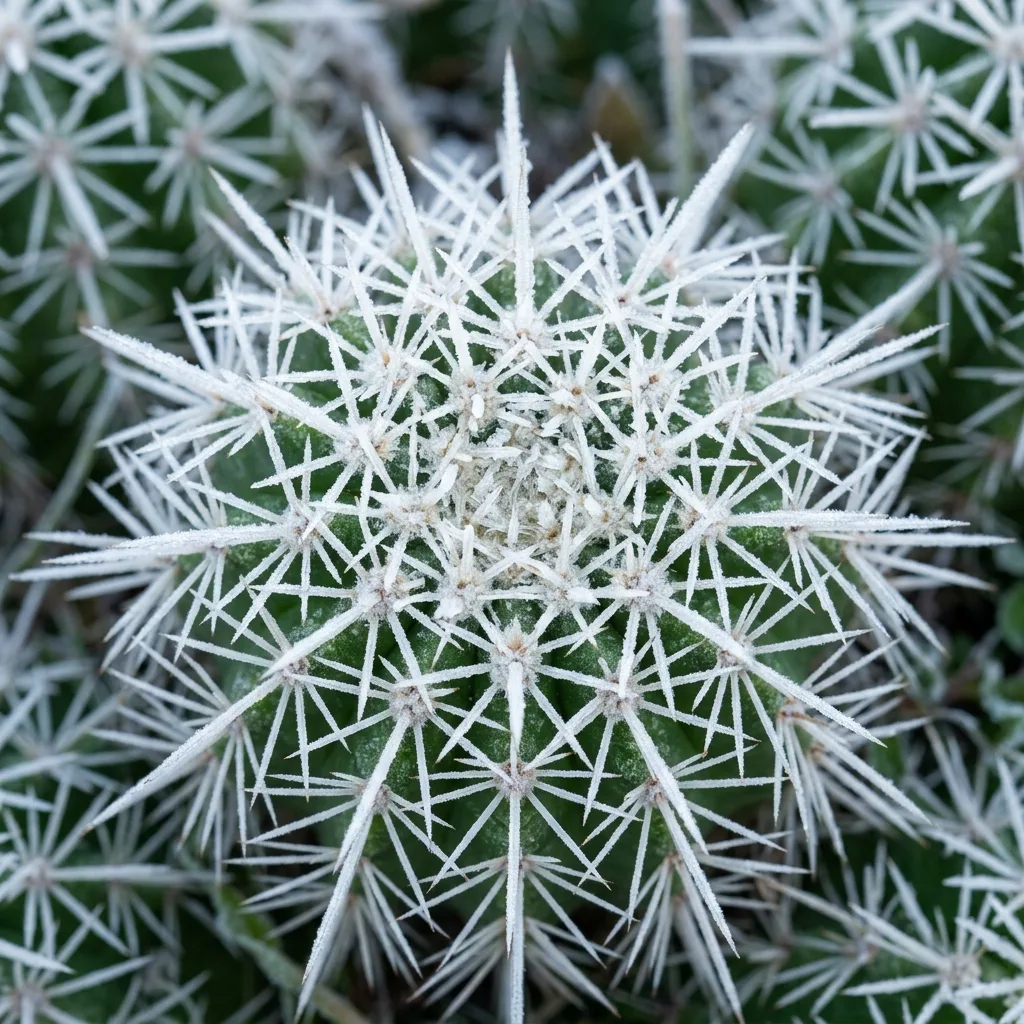
Cold-hardy cacti possess evolutionary morphological adaptations engineered specifically to endure biting polar winds and heavy snow loads. The areoles (the specialized bud-like cushions unique to the family Cactaceae) of these rugged taxa are frequently cushioned with dense woolly trichomes and heavily shielded by interlocking radial spines. This formidable spine matrix does far more than deter browsing herbivores; it traps a stagnant boundary layer of air against the epidermis, creating a microclimatic insulating pocket between frozen snow crystals and the living cuticle that prevents direct cellular frostbite.
Biologically, the secret to winter hardiness lies in regulated intracellular dehydration and a concentrated increase of cytoplasmic soluble sugars and cryoprotective proteins. As photoperiod shrinks and ambient temperatures dip in autumn, these cacti voluntarily discharge unbound water from their cells into intercellular gaps, transforming their inner cytoplasm into a viscous gel. This dynamic mechanism prevents internal ice crystallization from rupturing cell membranes. While this dehydration causes the plant to appear alarmingly wrinkled, deflated, and limp, it is by no means dying—it is merely entering an exquisite state of dormant cryo-protection.
The most proven, time-tested cold-hardy genera and species capable of braving sub-zero outdoor conditions include:
- Opuntia fragilis (Brittle Prickly Pear): A true cold-climate legend capable of withstanding temperatures down to -35°C (-31°F), its small segmented pads overwinter flawlessly beneath thick snow cover.
- Opuntia humifusa (Eastern Prickly Pear): Hardy between -25°C and -30°C (-13°F to -22°F); it visibly shrivels and flattens against the ground in winter, reawakening in late spring with brilliant, satiny yellow blossoms.
- Echinocereus triglochidiatus (Claret Cup Cactus): A heavily clustering, dark green cylindrical species that retains remarkable structural integrity even under harsh freezes down to -20°C (-4°F) and lower.
- Echinocereus viridiflorus (Nylon Hedgehog Cactus): A charming miniature barrel cactus enduring -20°C with ease, celebrated for its unique citrus-scented, greenish-yellow flowers.
- Escobaria vivipara (Beehive Cactus / Pincushion): A compact alpine wonder that withstands temperatures down to -25°C, enveloped in dense white spines and crowned with vibrant magenta flowers in spring.
- Cylindropuntia imbricata (Tree Cholla): A tree-like branching cactus surviving down to -20°C, lending an architectural, sculptural silhouette to cold-hardy landscape plantings.
2. Light Intensity, Solar Radiation, and Air Circulation Standards
The outdoor winter survival of cold-hardy cacti depends intimately on solar quality and atmospheric air movement. These plants must never be treated like delicate indoor houseplants; they require a minimum of 6 to 8 hours of direct, unfiltered sunlight every day of the year. Intense sun exposure triggers the synthesis of protective pigments and thickens the waxy cuticular layer, effectively weatherproofing the epidermis against physical freeze-thaw cycles.
Ventilation and air circulation represent the second pillar of winter survival. Stagnant, humid, enclosed winter microclimates create a breeding ground for opportunistic fungal pathogens, notably Botrytis and Fusarium. Never plant hardy cacti in sunken landscape depressions, poorly drained swales, or stagnant pockets where cold air and water settle. Instead, situate them on raised rock beds, berms, or south/southwest-facing gravel slopes where prevailing winds can pass unimpeded. Constant airflow ensures that when snow melts under sunny spells, moisture evaporates swiftly from the ribs and stems, preventing lethal crown rot.
3. Watering Cycles and the Crucial Dormancy Protocol
What kills cold-climate cacti is almost never cold air alone; it is the lethal combination of **cold combined with prolonged root moisture** (wet freezes). The single physiological mechanism that prevents a cactus's cell walls from bursting at freezing temperatures is the complete reduction of internal free water before the first hard freeze occurs.
Implementing an uncompromising seasonal watering schedule is paramount:
- Spring (April – May): As the soil warms and pads or stems begin to plump up, deliver the first thorough, deep irrigation of the year.
- Summer (June – August): The active growth phase. Irrigate deeply whenever the substrate dries out completely, preferably in the evening coolness to minimize thermal shock.
- Autumn (September – October): The critical turning point. Taper off watering significantly by mid-September. By early October, stop watering entirely. You must allow the plant to experience natural water stress, prompting it to purge cell fluids and shrink into winter dormancy.
- Winter (November – March): Absolute zero watering. If planted outdoors, shield them from cold autumn rains using a transparent overhead canopy or glass pane, leaving the sides open for airflow. While dry snow cover is naturally insulating, cold, soaking rains on dormant roots are catastrophic.
4. High-Mineral Substrate Formulations and Container Requirements
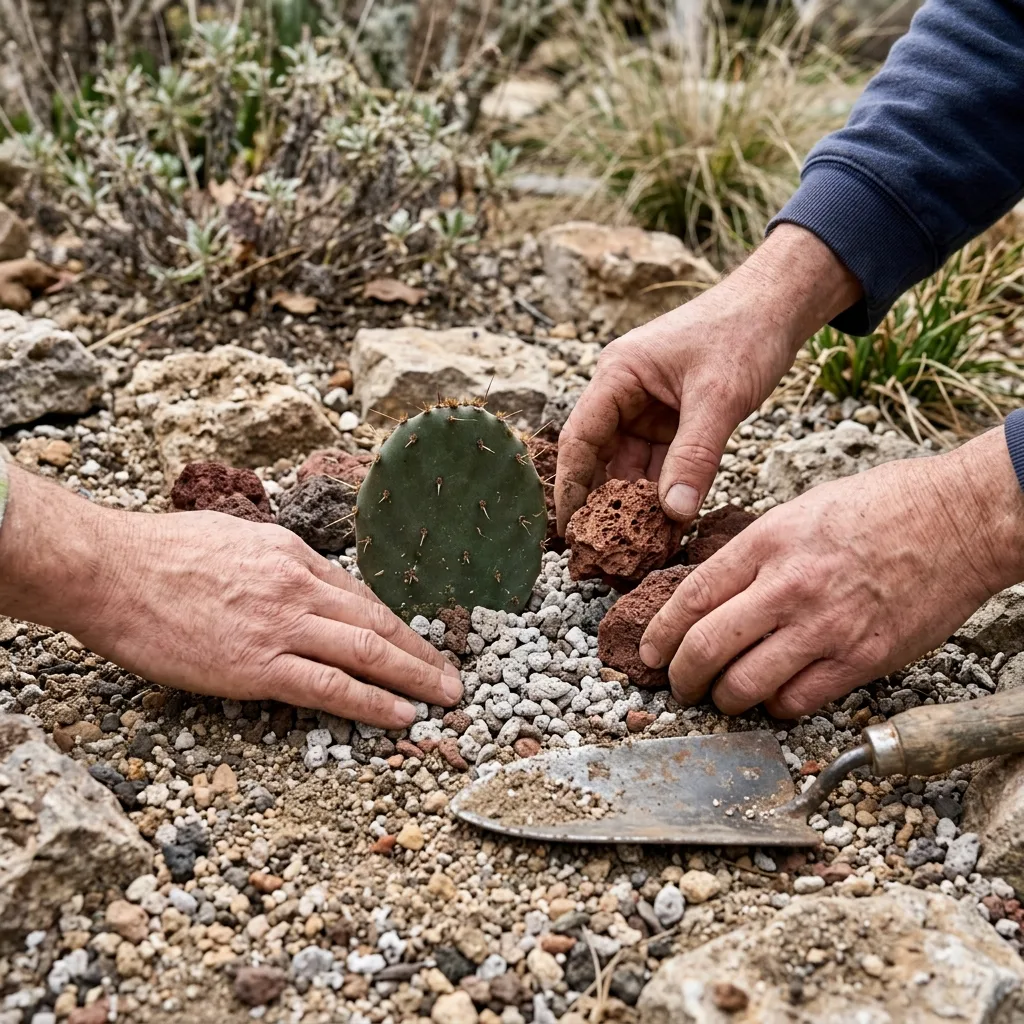
When cultivating cold-hardy cacti outdoors in freeze-prone regions, ordinary peat-based commercial potting soils must be completely discarded. Residual organic moisture lingering in cold soil inevitably invites root and collar freeze-decay. The root zone demands a porous, gritty, and almost entirely inorganic mineral aggregate that sheds gravitational water in seconds.
The table below outlines the optimal substrate composition engineered to ensure outdoor freeze survival:
| Component | Proportion (%) | Agronomic & Botanical Function |
|---|---|---|
| Pumice (3–6 mm) | 40% | Provides macroscopic pores that deliver root oxygenation while shedding perched water tables. |
| Crushed Lava Rock / Zeolite | 30% | Heavy volcanic grit that maximizes structural drainage, stabilizes the roots, and anchors the plant. |
| Coarse River Sand / Quartz Grit | 20% | Coarse, angular grit (2–4 mm) preventing soil compaction and ensuring swift water run-off. |
| Sifted Mature Compost or Coir | 10% | A strictly minimal organic fraction solely to support root anchorage and slight cation-exchange capacity. |
Regarding containers: Avoid thin plastic pots for outdoor overwintering, as plastic offers zero thermal buffering against biting winds and cannot breathe. Choose thick-walled, unglazed terracotta, cast stone, or concrete containers with multiple large drainage holes. If planting directly in the landscape, build a raised rock garden (crevice bed) elevated 20–30 cm above native grade to guarantee immediate, gravity-assisted drainage away from the root system.
5. Inducing Abundant Blooms and Nutritional Strategies
Paradoxically, cold-hardy cacti depend directly on sub-zero winter temperatures to flower successfully. In botanical terms, this requirement is known as vernalization. Overwintering in dormant temperatures between 0°C and -10°C triggers the biochemical synthesis and expression of floral primordia genes. Cold-hardy cacti brought into warm, climate-controlled living rooms over winter may survive, but they will reliably fail to produce a single flower bud come spring.
Once the soil warms in late spring (around late April), initiate feeding with a specialized low-nitrogen, high-phosphorus, and high-potassium cactus fertilizer (such as an NPK ratio of 5-10-15 or 4-8-16). Keeping nitrogen strictly minimal is essential; excessive nitrogen forces fast, tender vegetative growth with thin cell walls that will fail to harden off and will succumb instantly to the following winter's first frost.
6. Propagation, Stem Cuttings, and Grafting Considerations
Propagating cold-hardy cacti is straightforward, highly rewarding, and exceptionally reliable. The most effective method is vegetative stem propagation via pad or offset separation:
- Optimal Timing: The best window for taking cuttings is late spring to early summer (May to June). This allows the newly rooted plant to establish a deep, fibrous root system long before cold weather returns.
- Severing Segments: Using a sterile, surgical-grade knife, sever a mature pad (cladode) or lateral offset at its natural joint from the mother plant.
- Callus Formation: Never insert freshly cut succulent tissue into moist substrate! Lay the cutting in a dry, shaded, well-ventilated area for 7 to 14 days until a hard, pale, corky callus completely seals the wound.
- Rooting: Insert the callused cutting upright into an entirely dry pumice-sand blend. Withhold water for roughly two to three weeks until primary roots emerge, providing only subtle bottom moisture thereafter.
A vital note regarding grafting: If you graft a cold-hardy scion onto a cold-sensitive tropical rootstock (such as Hylocereus), the rootstock will collapse at the first frost, killing the entire composite plant. If grafting is required, select cold-tolerant, localized rootstocks such as Opuntia humifusa or vigorous clones of Opuntia fragilis.
7. Defending Against Winter Rot and Fungal Pathogens
The primary enemy of cold-climate cactus culture is not the cold itself, but rather latent fungal pathogens energized by winter dampness. Because the plant's immune response is largely dormant during winter, protective preventative measures must be established during early autumn.
Applying a light dusting of micronized elemental sulfur or a copper-based preventive spray over the stem and collar in early October prevents fungal spores from penetrating cuticular micro-abrasions. If, upon late-winter inspection, you discover a softened pad, dark localized lesions, or necrotic spots:
- Immediately excise the rotting tissue using a sterile scalpel, cutting roughly 1 cm into clear, firm, healthy green flesh.
- Dust the exposed wound liberally with sulfur powder or ground cinnamon to desiccate and seal the cut surface.
- Move the specimen out of any precipitation, maintain pristine dryness, and enhance ambient airflow.
When you respect these natural seasonal cycles, the sight of your cacti rising proudly from melting snowbanks—followed by a spectacular explosion of silken spring blooms—will stand as the ultimate reward for your thoughtful horticultural stewardship.


Reader Reviews & Comments 3 Reviews
Clara Hensley
Julian Vance
Marcus Sterling
Leave a Review & Rating
Share your plant care tips, experiences, or questions with our succulent community.