






Hailing from the hyper-arid valleys of the Atacama Desert or the sun-bleached limestone escarpments of Mexico, cacti are magnificent feats of hydraulic engineering fine-tuned to capture and store every stray molecule of moisture. Yet in our living rooms, the most pervasive mistake is condemning them to an unyielding swamp—the photographic negative of the desert conditions they conquered over evolutionary epochs. When you inspect your cactus one morning only to discover its base has turned to jelly and its once-regal column is leaning precariously, a frantic question inevitably arises: 'Can an overwatered cactus truly be saved?'
The brief and reassuring answer: Yes, provided your timing is impeccable and your botanical intervention precise! Frequent watering is not an expression of affection; it is an accidental asphyxiation of the root system. Deprived of soil oxygen, the rhizosphere collapses into anoxia, allowing opportunistic pathogens to proliferate uncontrollably and invade the plant's internal vascular waterways (xylem). In this masterclass, we will operate like botanical surgeons—triaging tissue damage, performing corrective root excisions, arresting fungal advancement, and restoring your cactus to an aerated mineral regime.
1. Taxonomic Identity, Areole Architecture, and Spine Morphology
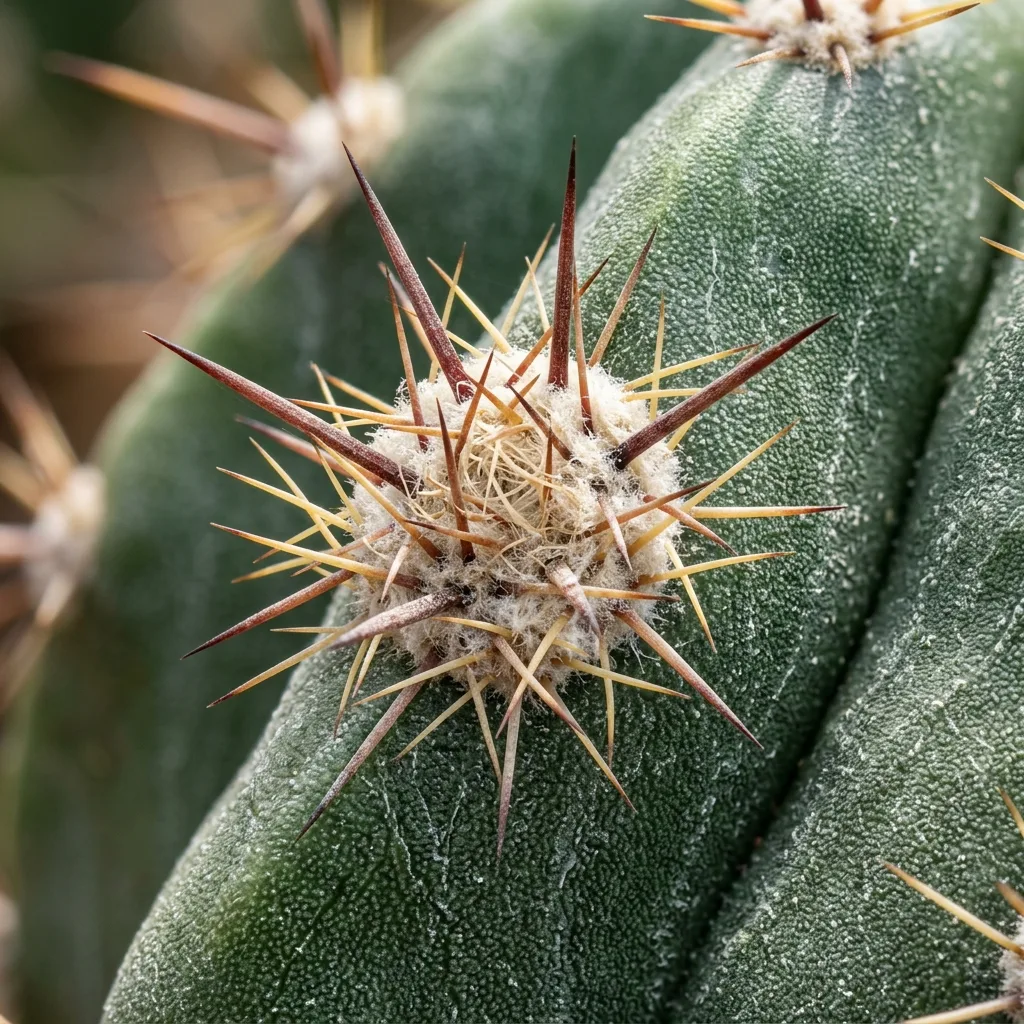
To anticipate how a plant will weather moisture trauma and evaluate its survival prognosis, one must understand the unique morphological blueprints of the family Cactaceae. The definitive anatomical marker setting cacti apart from all other succulent plant groups is the 'areole'—a condensed, highly specialized meristematic tissue node. Areoles serve as the biological control centers of the plant, generating spines, glochids, radial offsets, and glorious reproductive blooms.
Cactus spines are metamorphic leaves, evolutionary marvels modified to reduce transpiration surface area to absolute zero while buffering air currents. The succulent body itself—predominantly composed of expandable cortical parenchyma—stores water bound within viscous mucilage cells. Under severe overwatering, these specialized cells absorb water far beyond their structural limits, ballooning until cellular walls rupture internally. Desert cacti (such as Echinocactus, Mammillaria, or Ferocactus species) rely on extensive, shallow fibrous root systems; while evolved to drink rapid flash rains within hours, they succumb to cellular death via anoxia if their root zone remains saturated for more than 48 hours. Although epiphytic forest cacti (such as Schlumbergera) tolerate higher ambient moisture, fungal vascular rot migrating toward the areole bases proves universally lethal across both lineages.
2. Light Exposure, Solar Irradiance, and Ventilation Dynamics
An overwatered cactus enters metabolic shock. With its primary root system impaired or necrotic, the specimen can no longer transpire or process water internally at normal rates. At this critical juncture, your overarching priority is to stimulate photosynthesis and stomatal respiration safely without causing phototoxic collapse. While desert cacti thrive on 6 to 8 hours of unfiltered sunlight, exposing waterlogged, weakened cellular tissue to scorching midday ultraviolet radiation will trigger irreversible dermal scald, cell collapse, and immediate sun scorch.
A recovering cactus should reside in bright, indirect, filtered natural light. Equally decisive is constant ambient ventilation. Stagnant, humid microclimates act as natural incubators for airborne fungal spores looking to capitalize on compromised plant tissue. Situating your plant in an airy space with consistent air turnover—such as near an open window shielded from chilly drafts—accelerates surface evaporation and re-establishes internal osmotic equilibrium.
3. Irrigation Dynamics and the Critical Winter Dormancy Period
Cacti function via Crassulacean Acid Metabolism (CAM); they keep their stomata tightly closed throughout blistering daylight hours to curb vapor loss, opening them exclusively under cover of night to absorb carbon dioxide. The vast majority of fatal overwatering incidents occur when growers disrupt this delicate physiological rhythm by disregarding seasonal dormancy. During spring and summer, cacti appreciate deep drenches followed by complete substrate desiccation; from late autumn onward, however, they must enter an obligatory metabolic rest.
Between November and March, as ambient temperatures settle around 8–12°C (46–54°F), the metabolic water demand of a desert cactus plummets to near zero. It is precisely during this window that lethal errors strike: watering a cold, resting cactus saturates the soil with freezing mud, drowning the root tips and converting them into black necrotic mush in days. In any overwatering emergency, cease watering instantly. The plant must not receive a solitary drop of moisture until fully remediated and biologically active.
4. High-Mineral Cactus Substrates and Container Physics
Standard peat-based potting soils or heavy garden clays are death traps for cacti. Peat acts as a moisture-retaining sponge that suffocates subterranean tissue and subsequently turns hydrophobic, baking into an impenetrable brick that strangles the roots. When salvaging an overwatered cactus, your priority is liberating the root core from this damp mire and transitioning it into a highly porous, predominantly inorganic mineral substrate.
| Substrate Component | Ratio (%) | Botanical Function and Drainage Benefit |
|---|---|---|
| Horticultural Pumice (3–5 mm) | 40% | Guarantees maximum aeration and ensures continuous oxygen supply to root zones. |
| Crushed Lava Rock / Zeolite | 25% | Porous volcanic granules absorb excess moisture surges, bind toxins, and promote root anchorage. |
| Coarse Quartz River Grit | 15% | Facilitates instantaneous downward water transit and prevents structural compaction. |
| Screened Coir Peat (Coco Peat) | 20% | Offers a minimal, lightweight, and pathogen-free organic buffer for gentle root development. |
Container physics matter just as critically as substrate formulation. Unglazed, porous terracotta pots permit excess soil water to evaporate outward through their clay walls, drastically buffering against inadvertent overwatering. Ensure bottom drainage apertures remain completely unobstructed, and never allow residual drainage runoff to linger inside decorative saucers.
5. Post-Trauma Flowering Strategies and Nutritional Restraint
The ultimate confirmation that an overwatered cactus has fully recovered is the emergence of energetic floral buds during its subsequent growth cycle. However, offering chemical fertilizer to a plant that has just barely survived a near-fatal physiological trauma is akin to serving a heavy feast to a convalescing patient—the concentrated mineral salts will chemically burn the fragile, recovering root tips and kill the specimen.
Withhold all botanical fertilizers for at least two to three months following root intervention. Only after the cactus has anchored itself with fresh root growth and demonstrated visible apical expansion should you consider feeding. At that stage, introduce a low-nitrogen, high-phosphorus, high-potassium cactus formula (such as NPK 5-10-10) diluted to one-quarter strength. With balanced winter dormancy and clean mineral nutrition, your cactus will channel its past stress into vibrant floral displays bursting from its areoles.
6. Propagation, Beheading, and Rescue Grafting Protocols
If the lower portion of the stem has liquefied into a hollow column and the root collar has blackened, traditional root-saving methods are no longer viable. However, all is not lost! As long as the upper portion of the column remains firm, vibrant green, and uninfected, you can propagate the apex to generate an entirely new, self-rooted specimen.
Using a razor or scalpel sterilized with isopropyl alcohol, make a clean horizontal incision at least 1 to 2 cm above the highest visible trace of rot. Examine the circular vascular ring exposed on the cut surface; it must be completely clear of any brown, orange, or discolored spots. Dust the clean incision with sulfur powder or ground cinnamon to seal against secondary fungal colonization. Do not pot this cutting immediately. Place it in a warm, dry, shaded spot with ample air circulation for 7 to 14 days until a hard, woody callus develops over the entire wound. Once callused, rest the cutting upright atop bone-dry mineral grit; within a few weeks, fresh pink adventitious roots will emerge. For exceptionally rare or slow-growing taxa, this salvaged apex can alternatively be grafted directly onto a vigorous rootstock such as Hylocereus.
7. Combating Anaerobic Fungal Pathogens and Root Rot
Excessive moisture alone does not directly kill a cactus; rather, persistent moisture acts as an environmental catalyst for opportunistic anaerobic oomycetes and fungi (most notably Fusarium, Phytophthora, and Pythium). These virulent pathogens colonize and occlude the plant's internal water-conducting vascular bundles, triggering collapse from the inside out.
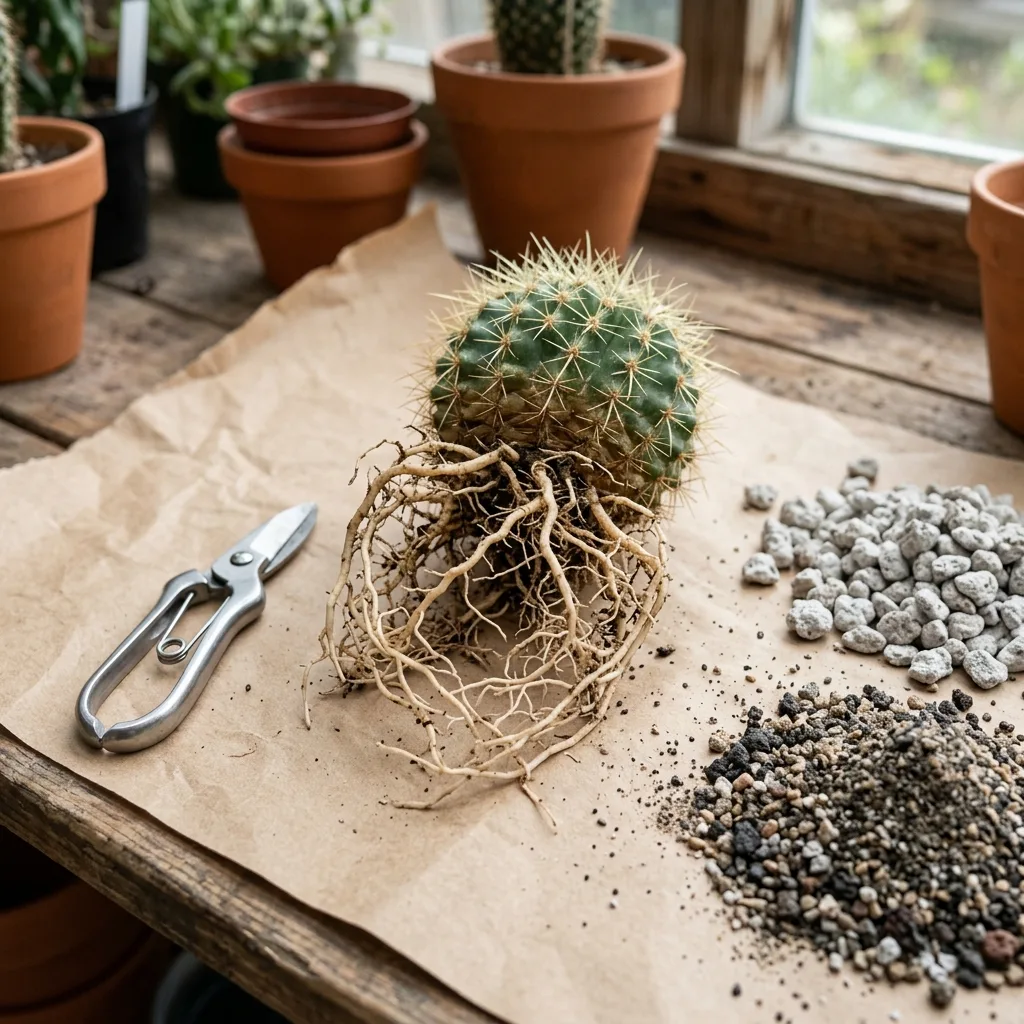
After unpotting the afflicted plant, gently wash away all residual soil from the root network under lukewarm running water. With flame-sterilized scissors, prune back every hollow, discolored, or decomposed root fiber until only healthy, pale, firm root tissue remains. Submerge these surviving roots in a 10-minute restorative bath of diluted hydrogen peroxide (3% H2O2 diluted 1:4 with water) or a broad-spectrum systemic copper/propiconazole fungicide. Afterward, lay the bare-root cactus onto clean paper towels in an airy, shaded spot for 3 to 4 days until the roots are completely dry to the touch. Replant into completely dry mineral mix, and enforce a strict 10-day dry period before introducing the first drop of water.


Reader Reviews & Comments 4 Reviews
Julian Sterling
Marcus Vance
Eleanor Higgins
Claire Montgomery
Leave a Review & Rating
Share your plant care tips, experiences, or questions with our succulent community.