






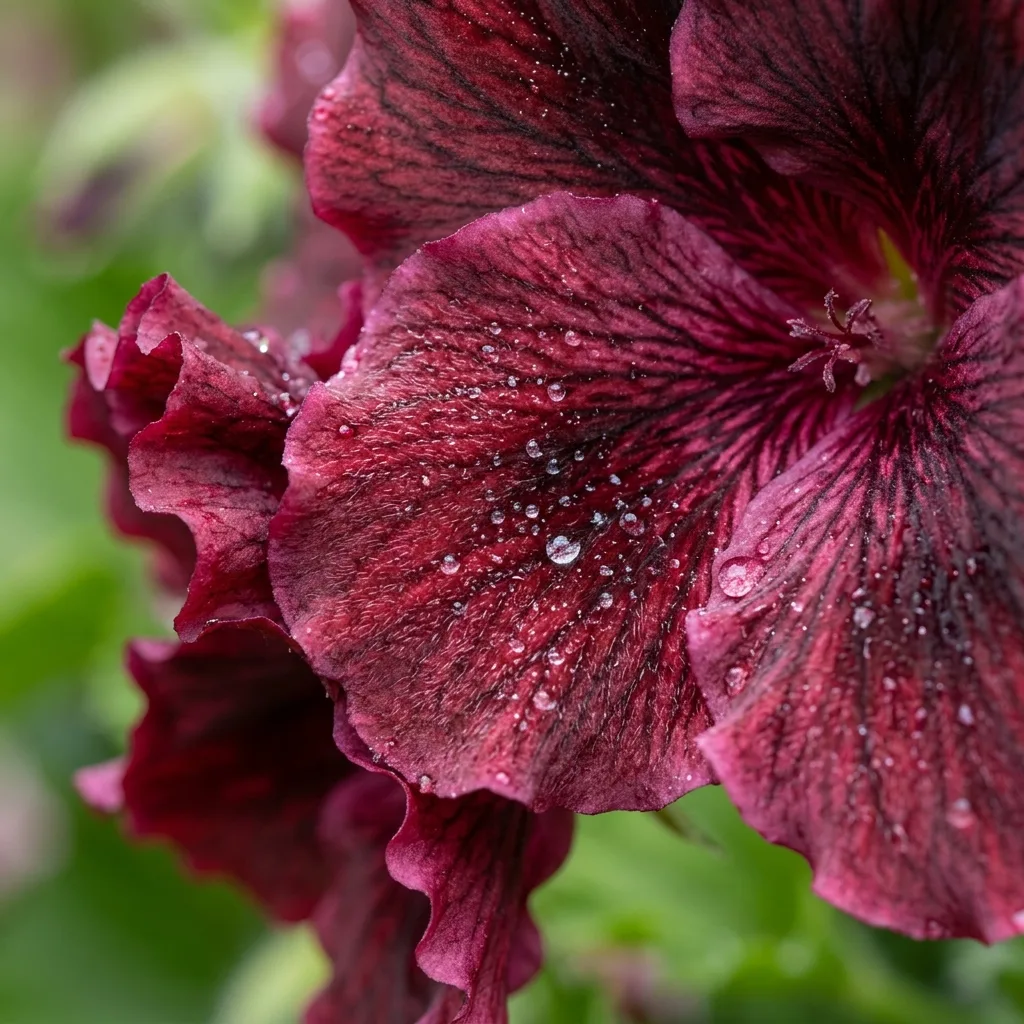
Classified in the botanical world as Pelargonium domesticum, the Martha Washington geranium (also known as the Regal pelargonium) fundamentally differs from standard zonal geraniums through its velvety, orchid-like petals and distinct cool-climate physiology. A historic darling of aristocratic Victorian parlors, this hybrid is far more than a typical windowsill planter subject; given the right light intensity, gas exchange rate, and moisture equilibrium, it becomes the undisputed focal point of contemporary interior botanical compositions. However, sustaining it within a living open-air display requires a disciplined approach to drainage and microclimates that goes well beyond traditional potted plant routines.
Embracing an open-glass design philosophy is essential to understanding the unique biology of this species. Because of their semi-succulent stem tissues and specialized stomatal gas exchange mechanisms, Martha Washington geraniums cannot tolerate stagnant, high relative humidity. Closed terrarium environments trap humid air, precipitating the closure of guard cells, collapsing the transpiration cycle, and enabling fungal pathogens such as Botrytis cinerea to invade the root collar in a matter of hours. Therefore, the cardinal rule of styling this plant is to always use wide-mouthed, open glass vessels that encourage continuous vertical air currents alongside impeccably engineered drainage strata.
1. Engineering the Drainage Stratification
When working with undrilled glass vessels where drainage holes are absent, shielding the delicate root system from fatal decay relies entirely on the mechanical and biochemical efficiency of your substrate layers. The roots of Martha Washington geraniums require loose, highly oxygenated media. Water pooling around the root crown causes rapid cellular lysis of the protective root epidermis, inviting pathogenic invasion.
An engineered base design must integrate inorganic coarse aggregates that rapidly pull excess gravitational water downward, combined with horticultural-grade activated charcoal to biochemically buffer against organic root rot and odors. A physical fibrous separation layer must act as a hydraulic barrier, ensuring that the planting medium never slumps into the water reservoir below.
2. Compatible Companion Species and Pairing Rules
When the Martha Washington geranium is positioned as the primary specimen plant, any surrounding companion flora must exhibit identical light, humidity, and moisture demands. This cultivar requires cool nocturnal temperatures (10–15°C / 50–59°F), brilliant ambient light, and distinctly measured watering regimes. Consequently, any plant sharing the same root basin must demonstrate comparable drought tolerance.
Miniature succulents that utilize Crassulacean Acid Metabolism (CAM) photosynthesis and boast protective epicuticular farina wax on their leaf surfaces serve as ideal counterparts. Species such as Echeveria lilacina, Haworthiopsis fasciata, or mat-forming Sedum makinoi adapt seamlessly to the hydration rhythms of the geranium's root zone. Conversely, moisture-loving tropical plants such as delicate ferns, club mosses, or Fittonia must be strictly excluded from this arrangement.
3. Layer Thicknesses and Substrate Matrix
The following table outlines the layer depths, material specifications, and technical functions required when establishing a Martha Washington geranium inside an open glass bowl or geometric prism measuring 25–30 cm in height:
| Stratum | Material Type | Thickness | Biological & Physical Function |
|---|---|---|---|
| Base Reservoir | Pumice / Horticultural Lava Rock (8–12 mm) | 3.5 – 4.5 cm | Traps gravitational runoff safely away from root zones. |
| Filter & Purifier | Horticultural Activated Charcoal Granules | 1.0 – 1.5 cm | Inhibits volatile odor buildup and microbial colonisation. |
| Physical Barrier | Long-Fiber Sphagnum / Permeable Geotextile | 0.5 cm | Prevents fine planting soil from shifting into drainage voids. |
| Root Medium | Pumice + Perlite + Coir/Peat Grit (60% inorganic) | 6.0 – 8.0 cm | Provides macro-porosity, high air capacity, and swift runoff. |
| Top Dressing Mulch | Washed River Pebbles / Crushed Slate Chips | 1.0 cm | Regulates evaporation and keeps the stem base dry. |
4. Step-by-Step Assembly and Planting Protocol
Precision and botanical hygiene are the cornerstones of an enduring glass arrangement. Begin by thoroughly cleaning the interior surfaces of the glass vessel using isopropyl alcohol, allowing it to evaporate completely before assembly.
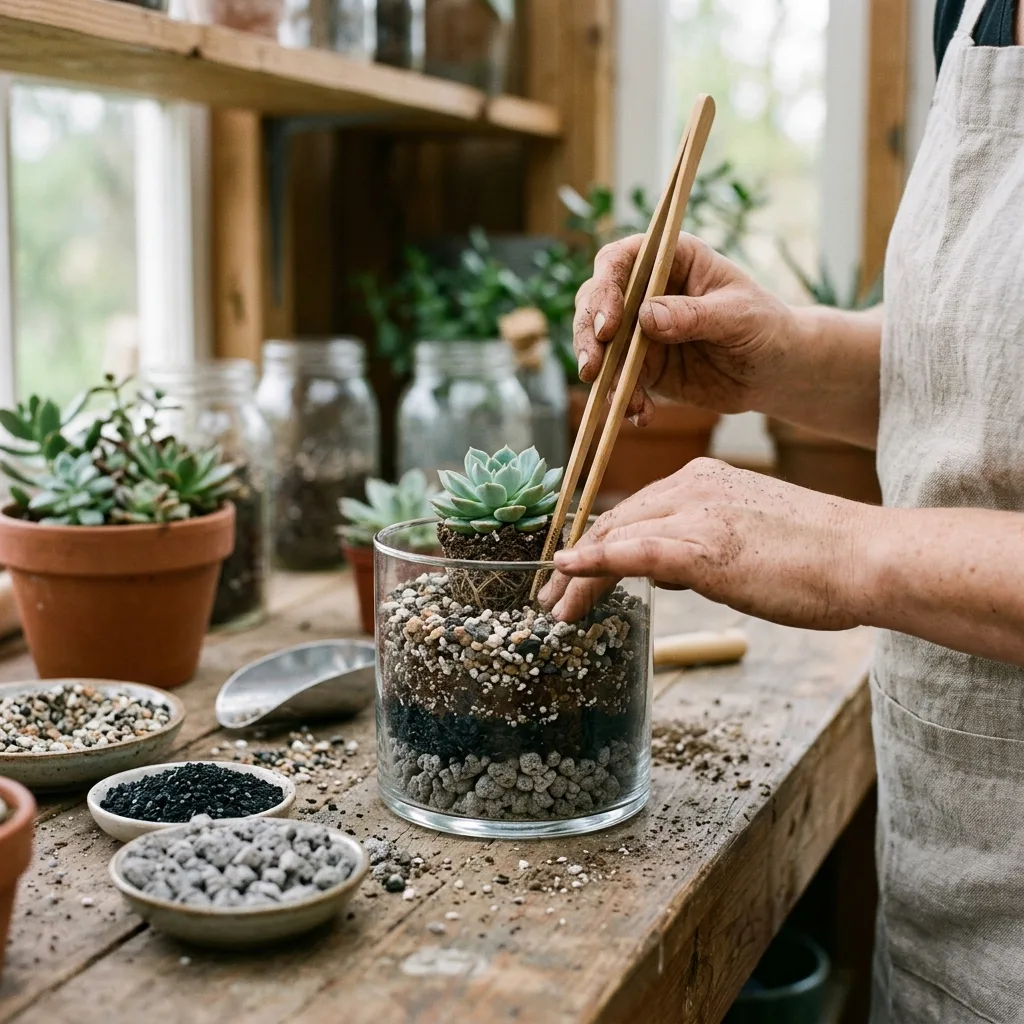
Evenly distribute the coarse pumice across the bottom, followed by an unbroken layer of granulated activated charcoal. Moisten a thin sheet of long-fiber sphagnum moss and lay it flat over the charcoal to form a physical separator. Pour in your custom potting mix—formulated with 60% inorganic aggregates—and sculpt a gentle depression in the center.
Gently tease the root ball of your Martha Washington geranium free from its dense commercial nursery soil, pruning away any bruised or desiccated roots with sterilized shears. Seat the geranium upright or at a dynamic slight tilt, anchoring shallow-rooted companion succulents around its periphery using precision planting tweezers. Ensure the final crown level sits at least 4 cm below the rim of the glass container to safeguard adequate air exchange across the foliage.
5. Natural Decorative Accents: Stone, Wood, and Coarse Sands
To cultivate a sophisticated, biophilic aesthetic, choose inert hardscape materials that do not leach minerals into the substrate. Chemically non-reactive granite, volcanic basalt stones, or weathered, aged driftwood elements provide an earthy architectural contrast to the flamboyant, ruffly blooms of the Martha Washington.
Arranging smooth river stones immediately beneath the basal crown prevents water splashes from excavating the soil during irrigation and keeps vulnerable stem tissue elevated away from damp substrates, significantly minimizing fungal stem rot. Strictly avoid calcareous or limestone-based rocks, as they progressively raise media pH, locking out essential micronutrients like bioavailable iron.
6. Precision Hydration and Illumination Strategies
Because open glass vessels lack drainage holes, irrigation must be carried out with surgical precision. A reliable baseline formula is to apply water equivalent to roughly 1/8 of the total soil volume per hydration event. Water should always be applied using a narrow-spout squeeze bottle or large syringe, directing the stream precisely around the root zone while keeping the leaves, stems, and flower petals completely dry.
In terms of photoperiod and intensity, Martha Washington geraniums are distinctly photophilic. They require a minimum of 5 to 6 hours of bright, filtered natural sunlight daily. However, direct, intense summer sun can produce a glass greenhouse magnification effect that scorches the foliage. Gentle sheer curtains or full-spectrum 6500K LED grow lights maintained for 12 hours a day will supply optimum photon flux density for robust, compact growth.


Reader Reviews & Comments 3 Reviews
Eleanor Vance
Julian Thorne
Clara Higgins
Leave a Review & Rating
Share your plant care tips, experiences, or questions with our succulent community.