






Awakening to the drenching winter rains and retreating subterranean during scorching, arid summers, the flora of South Africa’s Namaqualand and Western Cape harbors some of the most extraordinary botanical architecture in the succulent kingdom. Among the region's most captivating geophytes is Albuca spiralis—colloquially known as the 'Frizzle Sizzle' or 'Corkscrew Albuca'—whose tightly coiled, spring-like foliage resembles a kinetic work of art. Yet, these sculptural spirals are far more than ornamental eccentricity; they represent a cellular triumph of evolutionary engineering perfected over millennia to scatter fierce desert solar radiation, disrupt boundary-layer thermal stress, and drastically mitigate transpirational water loss.
Welcoming a Corkscrew Albuca into your home collection is an exhilarating journey for any serious indoor grower, primarily because it defies traditional succulent norms: it is a master of winter growth that reverses the typical spring-to-autumn activity cycle. When its distinct foliage yellows, crisps, and dies back in late spring, novices frequently panic, erroneously concluding the plant has perished. In reality, understanding its Mediterranean-type geophytic rhythm is key. By balancing the vital reserves stored within its swollen bulb tunic with strategic photon exposure and a rigorous watering regime, you will not only achieve immaculate, tightly coiled foliage but also enjoy a celestial springtime display of creamy, butter-and-vanilla-scented nodding blossoms.
1. Botanical Profile and Morphological Characteristics
Taxonomically assigned to the family Asparagaceae (subfamily Scilloideae), Albuca spiralis is categorized not merely as a typical desert succulent, but as a perennial geophyte with fleshy foliage and an underground storage organ. Its flattened globose subterranean bulb reaches approximately 2 to 4 cm in diameter, formed from layered, greenish-white tunic scales. Its fibrous root architecture emanates rapidly from the basal plate, adapted specifically to anchor within hyper-draining, coarse, mineral-heavy sands.
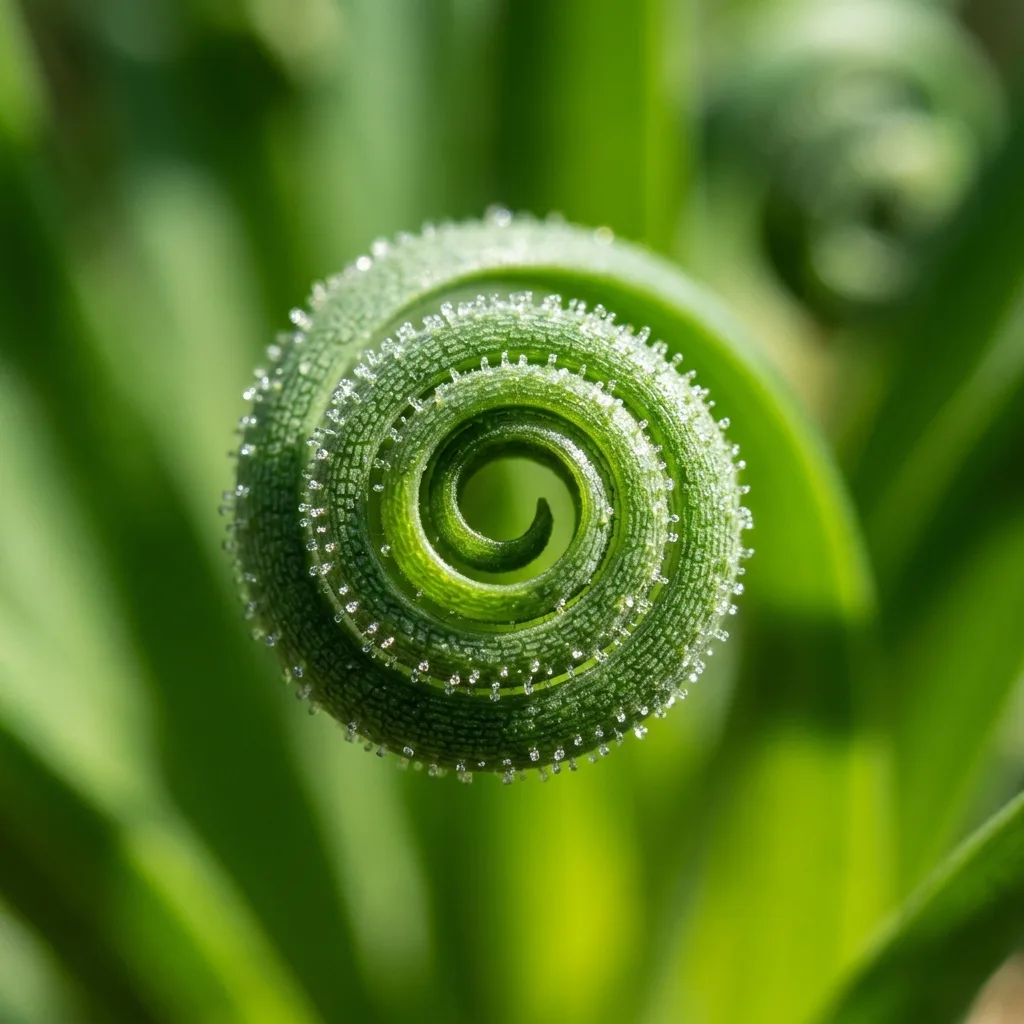
The plant's most striking morphological adaptation is undoubtedly its leaves. Slender, cylindrical, and generously cloaked in glandular trichomes, these leaves twist clockwise or counterclockwise into tight corkscrews under intense sunlight. These specialized trichomes exude a subtly viscid, sticky glandular secretion designed to harvest microscopic morning dew droplets in arid microclimates while discouraging small phytophagous insects from grazing. In mid-spring, an erect scape (flower stalk) emerges from the center of the bulb, elevating 20 to 30 cm into the air. This inflorescence carries between 10 to 20 pendent, bell-shaped flowers characterized by pale yellow outer petal margins and deep green central stripes. The blooms emit a rich, confectionary fragrance reminiscent of warm vanilla and clarified butter, luring native bee pollinators across their natural scrublands.
2. Light Requirements and Indoor Photonic Positioning
Domestic success with the Frizzle Sizzle hinges almost entirely on photon density and light quality. In its native South African scrub, this species flourishes fully exposed under unrelenting, unshaded skies. Indoors, the optimal micro-location for Albuca spiralis is directly behind an unobstructed south- or west-facing window where it can bathe in a minimum of 5 to 6 hours of raw, unfiltered sunlight daily.
Placing this species within a dim room, an indirect north-facing alcove, or behind dense sheer drapes inevitably induces etiolation. Deprived of adequate light, the cellular structure relaxes, resulting in limp, elongated, flattened blades devoid of curls. In northern latitudes or during protracted overcast winter periods, supplementing natural illumination with a high-efficiency full-spectrum LED horticultural grow light delivering a minimum PPFD of 250 to 300 µmol/m²/s ensures the leaves retain their tight, decorative coils throughout the vegetative period.
3. Hydration Dynamics: The 'Soak and Dry' Protocol
Because Albuca spiralis is a specialized geophyte, it stores substantial reserves of moisture and nutrients not only within its fleshy leaves but primarily within the concentric scales of its bulb tunic. As a consequence, it demonstrates exceptional drought tolerance yet possesses profound vulnerability to lingering, stagnant moisture in the root zone. Watering protocols must be strictly bifurcated according to its natural phenological calendar:
- Active Vegetative Phase (Autumn to Spring): Watering commences in early autumn the moment the bulb pushes fresh emerald sprouts from its apex. Never irrigate unless 80% to 90% of the substrate—or ideally the entire pot—has dried thoroughly. Utilize a thorough 'soak and dry' approach, delivering water evenly until it freely escapes the drainage ports, and scrupulously discard any run-off collected in drip trays within 15 minutes. Depending on your ambient indoor humidity and air movement, this typically translates to an interval of once every 10 to 15 days throughout winter.
- Summer Dormancy Phase (Late Spring to Late Summer): Once the blossoms have faded and the foliage has completely desiccated into papery sheaths, suspend irrigation completely. The bulb enters absolute metabolic dormancy, and root absorption ceases entirely. Introducing moisture to the soil during this high-temperature resting phase invites devastating fungal pathogens such as Fusarium or bacterial soft rot (Pectobacterium/Erwinia), which liquefy the internal bulb scales within days. Store the dry bulb in a sheltered, well-ventilated, shaded environment. It will effortlessly reawaken upon receiving its inaugural autumn irrigation as night temperatures dip near 15°C (59°F).
4. Engineered Substrate Architecture and Pot Selection
The root system of Albuca spiralis rapidly deteriorates when suffocated in compact, oxygen-deprived peat moss. Replicating the decomposed granite, silica grit, and mineral scree of its indigenous habitat is vital. Standard peat-based commercial potting soils retain moisture far too persistently and must never be used unamended. The ultimate potting medium must feature a dominant inorganic mineral fraction with superior granular porosity.
| Substrate Component | Ratio (%) | Botanical Function & Physical Contribution |
|---|---|---|
| Horticultural Pumice (3–5 mm) | 35% | Creates exceptional macropore aeration, drives root oxygenation, and permanently resists compaction. |
| Crushed Lava Rock (Scoria) | 25% | Provides structural weight, trace mineral diversity, and accelerates unimpeded gravitational drainage. |
| Coarse Horticultural Sand / Zeolite | 15% | Disrupts perched water tables and eliminates capillary moisture stagnation in the root zone. |
| Fine Coco Coir | 15% | Supplies a sterile, low-salinity organic matrix for root hair adhesion without hydrophobic crusting. |
| Aged Worm Castings or Micro-Sifted Compost | 10% | Offers mild, slow-release biological nutrients vital for active autumn bulb replenish. |
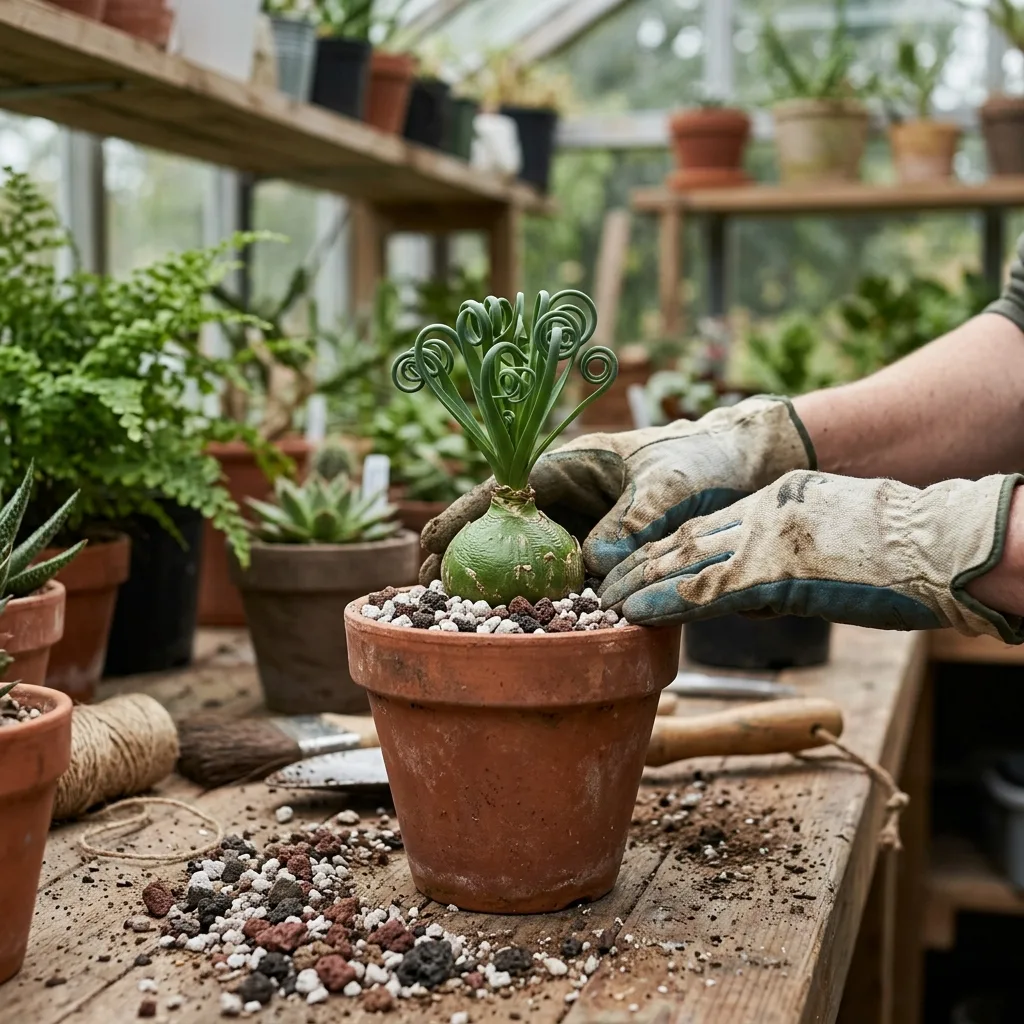
Regarding container selection, unglazed terracotta pots remain unparalleled. The microporous clay walls permit omnidirectional gas exchange and moisture evaporation from the root zone, maintaining a dry, healthy bulb base. Select a container merely 2 to 3 cm wider than the diameter of the bulb; excessively voluminous pots hold surplus water reserves that invite fungal pathogens. Crucially, never bury the bulb entirely. Position the bulb so that the upper third—including the apical neck—sits exposed safely above the soil line.
5. Step-by-Step Propagation Methodologies
Propagating Albuca spiralis is reliably accomplished through two distinct botanical pathways: vegetative division of daughter bulbs (offsets) and sexual propagation via seed. Foliar leaf cuttings are botanically unviable in this geophyte; without meristematic tissue from the basal plate, individual leaves cannot generate roots or regenerate a tunic.
Vegetative Division via Offset Bulblets
- Timing the Procedure: The prime window occurs at the tail end of summer dormancy, precisely in early autumn (September to October), right before vigorous new foliar growth ignites.
- Bulb Unpotting: Gently unpot the specimen, carefully teasing away spent substrate with a soft brush to reveal the basal plate and clonal clusters.
- Separating Offsets: Identify established bulblets along the perimeter of the primary mother bulb that possess their own nascent root systems. Carefully detach them using a sterile scalpel or by applying gentle lateral twisting pressure with your thumbs.
- Callusing and Antiseptic Dusting: Treat separation wounds immediately with powdered sulfur or activated charcoal powder. Allow the divided offsets to cure in a dry, shaded location for 24 to 48 hours to form a protective suberized callus over damaged vascular bundles.
- Potting the Offsets: Plant each bulblet into the granular mineral mix detailed above, ensuring the top third remains exposed. Wait 4 to 5 days before introducing light baseline moisture to encourage exploratory root growth.
Seed Propagation
Albuca blossoms are largely self-incompatible; viable seed production necessitates cross-pollinating distinct clones using a fine sable artist’s brush to transfer pollen between anthers and receptive stigmatic surfaces. Successful fertilization yields distinct three-chambered capsules. Once dried and dehiscent, collect the papery, flattened black seeds. In early autumn, sow them shallowly over a sterile bed of moist pumice and fine sand. Maintain ambient temperatures between 18 and 20°C (64–68°F); germination typically unfolds within 14 to 21 days. Seed-grown geophytes typically require 2 to 3 full annual cycles to reach blooming maturity.
6. Common Pathologies, Pests, and Therapeutic Interventions
While fundamentally hardy under rigorous culture, Frizzle Sizzle specimens exposed to stagnant indoor air and over-hydration are susceptible to physiological and biological decline:
- Unfurling and Loss of Foliar Spirals (Etiolation): This represents a physiological photon-deficiency response rather than an infectious disease. Remedy: Incrementally acclimate the specimen toward an unobstructed south-facing window, or introduce high-CRI horticultural grow lighting.
- Basal Plate Soft Rot and Bulb Liquefaction: Triggered by prolonged substrate saturation fostering Pythium and Fusarium species. Intervention: Unpot the bulb immediately, carve away all darkened, necrotic tissues back to pristine white flesh using a sterile blade, dust with systemic fungicide or sulfur, allow the bulb to dry unpotted for 7 days, and repot in fresh, 100% inorganic medium.
- Mealybugs and Root Mealybugs: These pests conceal themselves deep within the whorls of curled foliage and beneath outer papery bulb tunics, appearing as cottony wax masses. Remedy: Manually extract them using a cotton swab dipped in 70% isopropyl alcohol; severe infestations necessitate applications of cold-pressed neem oil emulsions or systemic imidacloprid during the active vegetative cycle.
- Spider Mites (Tetranychidae): Thriving in dry indoor winter air, these arachnids colonize leaf bases, creating minute chlorotic stippling and fine webbing. Remedy: Elevate localized ventilation, rinse the foliage gently with tepid water sprays, or apply insecticidal soap solutions (potassium salts of fatty acids); deploy dedicated miticides for persistent colonies.
7. Chronological Seasonal Management Calendar
Aligning your cultural practices with the internal biological clock of Albuca spiralis guarantees decades of sculptural health and flowering performance:
- Autumn (September – November) – The Awakening: Emerald sprouts pierce the summit of the exposed bulb. Recommence thorough watering, relocate the specimen into maximum direct sun, and administer a half-strength, low-nitrogen succulent fertilizer once per month.
- Winter (December – February) – Peak Vegetative Spiral: Foliage exhibits its tightest, most dramatic helical corkscrews. Maximize photon exposure and maintain cool ambient conditions (12–18°C / 54–64°F) to heighten curl definition. Protect unconditionally from freezing drafts and keep well clear of convective heat sources like radiators.
- Spring (March – May) – Blossom & Energy Allocation: Scapes elevate, unfolding vanilla-scented blooms. Leaf coils may slightly loosen as cellular energy redirects toward flowering; this is biologically expected. Unless cross-pollinating for seed collection, excise spent flower stalks cleanly at their base to preserve vital bulb biomass.
- Summer (June – August) – Deep Summer Dormancy: Foliage dries to crisp amber husks. Gently strip away dead leaves. Terminate watering entirely. Move the pot into a dry, well-ventilated, shaded environment. Do not fertilize or moisten the substrate until cool autumn cues arrive.


Reader Reviews & Comments 4 Reviews
Julian Thorne
Eleanor Vance
Marcus Sterling
Clara Higgins
Leave a Review & Rating
Share your plant care tips, experiences, or questions with our succulent community.