






When most of us imagine a cactus, our minds conjure the iconic silhouette of a solitary desert sentinel standing defiant beneath a blistering sun against cracked, crimson earth. Yet nature’s resilient structural engineers are not confined strictly to parched lowlands; they have conquered the fog-drenched peaks of the Andes and even anchored themselves along the humid, mossy bark of the Amazonian rainforest. Whenever a discerning plant enthusiast observes a cactus, they are witnessing millions of years of profound geological adaptation and botanical survival mastery.
In their native ecosystems, cacti draw vitality from airborne mineral dust, porous limestone fissures, and heavy nocturnal fog banks. This reveals why answering 'where do cacti grow?' is far more than an exercise in geographical curiosity—it is the master key to decoding their physiological imperatives right on your living room windowsill. Once we understand their 10 fundamental native niches, the underlying causes of domestic root rot and stubborn non-blooming cycles become crystal clear.
1. Taxonomic Identity, Areole Anatomy, and Spine Morphology
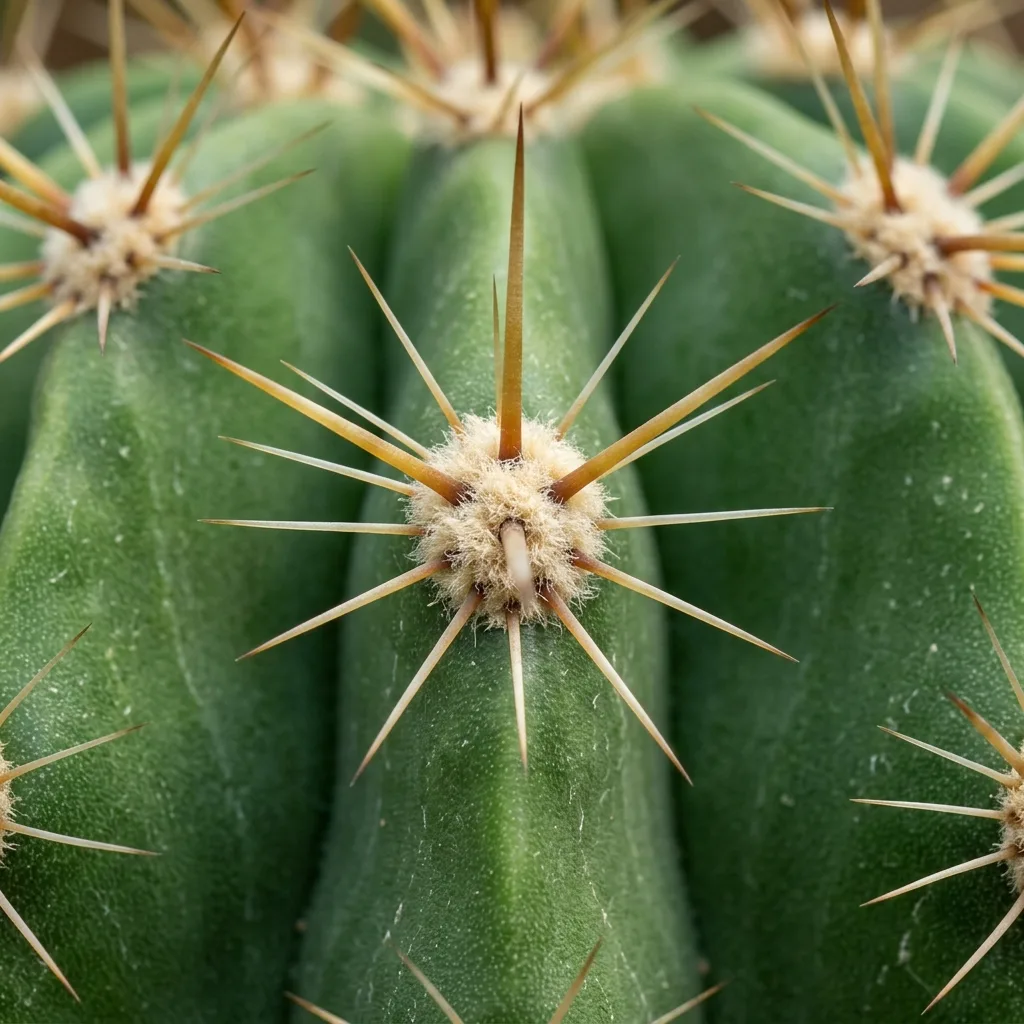
Cacti (family Cactaceae) represent the most specialized lineage within the succulent world; however, not all fleshy-stemmed succulents are cacti. The definitive, non-negotiable botanical marker that separates a true cactus from any other plant is the presence of areoles. Areoles are highly modified, cushion-like nodal buds distributed symmetrically along the stem ribs, serving as the sole physiological origin points from which spines, blossoms, lateral offsets, and—in certain genera—microscopic barbed glochids emerge. If a succulent stem lacks areoles (as seen in spiny euphorbias), it is unequivocally not a true cactus.
Cactus spines are actually morphologically transformed foliage, refined over millennia to eliminate transpirational water loss. Far beyond functioning merely as a deterrent against grazing herbivores, these hardened structures serve as complex microclimatic shields. Spines diffract harsh solar radiation to cast cooling micro-shadows across the epidermis, break laminar wind velocity to diminish evaporative stress, and condense morning coastal mists, channeling nutrient-bearing droplets directly down to shallow feeder roots.
2. Light Dynamics, Atmospheric Airflow, and the 10 Prime Cactus Habitats
In the wild, cacti reign over a remarkable array of terrains. Botanists identify 10 iconic ecosystems that establish the definitive benchmarks for their light, mineral, and air circulation requirements:
- 1. The Sonoran and Mojave Deserts (North America): Expansive gravel plains where towering giants like Carnegiea gigantea (Saguaro) and robust Ferocactus endure full-spectrum, unfiltered solar radiation all day long.
- 2. Oaxaca and the Tehuacán Valley (Mexico): Sheer limestone escarpments and canyon crevices that cradle diminutive, densely spined Mammillaria species.
- 3. The Atacama Desert (Chile): One of the driest frontiers on Earth, where rainfall is virtually nonexistent and native Copiapoa colonies survive exclusively on dense marine fog blankets known as Camanchaca.
- 4. The High Altiplano Plateaus (Bolivia & Argentina): Perched over 3,000 meters above sea level, subjecting highland genera like Lobivia and Rebutia to sub-zero nocturnal freezes paired with extreme daytime ultraviolet irradiance.
- 5. The Brazilian Atlantic Forest (Mata Atlântica): Damp, shaded canopies where epiphytic varieties such as Schlumbergera (Holiday Cactus) and Rhipsalis flourish nestled in organic tree crotches, completely protected from harsh midday sun.
- 6. Caribbean Coastal Bluffs: Exposed maritime terraces where heavily cephalium-crowned Melocactus thrive against relentless saline winds.
- 7. Galapagos Basaltic Lava Fields: Barren volcanic scree where pioneer species such as Brachycereus nesioticus colonize cooled lava fissures.
- 8. Naturalized Mediterranean Escarpments: Sunny rocky coastal slopes across Southern Europe and coastal Anatolia where resilient naturalized cultivars like Opuntia ficus-indica dominate.
- 9. Curated Botanical Conservatories: Carefully engineered glasshouses with active mechanical airflow systems and light-diffusing panels, preserving rare exotics from across the globe.
- 10. Bright Residential Windowsills and Balconies: Well-ventilated indoor living spaces positioned along unobstructed south- or west-facing exposures enjoying natural ambient air movement.
3. Hydration Cycles and the Vital Winter Dormancy Mechanism
Cacti practice CAM (Crassulacean Acid Metabolism) photosynthesis, opening their microscopic stomata strictly under the cover of night to absorb carbon dioxide while atmospheric temperatures are lower. This specialized pathway minimizes transpirational dehydration. When hydrating your specimens, practice the uncompromising 'Soak and Dry' method: irrigate thoroughly until water drains freely from the base, then allow the root zone to dry out completely. Giving small, frequent sips of water is not a sign of care—it is a recipe for anaerobic asphyxiation and basal stem collapse.
The most neglected phase of cactus cultivation is the seasonal Winter Dormancy window. From November through March, the majority of arid desert species must be housed in an unheated, bright space averaging 8–12°C (46–54°F), with moisture restricted entirely (only a conservative splash if cellular shriveling becomes pronounced). Depriving your cactus of this cold, desiccated winter resting phase prevents vernal floral initiation and guarantees your plant will not produce buds come spring.
4. Mineral-Rich Substrate Formulation and Container Porosity
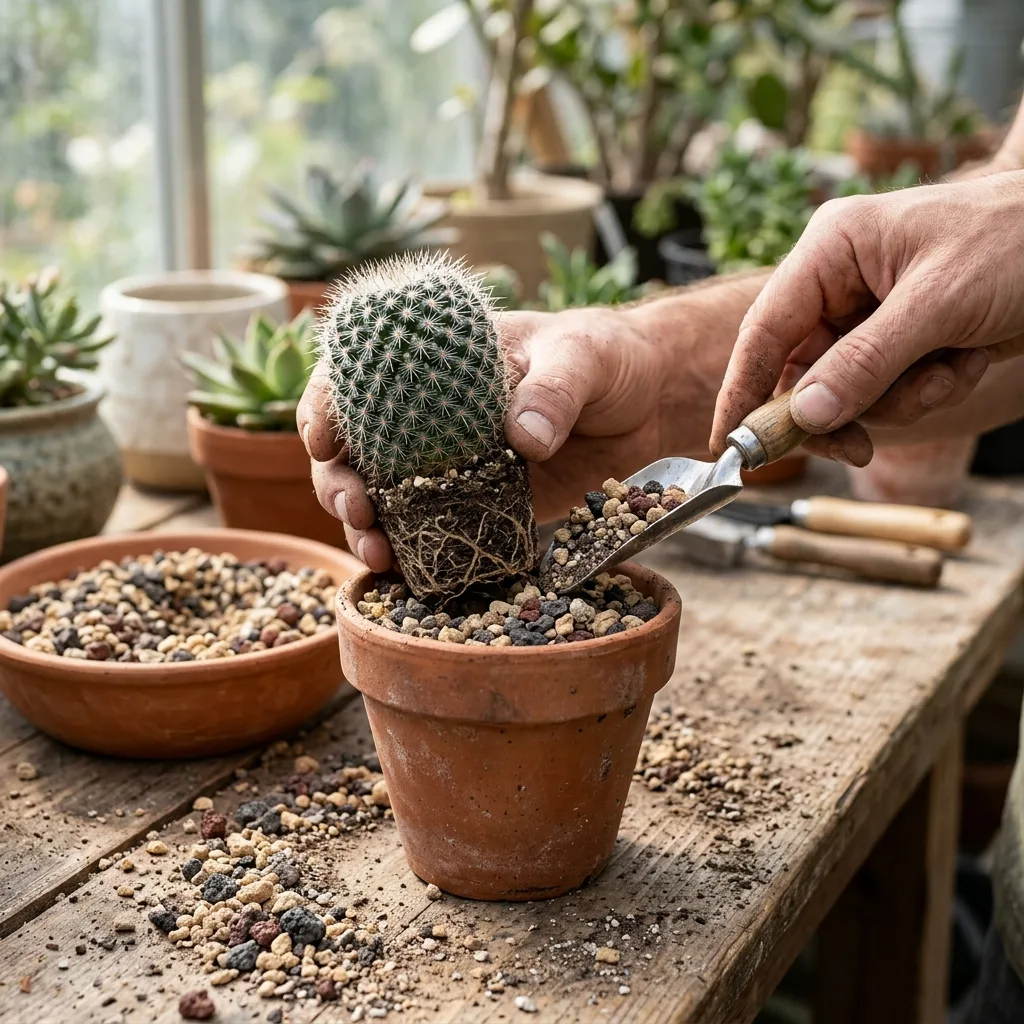
The native root ecosystems of desert cacti are devoid of soggy, rich peat moss. Instead, they thrive within open, porous networks of volcanic scoria, decomposed granite, and gritty scree. Your indoor potting medium must never retain water like a sponge; surplus moisture should flash through the container within seconds. Unfinished terracotta pots are vastly superior to sealed plastic or glazed vessels, as their microporous clay walls allow essential gas exchange across the entire root periphery.
| Substrate Component | Ratio (%) | Botanical Function |
|---|---|---|
| Horticultural Pumice (3–6 mm) | 40% | Forms structural air pockets, optimizing gas exchange around root hairs. |
| Lava Rock & Granular Zeolite | 25% | Delivers heavy structural porosity and inhibits anaerobic microbial proliferation. |
| Coarse Washed Quartz River Sand | 15% | Accelerates internal gravity drainage and keeps substrate channels open. |
| Screened Coir or Organic Peat | 20% | Provides baseline micronutrient reserves and structural purchase for tender root tips. |
5. Flowering Triggers and Targeted Macronutrient Support
A cactus erupting into blossom is the ultimate expression of botanical health and cellular vitality. Inducing heavy floral flushes requires three non-negotiables: uninterrupted cold winter dormancy, an influx of unfiltered spring sunshine, and precise N-P-K mineral nutrition. During the active vegetative months (April through September), feed your cacti monthly with a low-nitrogen, high-phosphorus, and high-potassium soluble fertilizer. Excessive nitrogen forces bloated, brittle cellular expansion, causes deep epidermal splitting, and shuts down bud production entirely.
6. Propagation, Offset Division, and Grafting Techniques
Expanding your cactus collection through propagation is an immensely rewarding horticultural pursuit. You can detach basal offsets using an alcohol-sterilized scalpel or harvest clean stem cuttings during early summer. The golden rule here is ensuring complete callus formation. Never plant a freshly cut piece directly into damp soil. Rest the cutting in a dry, ventilated, and shaded space for 4 to 7 days until the severed vascular tissue dries into a firm, leathery seal. Planting an uncallused cut invites soil-borne moisture to infiltrate raw cells, guaranteeing rapid rot. Furthermore, rare chlorophyll-deficient mutations (such as neon cultivars) can be grafted onto vigorous columnar rootstocks (like Hylocereus) to secure sustained long-term vigor.
7. Combating Fungal Pathogens and Basal Stem Rot
Over 90% of cactus mortalities stem from opportunistic fungal pathogens (notably Phytophthora and Fusarium) spurred on by waterlogged soil and poor air circulation. If the basal core of your plant turns soft, translucent, or takes on a sponge-like consistency, immediate intervention is mandatory. Unpot the specimen without delay and use a sterile razor to slice away all compromised tissue until solely pristine, bright-green pulp remains. Dust the fresh excision thoroughly with horticultural sulfur or ground cinnamon, allow it to dry in an airy room for several days, replant into fresh mineral grit, and hold off on all watering for at least 10 to 14 days.


Reader Reviews & Comments 3 Reviews
Eleanor Vance
Marcus Sterling
Julian Thorne
Leave a Review & Rating
Share your plant care tips, experiences, or questions with our succulent community.