






From the scorched limestone canyons of Mexico to the humid coastal canopies of Brazil, cacti stand as nature's most resilient yet surprisingly ornate blooming sculptures. Most enthusiasts perceive them solely as tough, spiny silhouettes built to defy prolonged drought; yet, upon receiving the precise seasonal cues, they unveil explosions of floral silk and brilliant pigments that rival even the most delicate tropical orchids. Bearing witness to this transformation in your own home feels like capturing the sudden, breathtaking vitality of a desert rainstorm right in your living room.
A cactus never blooms by sheer luck or coincidence; its blossom represents the celebratory milestone of a finely tuned metabolism—one that has stored carbohydrates at a cellular level, endured the necessary low-temperature chill of winter dormancy, and executed its photosynthetic cycle flawlessly. In this comprehensive guide, we examine 13 of the most captivating flowering cactus species for domestic collections, delving into every physiological detail from areole morphology to mineral substrate chemistry with meticulous horticultural rigor.
1. Taxonomic Identity, Areole Architecture, and Spine Morphology
The hallmark anatomical structure distinguishing the family Cactaceae from all other succulent plant lineages is the specialized organ known as the 'areole'. Areoles are condensed, highly modified lateral shoots or brachyblasts from which spines, trichomes, glochids, adventitious roots, and floral buds exclusively emerge. Spines themselves are evolutionary modifications of leaves; by dramatically reducing evaporative surface area, they curtail transpiration while casting microscopic shadows over the epidermis to depress epidermal tissue temperatures by 5 to 10°C.
Below are 13 distinguished species celebrated for their spectacular floral performance indoors, along with their areole-to-flower traits:
- 1. Schlumbergera truncata (Thanksgiving / Holiday Cactus): A rainforest epiphyte featuring stem segments (cladodes) whose terminal areoles yield zygomorphic, lustrous fuchsia, coral, and scarlet tiered blooms.
- 2. Mammillaria zeilmanniana: Possesses areoles nestled upon prominent tubercles, generating a vibrant corona of violet-purple and rose-pink flowers that encircle the apex of the globe.
- 3. Rebutia heliosa: Covered in densely packed, silvery pectinate spines emerging from miniature areoles; produces disproportionately massive, trumpet-shaped blazing orange blooms from its basal areoles.
- 4. Astrophytum asterias (Sand Dollar Cactus): Spineless, punctuated instead by lines of woolly white tufted areoles; yields huge, silky sulfur-yellow flowers with striking crimson-red centers straight from the apical meristem.
- 5. Parodia magnifica: Features a ribbed, glaucous blue-green stem framed by golden bristly spines; crown areoles unleash clusters of glossy, sulfur-yellow blossoms in early summer.
- 6. Gymnocalycium damsii: Shows notched, chinned ribs beneath its areoles; floral buds emerge completely smooth and devoid of hair or bristles (Gymnocalycium translating to 'naked calyx'), unfurling into elegant pale pink-and-white blooms.
- 7. Echinopsis oxygona (Easter Lily Cactus): Produces nocturnal, 20 cm-long trumpet blossoms from lateral rib areoles that fill the room with an intoxicating fragrance and delicate pinkish-white petals.
- 8. Rhipsalidopsis gaertneri (Easter Cactus): An epiphytic forest dweller that produces perfectly actinomorphic, brilliant flame-red starlike blossoms from its flattened terminal segments.
- 9. Lobivia tiegeliana: A compact, spherical solitary stem armed with claw-like spines that reliably unleashes metallic, shimmering purple-violet cup-shaped blossoms.
- 10. Thelocactus bicolor: Noted for vividly banded red, white, and yellow spine arrays; develops enormous, bicolored fuchsia-magenta flowers with radiant red throats that dwarf its main stem.
- 11. Aporocactus flagelliformis (Rat Tail Cactus): Renowned for slender, pendulous stems whose dense areoles erupt into a cascade of vibrant neon-pink tubular flowers.
- 12. Mammillaria bocasana: Concealed behind clouds of soft white downy trichomes and hooked central spines, it produces delicate wreaths of creamy ivory-yellow and pale pink floret crowns.
- 13. Matucana madisoniorum: Displays a globular, sub-naked stem that erupts with dramatic, long-throated zygomorphic vermilion-orange blooms that hover high above the body.
2. Lighting, Irradiance Levels, and Ventilation Protocols
For a cactus to initiate floral primordia, it must accumulate ample cellular carbohydrates through vigorous photosynthesis. Arid desert species (such as Echinopsis, Rebutia, Parodia, and Astrophytum) require a minimum of 5 to 6 hours of direct, unfiltered solar radiation daily. Insufficient light drives the plant into etiolation—a state where stems stretch abnormally, chlorophyll density falters, and flower-bud induction is completely halted.
In contrast, forest cacti (such as Schlumbergera and Rhipsalidopsis) evolved under dappled rainforest canopies and must be shielded from harsh midday sun, thriving instead under bright, filtered exposure. Atmospheric movement is another indispensable parameter often overlooked: stagnant air slows Crassulacean Acid Metabolism (CAM). Because desert cacti open their stomata predominantly at night to sequester carbon dioxide, sluggish airflow hampers nocturnal gas exchange and invites opportunistic fungal sporulation.
3. The Hydration Cycle and the Crucial Winter Dormancy Protocol
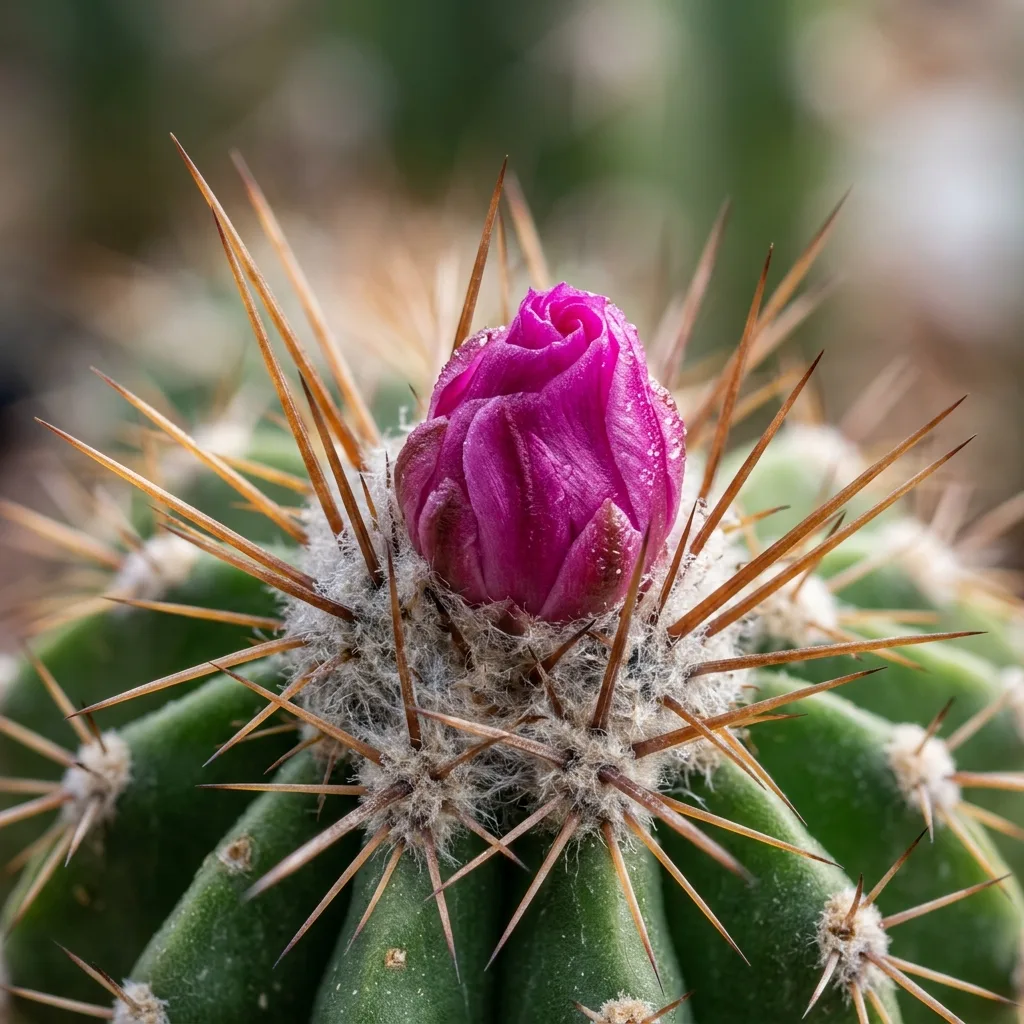
The single most vital prerequisite for inducing flowers is providing an authentic winter dormancy period. In their native habitats, cacti survive a cool, dry seasonal pause during which growth hormones like auxins are down-regulated while flowering signals (florigen pathways) are triggered. From November through late February, desert cacti should rest in a bright, unheated space kept between 8°C and 12°C (46°F–54°F), with irrigation curtailed almost entirely. Cacti kept in heated, cozy living rooms and watered routinely throughout winter will continue vegetative growth, but they will reliably fail to set a single bud.
During active growth in spring and summer, adopt the classic 'soak-and-dry' principle. Root xylem tissues require oxygen between water applications; light, frequent sips do not show care—they suffocate bottom roots while leaving deeper roots desiccated. Drench the pot until water runs freely through the drainage holes, then completely withhold moisture until the soil column has dried through.
4. Highly Mineralized Cactus Substrates and Container Physics
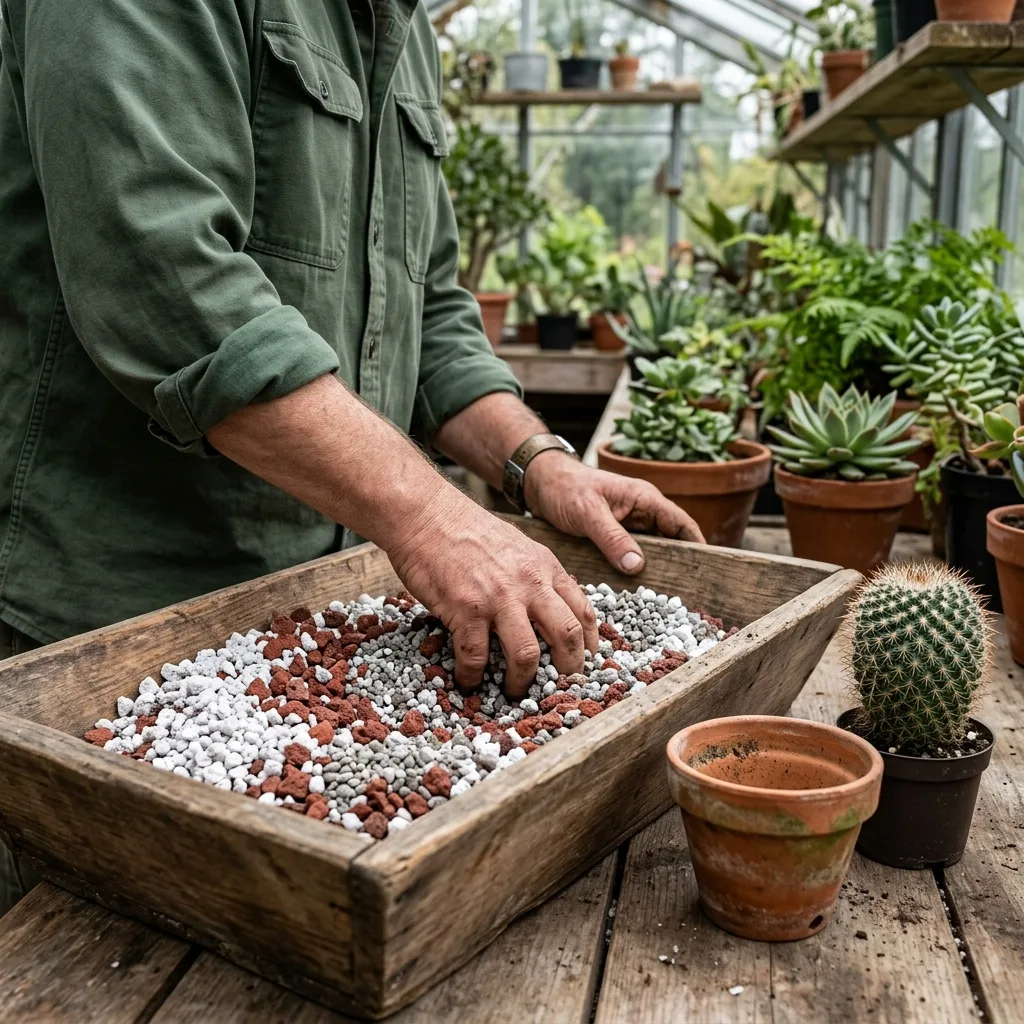
Cacti quickly perish when forced into moisture-retentive, peat-heavy soils. Saturating the rhizosphere for more than 48 hours causes root cell lysis and invites devastating oomycete infections. Thus, your growing medium should consist overwhelmingly of porous, inorganic volcanic minerals.
| Component | Recommended Ratio (%) | Horticultural Function & Benefit |
|---|---|---|
| Pumice (3–6 mm) | 35% | Superior porosity, vital aeration pockets, and zero compaction |
| Lava Rock / Zeolite | 25% | Root-zone aeration, pH buffering, and slow trace mineral release |
| Coarse River Sand / Quartz Grit | 15% | Facilitates rapid drainage velocity and structural stability |
| Sterile Coconut Coir | 15% | Minimal moisture retention and an ideal fibrous matrix for root adhesion |
| Worm Castings (Sifted) | 10% | Gentle, slow-release bio-nutrients and beneficial rhizosphere microbes |
When selecting containers, unglazed terracotta is vastly superior. The natural microporosity of fired clay permits moisture to evaporate laterally through the pot walls, ensuring uniform drying and superior gas exchange around the taproots.
5. Flower-Induction Strategies and Fertilizer Balancing
Encouraging your cactus to bloom begins with early spring awakening. By late March, as daytime temperatures lift and stems show slight dehydration wrinkles, offer a modest, lukewarm watering to reactivate desiccated feeder root hairs. Within two weeks, resume full watering cycles.
When fertilizing, select formulations with very low nitrogen (N) and elevated phosphorus (P) and potassium (K)—such as an NPK 5-10-10 or 4-8-12 ratio. Excess nitrogen causes rapid, bloated vegetative growth that softens cell walls, inviting pathogen entry while suppressing floral initiation. During active growth (April to August), applying a balanced cactus fertilizer diluted to one-quarter strength once a month is more than sufficient.
6. Propagation, Offset Cuttings, and Grafting Techniques
Multiplying your flowering specimens is deeply rewarding. For prolific clumping species (such as Rebutia, Mammillaria, and Lobivia), sever healthy offsets (pups) cleanly using a flame-sterilized scalpel. Lay the severed offsets in a dry, shaded location for 4 to 7 days to form a firm, lignified callous over the vascular wound before potting. Introducing an unhealed cut directly into soil invites swift microbial infection.
For chlorophyll-deficient or slow-growing gems (like certain Gymnocalycium mutants), flat grafting onto vigorous rootstocks like Hylocereus or Trichocereus is highly effective. By aligning and securing the vascular cambium rings, the vigorous rootstock pumps water and dissolved minerals to the scion, yielding astonishing growth and remarkably early blooms.
7. Defending Against Fungal Pathogens and Rot
The most devastating afflictions in cactus cultivation are basal and vascular stem rots caused by Fusarium oxysporum and Phytophthora species. Excessive irrigation coupled with dense, suffocating soil destroys root integrity, granting these pathogens unimpeded access to internal xylem bundles. If you observe yellowing, brown discolored margins, or mushy tissue around the soil line, swift surgical intervention is mandatory.
Using a sterile blade, resect all softened, necrotic tissue until you reach entirely clean, crisp green flesh. Dust the cut face generously with sulfur powder or ground cinnamon to provide an antifungal barrier. Keep the treated specimen dry and shaded for 10 to 14 days until a durable callus forms, then pot into a bone-dry, high-mineral substrate to regenerate roots.


Reader Reviews & Comments 4 Reviews
Eleanor Vance
Marcus Thornton
Julianne Reed
Derek Harrison
Leave a Review & Rating
Share your plant care tips, experiences, or questions with our succulent community.