






Originating from the subtropical montane slopes of southern China and naturalized through the Ryukyu Islands of Japan, Musa basjoo (the Japanese fiber banana) introduces an authentic primeval drama to temperate landscapes and conservatory living spaces. Famed for its expansive, emerald-green architectural leaf blades, this ancient herbaceous perennial holds the distinct horticultural title of the world's cold-hardiest banana, tolerating rhizome temperatures as low as -15°C (5°F) under proper insulation. However, when the first brutal freeze tears through the canopy, or when heavy winter moisture suffocates poorly drained substrates, this majestic giant's foliage will collapse, the trunk softens, and growers panic, wondering if their prize specimen has perished. Drawing on decades of hands-on cultivation, physiological adaptation, and triage protocols at our Sukulentler.com research greenhouses, I assure you: beneath that blackened, frost-bitten exterior, the regenerative subterranean heart of your banana plant is often merely waiting for the right horticultural rescue.
Botanical Anatomy of Musa basjoo: Pseudostem, Rhizome, and Vascular Dynamics
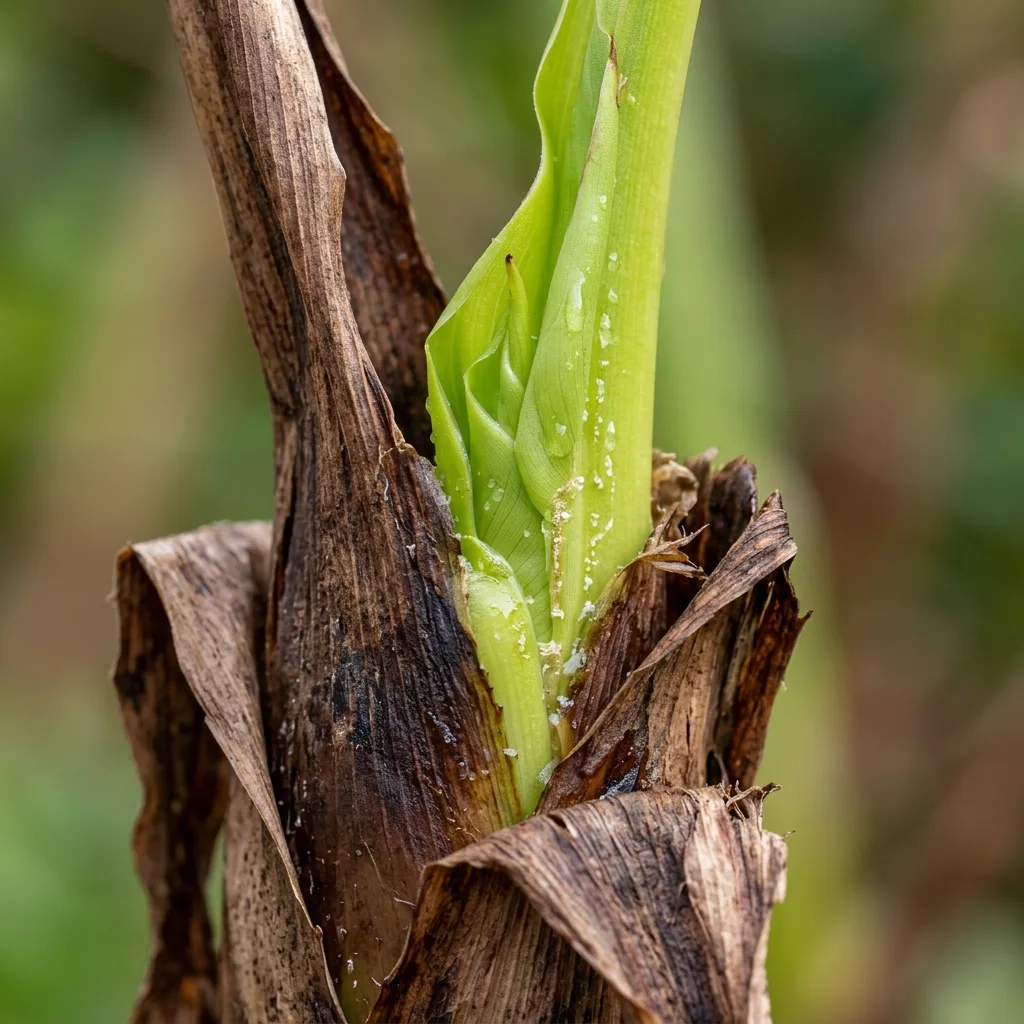
To accurately diagnose and treat a suffering Japanese hardy banana, one must first deconstruct its true morphological nature. Contrary to casual observation, Musa basjoo is not a tree; it is an immense arborescent herbaceous perennial. What appears to be a solid wooden trunk is botanically a pseudostem—a tightly coiled cylinder formed of concentric, overlapping, highly hydrated leaf sheaths. Because these sheaths consist of over 85–90% cellular sap and water, they act like biological thermal conductors. At the first sub-zero freeze, water within the intercellular spaces crystallizes, rupturing thin parenchymal cell walls and causing the structural integrity of the pseudostem to collapse like wet paper.
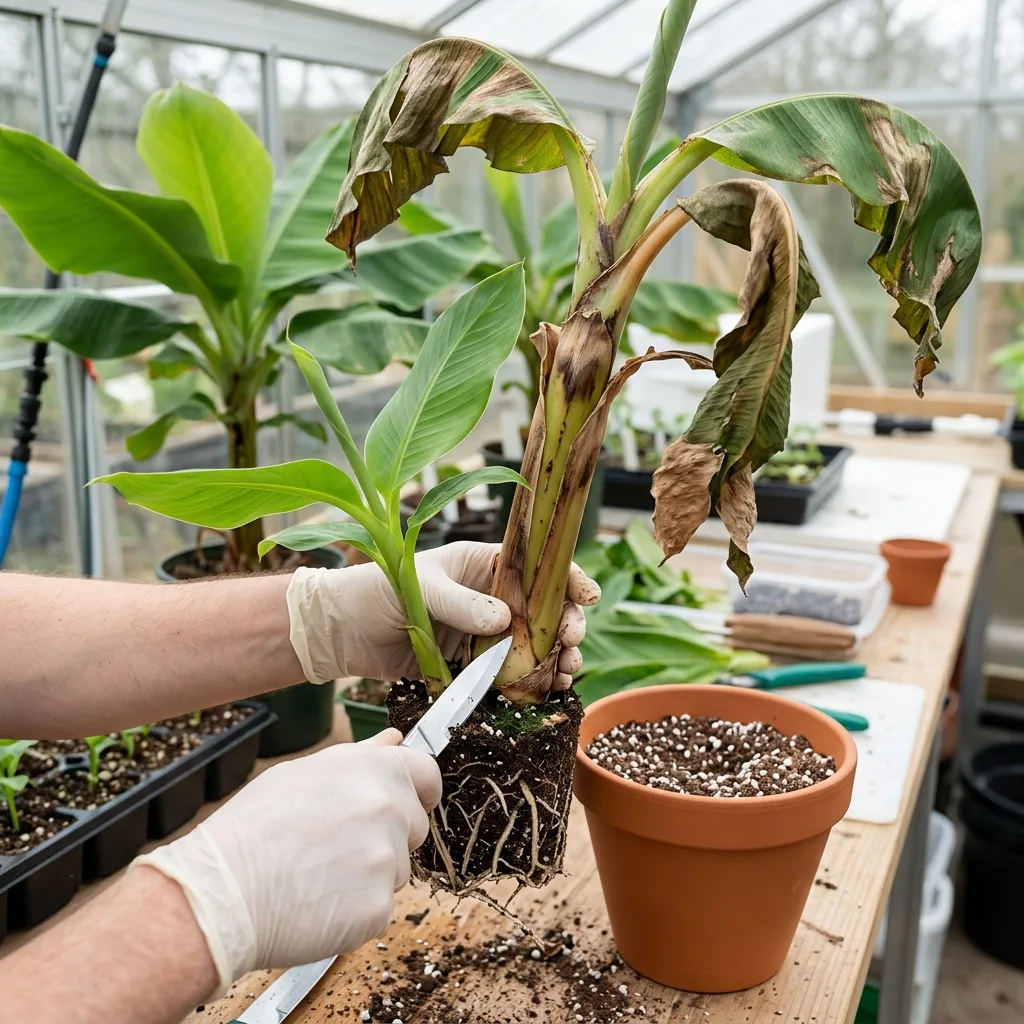
The true heart of the plant remains subterranean: the corm (or subterranean rhizome). This dense, starch-packed storage organ houses the apical meristem—the single growing point responsible for generating all subsequent leaf rolls (cigar leaves). Surrounding this corm is an extensive adventitious root network. In spring and summer, these roots pump liters of moisture and nitrogenous nutrients up into the massive foliar canopy daily. However, when ambient temperatures drop below 10°C (50°F), metabolic activity, transpiration, and root hydraulic conductance plummet near zero. If saturated, cold, anaerobic conditions persist around this dormant rhizome, opportunistic fungal pathogens will breach the weakened tissue, transitioning a temporary seasonal dormancy into fatal structural decay.
Common Pathological Afflictions: Fungal, Bacterial, and Physiological Disorders
While Musa basjoo is inherently resilient compared to edible desert cultivars (such as Musa acuminata), it remains vulnerable to severe physiological and microbial disorders when environmental conditions skew out of balance:
- Rhizome & Root Rot (Fusarium oxysporum / Pythium spp.): The most lethal subterranean threat. Pathogens proliferate in cold, heavy, waterlogged soils with low porosity. Symptoms manifest above ground as sudden, unseasonal yellowing of the lower leaves, premature drooping, and an unmistakable spongy softening accompanied by a sour, fermenting odor at the base of the pseudostem.
- Anthracnose & Leaf Necrosis (Colletotrichum musae): Characterized by water-soaked, dark brown to black necrotic lesions along the leaf margins and tips. These lesions frequently display a bright yellow chlorotic halo. It accelerates during warm, stagnant spring spells paired with overhead watering or high ambient humidity.
- Pseudostem Soft Rot (Dickeya dadantii / Pectobacterium carotovorum): A devastating bacterial infection that enters through frost wounds, physical pruning tears, or insect feeding sites. The interior of the pseudostem liquefies into a foul-smelling, dark brown slime, causing the upper canopy to topple under its own weight.
- Cigar Leaf Choke (Physiological / Cold Shock): When daytime temperatures drop abruptly during active vegetative growth, or when soil-level nutrient uptake is blocked by cold roots, the emergent rolled leaf ('cigar leaf') cannot unfurl. It becomes trapped, compacted, and rots inside the crown, blocking all emergent growth behind it.


Reader Reviews & Comments 4 Reviews
David Miller
Sarah Jenkins
Emily Clark
Michael Brown
Leave a Review & Rating
Share your plant care tips, experiences, or questions with our succulent community.