






Imagine a semi-epiphytic liana anchoring its aerial roots to venerable tree trunks, ascending toward the canopy across the humid tropical rainforests of Southeast Asia and Australia: Hoya carnosa, affectionately known as the Wax Plant. A heavily cutinized epidermal layer lends its foliage a porcelain-like luster and succulent-grade water storage capacity. Yet, when roots accustomed to free-flowing woodland breezes are sequestered within dense, non-draining potting composts in our living rooms, tragedy quickly brews. The moment those waxy leaves suddenly blanch and shrivel, your plant is signaling an acute, subterranean state of oxygen deprivation.
For many indoor gardeners, the wax vine is an enduring heirloom inherited from a grandparent's parlor, seemingly built to withstand neglect. However, while Hoya carnosa tolerates periods of drought with stoic grace, it is exceptionally vulnerable to stagnant water in the rhizosphere and cryptogenic pest infestations. The nutrient-dense phloem sap coursing through its succulent stems serves as a veritable banquet for mealybugs (Pseudococcidae). If you observe foliage deflating, premature bud blast, or telltale cottony residues along the nodes, the time has come to stage a targeted botanical intervention.
1. Early Diagnostic Symptoms and Microscopic / Visual Markers
When a Hoya carnosa enters systemic distress, its thick succulent morphology often masks initial damage; by the time exterior symptoms manifest, internal vascular disruption is well underway. When turgid leaves lose firmness and adopt a pliable, leathery texture, cellular turgor pressure has collapsed. Here lies a common diagnostic trap: leaf wrinkling—a hallmark sign of dehydration—is predominantly caused by overwatering rather than underwatering. Because necrotic roots have rotted away, the plant loses its hydraulic capacity to draw moisture upwards, inducing paradoxical dehydration.
Key diagnostic cues to inspect include:
- Chlorosis (Leaf Yellowing): A translucent yellowing starting from basal foliage and spreading interveinally indicates root asphyxiation and the cessation of nitrogen transport.
- Silvery Stippling and Underside Webbing: Microscopic spider mites (Tetranychidae) puncture leaf mesophyll cells to suck out chlorophyll, leaving foliage dull, bronzed, and depleted.
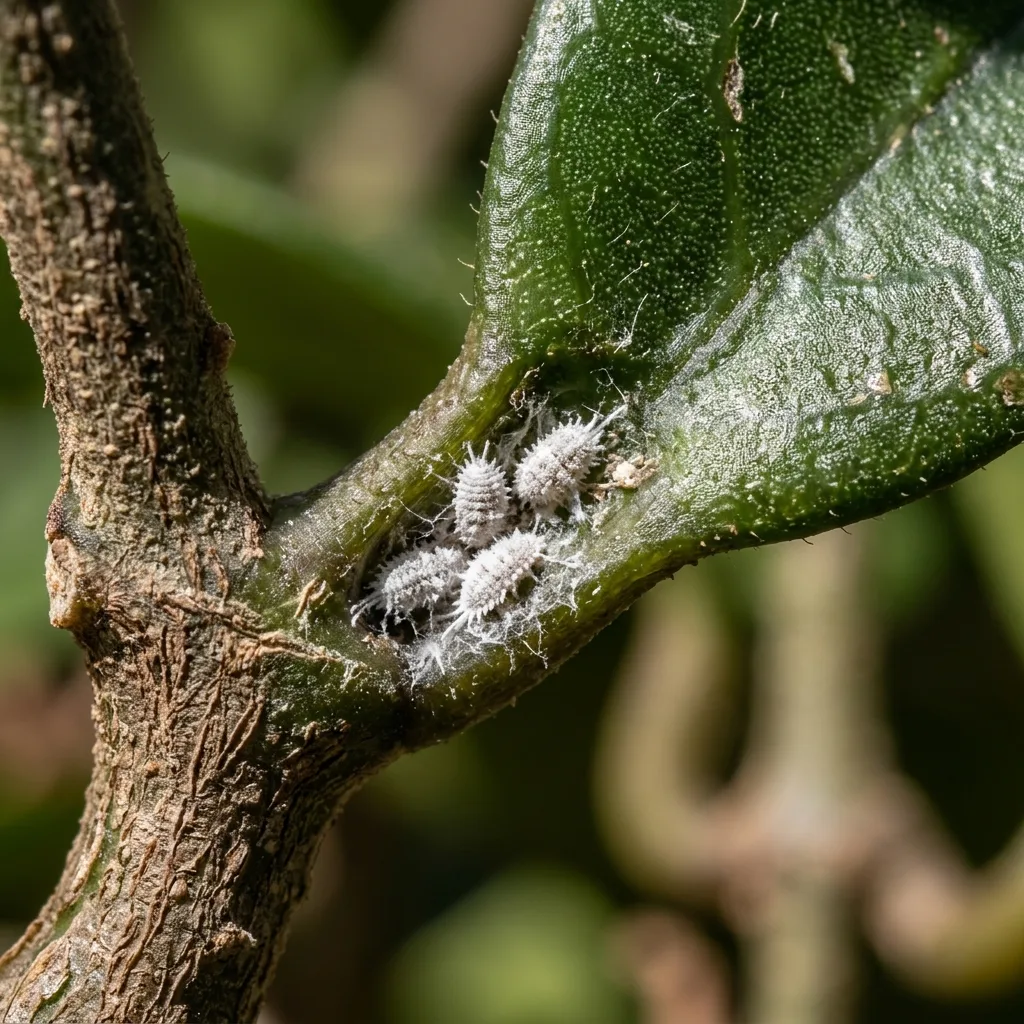
- Axillary Cotton-like Masses: Sticky, flour-like white clusters nested within stem-petiole nodes represent incontrovertible evidence of mealybug colonization.
- Peduncle Desiccation: Immature flower buds turning yellow and dropping before anthesis suggests vascular xylem blockage from opportunistic fungi or root nematodes.
2. Root Causes and Environmental Triggers
Roughly 85% of domestic wax plant failures stem from misplaced horticultural benevolence: overwatering. Routinely drenching epiphytic Hoyas is not care—it deprives the roots of vital gas exchange, causing rapid suffocation. In natural habitats, Hoya carnosa roots inhabit porous, bark-rich, oxygenated micro-niches. Dense peat- or loam-heavy potting soils break down into an anaerobic sludge when kept continuously wet, creating the optimal incubator for oomycete pathogens such as Phytophthora and Pythium.
A secondary driver of decline is the combination of inadequate photoperiod and dry, stagnant air. Adapted to dappled, bright canopy light, a Hoya relegated to a dim interior corner exhibits an immediate metabolic slowdown. Photosynthesis stalls, transpiration plummets, and water uptake drops to near zero; unaware, owners continue top-watering, hastening rot. Meanwhile, dry indoor heating accelerates the reproductive cycle of mealybugs and spider mites exponentially.
3. Natural and Organic Remediation Protocols
When mealybugs or soft scale are caught in early developmental stages, ecological control measures should precede synthetic chemicals. First, transport the specimen to a wash station and thoroughly hose down the stems, petiolar joints, and leaf undersides with a lukewarm spray to dislodge pests mechanically. Secure a plastic bag over the potting container beforehand to prevent dislodged pests from penetrating the substrate.
Follow mechanical removal with a topical emulsion formulated to dissolve the pests' protective epicuticular wax: mix 1 liter of lukewarm water with 1 teaspoon of pure potassium soft soap (castile soap) and 5 ml of cold-pressed neem oil. Add a few drops of raw apple cider vinegar to stabilize the emulsion. Apply this solution post-sunset across the entire canopy, paying particular attention to axils and undersides. For isolated, resilient mealybugs, spot-treat by dabbing individuals directly with a cotton swab soaked in 70% isopropyl alcohol to instantly denature their cuticle.
4. Chemical and Systemic Treatment Protocols
If mealybug crawlers have penetrated root crowns or systemic fungal pathogens (Fusarium or Pythium) are ascending the xylem, topical botanical washes will prove insufficient. At this threshold, a systemic fungicide and insecticide regimen is required to circulate active compounds through the vascular network. As pests tap into phloem sap, the compounds disrupt their nervous systems, while systemic fungicides arrest fungal hyphal extension from within.
| Active Ingredient | Target Pathogen / Pest | Dosage (Per 1 Liter Water) | Application Frequency & Method |
|---|---|---|---|
| Acetamiprid (20% SP) | Mealybugs, Scale Insects, Thrips | 0.5 g / L | Apply 2 treatments, 10 days apart, via foliage and soil drench |
| Propamocarb Hydrochloride | Root Rot (Pythium, Phytophthora) | 2.0 ml / L | Soil drench; apply 2 treatments spaced 14 days apart |
| Abamectin (18 g/L) | Spider Mites (Acarid Infestations) | 0.5 ml / L | Evening foliar misting targeting leaf undersides, 7 days apart |
| Copper Oxychloride | Bacterial & Fungal Leaf Blight | 1.5 g / L | Preventative foliar misting applied once monthly |
5. Quarantine and Sanitation Protocols
The instant an infestation or rot outbreak is diagnosed, isolate the Hoya at least 3 meters away from other succulent and tropical plants in a well-ventilated space. Mealybug nymphs (crawlers) are minute and mobile, capable of traversing pot rims, drainage trays, and windowsills. Maintain quarantine for a minimum of 21 days to break the pest's reproductive and hatching cycle.
Sterilize all pruning tools, forceps, and repotting surfaces using 96% ethyl alcohol or a 10% bleach solution before and after treatment. Discard infected old substrate immediately in sealed bags—never add it to home compost heaps. If the original container is to be reused, scrub it clean with boiling water and detergent, followed by a 30-minute soak in a diluted fungicidal solution.
6. Rehabilitation and Long-Term Recovery Care
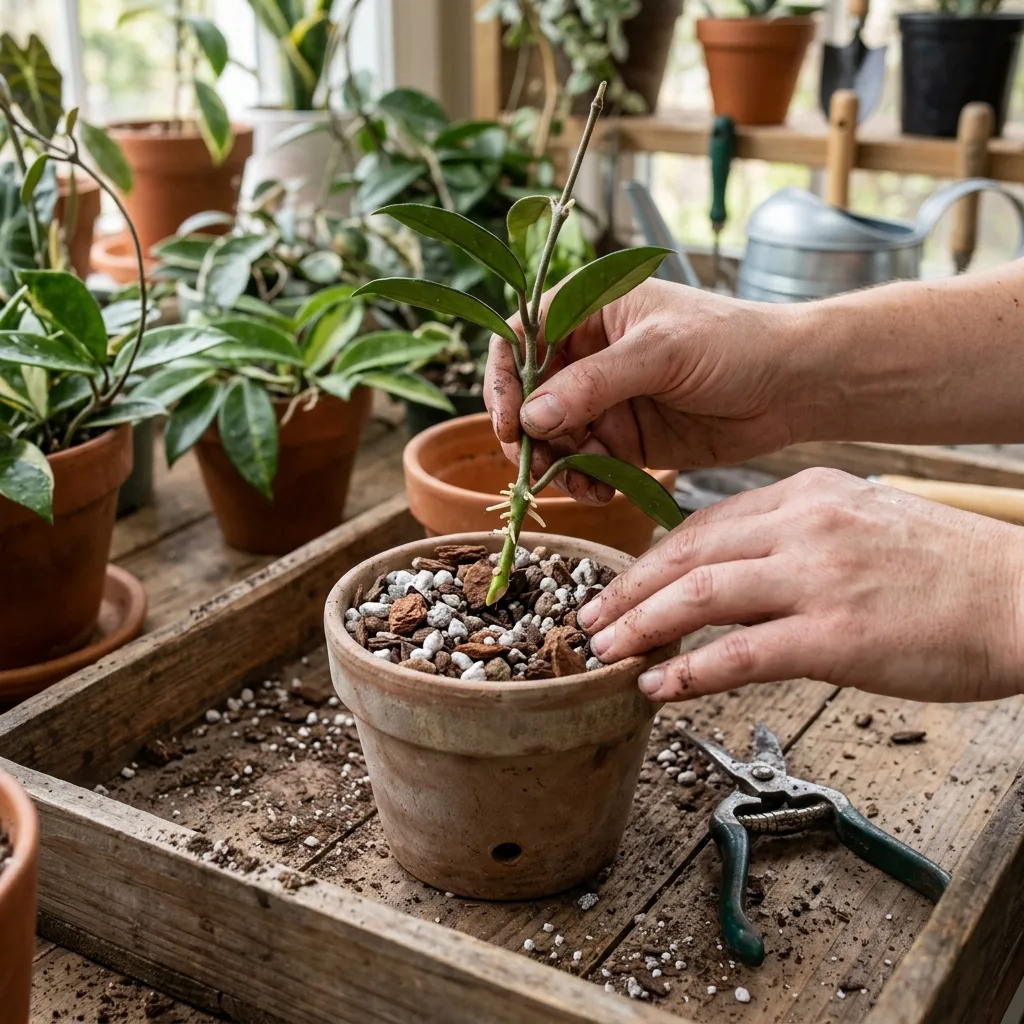
Examine the root ball, cleanly amputating all dark, mushy, or hollowed roots with sterilized shears until only firm, healthy white-to-cream tissue remains. Rinse the viable roots in a 3% hydrogen peroxide solution (1 part H2O2 to 4 parts water) to oxidize lingering fungal spores and oxygenate the tissue. Allow the plant to rest in a shaded, ventilated space for 4–6 hours so cut surfaces can form a protective callus.
Repot into a gritty, loose medium designed specifically for semi-epiphytic climbers. A proven structural formula consists of: 30% coarse pine bark (orchid bark), 25% chunky pumice, 15% zeolite, 10% coarse perlite, and only 20% high-grade fibrous blonde peat. House the plant in an unglazed terracotta pot or a heavily perforated clear orchid container. Withhold water for the first 4 days post-potting to settle root tissues, then initiate hydration using water amended with humic-fulvic acids to stimulate cellular root regeneration. Keep the specimen in bright, filtered morning light at temperatures between 20–25°C (68–77°F) as it resumes active vegetative growth.


Reader Reviews & Comments 3 Reviews
Eleanor Vance
Clara Higgins
Julian Hayes
Leave a Review & Rating
Share your plant care tips, experiences, or questions with our succulent community.