






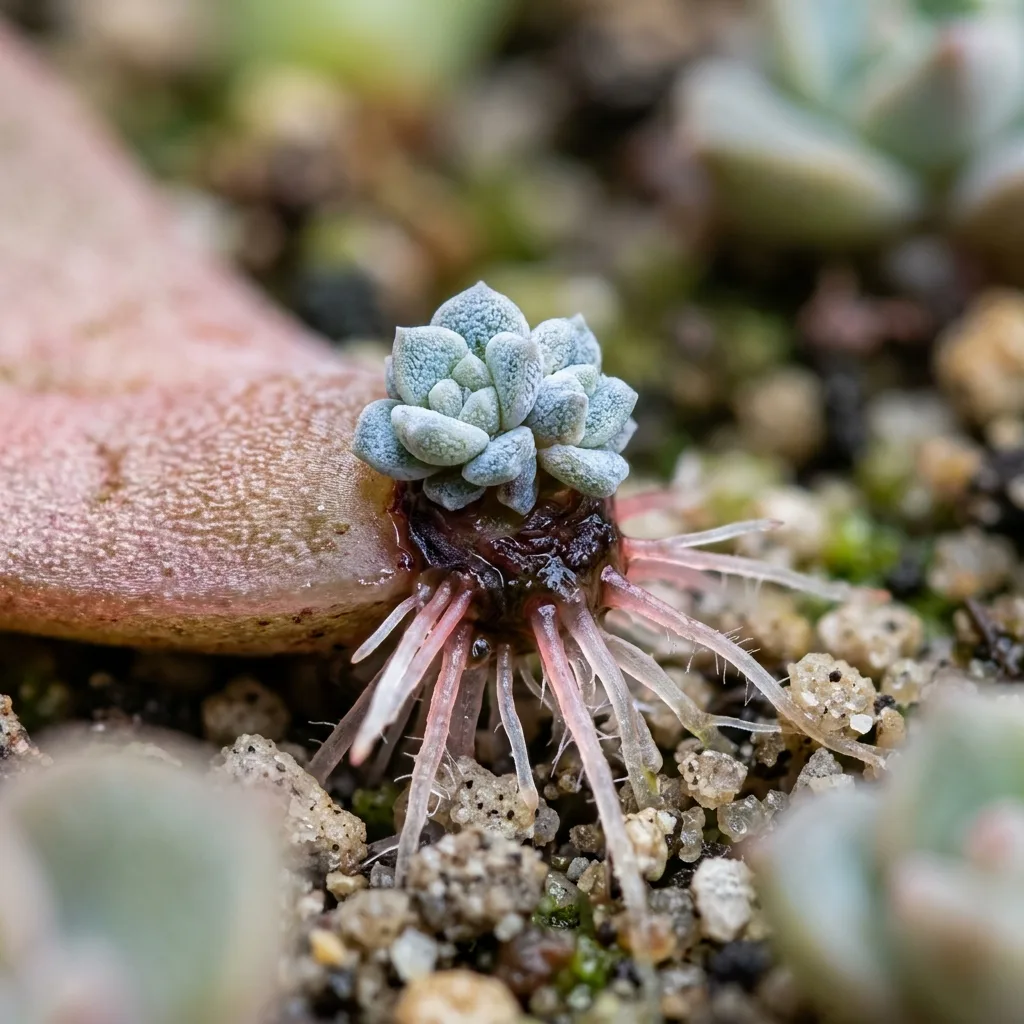
A succulent leaf separating from its stem and, weeks later, conjuring a miniature clonal replica alongside delicate pink adventitious roots is one of the most astonishing cellular adaptations in the plant kingdom. From the sheer, sun-baked canyons of Mexico to the arid expanses of South Africa's Karoo Plateau, succulents like the Ghost Plant (Graptopetalum), Stonecrop (Sedum), and Hens and Chicks (Echeveria) evolved to turn every detached tissue fragment into a thriving new life following violent winds or herbivore browsing. That single rosette sitting on your windowsill or balcony quietly holds the genetic blueprint for hundreds of new plants.
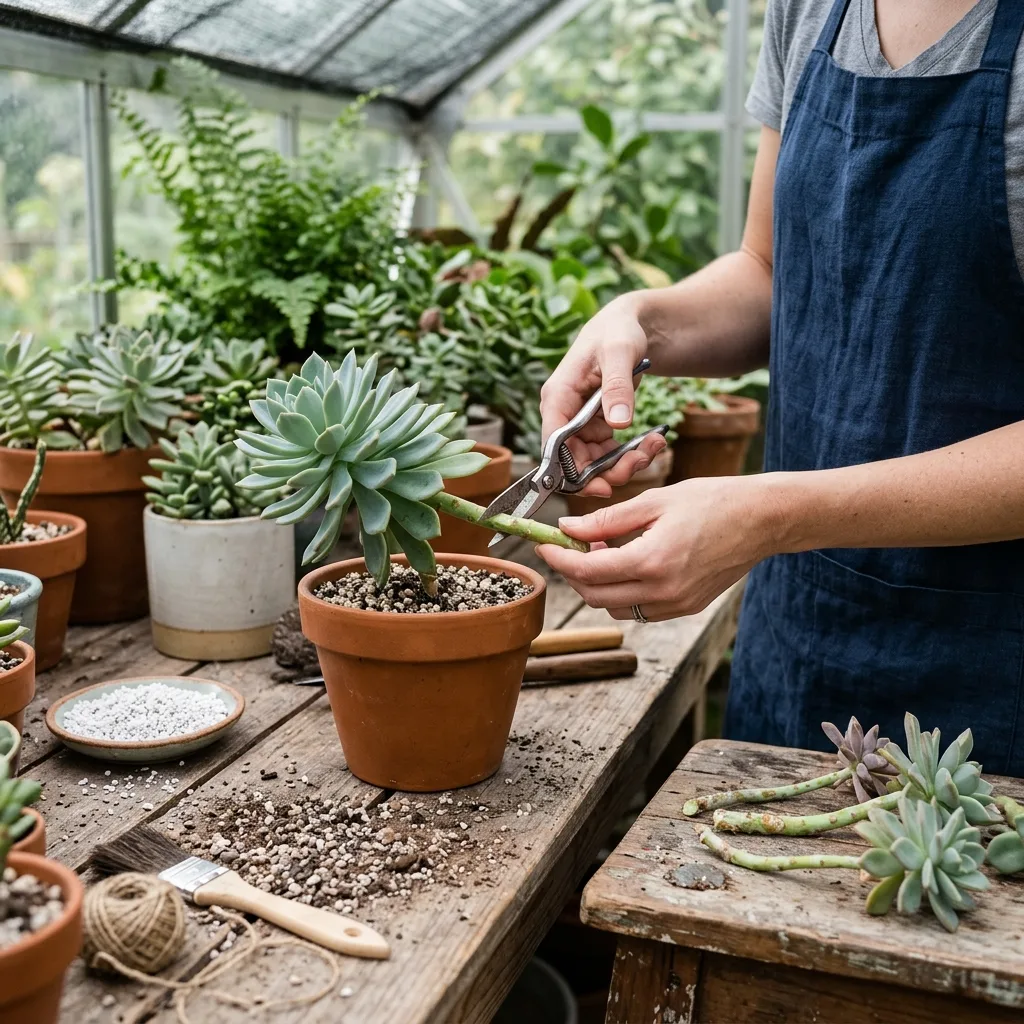
Yet, the single greatest heartbreak for plant lovers asking 'how do I propagate succulents?' is watching plucked leaves turn translucent and turn into mush instead of rooting. The culprit is almost always a failure to mimic nature's precise environmental cues. Successfully multiplying succulents is a scientific craft demanding patience, sterile mechanical execution, and meticulous moisture control at the micro-level. In this comprehensive guide, we dissect every phase of succulent propagation—from leaf pulls and stem beheading to pups and root divisions—grounded firmly in botanical principles.
1. Botanical Identity and Morphological Characteristics
The extraordinary regenerative capacity of succulents lies buried within their cellular architecture. Unlike many woody perennials, succulents concentrate dense clusters of undifferentiated meristematic tissue at their leaf bases (the petiole junction) and stem nodes. Meristematic cells are botanical stem cells: given the correct endogenous hormonal cues—specifically a targeted accumulation of auxins—they divide rapidly to generate adventitious roots and adventitious shoot buds.
Members of the Crassulaceae family—including Echeveria, Graptopetalum, Sedum, and Kalanchoe—wield these basal meristem cells with exceptional efficiency. Conversely, monocotyledonous succulents such as Haworthia (Zebra Cactus), Aloe, and Sansevieria (Snake Plant) are genetically predisposed to reproduce via underground rhizomes and basal offsets (pups) rather than single detached leaves. Understanding the cellular anatomy of your specific genus is the very first factor governing your propagation success.
2. Light Requirements and Indoor Positioning


Reader Reviews & Comments 4 Reviews
Sarah Jenkins
David Miller
Emily Clark
Michael Brown
Leave a Review & Rating
Share your plant care tips, experiences, or questions with our succulent community.