


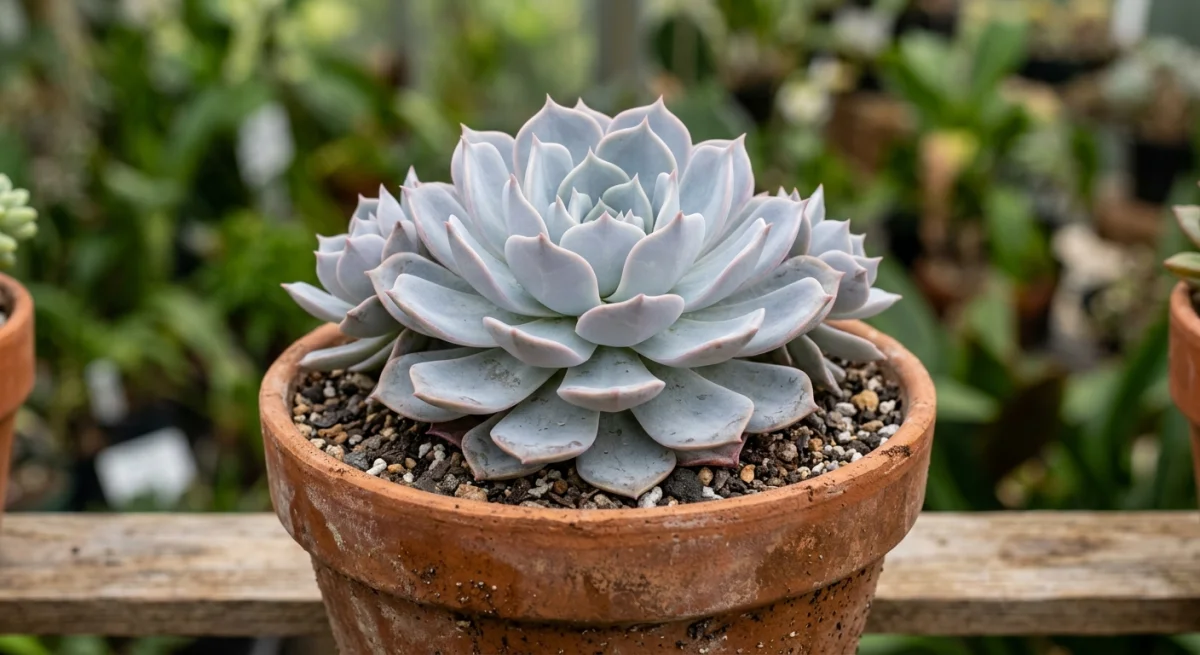
Native to Nuevo León, Mexico, Echeveria lilacina forms a remarkably symmetrical, slow-growing rosette of fleshy, spoon-shaped leaves in ethereal shades of pale silver-grey and delicate lilac. The foliage is enveloped in a dense coating of farina (epicuticular wax), providing a powdery porcelain appearance while deflecting harsh ultraviolet rays. In late winter to spring, mature specimens elevate elegant arching racemes adorned with coral-pink to pale red bell-shaped flowers.
📋Core Botanical Care Parameters
☀️ Light Requirements
Requires at least 5-6 hours of direct morning sunlight or intense filtered light daily to maintain leaf compactness and vibrant pastel coloration.
💧 Watering Frequency
Follow the soak-and-dry method; allow the potting substrate to dry out entirely between waterings. Never let water pool inside the central rosette crown.
Discover the most frequent mistakes made by succulent enthusiasts, from translucent yellow foliage to fatal root rot, and master the evidence-based botanical care protocol needed to nurse your plants back to peak vitality.
When insufficient light or natural aging causes your succulents to stretch, become leggy, and lose their compact rosette form, beheading them provides a vibrant second life. Learn proper tool sterilization, stem cutting methods, callous formation, and rooting techniques based on proven botanical principles.
Discover the art of cultivating the weeping crab cactus (Schlumbergera truncata) in open glass terrariums. Learn the precise phylloclade-twisting pruning technique, sub-surface false bottom engineering, and how to trigger spectacular cascades of blooms without root rot.
