






Blending aesthetic glass vessels with the sculptural geometry of succulents, open terrarium designs represent true living biological sculptures. However, the long-term sustainability of these creations rests on precise botanical balance rather than purely artistic choices. In stark contrast to closed terrariums, succulents—adapted across millennia to arid plateaus and desert microclimates—abhor stagnant air and high ambient humidity; thus, an open-glass architecture is the only biologically viable format for succulent terrarium design.
Succulents operating via Crassulacean Acid Metabolism (CAM) open their stomata at night to capture and store carbon dioxide, sealing them tightly during the day to minimize transpiration water loss. Elevated relative humidity and compromised gas exchange within sealed or narrow-necked vessels disrupt this diurnal CAM cycle, triggering anaerobic decay within succulent tissues. Furthermore, the delicate epicuticular farina (a natural, powdery wax coating the leaf epidermis) dissolves under prolonged stagnant moisture, rendering the plant defenseless against opportunistic fungal pathogens.
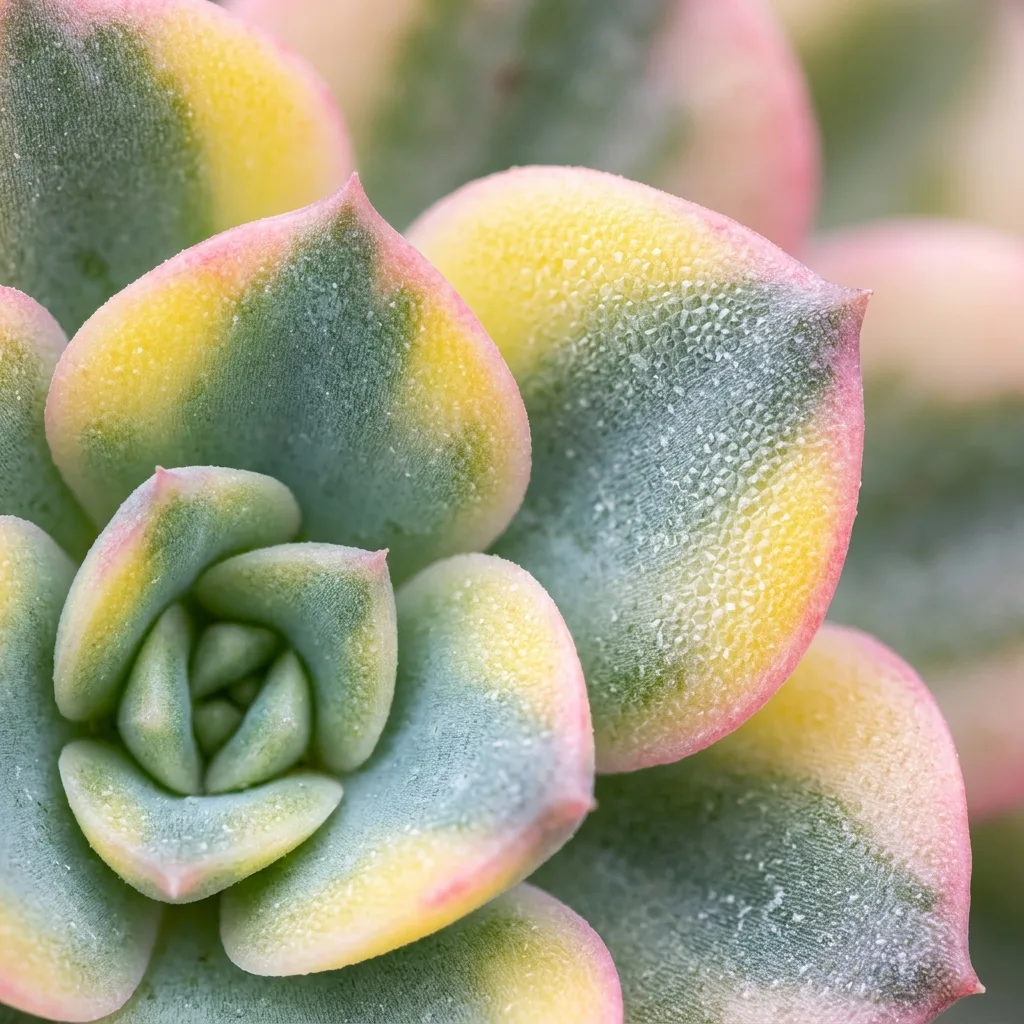
Prized for their vibrant tri-color margins, Aeonium haworthii hybrids (popularly known as 'Kiwi') and miniature Echeveria selections serve as stunning focal points in a properly engineered open vessel. Within this guide, you will master the false-bottom substrate engineering required to prevent root asphyxiation in drainless glassware, alongside precise light orientation and the physiological rules of multi-species companion planting.
1. Engineering the Drainage Layers
Cultivating specimens in an unperforated glass container demands proactive management of hydrostatic pressure and vapor dynamics. While conventional nursery pots expel surplus moisture via gravitational drainage, glass vessels require the physical separation of standing water from the active rhizosphere, relying on controlled closed-loop evaporation. This balance is achieved by constructing an engineered three-tier false bottom system.
The lowest tier consists of an inorganic reservoir bed designed to catch percolation runoff and prevent root submersion. Directly atop this base, a layer of horticultural-grade granular activated carbon serves as a bio-chemical filter. The carbon absorbs volatile compounds, prevents stagnancy odors, and suppresses anaerobic bacterial colonization. Positioned over the carbon, a permeable microfiber or fiberglass mesh barrier permanently prevents fine mineral substrate from sifting downward and clogging the drainage pore spaces.
2. Species Compatibility and Companion Planting Rules
The most common failure point when designing mixed terrariums is prioritizing color and structural harmony while disregarding physiological synchrony. Plants sharing an enclosed microclimate must possess closely aligned photosynthetic rates, dormancy schedules, and water-uptake thresholds.
Celebrated for their dynamic yellow, cream, and pink margins, Aeonium haworthii 'Kiwi' and related variegated cultivars exhibit a winter-growing (opportunistic cool-season) rhythm, favoring semi-arid cool temperatures. Pairing these directly alongside summer-active Haworthia cooperi or high-retention desert cacti inevitably triggers moisture-stress conflicts. To construct a biologically stable arrangement, observe these foundational pairing criteria:
- Photoperiod & Light Demand: Pair full-sun specimens like Echeveria and Aeonium together; house shade-tolerant, indirect-light species like Haworthia and Gasteria in separate, low-irradiance compositions.
- Root Morphology: Utilize shallow-rooting carpet formers (such as Sedum rubrotinctum) to ground the peripheral substrate surrounding deep-anchoring rosettes.
- Tissue Sensitivity: Reserve the most aerated, elevated slopes of the terrarium's topography for species with dense, fleshy caudices that are particularly vulnerable to collar rot.
3. Layer Dimensions and Material Profile
Substrate thickness must be calibrated proportionally to the vessel's vertical dimension. For a standard open tabletop terrarium, the following ratios ensure optimum root oxygenation and fluid balance:
| Layer Order | Material Selection | Ideal Thickness | Biological & Mechanical Purpose |
|---|---|---|---|
| 1. Foundation Base | Crushed Lava Rock / Coarse Pumice (4-8 mm) | 2 - 4 cm | Catchment reservoir for excess irrigation; isolates lower roots from standing water. |
| 2. Biological Filter | Granular Activated Horticultural Charcoal | 0.5 - 1 cm | Adsorbs impurities, deters stagnation odors, and prevents anaerobic pathogens. |
| 3. Separation Barrier | Inert Fiberglass Mesh / Microfiber Screen | 1 mm (single layer) | Physically halts fine soil migration into the drainage voids beneath. |
| 4. Growing Substrate | Inorganic Blend (70% Pumice-Zeolite, 30% Cactus Peat) | 4 - 7 cm | High-porosity, mineral-rich root zone providing rapid oxygen diffusion for CAM taxa. |
| 5. Top Dressing | River Gravel / Crushed Quartz Grit | 0.5 - 1 cm | Keeps the root collar dry, stabilizes surface evaporation, and enhances aesthetics. |
4. Step-by-Step Assembly and Planting Guide
Prior to assembly, sanitize the interior glass walls using a 70% isopropyl alcohol solution and allow the container to dry completely. Microscopic organic residues or surface moisture on the interior walls can rapidly incubate micro-algae blooms under grow lights.
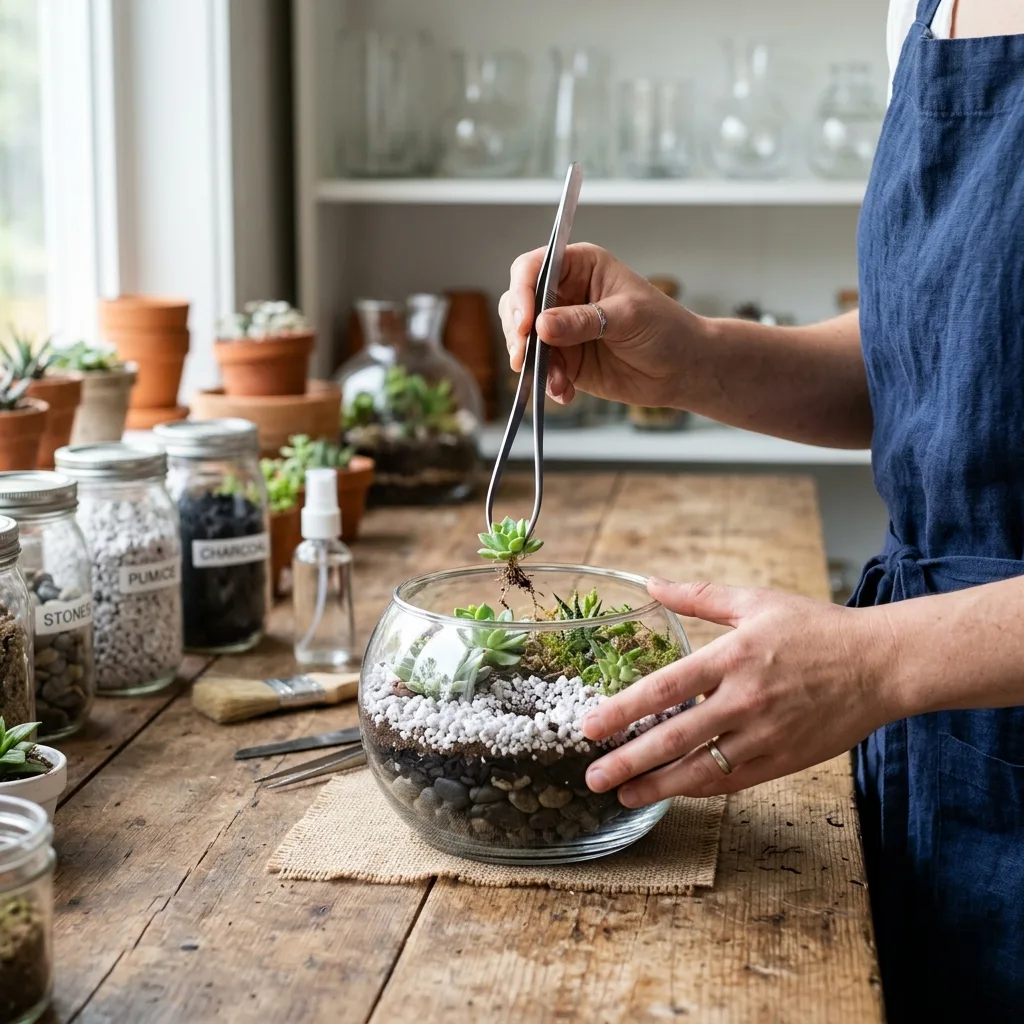
- Distribute the Drainage Base: Evenly spread sterile volcanic scoria or coarse pumice across the vessel floor to establish the water catchment zone.
- Add Charcoal and Barrier: Disperse an even layer of activated charcoal granules over the stone, then position the custom-trimmed mesh barrier flush against the perimeter.
- Deposit Soil and Sculpt Topography: Introduce the mineral soil blend, banking it higher toward the rear to construct a visible slope. This enhances visual depth while optimizing localized gradient drainage.
- Bare-Root Preparation: Gently unpot your 'Kiwi' and companion plants. Carefully brush away old peat-based nursery soil to inspect the bare roots. Trim damaged, necrotic, or excessively long taproots with sterile shears, and let the cuts callus in dry shade for several hours.
- Planting: Form planting cavities using precision tweezers. Seat each specimen gently, confirming that the sensitive crown (root-stem collar) rests cleanly above the substrate line rather than buried beneath it.
5. Hardscape Selection: Inert Rock, Cured Wood, and Natural Sand
A striking succulent terrarium mimics a miniature cross-section of an arid canyon or windswept outcrop. Any decorative stone integrated into the scape—such as non-calcareous gneiss, granite, or dragon stone—must be strictly lime-free. Calcareous stones slowly leach minerals over repeated waterings, shifting the rhizosphere toward an alkaline pH that locks out essential micronutrients like iron.
If incorporating botanical woodwork, utilize kiln-dried, rot-resistant mopani wood or porous volcanic drift-stones. When applying colored sand accents, avoid synthetic polymer-coated aquarium sands; opt for natural, washed quartz sands instead. Apply them selectively around specimens using narrow-spout funnels to keep abrasive grains out of delicate leaf rosettes.
6. Precision Irrigation and Light Dynamics
The standard container gardening maxim of 'drench thoroughly until water runs clear from the base' must never be applied to a drainless terrarium. Irrigation must be metered carefully so the volume moistens only the active root zone without overwhelming the false bottom. Deliver moisture cleanly using a laboratory wash bottle or a narrow-tipped squeeze pipette directly to the soil line surrounding the root collar, never over the foliar rosette.
Rather than adhering to an arbitrary weekly calendar, rely on plant bio-indicators. Water only when the lower foliage of the 'Kiwi' specimen exhibits subtle, soft creasing and loss of turgidity. For lighting, protect the glass vessel from harsh midday sun. Curved glass acts as a magnifying lens that can scorch succulent tissue in hours. Position your open terrarium in bright, indirect exposure—such as an east- or partially shaded west-facing window—to maintain intense pigments without thermal stress.


Reader Reviews & Comments 3 Reviews
Eleanor Vance
Marcus Sterling
Chloe Henderson
Leave a Review & Rating
Share your plant care tips, experiences, or questions with our succulent community.