






Possessing some of nature's most resilient biological adaptations, cacti can effortlessly outlive humans when provided with the correct ecological conditions. The question that captivates plant enthusiasts—'how long does a cactus live?'—yields answers ranging from 15 to over 200 years in the wild. In indoor environments and terrarium compositions, however, longevity relies entirely on the delicate balance of drainage engineering, ventilation, and gas exchange. When translating a cactus's century-long potential into glass vessels, adopting the open-glass principle is the single most vital prerequisite to prevent stem decay.
Unlike tropical terrariums, the cactus and succulent families can never survive inside sealed glass enclosures. Cacti rely on Crassulacean Acid Metabolism (CAM) photosynthesis—opening their stomata at night to absorb carbon dioxide and sealing them during the day to prevent transpiration. This metabolic cycle collapses in trapped, humid air and stagnant microclimates. The high relative humidity that accumulates inside closed systems degrades the protective cuticle and epicuticular wax (farina) on the epidermis, leaving cellular tissues vulnerable to pathogenic fungal infestations.
In this comprehensive guide, you will uncover the cellular dynamics that govern a cactus's lifespan, the stratified drainage configuration that makes root rot impossible in a terrarium, and the aesthetic secrets behind cultivating open-glass arrangements that preserve their structural perfection for decades.
1. The Engineering of Drainage Layers
In glass vessels lacking drainage holes, the lifespan of a cactus is directly proportional to the structural efficacy of the applied layering. While standard pots discharge excess moisture through bottom perforations, glass containers require gravity to draw water rapidly away from the root zone toward an evaporative reservoir. Allowing stagnant water to linger against tender root capillaries induces cellular hypoxia (oxygen starvation), triggering irreversible root rot within a matter of weeks.
To safeguard root aeration, a perched water table is constructed at the base using porous volcanic lava rock or expanded clay aggregate (LECA). Positioned directly above this reservoir, a layer of activated charcoal (activated carbon) suppresses anaerobic bacterial colonization in the microflora and absorbs foul soil gasses. Topping this with a highly permeable inorganic substrate allows roots to breathe freely and maintains balanced cellular turgor pressure within the plant tissues.
2. Compatible Species Selection and Pairing Rules
One of the most critical factors dictating a terrarium cactus's longevity is the synchronization of growth rates and dormancy cycles among cohabiting species. In confined micro-environments with limited substrate volume, vigorous cultivars must never share space with species exhibiting microscopic annual development. An aggressive root system from an Opuntia or fast-growing Mammillaria will quickly strangle a slow-growing Astrophytum, monopolizing vital moisture and nutritional resources.
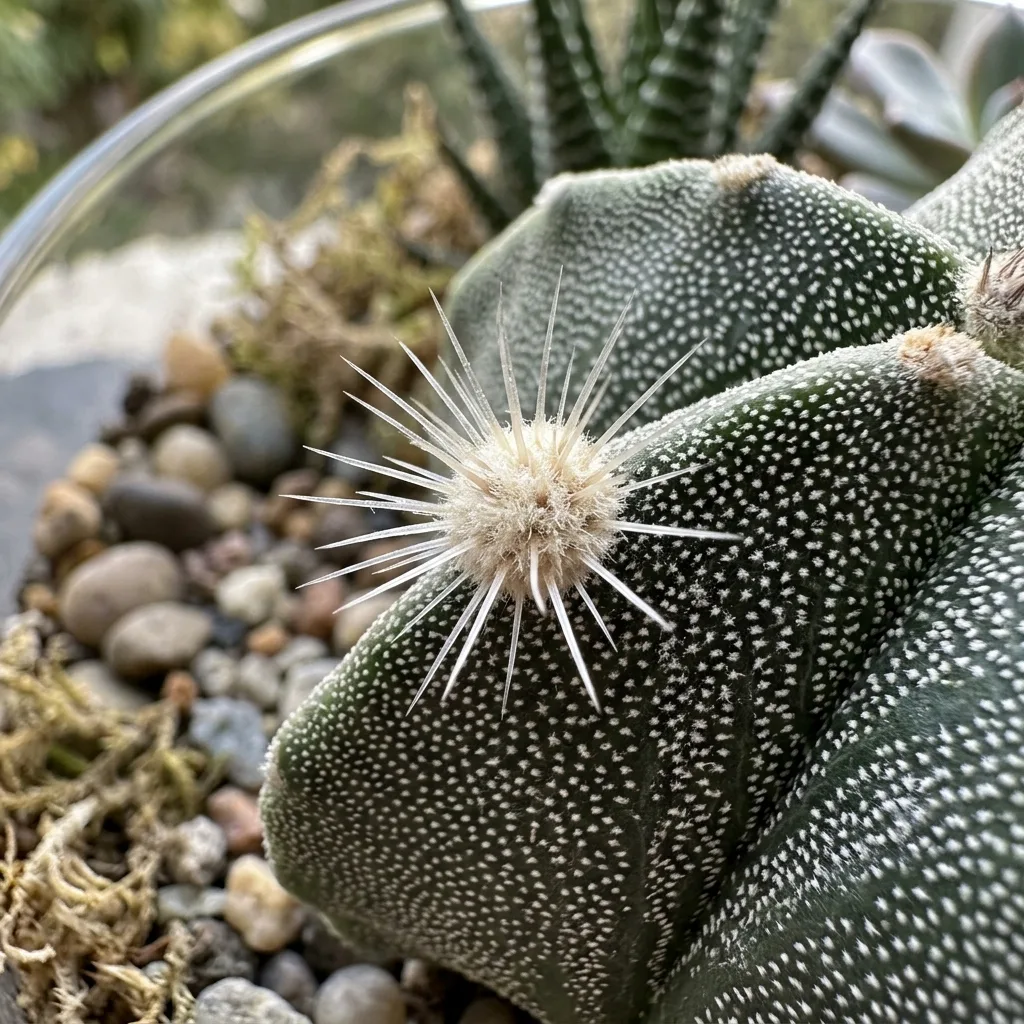
Exemplary species that retain their compact forms for decades in open glass include Astrophytum asterias (Star Cactus), Echinocactus grusonii (Golden Barrel - juvenile stages), and Gymnocalycium mihanovichii. These taxa feature thick cuticles and dense epidermal trichomes that diffuse harsh light, neutralizing the magnifying lens effect produced by curved glass walls. As companion plantings, select succulents with matching mineral substrate needs and identical moisture storage rhythms, such as Haworthiopsis fasciata.
3. Layer Thickness and Material Specifications
To ensure your terrarium endures across decades, the depth ratios of each internal layer must follow precise structural proportions. The engineering table below outlines the optimized stratification for a standard open glass terrarium with an overall depth of 20–25 cm:
| Layer Order | Material Specification | Recommended Depth | Biological and Structural Function |
|---|---|---|---|
| 1. Foundation Base | Coarse Pumice & Lava Rock (8-12 mm) | 3.0 - 4.5 cm | Subterranean catchment isolating excess water from roots; prevents hydraulic suffocation. |
| 2. Biological Filter | Granular Activated Carbon | 0.5 - 1.0 cm | Inhibits water stagnancy, binds organic toxins, and neutralizes anaerobic bacterial growth. |
| 3. Barrier Membrane | Porous Fiberglass Mesh / Geotextile | 1 - 2 mm | Stops fine substrate particles from migrating downward and clogging foundational air voids. |
| 4. Root Substrate | 70% Zeolite, Pumice, Perlite + 30% Cactus Peat | 6.0 - 8.0 cm | Promotes aeration for CAM-performing roots; completely porous, fast-draining mineral matrix. |
| 5. Surface Mulch | Quartz Sand & Crushed Slate Shards | 1.0 - 1.5 cm | Shields the root flare from moisture, protects the farina coat, and provides an aesthetic vapor barrier. |
4. Step-by-Step Assembly and Planting Protocol
Assembling an enduring cactus terrarium demands surgical precision. Every phase must be executed to protect mycorrhizal root associations and maintain the epidermal integrity of your specimens:
- Vessel Sterilization: Disinfect the interior glass thoroughly with isopropyl alcohol and allow it to dry completely; fungal spore residues left on glass surfaces create early vectors for algae growth under ambient light.
- Drainage and Carbon Application: Pour the base stone evenly and distribute a consistent layer of activated carbon across it. Angle the substrate slightly higher toward the rear to create visual depth and a natural contour.
- Membrane Insertion: Cut the geotextile barrier slightly smaller than the glass perimeter (leaving a 5 mm recessed margin) so the synthetic edge remains invisible from external viewing angles.
- Substrate Construction: Introduce the mineral-heavy cactus mix. Sculpt micro-topography by establishing mounds for primary focal specimens and valleys along the periphery to foster an impression of desert terrain.
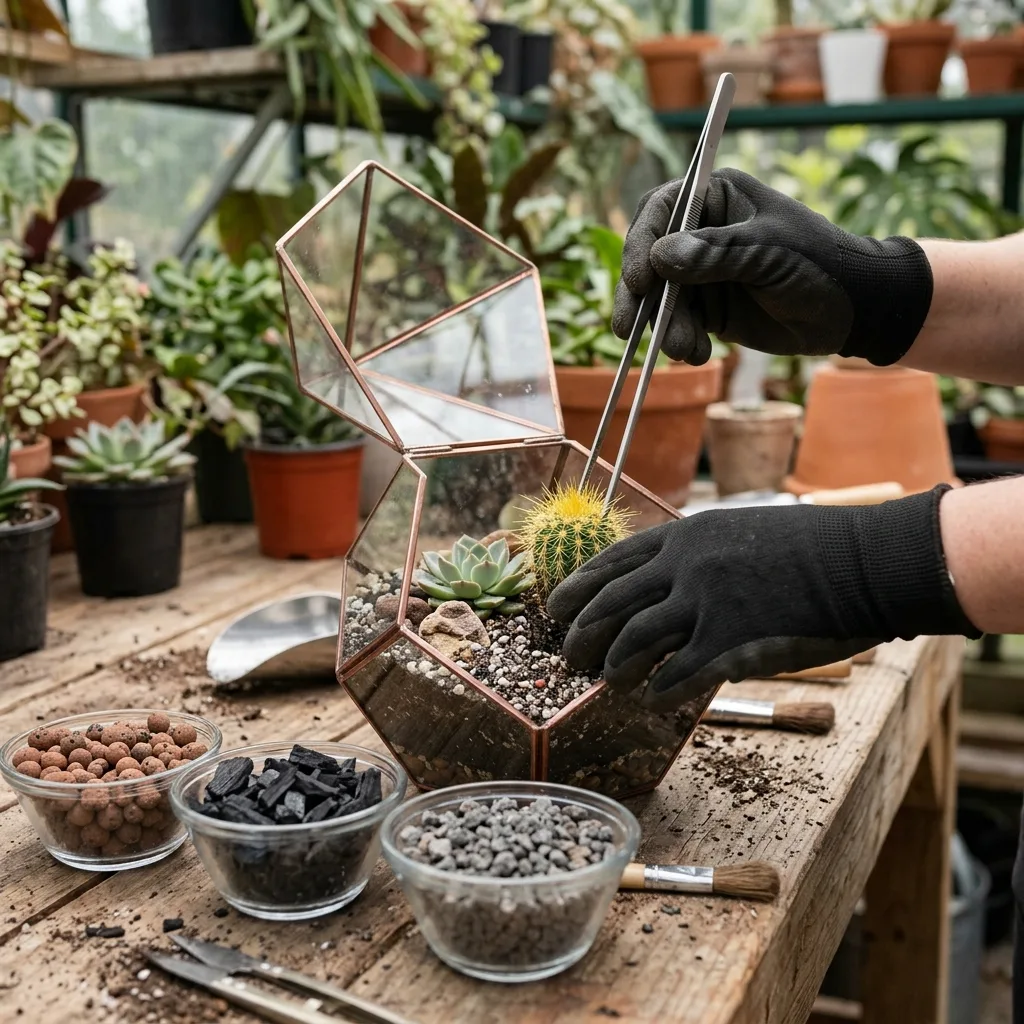
- Root Preparation and Planting: Carefully unpot the cacti and remove dense nursery peat from root hairs using a fine, dry brush. Using curved planting tweezers, set the clean roots gently into the mineral blend. Ensure the sensitive root crown (collar) remains strictly above the soil surface.
- Surface Dressing: Position coarse river pebbles or crushed quartz shards directly beneath and around each crown to elevate stem tissues above damp substrate particles.
5. Natural Hardscaping: Rock, Driftwood, and Mineral Sands
The visual framework of an open glass desert composition should mimic real-world arid biomes. Carefully chosen hardscape elements not only impart organic character but also act as structural thermal buffers. Dense volcanic stones or dark slate absorb daytime ambient heat and gently radiate it into the subterranean root matrix as temperatures drop after sunset, simulating authentic desert diurnal fluctuations.
To introduce organic warmth, incorporate inert botanicals like petrified wood or dried mopani root fragments. Fresh, soft, or sap-bearing woods must never enter the terrarium, as they inevitably harbor decomposing fungal organisms. When selecting decorative top sands, bypass artificially colored pet-store sands that may leach synthetic dyes. Instead, select naturally inert minerals like garnet sand, crushed basalt, or pure silica sand. These substrates preserve an optimal sub-acidic to neutral pH balance without altering water chemistry.
6. Precision Irrigation and Photoperiod Management
The ultimate determinant of a cactus's lifespan in glass lies at the tip of your watering dropper. In containers without bottom drainage holes, traditional soaking techniques spell immediate disaster. Irrigation must be administered with a targeted pipette or precision squeeze bottle, applying water equivalent to just 5 to 8 percent of the overall terrarium volume directly to the perimeter gravel rather than onto the plant's flesh.
Cacti require a minimum of 5 to 6 hours of bright, filtered sunlight each day. Keep in mind that curved glass surfaces can act as natural magnifying lenses under intense, direct midday sun, focusing heat beams that cause irreversible thermal blistering and melt away the protective epicuticular wax. Position terrariums roughly 50 to 70 cm away from south- or east-facing windows, protected by a sheer curtain. Throughout the winter, lower ambient temperatures to 10–12°C (50–54°F) to trigger authentic dormancy, spacing out waterings to every 4 to 6 weeks to suspend cell division. Honoring this vegetative rest period is the single most vital habit for extending a cactus's life over decades.


Reader Reviews & Comments 3 Reviews
Julian Vance
Clara Sterling
Arthur Pendelton
Leave a Review & Rating
Share your plant care tips, experiences, or questions with our succulent community.